Chromogenic Substrates
Chromogenic substrates are compounds that produce a visible color change when acted upon by specific enzymes. These substrates are widely used in diagnostic assays, biochemical research, and enzyme-linked immunosorbent assays (ELISAs) to detect and quantify enzyme activity. The color change allows for easy and rapid visual identification of enzyme reactions, making chromogenic substrates essential tools in laboratory analysis. At CymitQuimica, we provide a diverse selection of high-quality chromogenic substrates to support your research and diagnostic applications.
Found 712 products of "Chromogenic Substrates"
Sort by
Purity (%)
0
100
|
0
|
50
|
90
|
95
|
100
4-Nitrophenyl phosphate disodium hexahydrate
CAS:<p>4-Nitrophenyl phosphate disodium salt hexahydrate is a substrate of the hydrolase alkaline phosphatase. The products of the enzymatic reaction are 4-nitrophenol and phosphate.</p>Formula:C6H16NNa2O12PColor and Shape:PowderMolecular weight:371.15 g/mol1-Naphthyl β-D-glucuronide
CAS:<p>1-Naphthyl beta-D-glucuronide (NPG) is a chromogenic enzyme substrate used to detect the presence of β-glucuronidase activity. Upon hydrolysis by the enzyme, it produces a yellow product that can be detected by spectrophotometry or visually. It is commonly used in clinical assays to detect the presence of the enzyme in urine samples, as elevated levels can indicate liver or urinary tract diseases. It is also utilized in environmental testing, as some bacteria strains can produce the enzyme as a by-product, making NPG a useful tool for detecting these strains in contaminated water or food sources.</p>Formula:C16H16O7Purity:Min. 95%Color and Shape:White PowderMolecular weight:320.29 g/mol4-Nitrophenyl b-L-arabinopyranoside
CAS:<p>4-Nitrophenyl beta-L-arabinopyranoside is a chromogenic substrate for beta-L-arabinosidase. Upon hydrolysis, para-nitrophenol is released yielding a yellowish colour. 4-Nitrophenyl beta-L-arabinopyranoside is used in different applications such as the Bacterial arabinan degradation assays, gut microbiome analysis</p>Formula:C11H13NO7Purity:Min. 98 Area-%Color and Shape:White PowderMolecular weight:271.22 g/mol2-Naphthyl b-D-galactopyranoside
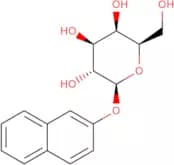
CAS:<p>2-Naphthyl beta-D-galactopyranoside is a glycoside that is found in the flowers of the plant Eschscholzia californica. It is used as a localizer for bacterial strains and can be hydrolyzed by enzymes to release naphthalene. 2-Naphthyl beta-D-galactopyranoside has been shown to inhibit the growth of corynebacterium and diazonium salt, which may be due to its ability to bind to DNA and disrupt protein synthesis. The potential use of this molecule is for its insolubility, which prevents it from being absorbed by skin cells.</p>Formula:C16H18O6Purity:Min. 99 Area-%Color and Shape:PowderMolecular weight:306.31 g/mol2-Nitrophenyl b-D-cellobioside heptaacetate
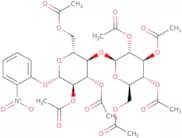
CAS:<p>2-Nitrophenyl b-D-cellobioside heptaacetate is a chromogenic enzyme substrate used to assay for cellobiohydrolase activity. The substrate undergoes enzymatic hydrolysis, releasing 2-nitrophenol which can then be detected via absorbance at 400 nm. This type of substrate is also used for the analysis of cellulose and hemicelluloses in plant materials. The heptaacetate modification enhances solubility, making it ideal for use in organic solvents, and it also protects against unwanted hydrolysis by acid or alkali. The substrate can be used in a variety of applications, including enzyme assay development, screening for inhibitors or activators, and in the study of the mode of action and substrate specificity of cellulase enzymes.</p>Purity:Min. 95%Color and Shape:PowderMolecular weight:757.65 g/mol2-Nitrophenyl b-D-xylopyranoside
CAS:<p>Chromogenic substrates targeting beta-xylosidase</p>Purity:Min. 95%Color and Shape:PowderMolecular weight:271.22 g/mol5-Bromo-4-chloro-1H-indol-3-yl-β-D-cellotetraoside
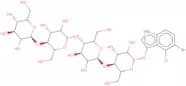
5-Bromo-4-chloro-1H-indol-3-yl-b-D-cellotetraoside is a chromogenic substrate used to detect the specific enzymatic activity of cellulase. After cleavage, 5-bromo-4-chloro-indoxyl is released, resulting in a blue to blue-green color change in bacterial colonies or media. 5-Bromo-4-chloro-1H-indol-3-yl-b-D-cellotetraoside is used in bacterial cellulase detection and biomass conversion research.Formula:C32H45BrClNO21Purity:Min. 95%Color and Shape:PowderMolecular weight:895.05 g/mol2-Chloro-4-nitrophenyl α-D-mannopyranoside
CAS:<p>2-Chloro-4-nitrophenyl alpha-D-mannopyranoside is a substrate used to measure the alpha-mannosidase activity. This enzyme plays a crucial role in the lysosomal degradation of asparagine-linked carbohydrate cores of glycoproteinsis. The use of 2-Chloro-4-nitrophenyl alpha-D-mannopyranoside in diagnostic assays is important as a deficiency in alpha-mannosidase leads to the accumulation of mannose-rich oligosaccharides in lysosomes, causing a range of health problems collectively known as alpha-mannosidosis.</p>Formula:C12H14ClNO8Purity:Min. 98 Area-%Color and Shape:White PowderMolecular weight:335.69 g/mol2-Nitrophenyl-β-D-thiogalactopyranoside
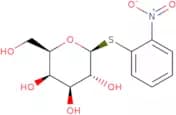
CAS:<p>2-Nitrophenyl-beta-D-thiogalactopyranoside is a chromogenic substrate used to detect the presence of galactosidase enzymes in various biological and biochemical assays. It consists of a nitrophenyl group attached to a galactose sugar molecule through a thioglycosidic bond. When acted upon by enzymes such as galactosidases, it releases the colored nitrophenyl group, which can be detected using spectrophotometry. This substrate is commonly used in assays for the detection of LacZ activity in bacterial cultures, as lacZ encodes for β-galactosidase.</p>Formula:C12H15NO7SPurity:Min. 98 Area-%Color and Shape:Yellow PowderMolecular weight:317.32 g/mol2-O-(4-Nitrophenyl)-a-D-N-acetylneuraminic acid
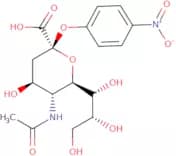
CAS:<p>2-O-(4-Nitrophenyl)-a-D-N-acetylneuraminic acid, also known as p-nitrophenyl N-acetylneuraminic acid, is a chromogenic substrate specifically designed for the detection and quantification of neuraminidase (sialidase) activity. Upon cleavage by neuraminidase, it releases a yellow-colored product, 4-nitrophenol, which can be easily monitored spectrophotometrically at 405 nm. This substrate is widely used in various applications, including enzyme kinetics studies, inhibitor screening, and the determination of neuraminidase activity in biological samples such as viruses, bacteria, and cell lysates. It is particularly useful for studying the enzymatic properties of neuraminidases from different sources and for the development of novel antiviral and antibacterial agents targeting neuraminidase activity.</p>Formula:C17H22N2O11Purity:Min. 90 Area-%Color and Shape:White PowderMolecular weight:430.36 g/mol5-Bromo-4-chloro-3-indolyl b-D-mannopyranoside
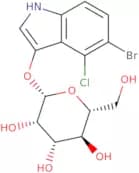
CAS:<p>5-Bromo-4-Chloro-3-Indolyl b-D-Mannopyranoside, also known as X-Man, is an enzyme substrate commonly used for detecting mannosidase enzymes. Upon hydrolysis by the enzyme, it produces a blue-green colored compound that can be detected visually or measured spectrophotometrically. This substrate is useful in characterizing the activity of mannosidases involved in glycoprotein processing and quality control.</p>Formula:C14H15BrClNO6Color and Shape:White Off-White PowderMolecular weight:408.63 g/mol6-Chloro-3-indolyl b-D-glucuronide sodium salt
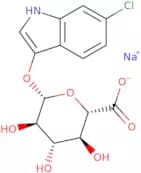
CAS:<p>6-Chloro-3-indolyl b-D-glucuronide sodium salt is a chromogenic substrate for beta-glucuronidase, a reporter gene used to monitor gene expression by detecting the enzyme's activity. It yields a salmon colored precipitate upon cleavage.</p>Purity:Min. 95%Color and Shape:PowderMolecular weight:365.7 g/molNaphthol AS-BI b-D-glucuronide
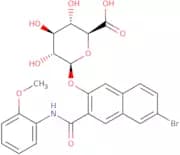
CAS:<p>Chromogenic substrate to visualize beta-glucuronidase activity; produces a red color</p>Formula:C24H22BrNO9Purity:Min. 98 Area-%Color and Shape:White PowderMolecular weight:548.34 g/mol2-Chloro-4-nitrophenyl β-D-glucopyranoside
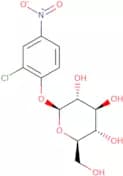
CAS:2-Chloro-4-nitrophenyl β-D-glucopyranoside is a chromogenic substrate for beta-glucosidases. In biochemical enzyme assays and in vitro diagnostics analysis, the substrate is used to monitor the glycosyltransferase activity. When 2-chloro-4-nitrophenyl β-D-glucopyranoside is cleaved by beta-glucosidase, 2-chloro-4-nitrophenol is released and quantified.Formula:C12H14ClNO8Purity:Min. 95%Color and Shape:White PowderMolecular weight:335.69 g/molNaphthol AS-BI β-L-fucopyranoside
CAS:<p>Substrate for the detection of beta-D-fucosidase</p>Formula:C24H24BrNO7Purity:Min. 95%Molecular weight:518.35 g/mol6-Bromo-2-naphthyl 2-acetamido-2-deoxy-b-D-glucopyranoside
CAS:<p>6-Bromo-2-naphthyl 2-acetamido-2-deoxy-b-D-glucopyranoside is a chromogenic substrate used for the detection of chitinase activity. Upon hydrolysis by chitinase, it releases a yellow-brown color, which is easily detected by spectrophotometry. This substrate has been used to study chitinases in various organisms, including bacteria, fungi, and insects. It can also be used to quantitate chitinase activity in various biological samples.</p>Formula:C18H20BrNO6Purity:Min 97%Color and Shape:White PowderMolecular weight:426.26 g/mol4-Nitrophenyl 2-acetamido-2-deoxy-a-D-galactopyranoside
CAS:<p>4-Nitrophenyl 2-acetamido-2-deoxy-alpha-D-galactopyranoside is a chromogenic substrate for alpha-N-acetylgalactosaminidase. Upon hydrolysis, para-nitrophenol is released yielding a yellowish colour. 4-Nitrophenyl 2-acetamido-2-deoxy-alpha-D-galactopyranoside is used in different applications such as the diagnosis of Schindler-Kanzaki disease and other lysosomal storage disorders.</p>Formula:C14H18N2O8Purity:Min. 98%Color and Shape:White PowderMolecular weight:342.3 g/molSalmon-pal
CAS:<p>6-Chloro-1H-indol-3-yl hexadecanoate is a chromogenic substrate for an enzyme that oxidizes it to produce a blue color. It can be used in the diagnosis of bacterial infections, such as tuberculosis and leprosy. 6CHIH is a ligand for various enzymes, including lactate dehydrogenase, which catalyzes the conversion of pyruvate to lactic acid. This compound reacts with oxygen to produce light in the presence of a catalyst. 6CHIH is also used as a fluorescent tag for protein labeling and detection.<br>6CHIH has been shown to be effective in detecting bacteria in food products and water samples using bioluminescence techniques. The high purity and quality of this compound make it suitable for use in diagnostics, culture media, and environmental testing.</p>Purity:Min. 95%Molecular weight:406 g/mol5-Bromo-4-chloro-3-indoxyl phosphate, dilithium salt hydrate
<p>5-Bromo-4-chloro-3-indoxyl phosphate, dilithium salt hydrate is a chromogenic substrate used to detect the specific enzymatic activity of alkaline phosphatase. After cleavage, 5-bromo-4-chloro-indoxyl is released, resulting in a blue to blue-green color change in bacterial colonies or media. 5-Bromo-4-chloro-3-indoxyl phosphate, dilithium salt hydrate is used in ELISA and molecular biology assays such as lacZ reporter systems.</p>Formula:C8H4BrClLi2NO4P(anhydrousbasis)Purity:Min. 98 Area-%Color and Shape:PowderMolecular weight:338.34 g/molAldol® 484 alpha-D-glucopyranoside, Biosynth Patent: EP 2427431 and US 8940909
CAS:<p>Aldol® 484 alpha-D-glucopyranoside is a chromogenic and fluorogenic enzyme substrate for alpha-glucosidase activity (EC 3.2.1.20, alpha-1,4-glucosidase, also known as maltase). The colorless enzyme substrate is cleaved by bacteria producing this enzyme in liquid or solid media, yielding orange color. Green fluorescence is also generated if a suitable matrix is present such as: cellulose acetate filters, polypropylene tubes or microplates and polyethylene vials. Aldol® 484 alpha-D-glucopyranoside can be used under aerobic and anaerobic conditions.</p>Formula:C26H24ClFN2O7Purity:Min. 95%Color and Shape:PowderMolecular weight:530.93 g/mol