Apoptosis
Los inhibidores de la apoptosis son compuestos que previenen o retrasan el proceso de muerte celular programada, conocido como apoptosis. Estos inhibidores son vitales para estudiar los mecanismos de supervivencia celular y se utilizan para investigar enfermedades donde la apoptosis está desregulada, como el cáncer, los trastornos neurodegenerativos y las enfermedades autoinmunes. Al modular la apoptosis, estos inhibidores pueden ayudar en el desarrollo de terapias dirigidas a controlar la muerte celular. En CymitQuimica, ofrecemos una amplia selección de inhibidores de la apoptosis de alta calidad para apoyar su investigación en biología celular, oncología y campos relacionados.
Subcategorías de "Apoptosis"
- ASK(6 productos)
- BCL(11 productos)
- Caspasa(125 productos)
- FOXO1(3 productos)
- IAP(66 productos)
- Mdm2(12 productos)
- PD-1 / PD-L1(125 productos)
- PDK(9 productos)
- PERK(25 productos)
- Serina / treonina quinasa(15 productos)
- Survivin(13 productos)
- TNF(92 productos)
- c-RET(51 productos)
- p53(62 productos)
Mostrar 6 subcategorías más
Se han encontrado 5600 productos de "Apoptosis"
Ordenar por
Pureza (%)
0
100
|
0
|
50
|
90
|
95
|
100
GPD-1116
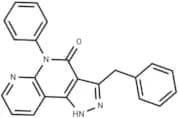
CAS:<p>GPD-1116 is an orally active inhibitor of phosphodiesterase (PDE)4 and PDE1. The compound effectively reduces smoke-induced apoptosis in lung cells. Additionally, GPD-1116 has shown efficacy in various animal disease models, including emphysema, acute lung injury, chronic obstructive pulmonary disease (COPD), asthma, and pulmonary arterial hypertension.</p>Fórmula:C22H16N4OForma y color:SolidPeso molecular:352.39XSJ05
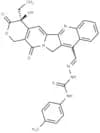
CAS:<p>XSJ05, a derivative of camptothecin (CPT), exhibits anti-cancer activity by inhibiting topoisomerase I (Topo I). This compound induces DNA double-strand breaks, leading to DNA damage. Furthermore, XSJ05 stifles the growth of colorectal cancer (CRC), halts the cell cycle in the G2/M phase, and induces apoptosis.</p>Fórmula:C29H25N5O4SForma y color:SolidPeso molecular:539.60CP-31398
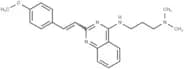
CAS:<p>CP-31398 stabilizes the active conformation of p53 in cancer cells with either mutated or wild-type p53, enhancing its activity. Additionally, CP-31398 upregulates target genes of p53 such as p21WAF1/Cip1 and KILLER/DR5. This compound possesses tumor-suppressive properties.</p>Fórmula:C22H26N4OForma y color:SolidPeso molecular:362.47TfR-1-IN-1
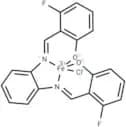
CAS:<p>TfR-1-IN-1 is a TfR-1 inhibitor, also a Fe(III) salivary phenol complex, inducing apoptosis and inhibiting tumor and normal cell growth.</p>Fórmula:C20H12ClF2FeN2O2Pureza:96.96%Forma y color:SolidPeso molecular:441.62GPX4-IN-13
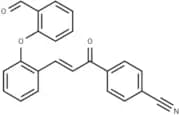
CAS:<p>GPX4-IN-13 (compound 16), a GPX4 inhibitor, exhibits anticancer properties by diminishing the expression of GPX4, thereby reducing thyroid cell proliferation and inducing ferroptosis. Additionally, this compound effectively inhibits the growth of three distinct thyroid cancer cell lines: N-thy-ori-3-1 (IC 50 =8.39 μM), MDA-T32 (IC 50 =10.28 μM), and MDA-T41 (IC 50 =8.18 μM).</p>Fórmula:C23H15NO3Forma y color:SolidPeso molecular:353.37ERK-MYD88 interaction inhibitor 1
CAS:<p>ERK-MYD88 Interaction Inhibitor 1, an agent that disrupts the interaction between ERK and MYD88, has demonstrated the ability to trigger an HRI-mediated integrated stress response (ISR) that specifically promotes immunogenic cell apoptosis (apoptosis) in cancer cells. Additionally, in models using Lewis lung cancer mice, this compound has been shown to stimulate anti-tumor T cell responses, thereby exhibiting significant anti-tumor activity.</p>Fórmula:C22H21N5O2Forma y color:SolidPeso molecular:387.43JND4135
CAS:<p>JND4135, a type II TRK inhibitor, exhibits IC50 values targeting TRKA, TRKB, and TRKC at 2.79, 3.19, and 3.01 nM, respectively. It can overcome resistance due to TRKxDFG and other mutations in the BaF3 stable model, inhibiting the phosphorylation of TRKs WT, xDFG mutations, and their downstream signaling molecules. Additionally, JND4135 induces G0/G1 phase arrest and cell apoptosis (apoptosis) in BaF3–CD74-TRKA-G667C cells. This compound also demonstrates antitumor activity in a BaF3-CD74-TRKA-G667C mouse xenograft model by suppressing tumor growth.</p>Fórmula:C37H39N7OForma y color:SolidPeso molecular:597.75NDs-IN-1
CAS:NDs-IN-1 (Compound 3g) is a novel non-covalent multi-target inhibitor that inhibits the activities of key enzymes such as hBACE-1, hAChE, and hMAO-B, and is primarily used in the study of neurodegenerative diseases [1].Fórmula:C20H18N2O2Peso molecular:318.37XJTU-L453
CAS:<p>XJTU-L453, a PI3Kα inhibitor, exhibits an IC50 of 0.4 nM. It inhibits the proliferation of breast cancer cell lines T47D and MCF7, with IC50 values of 0.2 μM and 0.5 μM respectively. Additionally, XJTU-L453 disrupts the PI3K pathway, leading to cell cycle arrest and cell apoptosis (apoptosis). It also demonstrates antitumor activity in MCF7 xenograft mice.</p>Fórmula:C22H22N4O3Forma y color:SolidPeso molecular:390.44RIP1 kinase inhibitor 1
CAS:<p>RIP1 kinase inhibitor 1 is an orally available and brain-penetrating inhibitor of RIP1 kinase with pKi of 9.04.</p>Fórmula:C24H20ClN5O3Pureza:98%Forma y color:SolidPeso molecular:461.9Rezatapopt
CAS:<p>Rezatapopt (PC14586) is a p53 reactivator with antitumor activity for the study of locally advanced or metastatic solid tumors.</p>Fórmula:C28H31F4N5O2Pureza:98.12%Forma y color:SolidPeso molecular:545.57L5-DA
<p>L5-DA, a G-quadruplex ligand, stabilizes G4s in HeLa cells, induces apoptosis, and is cytotoxic with an IC50 of 4.3 μM.</p>Fórmula:C32H34N6O2Forma y color:SolidPeso molecular:534.65EMT inhibitor-3
CAS:<p>EMT inhibitor-3 (compound 11i) is an epithelial-mesenchymal transition (EMT) inhibitor that effectively suppresses the proliferation, migration, and invasion of SK-N-SH neuroblastoma cells, with an IC50 value of 2.5 μM. It induces mitochondrial-mediated intrinsic apoptosis in tumor cells by enhancing the Bax/Bcl-2 protein expression ratio, promoting the release of cytochrome C from mitochondria, and activating caspase 9 and caspase 3. EMT inhibitor-3 is applicable for cancer research.</p>Fórmula:C29H21F2N3O4SeForma y color:SolidPeso molecular:592.45Apoptosis inducer 36
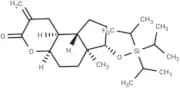
CAS:<p>Apoptosisinducer 36 (Compound 42) exhibits anti-leukemic activity by reducing leukemia stem cells (LSC) and inducing differentiation. It inhibits proliferation of AML cells by causing cell cycle arrest in the G1 phase, and induces PANoptosis, which includes apoptosis, pyroptosis, and necrosis.</p>Fórmula:C23H40O3SiForma y color:SolidPeso molecular:392.647PD-L1/HDAC6-IN-1
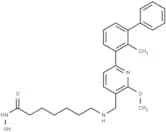
CAS:<p>PD-L1/HDAC6-IN-1 (Compound HP29) is an inhibitor targeting both PD-L1 and HDAC6, effectively disrupting the PD-L1/PD-1 interaction and inhibiting HDAC6 activity, with IC50 values of 26.8 nM and 69 nM, respectively. This compound enhances the cytotoxicity of Jurkat T cells against HepG2 cells, exhibiting an IC50 of 3.4 μM. In rats, PD-L1/HDAC6-IN-1 demonstrates favorable pharmacokinetics, showing a drug exposure level of 871.62 ng·h/mL, and displays antitumor activity in a B16-F10 xenograft mouse model.</p>Fórmula:C27H33N3O3Forma y color:SolidPeso molecular:447.569MG28
CAS:<p>MG28 exhibits significant cytotoxic effects, likely stemming from its direct and potent DNA-damaging activity. The compound is utilized in cancer research.</p>Fórmula:C27H25NO3SForma y color:SolidPeso molecular:443.56SSB-2548
CAS:<p>SSB-2548 is a CXCR-4 inhibitor that suppresses the proliferation and migration of acute myeloid leukemia cells and induces apoptosis (apoptosis). It is well absorbed in the gastrointestinal tract and can be used for leukemia research.</p>Fórmula:C18H17N5O2Forma y color:SolidPeso molecular:335.36DDO-8958
CAS:<p>DDO-8958 is an orally active and selective BET BD1 inhibitor, exhibiting a KD of 5.6 nM for BRD4 BD1. It shows low nanomolar inhibitory activity across all BET BD1 bromodomains except for BRDT BD1. DDO-8958 inhibits tumor cell proliferation and migration, induces apoptosis and cell cycle arrest, and demonstrates antitumor activity.</p>Fórmula:C22H22FN5O2Forma y color:SolidPeso molecular:407.441PKM2 modulator 2
CAS:<p>PKM2 modulator 2 (compound C599) is a potent inhibitor of PKM2, displaying antiproliferative activity and inducing apoptosis. This compound holds potential for research in glioblastoma.</p>Fórmula:C21H13FN4O3Forma y color:SolidPeso molecular:388.351SIRT-IN-7
CAS:<p>SIRT-IN-7 (Compound 7ba) is a SIRT inhibitor. It effectively suppresses the expression of SIRT1, SIRT2, and SIRT3, leading to increased acetylation and activation of p53. Additionally, SIRT-IN-7 inhibits the proliferation of breast cancer cells and induces apoptosis and autophagy, demonstrating antitumor activity.</p>Fórmula:C24H16BrClN2OSForma y color:SolidPeso molecular:495.819