Apoptosis
Los inhibidores de la apoptosis son compuestos que previenen o retrasan el proceso de muerte celular programada, conocido como apoptosis. Estos inhibidores son vitales para estudiar los mecanismos de supervivencia celular y se utilizan para investigar enfermedades donde la apoptosis está desregulada, como el cáncer, los trastornos neurodegenerativos y las enfermedades autoinmunes. Al modular la apoptosis, estos inhibidores pueden ayudar en el desarrollo de terapias dirigidas a controlar la muerte celular. En CymitQuimica, ofrecemos una amplia selección de inhibidores de la apoptosis de alta calidad para apoyar su investigación en biología celular, oncología y campos relacionados.
Subcategorías de "Apoptosis"
- ASK(6 productos)
- BCL(11 productos)
- Caspasa(125 productos)
- FOXO1(3 productos)
- IAP(66 productos)
- Mdm2(12 productos)
- PD-1 / PD-L1(125 productos)
- PDK(9 productos)
- PERK(25 productos)
- Serina / treonina quinasa(15 productos)
- Survivin(13 productos)
- TNF(92 productos)
- c-RET(51 productos)
- p53(62 productos)
Mostrar 6 subcategorías más
Se han encontrado 5600 productos de "Apoptosis"
Ordenar por
Pureza (%)
0
100
|
0
|
50
|
90
|
95
|
100
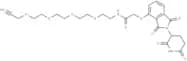
Thalidomide-O-amido-PEG4-propargyl
<p>Thalidomide-O-amido-PEG4-propargyl is a polyethylene glycol (PEG)-based linker employed for the synthesis of proteolysis targeting chimeras (PROTACs)[1].</p>Fórmula:C26H31N3O10Pureza:98%Forma y color:SolidPeso molecular:545.54F1324
<p>F1324: potent BCL6 inhibitor, IC50=1nM, binding t1/2=441s, strongly inhibits BCL6 PPI.</p>Fórmula:C83H121N21O20SPureza:98%Forma y color:SolidPeso molecular:1765.04TTQ-SA
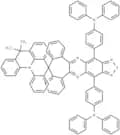
<p>TTQ-SA is a near-infrared spiraling aggregation-induced emitter capable of converting near-infrared light (NIR) into thermal energy, resulting in thermal damage and death of tumor cells. In cancer cells MF-7, TTQ-SA shows cell uptake and targeting capabilities. TTQ-SA binds with DNAzyme to inhibit the expression of the survivin gene, enhancing the sensitivity of tumor cells to photothermal therapy.</p>Fórmula:C78H53N7SForma y color:SolidPeso molecular:1120.37TAT-NEP1-40 acetate
<p>TAT-NEP1-40 acetate, a potential therapeutic for axonal regeneration and functional recovery post-stroke, safeguards PC12 cells from oxygen and glucose</p>Fórmula:C268H438N88O77·xC2H4O2Pureza:98%Forma y color:SolidPeso molecular:6124.89 (free base)C-Reactive Protein (CRP) (174-185)
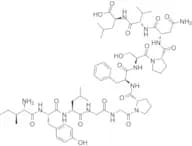
CAS:<p>CRP protein and its fragment (174-185, RS-83277) boost human monocyte and macrophage cancer-killing effects in vitro.</p>Fórmula:C62H93N13O16Pureza:98%Forma y color:SolidPeso molecular:1276.48PROTAC XPO1 degrader-1
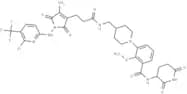
<p>PROTAC XPO1 degrader-1 (Compound 2c) is an XPO1 degrader. It exhibits anti-proliferative effects, induces apoptosis, inhibits NF-κB activity, and causes cell cycle arrest at the G1 phase. PROTAC XPO1 degrader-1 is applicable to research on hematological malignancies.</p>Fórmula:C33H35ClF3N7O7Forma y color:SolidPeso molecular:734.122STEP-IN-1
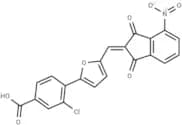
<p>STEP-IN-1 (Compound 14b) is a potent and selective inhibitor of STEP, with an IC50 of 5.27 μM. It offers neuroprotective effects by safeguarding neuronal cells from glutamate-induced toxicity, reducing intracellular reactive oxygen species (ROS) accumulation, and inhibiting apoptosis. STEP-IN-1 is applicable in research related to neurodegenerative diseases.</p>Fórmula:C21H10ClNO7Forma y color:SolidPeso molecular:423.76AMPK-IN-6
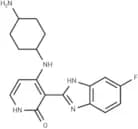
<p>AMPK-IN-6 (compound 13a) is a potent AMPK inhibitor with an IC50 value of 0.093 µM. It induces apoptosis and suppresses autophagy. Additionally, AMPK-IN-6 exhibits antiproliferative activity and holds potential for research into pulmonary arterial hypertension.</p>Fórmula:C18H20FN5OForma y color:SolidPeso molecular:341.383RET-IN-28
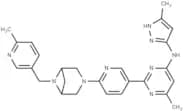
CAS:<p>RET-IN-28 (Compound 16) is an inhibitor of RET (a transmembrane receptor tyrosine kinase). It specifically inhibits the activity of a mutant RET enzyme (RET-V804M) and is utilized in cancer research.</p>Fórmula:C26H29N9Forma y color:SolidPeso molecular:467.57FD2157
<p>FD2157, a photosensitive PI3K inhibitor, exhibits inhibitory IC50 values of 43 nM for PI3Kα, 83 nM for PI3Kβ, 84 nM for PI3Kγ, and 14 nM for PI3Kδ.</p>Fórmula:C27H21ClN6O8SPureza:98%Forma y color:SolidPeso molecular:625.01JAK-IN-40
<p>JAK-IN-40 (Compound 46) is an inhibitor of JAK, effectively targeting JAK1, JAK2, and JAK3 with IC50 values of 0.022, 0.759, and 1.601 μM, respectively. It reduces the phosphorylation of STAT3 and inhibits the proliferation of cancer cells Ba/F3 and JAK1-TEL Ba/F3 with GI50 values of 0.614 μM and 0.193 μM. JAK-IN-40 arrests cell cycle progression at the G2/M phase in H1975 and H2087 cells, leading to apoptosis. Additionally, JAK-IN-40 exhibits a synergistic anti-tumor effect when used in combination with Osimertinib.</p>Fórmula:C26H32N8O3SForma y color:SolidPeso molecular:536.65Ceftiofur hydrochloride
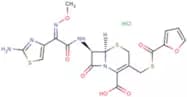
CAS:<p>Ceftiofur hydrochloride (U-67279A) is a stable, broad-spectrum 3rd-gen cephalosporin with antibacterial properties.</p>Fórmula:C19H17N5O7S3·HClPureza:99.51%Forma y color:Off-White SolidPeso molecular:560.029,11-Dehydroergosterol peroxide
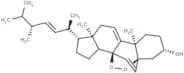
CAS:<p>9,11-Dehydroergosterol peroxide is a useful organic compound for research related to life sciences.</p>Fórmula:C28H42O3Forma y color:SolidPeso molecular:426.641CDK-IN-14
<p>CDK-IN-14 (B34) is a CDK2 inhibitor (IC50=0.097 μM) that exhibits anti-hepatocellular carcinoma activity. It inhibits the cell cycle in HepG-2 cancer cells and induces apoptosis (apoptosis) through a caspase-mediated mechanism.</p>Forma y color:Odour SolidCDK/HDAC-IN-4
<p>CDK/HDAC-IN-4 is a highly selective dual inhibitor of cyclin-dependent kinase (CDK) and histone deacetylase (HDAC), with IC50 values of 88.4 nM and 168.9 nM, respectively. This compound exhibits antiproliferative effects in both hematologic and solid tumor cells. Additionally, CDK/HDAC-IN-4 induces apoptosis and S-phase cell cycle arrest in MV-4-11 cells. It has also demonstrated significant antitumor efficacy in an MV-4-11 xenograft model.</p>Forma y color:Odour SolidApoptosis inducer 31
<p>Apoptosisinducer 31 (compound 19) triggers caspase-dependent apoptosis (cell death). It plays a crucial role in cancer research.</p>Fórmula:C14H10N4O3Forma y color:SolidPeso molecular:282.254Ch282-5
CAS:<p>Ch282-5, an orally active inhibitor targeting the Bcl-2 protein, promotes mitochondria-dependent apoptosis (Apoptosis) by disrupting mitophagy and the mTOR pathway. It demonstrates antiproliferative effects on colorectal cancer cells, effective both in vitro and in vivo, while also inhibiting metastasis. Further, Ch282-5 augments Oxaliplatin-induced autophagy (Autophagy) by downregulating Mcl-1 protein and raising platelet count, which helps mitigate the adverse effects of Navitoclax.</p>Fórmula:C34H34N2Na2O14S2Forma y color:SolidPeso molecular:804.75PD-L1/LpxC-IN-1
<p>PD-L1/LpxC-IN-1 (Compound 12b) is an inhibitor of PD-L1 and LpxC, with IC50 values of 5.2 μM and 0.081 μM, respectively. This compound disrupts bacterial lipopolysaccharide biosynthesis, leading to bacterial cell lysis and death. It effectively inhibits Gram-negative bacteria, exhibiting a minimum inhibitory concentration (MIC) of 0.25-0.5 μg/mL against K. pneumoniae ATCC 13883, E. coli ATCC 8739, S. typhimurium ATCC 14028, and P. aeruginosa ATCC 9027. Additionally, PD-L1/LpxC-IN-1 modulates the immune response by downregulating the expression of inflammatory cytokines IL-2 and IFN-γ, and upregulating CD4+ and CD8+ cells, thus activating the immune system and mitigating excessive inflammatory responses. In a mouse model of K. pneumoniae ATCC 13883 infection, PD-L1/LpxC-IN-1 demonstrated antibacterial activity.</p>Forma y color:Odour SolidSTAT3-IN-40
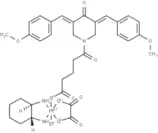
CAS:<p>STAT3-IN-40 (Compound 8b) is an anticancer agent. It initiates immune responses in CD4+ and CD8+ T lymphocytes by inhibiting the expression and phosphorylation of STAT3, and induces ferroptosis and apoptosis in tumor cells. STAT3-IN-40 is valuable for research into cancer chemoimmunotherapy drugs.</p>Fórmula:C34H40ClN3O10PtForma y color:SolidPeso molecular:881.232H3R antagonist 4
<p>H3R antagonist 4 (compound 11l) serves as a dual inhibitor of cholinesterases and histamine H3 receptors (H3R), demonstrating IC50 values of 7.04 μM (eeAChE), 9.73 μM (hAChE)(reversible), and 1.09 nM (H3R). It effectively inhibits both self and Cu2+-induced Aβ1-42 aggregation at 95.48% and 88.63%, respectively, and degrades Aβ1-42 protofibrils with 80.16% and 89.30% efficiency under similar conditions. Additionally, H3R antagonist 4 possesses the chelating capability for biometals Cu2+, Zn2+, Al3+, and Fe2+. It significantly reduces tau protein hyperphosphorylation induced by Aβ1-42, inhibits RSL-3 induced apoptosis and ferroptosis in PC12 cells, and shows optimal blood-brain barrier permeability and intestinal absorption characteristics in hCMEC/D3 and hPepT1-MDCK cells, respectively. Moreover, the compound improves learning and memory impairments in an Alzheimer's mouse model induced with scopolamine.</p>Fórmula:C30H36N2O9Forma y color:SolidPeso molecular:568.61