Apoptosis
Los inhibidores de la apoptosis son compuestos que previenen o retrasan el proceso de muerte celular programada, conocido como apoptosis. Estos inhibidores son vitales para estudiar los mecanismos de supervivencia celular y se utilizan para investigar enfermedades donde la apoptosis está desregulada, como el cáncer, los trastornos neurodegenerativos y las enfermedades autoinmunes. Al modular la apoptosis, estos inhibidores pueden ayudar en el desarrollo de terapias dirigidas a controlar la muerte celular. En CymitQuimica, ofrecemos una amplia selección de inhibidores de la apoptosis de alta calidad para apoyar su investigación en biología celular, oncología y campos relacionados.
Subcategorías de "Apoptosis"
- ASK(9 productos)
- BCL(11 productos)
- Caspasa(142 productos)
- FOXO1(3 productos)
- IAP(67 productos)
- Mdm2(12 productos)
- PD-1 / PD-L1(138 productos)
- PDK(9 productos)
- PERK(25 productos)
- Serina / treonina quinasa(14 productos)
- Survivin(14 productos)
- TNF(89 productos)
- c-RET(56 productos)
- p53(63 productos)
Mostrar 6 subcategorías más
Se han encontrado 5903 productos de "Apoptosis"
Ordenar por
Pureza (%)
0
100
|
0
|
50
|
90
|
95
|
100
IPH10
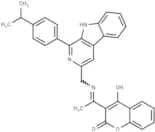
<p>IPH10 is an anticancer agent with strong antitumor effects in vivo and exhibits no liver or kidney toxicity. It significantly increases the reactive oxygen species (ROS) levels in tumor cells, decreases mitochondrial membrane potential, and induces apoptosis (apoptosis) in these cells.</p>Fórmula:C32H33NO4Forma y color:SolidPeso molecular:495.61m7GpppAmpG
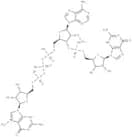
CAS:M7GpppAmpG is a trinucleotide 5′ cap analog, exhibiting capping efficiencies of 90% for the produced RNAs [1].Fórmula:C32H43N15O24P4Forma y color:SolidPeso molecular:1145.66Thujopsene
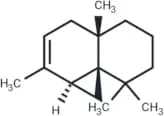
CAS:Thujopsene, a sesquiterpene found in T. dolabrata, exhibits a wide range of biological activities. It inhibits Na+/K+-ATPase and cytochrome P450 (CYP) isoform CYP2B6 with IC50 values of 25.9 µg/ml and Ki of 0.8 µM, respectively. Additionally, thujopsene demonstrates antimicrobial efficacy against both Gram-positive and Gram-negative bacteria, such as S. aureus, M. luteus, and S. typhimurium, with MICs ranging from 25-50 µg/ml. It also suppresses antigen-induced β-hexosaminidase release in IgE-sensitized RBL-2H3 mast cells (IC50= 25.1 µM) and shows cytotoxicity against A549 non-small cell lung cancer cells with an LC50 of 35.27 µg/ml. Furthermore, thujopsene causes mortality in mites D. farinae and T. putrescentiae, with LC50s of 9.82 and 10.92 µg/cm2, respectively.Fórmula:C15H24Forma y color:SolidPeso molecular:204.35c-Met/HDAC-IN-4
<p>c-Met/HDAC-IN-4, a dual inhibitor of c-Met/HDAC, exhibits an IC 50 value of 28.92 nM for c-Met. This compound effectively induces G 0 /G 1 phase cell cycle arrest and apoptosis in MDA-MB-231 breast cancer cells. Additionally, c-Met/HDAC-IN-4 suppresses both the proliferation and invasion of breast cancer cell lines.</p>Fórmula:C37H36N8OForma y color:SolidPeso molecular:608.73PROTAC PI3Kδ degrader-1
PROTACPI3Kδ degrader-1 is a covalent PI3Kδ-targeting PROTAC degrader that targets lysine, with a DC50 of 3.98 nM. It exhibits potent antiproliferative activity and selective PI3Kδ inhibition (IC50: 8 nM). Additionally, PROTACPI3Kδ degrader-1 effectively degrades p-AKT, induces cell cycle arrest in the G1 phase, and promotes apoptosis and autophagy. It also significantly suppresses tumor growth in the SU-DHL-6 xenograft mouse model.Forma y color:Odour SolidXIAP ligand-Linker Conjugate 2
XIAPligand-Linker Conjugate 2 is an E3 ubiquitin ligase ligand-linker conjugate (E3 ligase Ligand-linker conjugate) that includes the XIAPBIR2 ligand XB2M54 and a linker. It is utilized in the synthesis of PROTACGNE-1567.Forma y color:Odour SolidFGFR1/VEGFR2-IN-2
<p>FGFR1/VEGFR2-IN-2 (compound 6) is a dual inhibitor targeting both VEGFR2 and FGFR1 with IC50 values of 0.025 µM and 0.026 µM, respectively. This compound also exhibits inhibitory effects on EGFR and PDGFR-β, with IC50 values of 0.106 µM and 0.077 µM, respectively. FGFR1/VEGFR2-IN-2 demonstrates significant anticancer activity in the NCI-60 cell lines, showing a growth inhibition (GI) of 60.38%. In T-47D cell lines, it achieves an IC50 of 8.51 µM, exhibits anti-migratory properties, induces cell cycle arrest in the G1 phase, and promotes both apoptosis and necrosis. Additionally, while it has an IC50 greater than 100 µM in MCF-7 cell lines, it does so with an IC50 of 69.17 µM in MDA-MB-231 cell lines and shows no toxicity to normal cells.</p>Fórmula:C21H15ClF3NO4SForma y color:SolidPeso molecular:469.86PROTAC FGFR2 degrader 1
<p>PROTAC FGFR2 degrader 1 (compound N5) is a potent PROTAC that efficiently targets FGFR2, boasting a DC 50 value of 6.46 nM and an FGFR2 IC 50 of 0.08 nM. This compound exhibits significant anti-proliferative effects and high selectivity. It induces G0/G1 arrest in the cell cycles of KATOIII and SNU16 and inhibits apoptosis by diminishing the activation of p-ERK and p-PLCγ, the downstream proteins of FGFR2. Additionally, PROTAC FGFR2 degrader 1 maintains over 50% inhibition of gastric cancer cells at a concentration of 0.17 nM and effectively suppresses the growth of SNU16 xenograft tumors in a mouse model.</p>Forma y color:Odour SolidTopoisomerase IIα-IN-10
<p>TopoisomeraseIIα-IN-10 (Compound 13r) is a topoisomerase IIα inhibitor that binds to the active site of DNA when complexed with topoisomerase IIα. This binding is stabilized through interactions with DNA base pairs and amino acid residues. By intercalating into DNA, TopoisomeraseIIα-IN-10 induces apoptosis and disrupts the mitochondrial membrane potential in HCT116 cells, effectively inhibiting their growth with an IC50 of 4.37 μM. It is applicable for cancer research studies.</p>Fórmula:C32H27N3O3Forma y color:SolidPeso molecular:501.575Antitumor agent-198
<p>Antitumor agent-198 (Compound A3) exhibits cytotoxicity in head and neck squamous cell carcinoma (HNSCC) cells, effectively inhibiting the proliferation of CAL27, HN6, HN30, SCC9, and SCC25, with an IC50 ranging from 4 nM to 77 nM. Additionally, Antitumor agent-198 suppresses HNSCC cell migration, arrests the cell cycle, and induces apoptosis.</p>Fórmula:C32H28O12SForma y color:SolidPeso molecular:636.62β-Glucuronide-dPBD-PEG5-NH2
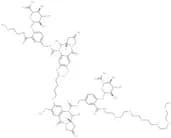
CAS:<p>β-Glucuronide-dPBD-PEG5-NH2 is a β-glucuronide-linked pyrrolobenzodiazepine dimer that functions as a proagent for the synthesis of the antibody-drug conjugate</p>Fórmula:C78H101N7O35Forma y color:SolidPeso molecular:1696.66(+)-Mcl-1 inhibitor 22
CAS:<p>(+)-Mcl-1 inhibitor 22 (Example 37) is an MCL-1 inhibitor that impedes the anti-apoptotic function of MCL-1 by blocking its interaction with pro-apoptotic proteins. It demonstrates antiproliferative activity against various cancer cell lines and is applicable for cancer research.</p>Fórmula:C33H33ClFN3O4Forma y color:SolidPeso molecular:590.084Ub4ix
CAS:<p>Ub4ix, a DUB/26S proteasome inhibitor, safeguards K48-linked Ub chains against cleavage by deubiquitinating enzymes (DUBs) and inhibits the proteasomal degradation of Ub-tagged proteins. Additionally, it diminishes the viability of Hela cells and triggers apoptosis, exhibiting an IC 50 value of 1.6 μM.</p>Fórmula:C84H106N18O23SForma y color:SolidPeso molecular:1767.91PDE4-IN-28
PDE4-IN-28 (Compound G1) is an inhibitor of PDE4D, with an IC50 of 29 nM. It suppresses the production of TNF-α and NO, with IC50 values of 13.32 μM and 2.32 μM, respectively. In a rat pressure ulcer (PU) model, PDE4-IN-28 exhibits anti-inflammatory, antibacterial, and analgesic properties, while promoting HUVEC cell migration to enhance wound healing.Forma y color:Odour SolidDD0-2363
<p>DD0-2363 (Compound 32d) is a dual-target inhibitor of WDR5-MLL1/HDAC. It can suppress the proliferation of acute myeloid leukemia cells and induce apoptosis. With its antitumor properties, DD0-2363 is applicable for research on acute myeloid leukemia.</p>Fórmula:C36H36ClFN6O4Forma y color:SolidPeso molecular:671.16VEGFR2/HDAC1-IN-1
<p>VEGFR2/HDAC1-IN-1 (compound 13) is a potent dual inhibitor of VEGFR-2 and HDAC, with IC50 values of 57.83 nM for VEGFR-2 and 9.82 nM for HDAC.</p>Pureza:98%Forma y color:Odour SolidFAK-IN-24
CAS:FAK-IN-24 (Compound 9f) is a potent FAK inhibitor with an IC50 of 0.815 nM. It induces DNA damage and apoptosis, and exhibits activity against glioblastoma. FAK-IN-24 effectively inhibits proliferation of glioblastoma cell lines U87-MG (IC50= 15 nM) and U251 (IC50= 20 nM), and suppresses tumor growth in U87-MG xenograft models.Fórmula:C39H45Cl2F3N8O3Forma y color:SolidPeso molecular:801.728PAK4-IN-3
<p>PAK4-IN-3 (compound 27e) is a PAK4 inhibitor exhibiting an IC50 of 10 nM and demonstrates antiproliferative effects on A549 cells with an IC50 of 0.61μM.</p>Pureza:98%Forma y color:Odour Solidc-Met-IN-24
<p>c-Met-IN-24 (compound 3g) serves as a dual-target inhibitor for STAT-3 (=4.7 μM) and c-MET (=12.67 μM), exhibiting anticancer properties. It arrests the G2/M cell cycle and induces apoptosis in SNB-75 cells, making it applicable in the research of central nervous system cancers.</p>Fórmula:C20H15ClN4O4SForma y color:SolidPeso molecular:442.88GD3 Ganglioside sodium
<p>GD3 Ganglioside sodium is a crucial ganglioside in human melanoma and functions as an inducer of mitochondrial permeability. It targets mitochondria directly in a manner controlled by bcl-2. Following the aggregation of death-inducing receptors, ceramide accumulates rapidly, synthesizes GD3 ganglioside, and triggers apoptosis.</p>Forma y color:Solid