Apoptosis
Los inhibidores de la apoptosis son compuestos que previenen o retrasan el proceso de muerte celular programada, conocido como apoptosis. Estos inhibidores son vitales para estudiar los mecanismos de supervivencia celular y se utilizan para investigar enfermedades donde la apoptosis está desregulada, como el cáncer, los trastornos neurodegenerativos y las enfermedades autoinmunes. Al modular la apoptosis, estos inhibidores pueden ayudar en el desarrollo de terapias dirigidas a controlar la muerte celular. En CymitQuimica, ofrecemos una amplia selección de inhibidores de la apoptosis de alta calidad para apoyar su investigación en biología celular, oncología y campos relacionados.
Subcategorías de "Apoptosis"
- ASK(9 productos)
- BCL(11 productos)
- Caspasa(142 productos)
- FOXO1(3 productos)
- IAP(67 productos)
- Mdm2(12 productos)
- PD-1 / PD-L1(138 productos)
- PDK(9 productos)
- PERK(25 productos)
- Serina / treonina quinasa(14 productos)
- Survivin(14 productos)
- TNF(89 productos)
- c-RET(56 productos)
- p53(63 productos)
Mostrar 6 subcategorías más
Se han encontrado 5903 productos de "Apoptosis"
Ordenar por
Pureza (%)
0
100
|
0
|
50
|
90
|
95
|
100
Antitumor agent-54
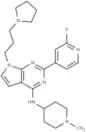
Compound C11 inhibits 14-3-3η protein (KD: 35 μM), targets liver cancer cells, blocks G1-S phase, and induces apoptosis.Fórmula:C29H32N2O3Forma y color:SolidPeso molecular:456.58DNMT1-IN-5
CAS:<p>DNMT1-IN-5 (Compound 55) is an inhibitor of DNMT, specifically targeting DNMT1 and DNMT3A, with IC50 values of 2.42 μM and 14.4 μM, respectively. It demonstrates antiproliferative effects across various cancer cell lines (TMD-8, DOHH2, MOLM-13, THP-1, RPIM-8226, and HCT116) with IC50 values ranging from 0.19 to 2.37 μM. The compound induces G2/M phase cell cycle arrest and apoptosis in TMD-8 and DOHH2 cells. Additionally, DNMT1-IN-5 exhibits antitumor efficacy in a TMD-8 xenograft mouse model.</p>Fórmula:C24H32FN7Forma y color:SolidPeso molecular:437.5564-Hydroxyresveratrol
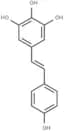
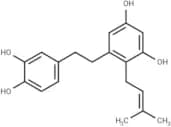
CAS:<p>4-Hydroxyresveratrol (3,4,5,4'-Tetrahydroxystibene) is a resveratrol analog that variably induces the expression of pro-apoptotic genes such as p53 and Bax. It triggers apoptosis in SV40 virus-transformed WI38 cells (WI38VA), but not in WI38 cells. Additionally, 4-Hydroxyresveratrol significantly increases the expression of p53, GADD45, and Bax genes in WI38VA cells, while suppressing the expression of the bcl-2 gene.</p>Fórmula:C14H12O4Forma y color:SolidPeso molecular:244.243Urease-IN-20
CAS:<p>Urease-IN-20 (compound XBP2) is an inhibitor of Helicobacter pylori (H. pylori), with an IC50 of 0.14 μM for H. pylori inhibition. It effectively decreases apoptosis in GES-1 cells infected with H. pylori and reduces levels of ROS and γH2AX. Urease-IN-20 also demonstrates significant gastric mucosal protective effects, making it suitable for H. pylori research.</p>Fórmula:C14H8FNO2SeForma y color:SolidPeso molecular:320.18hCAIX/XII-IN-1
hCAIX/XII-IN-1: potent CAIX inhibitor (KI=0.48μM), CAXII (KI=0.83μM), antiproliferative, induces apoptosis in MCF-7 cells.Fórmula:C19H11NO5S2Forma y color:SolidPeso molecular:397.42PARP1-IN-12
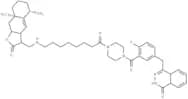
PARP1-IN-12: potent PARP1 inhibitor, IC50 2.99 nM, triggers cell apoptosis, G2/M arrest, induces DSBs in BRCA-deficient cells.Fórmula:C43H56FN5O5Forma y color:SolidPeso molecular:741.93HDAC-IN-34
HDAC-IN-34 inhibits HDAC1 (IC50: 0.022 μM) & HDAC6 (IC50: 0.45 μM), binds DNA causing damage, and halts HCT-116 cell growth (IC50: 1.41 μM).Fórmula:C24H26N6O3Forma y color:SolidPeso molecular:446.5L-threo-Sphingosine C-18
CAS:L-threo-Sphingosine C-18 is a protein kinase C inhibitor.Fórmula:C18H37NO2Pureza:98%Forma y color:SolidPeso molecular:299.49Top/HDAC-IN-1
<p>Top/HDAC-IN-1: Dual Top/HDAC inhibitor, potent against HDAC1-3,6,8 and HCT116 cells; blocks G2 phase, induces apoptosis.</p>Fórmula:C29H27N5O4Forma y color:SolidPeso molecular:509.56Spliceostatin A
CAS:<p>Spliceostatin A is an anticancer agent and splicing inhibitor that induces apoptosis by inducing cell cycle arrest in the G1 and G2/M phases.</p>Fórmula:C28H43NO8Pureza:94.66%Forma y color:SolidPeso molecular:521.643CHI-KAT8i5
CAS:<p>CHI-KAT8i5 is a selective inhibitor of KAT8 with a KD of 19.72 μM. It induces apoptosis (Apoptosis) in a dose-dependent manner. CHI-KAT8i5 can inhibit tumor growth in esophageal squamous cell carcinoma, colon cancer, melanoma, gastric cancer, non-small cell adenocarcinoma, and liver cancer.</p>Fórmula:C23H29N3O5S3Forma y color:SolidPeso molecular:523.688TMC353121
CAS:TMC353121 is an effective inhibitor of respiratory syncytial virus fusion (pEC50: 9.9).Fórmula:C32H42N6O3Pureza:≥98%Forma y color:SolidPeso molecular:558.71VNPP433-3β
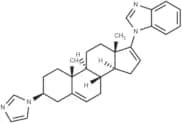
CAS:VNPP433-3β acts as a molecular glue degrader, targeting the androgen receptor (AR) and its splice variants (AR-Vs) as well as MAP kinase-interacting serine/threonine protein kinase Mnk1/2. It effectively inhibits the proliferation of cancer cells LNCaP, C4-2B, and CWR22Rv1, with GI50 values of 0.2, 0.3, and 0.31 μM, respectively. Additionally, VNPP433-3β shows favorable pharmacokinetics in CD-1 mice and suppresses tumor growth in the CWR22Rv1 xenograft mouse model.Fórmula:C29H34N4Forma y color:SolidPeso molecular:438.61TFCP2L1-IN-1
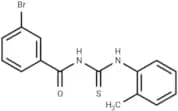
CAS:TFCP2L1-IN-1 is a TFCP2L1 transcription factor inhibitor that regulates cell proliferation and promotes antitumor effect of Sorafenib by STAT3/NANOG pathway.Fórmula:C15H13BrN2OSPureza:98.86%Forma y color:SolidPeso molecular:349.25RIPK3-IN-6
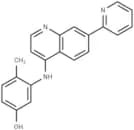
CAS:RIPK3-IN-6 (compound 1) is a type I RIPK3 inhibitor with low selectivity within the RIPK family, particularly in relation to RIPK2 activity.Fórmula:C21H17N3OForma y color:SolidPeso molecular:327.38HAC-Y6
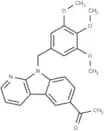
CAS:<p>HAC-Y6 exerts its anticancer effects by inducing cell cycle arrest. It prompts apoptosis in COLO 205 cells with an IC50 of 0.52 µM.</p>Fórmula:C23H22N2O4Forma y color:SolidPeso molecular:390.43T-1-PMPA
CAS:T-1-PMPA, a potent EGFR inhibitor, demonstrates apoptotic properties and effectively inhibits EGFR WT and EGFR 790m, with IC50 values of 86 nM and 561.73 nM, respectively [1].Fórmula:C16H17N5O3Peso molecular:327.34Minnelide free acid
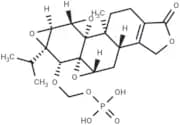
CAS:Minnelide treats pancreatic cancer, hinders androgen-related prostate growth, shrinks tumors, and improves survival.Fórmula:C21H27O10PForma y color:SolidPeso molecular:470.41Anticancer agent 183
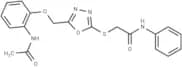
CAS:Anticancer agent 183 (compound 4h) exhibits potent inhibition of matrix metalloproteinase-9 (MMP-9), reducing its viability by more than 75% at a concentration of 100 μg/mL. Additionally, it demonstrates significant anticancer activity, with an IC50 value of <0.14 μM against the A549 cell line and induces apoptotic [1] processes.Fórmula:C19H18N4O4SForma y color:SolidPeso molecular:398.44N-Nitrosonornicotine
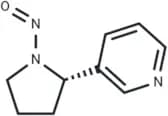
CAS:N-Nitrosonornicotine, a tobacco-specific nitrosamine, exhibits carcinogenic and mutagenic properties, and is capable of inducing micronuclei in C3A cells. Additionally, N-Nitrosonornicotine can form DNA adducts.Fórmula:C9H11N3OForma y color:SolidPeso molecular:177.2DOR agonist 2
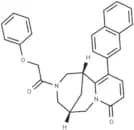
CAS:<p>Compound 3 (DOR agonist 2) acts as a Delta Opioid Receptor agonist. It inhibits the expression of TNF-α, obstructs NF-κB transportation to the nucleus, and activates the G protein-mediated ERK1/2 pathway. This compound is useful for research into neurodegenerative diseases.</p>Fórmula:C29H26N2O3Forma y color:SolidPeso molecular:450.53Tuspetinib dihydrochloride
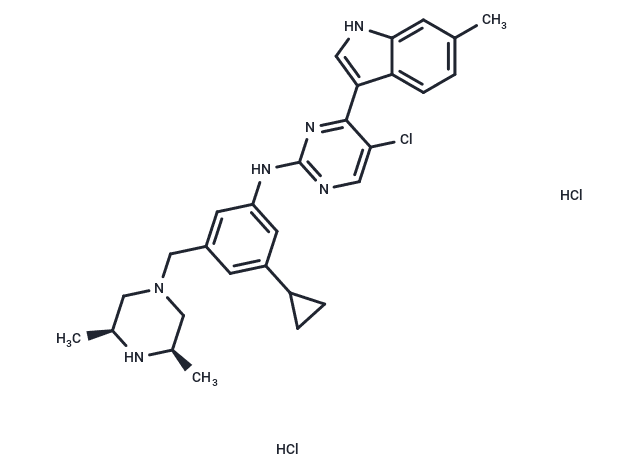
CAS:Tuspetinib (HM43239) dihydrochloride is a selective FLT3 inhibitor with oral bioactivity, exhibiting IC50 values of 1.1 nM for FLT3 wild type, 1.8 nM for FLT3ITD mutant type, and 1.0 nM for FLT3D835Y mutant type. As a reversible type I inhibitor, it directly suppresses FLT3 kinase activity and modulates p-STAT5, p-ERK, SYK, JAK1/2, and TAK1. Tuspetinib dihydrochloride inhibits the proliferation of leukemia cells and induces apoptosis (apoptosis).Fórmula:C29H35Cl3N6Forma y color:SolidPeso molecular:573.99Antitumor agent-184
CAS:Antitumor Agent-184 (compound 12aa) triggers apoptosis in various cell lines, exhibiting IC50 values of 2.35 μM in B16-F10 cells, 7.32 μM in 4T1 cells, and 10.31 μM in CT26 cells.Fórmula:C22H16N4O2SForma y color:SolidPeso molecular:400.45Anticancer agent 17
Anticancer agent 17 was effective against HeLa cells (IC50: 0.19 μM) and A2780 cells (IC50: 0.09 μM).Fórmula:C27H34BrN3OForma y color:SolidPeso molecular:496.48(±)-Perillaldehyde
CAS:(±)-Perillaldehyde exhibits antidepressant effects in mice with stress-induced depressive-like behavior by modulating the olfactory nervous system. Additionally, it demonstrates anti-inflammatory activity by activating JNK in RAW264.7 cells and suppressing the expression of TNF-α, with an IC50 value of 171.7 μM.Fórmula:C10H14OForma y color:SolidPeso molecular:150.22LLW-018
CAS:LLW-018 is a potent PD-1/PD-L1 inhibitor with an IC50 value of 2.61 nM. It can disrupt the PD-1/PD-L1 interaction, with a cell-based PD-1/PD-L1 blocking bioassay IC50 value of 0.88 μM. LLW-018 holds potential for research in immune-related diseases.Fórmula:C35H38Cl2N4O5SPeso molecular:697.67Citric acid-13C2
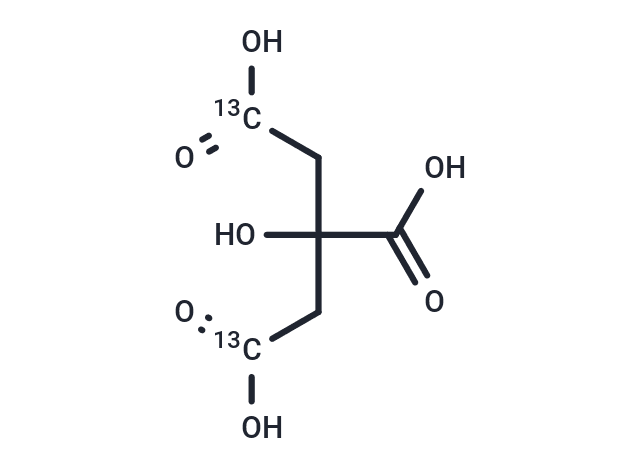
CAS:Citric acid-13C2 is a 13C-labeled form of citric acid. Citric acid serves as a preservative and food additive. It induces apoptosis in HaCaT cells and causes cell cycle arrest at the G2/M and S phases. Additionally, citric acid contributes to liver oxidative damage by reducing antioxidant enzyme activity. It also functions as an acidulant, emulsifier, chelating agent, and buffer, with extensive applications across multiple industries.Fórmula:C6H8O7Forma y color:SolidPeso molecular:194.11RIPK2-IN-6
CAS:RIPK2-IN-6 (Compound 15a) is an inhibitor of RIPK that specifically targets the phosphorylation of RIPK2, thereby suppressing the NF-κB and MAPK signaling pathways. It has demonstrated anti-inflammatory and anti-fibrotic activities in a mouse model of colitis induced by Dextran sodium sulfate.Fórmula:C26H21NO3Forma y color:SolidPeso molecular:395.45ST-899
CAS:ST-899 is an innovative platelet-activating factor (PAF) receptor antagonist. It significantly reduces the mortality rate in mice experiencing shock induced by endotoxins (LPS). The compound markedly inhibits the LPS-induced increase in serum tumor necrosis factor (TNF) levels while leaving interleukin-6 (IL-6) unaffected. The mechanism by which ST-899 operates involves disrupting the positive feedback loop between PAF and TNF, thereby mitigating inflammatory responses. ST-899 is applicable for studies related to inflammatory diseases such as septic shock.Fórmula:C22H29BrClNO6Forma y color:SolidPeso molecular:518.83sEH-IN-21
CAS:sEH-IN-21 is an orally active inhibitor of sEH, exhibiting IC50 values of 0.1 nM for both hsEH and msEH. It significantly suppresses the NF-κB signaling pathway. sEH-IN-21 demonstrates potent anti-inflammatory activity by reducing IL-6 and TNF-α release and maintaining intestinal barrier integrity. It is applicable in research on inflammatory bowel disease (IBD).Fórmula:C30H40N4O5SForma y color:SolidPeso molecular:568.73SF-9-2
CAS:SF-9-2 is a PD-L1/PD-1 binding inhibitor with an IC50 of 24.9 nM. It suppresses epithelial-mesenchymal transition, migration, invasion, and proliferation of SK-N-SH cells, while also inducing apoptosis and causing cell cycle arrest. SF-9-2 blocks PD-L1-induced growth of SK-N-SH cells via the MAPK signaling pathway. It restores GSK-3β activity and enhances PD-L1 degradation through the ubiquitin-proteasome pathway. In the SK-N-SH NOG mouse model, SF-9-2 inhibits tumor growth without notable toxicity. Additionally, SF-9-2 acts as an immune checkpoint inhibitor, blocking PD-L1 to restore T cell function and is applicable to neuroblastoma research.Fórmula:C30H27F2N3O3Forma y color:SolidPeso molecular:515.55ASCT2-IN-1
CAS:ASCT2-IN-1 (compound 20k) is an inhibitor of ASCT2, demonstrating IC50 values of 5.6 μM in A549 cells and 3.5 μM in HEK293 cells. It induces apoptosis and inhibits tumor growth.Fórmula:C36H32Cl2N2O4Peso molecular:627.56N-a-Tosyl-L-lysinyl-chloromethylketone hydrochloride
CAS:N-a-Tosyl-L-lysinyl-chloromethylketone hydrochloride (TLCK hydrochloride) is an irreversible serine protease inhibitor that functions by alkylating the histidine residue at the active site, thus inhibiting trypsin and trypsin-like proteases. It effectively inhibits caspase-3, caspase-6, and caspase-7 with IC50 values of 12.0, 54.5, and 19.3 μM, respectively. Additionally, N-a-Tosyl-L-lysinyl-chloromethylketone hydrochloride induces apoptosis in HL-60 cells and prevents the reduction of mitochondrial transmembrane potential during the apoptosis process.Fórmula:C14H22Cl2N2O3SPeso molecular:369.31tDHU, acid
CAS:<p>tDHU, acid is a dihydropyrimidine cereblon ligand consisting of an E3 ligase ligand and a benzoic acid linker. It serves as an E3 ubiquitin ligase ligand-linker conjugate in the development of PROTACs.</p>Fórmula:C12H12N2O4Peso molecular:248.23RIPK1-IN-23
CAS:RIPK1-IN-23 (compound 19) is an RIPK1 inhibitor with potent anti-necroptotic effects in HT-29 cells (EC50 = 1.7 nM). Additionally, RIPK1-IN-23 exhibits anti-inflammatory properties.Fórmula:C27H22N6O3Peso molecular:478.50STAT3-IN-9
STAT3-IN-9 hinders STAT3 at Tyr705, doesn't affect STAT1 Tyr701, induces apoptosis, and arrests cells in G2/M phase.Fórmula:C22H21N3O4Forma y color:SolidPeso molecular:391.42Neral
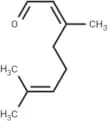
CAS:Neral, a monoterpenoid compound, exhibits anti-inflammatory and anticancer activities. It inhibits TNF-α and IL-6, along with inflammatory mediators such as pro-IL-1β, iNOS, COX-2, and NLRP-3.Fórmula:C10H16OForma y color:SolidPeso molecular:152.23Thalidomide-NH-amido-PEG2-C2-NH2 hydrochloride
CAS:<p>Thalidomide-NH-amido-PEG2-C2-NH2 hydrochloride is a synthetic E3 ligase ligand-linker conjugate, comprised of a cereblon ligand based on Thalidomide and a linker, utilized in the synthesis of PROTACs.</p>Fórmula:C21H28ClN5O7Peso molecular:497.93MAO-B-IN-45
CAS:MAO-B-IN-45 is a dual inhibitor of ferroptosis and MAO-B. It selectively inhibits MAO-B with an IC50 of 87.47 nM, demonstrating a selectivity over MAO-A by more than 229 times. In vitro, MAO-B-IN-45 exhibits significant anti-ferroptosis activity by modulating iron metabolism pathways and the GSH-GPX4 axis. Additionally, it improves cognitive and behavioral deficits in 3×Tg (APP/Tau/Ps1) Alzheimer's disease mice and significantly reduces levels of ferritin heavy chain 1 (FTH1), β-amyloid protein (APP), and Tau protein phosphorylation (p-Tau) in their brains.Fórmula:C17H14ClNO3Forma y color:SolidPeso molecular:315.75Thalidomide-NH-amido-PEG2-C2-NH2
CAS:<p>Thalidomide-NH-amido-PEG2-C2-NH2 is a synthetic E3 ligase ligand-linker conjugate comprising a Thalidomide-based cereblon ligand and a linker. It is utilized in the synthesis of PROTACs.</p>Fórmula:C21H27N5O7Peso molecular:461.47Thalidomide-NH-amido-PEG1-C2-NH2 hydrochloride
CAS:<p>Thalidomide-NH-amido-PEG1-C2-NH2 hydrochloride is a synthetic E3 ligase ligand-linker conjugate that includes a thalidomide-based cereblon ligand and a linker, used in the synthesis of PROTAC.</p>Fórmula:C19H24ClN5O6Peso molecular:453.88LL-Z 1640-4
CAS:A signal-specific JNK/p38 pathway and TAK 1 inhibitorFórmula:C19H24O7Pureza:98%Forma y color:SolidPeso molecular:364.39eIF4A-IN-3
CAS:eIF4A-IN-3 (Compound 71E) is an inhibitor of the eukaryotic translation initiation factor 4A (eIF4A). This compound can be utilized as a cytotoxic payload for antibody-drug conjugates (ADCs).Fórmula:C34H37N3O7Forma y color:SolidPeso molecular:599.67ASK1 ligand 1
CAS:ASK1ligand 1 is a binding ligand for ASK1 and can be utilized to synthesize PROTACs such as dASK1-VHL.Fórmula:C17H16F2N6OForma y color:SolidPeso molecular:358.35FAK-IN-4
FAK-IN-4 (Compound 7d) has anticancer activities that can induce cell apoptosis. FAK-IN-4 is potential inhibitor of FAK [1].Fórmula:C20H22N4OForma y color:SolidPeso molecular:334.41NLRP3-IN-28
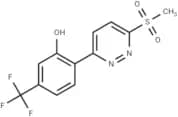
CAS:NLRP3-IN-28 (compound N77) serves as a potent inhibitor of NLRP3, effectively blocking Nigericin-induced pyroptosis with an EC50 of 0.07μM. Additionally, it mitigates inflammatory reactions in vivo [1].Fórmula:C12H9F3N2O3SForma y color:SolidPeso molecular:318.27NPB-1575
CAS:NPB-1575 is a potent, orally active anti-inflammatory agent capable of crossing the blood-brain barrier. It mitigates neuroinflammation and resists ferroptosis by activating IRS2/Nrf2/NF-κB. NPB-1575 protects against cerebral ischemic injury and improves neurological function outcomes, making it suitable for research in focal ischemic stroke.Fórmula:C19H22O4Forma y color:SolidPeso molecular:314.38Z-VA-DL-D-FMK
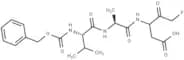
CAS:Z-VA-DL-D-FMK (Z-VA-DL-D(OH)-FMK) acts as an inhibitor of caspases. It irreversibly binds to caspases, enhancing the sensitivity to TNF-α and stimulating HIV replication in infected T cells ACH-2.Fórmula:C21H28FN3O7Forma y color:SolidPeso molecular:453.46GP130-IN-1
CAS:<p>GP130-IN-1 (compound 49) is an effective inhibitor of GP130, demonstrating significant in vitro anti-tumor activity and higher selectivity compared to Bazedoxifene. It induces ultrastructural changes in cells, leading to a time-dependent arrest of the cell cycle at the G0/G1 phase, and triggers both apoptosis and autophagy. GP130-IN-1 is useful for research on triple-negative breast cancer.</p>Fórmula:C21H10F5NO3Forma y color:SolidPeso molecular:419.30TI17
CAS:<p>TI17 is a selective TRIP13 inhibitor with anticancer activity and inhibits proliferation of multiple myeloma (MM) cells</p>Fórmula:C23H22N2O3Pureza:98.00%Forma y color:SolidPeso molecular:374.43