Apoptosis
Los inhibidores de la apoptosis son compuestos que previenen o retrasan el proceso de muerte celular programada, conocido como apoptosis. Estos inhibidores son vitales para estudiar los mecanismos de supervivencia celular y se utilizan para investigar enfermedades donde la apoptosis está desregulada, como el cáncer, los trastornos neurodegenerativos y las enfermedades autoinmunes. Al modular la apoptosis, estos inhibidores pueden ayudar en el desarrollo de terapias dirigidas a controlar la muerte celular. En CymitQuimica, ofrecemos una amplia selección de inhibidores de la apoptosis de alta calidad para apoyar su investigación en biología celular, oncología y campos relacionados.
Subcategorías de "Apoptosis"
- ASK(9 productos)
- BCL(8 productos)
- Caspasa(147 productos)
- FOXO1(3 productos)
- IAP(67 productos)
- Mdm2(12 productos)
- PD-1 / PD-L1(140 productos)
- PDK(9 productos)
- PERK(26 productos)
- Serina / treonina quinasa(19 productos)
- Survivin(14 productos)
- TNF(91 productos)
- c-RET(61 productos)
- p53(63 productos)
Mostrar 6 subcategorías más
Se han encontrado 6114 productos de "Apoptosis"
Ordenar por
Pureza (%)
0
100
|
0
|
50
|
90
|
95
|
100
CRT0066101
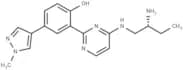
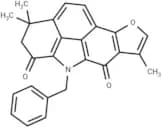
CAS:CRT0066101 is a potent, orally active PKD inhibitor with IC 50 values of 1 nM, 2.5 nM, and 2 nM for PKD1, PKD2, and PKD3, respectively [1]. Additionally, it inhibits PIM2 with an IC 50 of approximately 135.7 nM and demonstrates anticancer effects [2].Fórmula:C18H22N6OForma y color:SolidPeso molecular:338.41CRI9
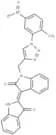
CRI9 effectively inhibits the c-MET/PI3K/Akt/mTOR axis, suppressing the proliferation of hepatocellular carcinoma (HCC) cells. This compound exhibits potent cytotoxicity against HCC cells and induces apoptosis.Fórmula:C26H18N6O4Forma y color:SolidPeso molecular:478.46Antiangiogenic agent 7
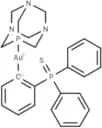
CAS:Antiangiogenic agent 7 (Compound 1) induces apoptosis, elevates Reactive Oxygen Species (Reactive Oxygen Species), and inhibits the intracellular enzyme thioredoxin reductase. It exhibits anticancer activity with IC50 values ranging from 0.08 to 3.5 μM against cervical cancer cells (HeLa), prostate cancer cells (PC-3), and non-small cell lung cancer cells (A549). Additionally, Antiangiogenic agent 7 suppresses tumor growth in a mouse xenograft model.Fórmula:C24H26AuN3P2SForma y color:SolidPeso molecular:647.46Spicamycin
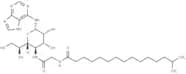
CAS:Spicamycin can be used as a potent inducer of differentiation of human myeloid leukemia cells (HL-60) and murine myeloid leukemia cells (M1).Fórmula:C30H51N7O7Forma y color:SolidPeso molecular:621.77Topo I-IN-1
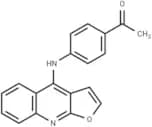
Topo I-IN-1 (14d) is a powerful Topo I inhibitor with antitumor effects and DNA intercalation, inducing apoptosis.Fórmula:C20H14BrN3O2Forma y color:SolidPeso molecular:408.25AKT-IN-3
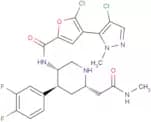
CAS:AKT-IN-3: potent oral Akt inhibitor with low hERG blockage. IC50: 1.4-1.7 nM for Akt1-3. Inhibits AGC kinases like PKA, PKC.Fórmula:C23H23Cl2F2N5O3Pureza:98%Forma y color:SolidPeso molecular:526.36CIL-102
CAS:CIL-102 is an apoptosis inducer that functions as an MMP-2/MMP-9 inhibitor, effectively reducing both the protein expression and mRNA levels of MMP-2/MMP-9. CIL-102 also demonstrates anticancer activity.Fórmula:C19H14N2O2Forma y color:SolidPeso molecular:302.327CB-184
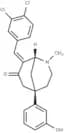
CAS:CB-184 is a selective ligand for sigma-2 (σ2) receptors, with Ki values of 7436 nM for sigma-1 (σ1) and 13.4 nM for sigma-2 (σ2), and it promotes apoptosis with antitumor activity.Fórmula:C22H21Cl2NO2Forma y color:SolidPeso molecular:402.31Belotecan
CAS:Belotecan (CKD-602) inhibits DNA topoisomerase I, blocks cell cycle, induces apoptosis, and is a camptothecin-derived anticancer agent.Fórmula:C25H27N3O4Forma y color:SolidPeso molecular:433.5Nampt-IN-16
CAS:Nampt-IN-16 (Compound 9a) is an orally active NAMPT inhibitor with an IC50 of 0.15 μM. It reduces intracellular NAD+ and ATP levels. Nampt-IN-16 inhibits the proliferation, migration, and invasion of gastric cancer cells, induces cell cycle arrest and apoptosis, and alters cellular metabolism. This compound is applicable for research in tumors such as gastric cancer.Fórmula:C25H25FN4O3Forma y color:SolidPeso molecular:448.49Rafutrombopag
CAS:Rafutrombopag is a thrombopoietin (TPO) agonist.Fórmula:C25H22N4O5Forma y color:SolidPeso molecular:458.47MAPK-IN-5
CAS:MAPK-IN-5 is a potent inhibitor of MAPK, with an IC50 value of 1.35 μM in HeLa cells. It induces ROS-mediated DNA damage and mitochondrial apoptosis (apoptosis) via the MAPK pathway. MAPK-IN-5 significantly inhibits colony formation in HeLa cells, reduces viable cell numbers, suppresses cell migration, and arrests the cell cycle at the G2/M phase. It is applicable in cervical cancer research.Fórmula:C30H29F3N6O4Forma y color:SolidPeso molecular:594.58FLT3-IN-32
CAS:FLT3-IN-32 is a potent FLT3 inhibitor with high selectivity, effectively suppressing FLT3 activating mutations and inducing apoptosis. It demonstrates good tolerance in non-tumor-bearing mice. In NOD/SCID mice loaded with MV4-11 cells, FLT3-IN-32 exhibits outstanding antitumor efficacy, significantly extending mouse survival. FLT3-IN-32 is applicable for acute myeloid leukemia research.Fórmula:C28H29N5O5Forma y color:SolidPeso molecular:515.56eIF4A-IN-1
CAS:eIF4A-IN-1 is an eIF4A inhibitor used in tumor research.Fórmula:C31H33N3O5Forma y color:SolidPeso molecular:527.61MAO-B-IN-45
CAS:MAO-B-IN-45 is a dual inhibitor of ferroptosis and MAO-B. It selectively inhibits MAO-B with an IC50 of 87.47 nM, demonstrating a selectivity over MAO-A by more than 229 times. In vitro, MAO-B-IN-45 exhibits significant anti-ferroptosis activity by modulating iron metabolism pathways and the GSH-GPX4 axis. Additionally, it improves cognitive and behavioral deficits in 3×Tg (APP/Tau/Ps1) Alzheimer's disease mice and significantly reduces levels of ferritin heavy chain 1 (FTH1), β-amyloid protein (APP), and Tau protein phosphorylation (p-Tau) in their brains.Fórmula:C17H14ClNO3Forma y color:SolidPeso molecular:315.75Fosizensertib
CAS:Fosizensertib is an inhibitor of RIP-1 kinase and is used in research related to ulcerative colitis.Fórmula:C22H21F2N4O5PForma y color:SolidPeso molecular:490.397SF-9-2
CAS:SF-9-2 is a PD-L1/PD-1 binding inhibitor with an IC50 of 24.9 nM. It suppresses epithelial-mesenchymal transition, migration, invasion, and proliferation of SK-N-SH cells, while also inducing apoptosis and causing cell cycle arrest. SF-9-2 blocks PD-L1-induced growth of SK-N-SH cells via the MAPK signaling pathway. It restores GSK-3β activity and enhances PD-L1 degradation through the ubiquitin-proteasome pathway. In the SK-N-SH NOG mouse model, SF-9-2 inhibits tumor growth without notable toxicity. Additionally, SF-9-2 acts as an immune checkpoint inhibitor, blocking PD-L1 to restore T cell function and is applicable to neuroblastoma research.Fórmula:C30H27F2N3O3Forma y color:SolidPeso molecular:515.55RIPK2-IN-6
CAS:RIPK2-IN-6 (Compound 15a) is an inhibitor of RIPK that specifically targets the phosphorylation of RIPK2, thereby suppressing the NF-κB and MAPK signaling pathways. It has demonstrated anti-inflammatory and anti-fibrotic activities in a mouse model of colitis induced by Dextran sodium sulfate.Fórmula:C26H21NO3Forma y color:SolidPeso molecular:395.45S100A2-p53-IN-1
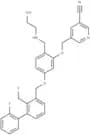
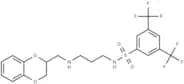
CAS:S100A2-p53-IN-1 inhibits S100A2-p53 in pancreatic cancer, stunting MiaPaCa-2 cell growth at 1.2-3.4 μM.Fórmula:C20H20F6N2O4SForma y color:SolidPeso molecular:498.44GlcNAc-MurNAc
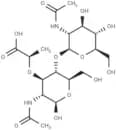
CAS:GlcNAc-MurNAc is a disaccharide and mild TLR4 agonist with a Kd of 383 μM for mouse TLR4. It directly binds to TLR4, activating the downstream NF-κB and IRF pathways. Additionally, GlcNAc-MurNAc ameliorates dextran sulfate sodium salt (DSS)-induced colitis in mice through a TLR4-dependent mechanism, making it useful for inflammatory bowel disease research.Fórmula:C19H32N2O13Forma y color:SolidPeso molecular:496.46Z-VAD-AMC
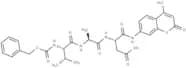
CAS:Z-VAD-AMC acts as a substrate specifically for caspase-9.Fórmula:C30H34N4O9Peso molecular:594.61Tuspetinib dihydrochloride
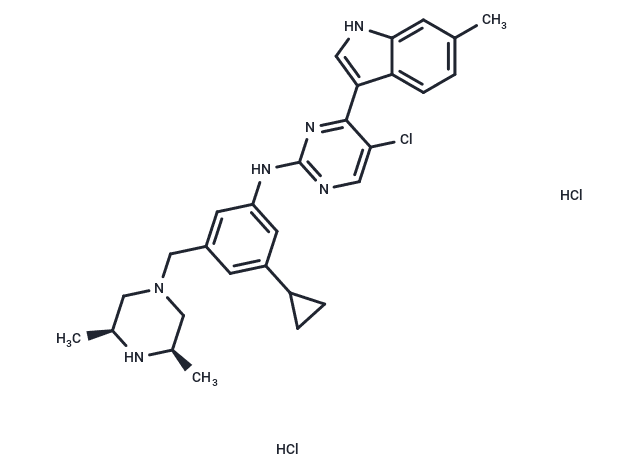
CAS:Tuspetinib (HM43239) dihydrochloride is a selective FLT3 inhibitor with oral bioactivity, exhibiting IC50 values of 1.1 nM for FLT3 wild type, 1.8 nM for FLT3ITD mutant type, and 1.0 nM for FLT3D835Y mutant type. As a reversible type I inhibitor, it directly suppresses FLT3 kinase activity and modulates p-STAT5, p-ERK, SYK, JAK1/2, and TAK1. Tuspetinib dihydrochloride inhibits the proliferation of leukemia cells and induces apoptosis (apoptosis).Fórmula:C29H35Cl3N6Forma y color:SolidPeso molecular:573.99Minnelide free acid
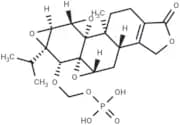
CAS:Minnelide treats pancreatic cancer, hinders androgen-related prostate growth, shrinks tumors, and improves survival.Fórmula:C21H27O10PForma y color:SolidPeso molecular:470.41T-1-PMPA
CAS:T-1-PMPA, a potent EGFR inhibitor, demonstrates apoptotic properties and effectively inhibits EGFR WT and EGFR 790m, with IC50 values of 86 nM and 561.73 nM, respectively [1].Fórmula:C16H17N5O3Peso molecular:327.34Erythromycin B
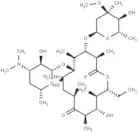
CAS:Erythromycin B exhibits antimalarial activity by effectively inhibiting the asexual growth of Plasmodium falciparum.Fórmula:C37H67NO12Forma y color:SolidPeso molecular:717.93UR-AK49
CAS:UR-AK49 (compound 11) is an agonist for the human histamine H1 and H2 receptors. It exhibits an EC50 of 23 nM in the GTPase assay involving hH2R-Gsalpha fusion protein expressed in Sf9 insect cells. UR-AK49 is applicable in neurologically related research.Fórmula:C16H27N5OForma y color:SolidPeso molecular:305.42Aplysin
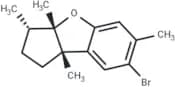
CAS:Aplysin suppresses breast cancer cells and protects liver cells by blocking PI3K/AKT/FOXO3a and preventing oxidative damage.Fórmula:C15H19BrOForma y color:SolidPeso molecular:295.21NPB-1575
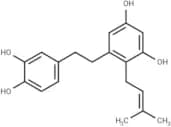
CAS:NPB-1575 is a potent, orally active anti-inflammatory agent capable of crossing the blood-brain barrier. It mitigates neuroinflammation and resists ferroptosis by activating IRS2/Nrf2/NF-κB. NPB-1575 protects against cerebral ischemic injury and improves neurological function outcomes, making it suitable for research in focal ischemic stroke.Fórmula:C19H22O4Forma y color:SolidPeso molecular:314.38ASTX295
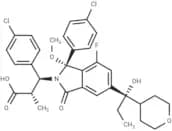
CAS:ASTX295 is a selective mouse double minute 2 (MDM2) antagonist with an IC50 value of less than 1 nM. It specifically inhibits the interaction between MDM2 and p53, reactivating wild-type (WT) TP53, which subsequently induces the expression of related transcriptional targets, leading to cell death and cell cycle arrest. ASTX295 holds potential for research in lymphoid malignancies such as diffuse large B-cell lymphoma (DLBCL), mantle cell lymphoma (MCL), and T-cell lymphoma.Fórmula:C33H34Cl2FNO6Forma y color:SolidPeso molecular:630.531GP130-IN-1
CAS:GP130-IN-1 (compound 49) is an effective inhibitor of GP130, demonstrating significant in vitro anti-tumor activity and higher selectivity compared to Bazedoxifene. It induces ultrastructural changes in cells, leading to a time-dependent arrest of the cell cycle at the G0/G1 phase, and triggers both apoptosis and autophagy. GP130-IN-1 is useful for research on triple-negative breast cancer.Fórmula:C21H10F5NO3Forma y color:SolidPeso molecular:419.30VEGFR-2-IN-11
VEGFR-2-IN-11 is a potent inhibitor of VEGFR-2 (IC50: 60.27 nM) with an IC50 value of 60.27 nM, which induces apoptosis and has anticancer activity.Fórmula:C29H22BrN5SForma y color:SolidPeso molecular:552.49PLK1-IN-13
CAS:PLK1-IN-13 is a selective, orally active PLK1 inhibitor with an IC50 of 0.27 nM. It also inhibits PLK2 (IC50: 12.72 nM) and PLK3 (IC50: 4.12 nM). PLK1-IN-13 induces cell cycle arrest at the G2 phase, promotes apoptosis, and downregulates the transcription of the cancer-associated oncogene c-MYC. This compound inhibits tumor growth and is applicable for research in acute myeloid leukemia (AML).Fórmula:C29H39N9O2SForma y color:SolidPeso molecular:577.744LRRK2-IN-17
CAS:LRRK2-IN-17 is an orally active LRRK2 inhibitor with IC50 values of 3.5 nM for WT and 3.3 nM for G2019S, and it also inhibits RET kinase with an IC50 of 59 nM. LRRK2-IN-17 is utilized in research related to cancer and Parkinson's disease (PD).Fórmula:C18H18N8Forma y color:SolidPeso molecular:346.39t9,t11,c15-CLNA
CAS:t9,t11,c15-CLNA is an isomer of conjugated linolenic acid (CLNA) produced by Lactobacillus plantarum ZS2058. It exhibits key activities including anti-inflammatory and antioxidant effects, as well as enhancement of intestinal barrier function. The regulatory mechanisms of t9,t11,c15-CLNA involve the upregulation of tight junction proteins, the inhibition of pro-inflammatory cytokines (such as TNF-α, IL-6), and the activation of antioxidant enzymes (such as SOD, CAT). t9,t11,c15-CLNA can be utilized in research on inflammatory bowel disease (like colitis).Fórmula:C18H30O2Forma y color:SolidPeso molecular:278.43TLBC
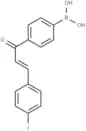
CAS:TLBC, a borane-chalcone derivative, exhibits dose-dependent inhibitory effects across various glioma cell lines with IC50 values ranging from 5.5 to 25.5 μM. TLBC induces apoptosis independently of alterations in the tumor suppressor factor p53.Fórmula:C15H12BIO3Forma y color:SolidPeso molecular:377.97Elocalcitol
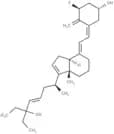
CAS:Elocalcitol is a calcitriol analog for inhibition of prostate cell growth.Fórmula:C29H43FO2Forma y color:SolidPeso molecular:442.65TRPM7-IN-1
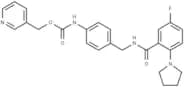
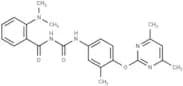
CAS:TRPM7-IN-1 (compound SUD) is a benzamide-urea derivative and an effective inhibitor of TRPM7. This compound induces cell cycle arrest and apoptosis in MCF-7 and BGC-823 cells, reducing their migration capabilities. It decreases vimentin expression while increasing E-cadherin expression. TRPM7-IN-1 reduces TRPM7-like currents and inhibits TRPM7 expression by activating the PI3K/Akt signaling pathway. This compound shows potential as a therapeutic agent for reducing breast and gastric cancer metastasis by targeting TRPM7 expression and activity.Fórmula:C23H25N5O3Forma y color:SolidPeso molecular:419.48Sabialimon P
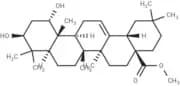
CAS:Sabialimon P (compound 16), with an IC50 of 18.12 μM, functions as a NO release inhibitor and exhibits anti-inflammatory properties. It effectively diminishes the secretion of TNF-α, iNOS, IL-6, and NF-κB, and suppresses the expression of COX-2 and NF-κB/p65 in LPS-induced RAW264.7 cells.Fórmula:C31H50O4Forma y color:SolidPeso molecular:486.73YCW-E11
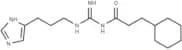
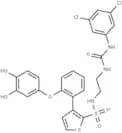
CAS:YCW-E11 is an antiapoptotic Bcl-2 family proteins inhibitor.Fórmula:C25H21Cl2N3O6S2Pureza:98%Forma y color:SolidPeso molecular:594.49Glyphosate isopropylammonium
CAS:Glyphosate isopropylammonium is a broad-spectrum, non-selective systemic biocide derived from the amino acid glycine. It inhibits the enzyme activity of 5-enolpyruvylshikimate-3-phosphate synthase (EPSPS) in the shikimate pathway, blocking the synthesis of aromatic amino acids tyrosine, phenylalanine, and tryptophan. Additionally, Glyphosate isopropylammonium induces oxidative stress, neuroinflammation, and mitochondrial dysfunction, leading to neuronal death through autophagy, necrosis, or apoptosis, resulting in behavioral and motor disturbances.Fórmula:C6H17N2O5PPeso molecular:228.18Thalidomide-NH-amido-C4-NH2
CAS:Thalidomide-NH-amido-C4-NH2 is a synthetic E3 ligase ligand-linker conjugate composed of a Thalidomide-based cereblon ligand and a linker, which is utilized in the synthesis of PROTAC.Fórmula:C19H23N5O5Peso molecular:401.42tDHU, acid
CAS:tDHU, acid is a dihydropyrimidine cereblon ligand consisting of an E3 ligase ligand and a benzoic acid linker. It serves as an E3 ubiquitin ligase ligand-linker conjugate in the development of PROTACs.Fórmula:C12H12N2O4Peso molecular:248.23RIPK1-IN-23
CAS:RIPK1-IN-23 (compound 19) is an RIPK1 inhibitor with potent anti-necroptotic effects in HT-29 cells (EC50 = 1.7 nM). Additionally, RIPK1-IN-23 exhibits anti-inflammatory properties.Fórmula:C27H22N6O3Peso molecular:478.50Thalidomide-NH-C5-NH2
CAS:Thalidomide-NH-C5-NH2 is a synthetic E3 ligase ligand-linker conjugate, consisting of a Thalidomide-based cereblon ligand and a linker, used in the synthesis of PROTACs.Fórmula:C18H22N4O4Peso molecular:358.39Thalidomide-NH-amido-PEG1-C2-NH2 hydrochloride
CAS:Thalidomide-NH-amido-PEG1-C2-NH2 hydrochloride is a synthetic E3 ligase ligand-linker conjugate that includes a thalidomide-based cereblon ligand and a linker, used in the synthesis of PROTAC.Fórmula:C19H24ClN5O6Peso molecular:453.88NLRP3-IN-28
CAS:NLRP3-IN-28 (compound N77) serves as a potent inhibitor of NLRP3, effectively blocking Nigericin-induced pyroptosis with an EC50 of 0.07μM. Additionally, it mitigates inflammatory reactions in vivo [1].Fórmula:C12H9F3N2O3SForma y color:SolidPeso molecular:318.27Z-VA-DL-D-FMK
CAS:Z-VA-DL-D-FMK (Z-VA-DL-D(OH)-FMK) acts as an inhibitor of caspases. It irreversibly binds to caspases, enhancing the sensitivity to TNF-α and stimulating HIV replication in infected T cells ACH-2.Fórmula:C21H28FN3O7Forma y color:SolidPeso molecular:453.46ASP9831
CAS:ASP9831 is an orally active PDE4 inhibitor. It suppresses LPS-induced TNF-α production and exhibits anti-inflammatory properties. ASP9831 is useful in the study of steatohepatitis.Fórmula:C20H23N3O3Forma y color:SolidPeso molecular:353.42JR5-26B
CAS:JR5-26B is an orally active apoptosis (apoptosis) inducer. It induces cell death via copper-mediated apoptosis and necroptosis (necroptosis). JR5-26B exhibits antiproliferative activity against MIA PaCa-2, PANC-1, PAN02, SU.86.86, and KPC-2 cells, with IC50 values of 0.6, 4.4, 8.0, 1.1, and 3.4 μM, respectively.Fórmula:C19H17FN6OForma y color:SolidPeso molecular:364.38HDAC/PSMD14-IN-1
CAS:HDAC/PSMD14-IN-1 is a derivative of gambogic acid. It serves as an orally active dual inhibitor targeting PSMD14 and HDAC1, with IC50 values of 238.7 nM and 141.2 nM, respectively. The compound exhibits significant cytotoxicity against ESCC cell lines (IC50: 30-250 nM) and effectively reverses epithelial-mesenchymal transition (EMT). Additionally, HDAC/PSMD14-IN-1 can induce apoptosis. In KYSE30 cell xenograft models in mice, it displays antitumor activity. HDAC/PSMD14-IN-1 is useful for researching esophageal cancer treatment.Fórmula:C20H24N4O3S2Forma y color:SolidPeso molecular:432.56