Apoptosis
Los inhibidores de la apoptosis son compuestos que previenen o retrasan el proceso de muerte celular programada, conocido como apoptosis. Estos inhibidores son vitales para estudiar los mecanismos de supervivencia celular y se utilizan para investigar enfermedades donde la apoptosis está desregulada, como el cáncer, los trastornos neurodegenerativos y las enfermedades autoinmunes. Al modular la apoptosis, estos inhibidores pueden ayudar en el desarrollo de terapias dirigidas a controlar la muerte celular. En CymitQuimica, ofrecemos una amplia selección de inhibidores de la apoptosis de alta calidad para apoyar su investigación en biología celular, oncología y campos relacionados.
Subcategorías de "Apoptosis"
- ASK(6 productos)
- BCL(11 productos)
- Caspasa(127 productos)
- FOXO1(3 productos)
- IAP(65 productos)
- Mdm2(12 productos)
- PD-1 / PD-L1(126 productos)
- PDK(9 productos)
- PERK(24 productos)
- Serina / treonina quinasa(15 productos)
- Survivin(13 productos)
- TNF(91 productos)
- c-RET(51 productos)
- p53(62 productos)
Mostrar 6 subcategorías más
Se han encontrado 5622 productos de "Apoptosis"
Ordenar por
Pureza (%)
0
100
|
0
|
50
|
90
|
95
|
100
Rozanolixizumab
CAS:<p>Rozanolixizumab (RYSTIGGO) is a humanized IgG4 monoclonal antibody that targets FcRn in newborns for autoimmune research.</p>Pureza:SDS-PAGE:97.2%;SEC-HPLC:95.9%Forma y color:LiquidPeso molecular:145.19 kDaLipustobart
CAS:<p>Lipustobart is an IgG4-kappa humanized monoclonal antibody targeting PDCD1 (programmed cell death 1, PD1, PD-1, CD279), with immunostimulant and antineoplastic</p>Pureza:98%Forma y color:LiquidThalidomide-O-PEG4-azide
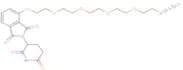
CAS:Thalidomide-O-PEG4-azide is a PEG-based PROTAC linker that can be used in the synthesis of PROTACs[1].Fórmula:C23H29N5O9Pureza:98%Forma y color:SolidPeso molecular:519.5Canfosfamide
CAS:<p>Canfosfamide, a prodrug activated by GSTP1-1, induces apoptosis and inhibits DNA-PK, producing an alkylating agent for cancer research.</p>Fórmula:C26H40Cl4N5O10PSForma y color:SolidPeso molecular:787.47Aromatase-IN-5
<p>Aromatase-IN-5 (Compound 10) is a potent inhibitor of aromatase with an IC50 value of 0.06 μM. It effectively blocks estrogen production and inhibits the proliferation of breast cancer cell lines such as MCF-7, arresting the cell cycle in the G1 phase and inducing apoptosis. Aromatase-IN-5 shows promise for breast cancer research.</p>Forma y color:Odour SolidC188
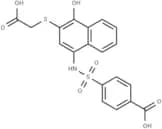
CAS:<p>C188, a naphthol-based STAT3 inhibitor, blocks IL-6-induced STAT3 activity in HepG2 cells, sparing STAT1.</p>Fórmula:C19H15NO7S2Forma y color:SolidPeso molecular:433.45BT44
CAS:<p>BT44, a potent second-gen GDNF mimetic, is a lead for treating neurodegeneration.</p>Fórmula:C28H27F4N3O4SPureza:99.87%Forma y color:SoildPeso molecular:577.59MG-C-30
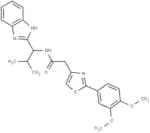
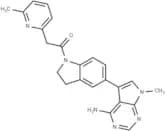
CAS:<p>MG-C-30 is an orally active CD27 agonist with an EC50 of 0.84 μM. It activates co-stimulatory signaling in NK cells and T cells, thereby enhancing the immune response. In the EG7-OVA mouse model, MG-C-30 demonstrates antitumor activity.</p>Fórmula:C24H26N4O3SForma y color:SolidPeso molecular:450.55Antiproliferative agent-25
<p>Antiproliferative Agent-25 (Compound 3s4) is a selective PRMT5 inhibitor displaying an IC50 of 0.11 μM.</p>Fórmula:C20H21BrN2O2Pureza:98%Forma y color:SolidPeso molecular:401.3Calcimycin hemimagnesium
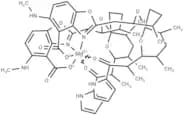
CAS:<p>Calcimycin hemimagnesium is an antibiotic, ionophore, and ATPase inhibitor that boosts intracellular Ca2+, causing cell death and apoptosis.</p>Fórmula:C58H72MgN6O12Forma y color:SolidPeso molecular:1069.53ROS inducer 4
<p>Compound TE3, also known as ROS inducer 4, serves as a mitochondrial inhibitor. This compound induces a variety of mitochondria-related physiological alterations in tumors, including mitochondrial fragmentation, intense generation and accumulation of ROS, reduced mitochondrial membrane potential, and lower ATP content. Additionally, it activates ROS-mediated apoptotic signaling within mitochondria.</p>Fórmula:C49H62BrO4PForma y color:SolidPeso molecular:825.89eIF4A3-IN-5
CAS:<p>eIF4A3-IN-5 potently inhibits eIF4AI/II, promising for cancer research.</p>Fórmula:C26H22N2O7Forma y color:SolidPeso molecular:474.469S-Adenosyl-L-methionine
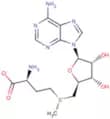
CAS:<p>S-Adenosyl-L-methionine (Ademetionine) is an intermediate metabolite of methionine,for treatment of primary biliary cirrhosis and major depressive disorder.</p>Fórmula:C15H22N6O5SPureza:99.08%Forma y color:SolidPeso molecular:398.44Thalidomide-O-amido-PEG4-propargyl
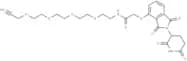
<p>Thalidomide-O-amido-PEG4-propargyl is a polyethylene glycol (PEG)-based linker employed for the synthesis of proteolysis targeting chimeras (PROTACs)[1].</p>Fórmula:C26H31N3O10Pureza:98%Forma y color:SolidPeso molecular:545.54EGFR/HER2/DHFR-IN-3
<p>EGFR/HER2/DHFR-IN-3 (compound 4c) serves as an efficacious dual inhibitor specifically targeting EGFR/HER2, exhibiting IC50 values of 0.138 μM for EGFR and 0.</p>Pureza:98%Forma y color:Odour SolidOno 3403
CAS:<p>Ono 3403, a synthetic serine protease inhibitor, blocks TNF-alpha, NO production, and has antitumor properties.</p>Fórmula:C26H31N3O8SPureza:98%Forma y color:SolidPeso molecular:545.6Taccalonolide E
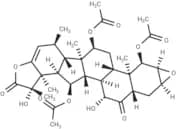
CAS:<p>Taccalonolide E is a microtubule stabilizer and induces cancer cell apoptosis .</p>Fórmula:C34H44O12Forma y color:SolidPeso molecular:644.71Antitumor agent-41
<p>Antitumor Agent-41 (Compound N-12) exhibits potent antitumor properties, demonstrating significant antimigration and anti-invasion activities.</p>Fórmula:C64H109IN2O21Forma y color:SolidPeso molecular:1369.46VEGFR-2-IN-66
<p>VEGFR-2-IN-66 (Compound 6) is an orally active VEGFR-2 inhibitor with an IC50 of 0.509 µM and an IC50 value of 7.48 μM for inhibiting MCF-7 cell proliferation. Its anticancer activity is exerted through cell cycle arrest, induction of apoptosis (Apoptosis), and modulation of gene expression, making it suitable for breast cancer research.</p>Forma y color:Odour SolidTrimebutine
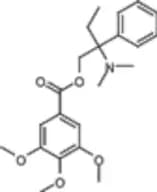
CAS:<p>Trimebutine (Mebutin) is a spasmolytic agent that regulates intestinal and colonic motility and relieves abdominal pain with antimuscarinic and weak mu-opioid</p>Fórmula:C22H29NO5Pureza:98.13% - 99.49%Forma y color:SolidPeso molecular:387.47hCAIX-IN-23
<p>hCAIX-IN-23 (Compound 27) is a human carbonic anhydrase (hCA) inhibitor with Ki values of 10.4 nM for hCA IX and 8.5 nM for hCA XII. It not only inhibits hCA activity but also releases NO, exerting dual anti-tumor effects. By reducing the expression of hCA IX and iron regulatory proteins, hCAIX-IN-23 regulates mitochondrial caspase activity and the ferroptosis pathway, thereby inducing apoptosis. This compound is utilized in research focused on renal cancer.</p>Forma y color:Odour SolidTubulin/HDAC-IN-2
<p>Tubulin/HDAC-IN-2 (Compound II-19k) is a dual inhibitor targeting Tubulin and HDAC, exhibiting IC50 values of 0.403 μM for HDAC1, 0.591 μM for HDAC2, 3.552 μM</p>Fórmula:C21H19FN2O4Forma y color:SolidPeso molecular:382.38PERK-IN-6
CAS:<p>PERK-IN-6 is a novel and highly potent PERK inhibitor (IC50:2.5 nM).</p>Fórmula:C23H22N6OPureza:99.62% - 99.92%Forma y color:SolidPeso molecular:398.46Stem bromelain
CAS:<p>Stem bromelain: cysteine protease from pineapple stem with fibrinolytic, anti-inflammatory, antitumoral properties.</p>Forma y color:SolidThalidomide-5-propargyne-NH2 hydrochloride
CAS:<p>Thalidomide derivative for CRBN protein recruitment, used in PROTACs production for protein degradation.</p>Fórmula:C16H14ClN3O4Forma y color:SolidPeso molecular:347.753HJC0416 hydrochloride
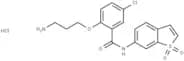
CAS:<p>HJC0416 hydrochloride: potent oral STAT3 inhibitor, better anticancer effects than Stattic, promising for breast cancer research.</p>Fórmula:C18H18Cl2N2O4SForma y color:SolidPeso molecular:429.31AB-3PRGD2
CAS:<p>AB-3PRGD2 is a radiolabeled agent that targets integrin αvβ3. It enhances tumor uptake and prolongs retention time in tumors, significantly improving the inhibition of tumor growth. AB-3PRGD2 also remodels the tumor immune microenvironment by upregulating PD-L1 expression and increasing tumor-infiltrating CD8+ T cells.</p>Fórmula:C137H215IN30O45SForma y color:SolidPeso molecular:3161.32Phosphocreatine dipotassium
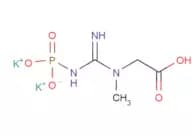
CAS:<p>Phosphocreatine dipotassium, primarily found in the skeletal muscles of vertebrates and one of organic compounds known as alpha amino acids and derivatives.</p>Fórmula:C4H8K2N3O5PPureza:98%Forma y color:SolidPeso molecular:287.29OA-Br-1
<p>OA-Br-1 is an orally active, selective inhibitor of PTP1B with an IC50 value of 7.08 μM. It induces apoptosis and exhibits broad-spectrum anti-cancer cell proliferation activity. OA-Br-1 exerts anti-breast cancer effects both in vitro and in vivo through the PTP1B/PI3K/AKT signaling pathway.</p>Fórmula:C43H70BrNO8Forma y color:SolidPeso molecular:808.92MALT1-IN-13
MALT1-IN-13 (compound 10m) is an inhibitor of the mucosa-associated lymphoid tissue lymphoma translocation protein (MALT1), forming a covalent and irreversible bond with the MALT1 protease, thereby inhibiting its activity with an IC50 of 1.7 μM. It suppresses the proliferation of ABC-DLBCL and induces apoptosis in ABC-DLBCL HBL1 cells. Additionally, MALT1-IN-13 regulates the mTOR and PI3K-Akt pathways.Fórmula:C20H15BrClN3O3S2Peso molecular:522.94267Anticancer agent 146
<p>Anticancer Agent 146 (Compound 1.19) acts as a necroptosis inducer and demonstrates anti-tumor efficacy in the MDA-MB-231 mouse xenograft model [1].</p>Fórmula:C19H16Cl2N2O2Pureza:98%Forma y color:SolidPeso molecular:375.25Sasanlimab
CAS:<p>Sasanlimab (PF-06801591), a humanized IgG4-κ antibody, selectively targets PD-1 and is primarily produced in Chinese Hamster Ovary (CHO) cells [1].</p>Pureza:98%Forma y color:LiquidNemorosone
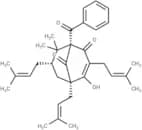
CAS:<p>Nemorosone, a PPAP from C. rosea, inhibits neuroblastoma and pancreatic cancer cell growth, induces apoptosis, and reduces mouse xenograft tumors.</p>Fórmula:C33H42O4Forma y color:SolidPeso molecular:502.695Delmitide
CAS:<p>Delmitide, a TNF-alpha production inhibitor, is used potentially for the treatment of Crohn's disease and ulcerative colitis.</p>Fórmula:C59H105N17O11Pureza:98%Forma y color:SolidPeso molecular:1228.572-Chloronaphthalene
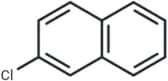
CAS:<p>2-Chloronaphthalene is an organochlorine chemical compound and is a chlorinated derivative of naphthalene. The compound is an isomer for 1-chloronaphthalene.</p>Fórmula:C10H7ClPureza:98%Forma y color:SolidPeso molecular:162.62HEMTAC CDK4/6 degrader 1
CAS:<p>HEMTAC CDK4/6 degrader 1, a PROTAC targeting HSP90/CDK4/6, Kd of 35.7 μM, disrupts B16F10 melanoma cell cycle, and induces apoptosis.</p>Fórmula:C48H53ClN16O4Forma y color:SolidPeso molecular:953.49Diazepinomicin
CAS:<p>Diazepinomicin, from Micromonospora, blocks EGF-Ras-ERK pathway and induces apoptosis; an anti-tumor agent for K-Ras mutants.</p>Fórmula:C28H34N2O4Pureza:98%Forma y color:SolidPeso molecular:462.58Tanfanercept
CAS:<p>Tanfanercept (HL036337) is an anti-TNF-α antibody, improving corneal erosions in dry eye mice.</p>Forma y color:LiquidAnti-inflammatory agent 61
<p>Compound 5b (Anti-inflammatory agent 61) is a potent anti-inflammatory agent that diminishes TNF-α expression in LPS-induced inflammation within RAW 264.7 cells</p>Forma y color:Odour SolidAnti-Mouse PD-L1 Antibody (10F.9G2)
<p>Anti-Mouse PD-L1 Antibody (10F.9G2) is an IgG-class antibody against mouse PD-L1.</p>Pureza:98.92% - >95% Determined by SDS-PAGEForma y color:Odour Liquidcpm-1285
CAS:<p>CPM-1285 induces apoptosis by effectively inhibiting the function of intracellular Bcl-2 and associated death antagonists.</p>Fórmula:C153H240N44O42SPureza:98%Forma y color:SolidPeso molecular:3399.88Balstilimab
CAS:<p>Balstilimab (AGEN2034) is a fully human monoclonal IgG4 antibody against PD-1 [1] .</p>Forma y color:LiquidPTD-p65-P1 Peptide
<p>PTD-p65-P1: a NF-kappaB inhibitor blocking activation from multiple inflammatory stimuli.</p>Fórmula:C168H275N57O44SPureza:98%Forma y color:SolidPeso molecular:3829.5Ferroptosis-IN-12
<p>Ferroptosis-IN-12 (Cpd-A1) is an inhibitor of ferroptosis. It effectively suppresses ferroptosis in mouse renal tubular epithelial cells (mTECs) treated with Erastin and improves renal function in dose-dependent manners in mouse models of acute kidney injury (AKI) induced by ischemia/reperfusion (I/R) or cecal ligation and puncture (CLP). This compound also reduces renal tubular damage and eliminates inflammation. Exhibiting good plasma stability and high distribution in renal tissues during pharmacokinetic studies in mice, Ferroptosis-IN-12 shows promising potential for research in the field of AKI.</p>Forma y color:Odour SolidHDAC-IN-79
<p>HDAC-IN-79 (compound 4) is an orally active dual inhibitor of xanthine oxidase and HDAC, exhibiting potent anti-hyperuricemia and antitumor activities in vivo (Xanthine oxidase: IC50=6.6 nM; HDAC1: IC50=134 nM; HDAC2: IC50=284 nM; HDAC3: IC50=173 nM; HDAC6: IC50=1.32 nM). Among leukemia cells, it is most effective in inhibiting the growth of HL60 cells (IC50=0.706 μM) and induces both apoptosis and autophagy. HDAC-IN-79 also modulates the expression levels of biomarkers associated with intracellular HDAC inhibition.</p>Forma y color:Odour SolidKusunokinin
<p>Kusunokinin is a useful organic compound for research related to life sciences and the catalog number is T124612.</p>Fórmula:C21H22O6Forma y color:SolidPeso molecular:370.401POV-PC
CAS:<p>POV-PC is an oxidized phospholipid that inhibits VSMC growth under high serum conditions and induces cell apoptosis under low serum conditions.</p>Fórmula:C29H56NO9PForma y color:SolidPeso molecular:593.73WD6305
WD6305 is an effective and selective METTL3-METTL14 PROTAC degrader, with DC50 values of 140 nM and 194 nM for METTL3 and METTL14, respectively. It inhibits m6A modification and the proliferation of acute myeloid leukemia cells while inducing apoptosis. WD6305 also exhibits antitumor activity.Fórmula:C61H75F2N11O5SPeso molecular:1111.56414DHFR-IN-23
<p>DHFR-IN-23 (compound 5) is a dual inhibitor of DNA binders/DHFR, exhibiting an IC50 value of 0.08 μM against hDHFR. It serves as an apoptosis inducer and is applicable in research on ER+ breast cancer.</p>Forma y color:Odour SolidOPBP-1
<p>OPBP-1 is a D-peptide developed through phage display screening, molecular docking, and molecular dynamics simulations. It exhibits high stability, strong antitumor activity, and oral bioavailability. OPBP-1 selectively binds to the PD-L1 protein, significantly blocking the interaction between PD-1 and PD-L1, which helps restore and enhance T lymphocyte function while reducing the proportion of myeloid-derived suppressor cells (MDSCs), counteracting tumor-induced immune evasion. OPBP-1 is applicable for research in cancer immunotherapy.</p>Fórmula:C64H92N20O19SPeso molecular:1476.65683