Apoptosis
Los inhibidores de la apoptosis son compuestos que previenen o retrasan el proceso de muerte celular programada, conocido como apoptosis. Estos inhibidores son vitales para estudiar los mecanismos de supervivencia celular y se utilizan para investigar enfermedades donde la apoptosis está desregulada, como el cáncer, los trastornos neurodegenerativos y las enfermedades autoinmunes. Al modular la apoptosis, estos inhibidores pueden ayudar en el desarrollo de terapias dirigidas a controlar la muerte celular. En CymitQuimica, ofrecemos una amplia selección de inhibidores de la apoptosis de alta calidad para apoyar su investigación en biología celular, oncología y campos relacionados.
Subcategorías de "Apoptosis"
- ASK(6 productos)
- BCL(11 productos)
- Caspasa(127 productos)
- FOXO1(3 productos)
- IAP(65 productos)
- Mdm2(12 productos)
- PD-1 / PD-L1(126 productos)
- PDK(9 productos)
- PERK(24 productos)
- Serina / treonina quinasa(15 productos)
- Survivin(13 productos)
- TNF(91 productos)
- c-RET(51 productos)
- p53(62 productos)
Mostrar 6 subcategorías más
Se han encontrado 5622 productos de "Apoptosis"
Ordenar por
Pureza (%)
0
100
|
0
|
50
|
90
|
95
|
100
TOPOI/PARP-1-IN-2
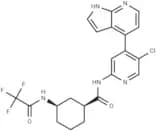
<p>TOPOI/PARP-1-IN-2 (compound 6c) serves as a dual inhibitor targeting both PARP-1 and topoisomerase 1 (TOPO-1), with IC50 values of 32.2 nM and 46.2 nM, respectively. This compound exhibits greater selectivity for PARP-1 over PARP-2. Additionally, TOPOI/PARP-1-IN-2 disrupts the S phase of the cell cycle and induces apoptosis in the NCI-60 cancer cell lines.</p>Fórmula:C16H11ClN4O2SForma y color:SolidPeso molecular:358.80FGFR1/VEGFR2-IN-3
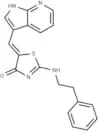
<p>FGFR1/VEGFR2-IN-3 (Compound 8m) acts as a dual inhibitor of FGFR1 and VEGFR2. This compound exhibits both anti-cancer cell proliferation and anti-migration activities, and it also has the capability to induce cell apoptosis (apoptosis).</p>Fórmula:C27H18N4O4Forma y color:SolidPeso molecular:462.46ROS inducer 5
ROS inducer 5 (compound 6e) induces intracellular ROS accumulation and subsequent nuclear fragmentation. It can provoke apoptosis in MCF-7 cells with an IC50 of 3.85 μM. ROS inducer 5 is useful for cancer research applications.Fórmula:C20H15ClN4O2S3Forma y color:SolidPeso molecular:475.01PIM-1/CK2-IN-2
<p>PIM-1/CK2-IN-2 (compound 3aA) is an inhibitor of the PIM-1/CK2 enzymes. This compound can induce the mitochondrial apoptosis pathway in CCRF-CEM cells and is utilized in cancer research.</p>Fórmula:C15H8Br4N2OForma y color:SolidPeso molecular:551.85BCL-XL-IN-1
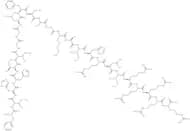
BCL-XL-IN-1 (Compound 11) is a selective inhibitor of BCL-XL, exhibiting a Ki of less than 0.01 nM against BCL-XLTR-FERT. It is primarily used in cancer research.Fórmula:C46H55N7O6SForma y color:SolidPeso molecular:834.04Haemanthamine hydrochloride
<p>Haemanthamine hydrochloride, an alkaloid from Amaryllidaceae, has anticancer, antioxidant, antiviral, antimalarial, and anticonvulsant properties.</p>Fórmula:C17H20ClNO4Forma y color:SolidPeso molecular:337.8LSD1-IN-36
LSD1-IN-36, an effective LSD1 inhibitor with an IC50 value of 0.8 nM, induces cell apoptosis and arrests the cell cycle. This compound also exhibits antitumor activity.Fórmula:C22H25N3O6SForma y color:SolidPeso molecular:459.52Antiproliferative agent-59
Antiproliferative agent-59 (Compound 14u) acts as an inhibitor of tubulin polymerization. Demonstrating anticancer activity in Huh7, SGC-7901, and MCF-7 cell lines, this compound achieves IC50 values of 0.03, 0.18, and 0.13 μM, respectively. Additionally, it arrests the cell cycle at the G2/M phase and induces apoptosis in Huh7 cells. In a xenograft mouse model utilizing Huh7 cells, Antiproliferative agent-59 exhibits antitumor effects against hepatocellular carcinoma without significant toxicity.Fórmula:C26H22N2O3Forma y color:SolidPeso molecular:410.465-LOX-IN-8
<p>5-LOX-IN-8 is a 5-LOX inhibitor with anti-inflammatory properties. It suppresses IL-6, IL-1β, TNF-α, and IFN-γ in macrophages and reduces IL-8 secretion in SW480 cells. Additionally, 5-LOX-IN-8 decreases the disease activity index in DSS colitis models. This compound is applicable for research in inflammatory bowel disease (IBD).</p>Forma y color:Odour SolidSarglaroids F
<p>Sarglaroids F (compound 6), an anti-inflammatory agent extracted from the roots of Grass Coral, suppresses LPS/ATP-induced IL-1β secretion by modulating K+</p>Fórmula:C38H44O12Pureza:98%Forma y color:SolidPeso molecular:692.75Thiocolchicine
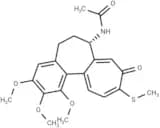
CAS:Thiocolchicine inhibits tubulin polymerization (IC50: 2.5 µM, Ki: 0.7 µM), induces apoptosis, and serves as an ADC cytotoxin.Fórmula:C22H25NO5SPureza:98.19%Forma y color:SolidPeso molecular:415.5MDM2 ligand 4
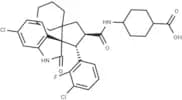
<p>MDM2ligand 4 is a ligand of MDM2 and can be used in the synthesis of the PROTAC degrader [KT-253].</p>Fórmula:C31H33Cl2FN2O4Forma y color:SolidPeso molecular:587.509EGFR-IN-143
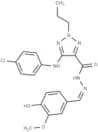
<p>EGFR-IN-143 (Compound 5f) is a potent EGFR inhibitor with an IC50 value of 0.15 μM. It induces apoptosis by arresting the cell cycle at the G2/M phase and exhibits antitumor activity.</p>Fórmula:C20H21ClN6O3Forma y color:SolidPeso molecular:428.872dTAGV-1-NEG TFA
<p>dTAGV-1-NEG TFA, a diastereomer, serves as the heterobifunctional negative control for dTAGV-1. It acts specifically as an FKBP12 F36V-selective degrader [1].</p>Fórmula:C70H91F3N6O16SForma y color:SolidPeso molecular:1361.56KT-253
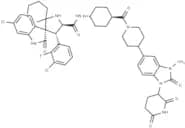
CAS:<p>KT-253 is a p53 stabilizer and a PROTAC degrader of MDM2 (DC50=0.4 nM). It inhibits the proliferation of cancer cells RS4;11 with an IC50 of 0.3 nM, induces cell cycle arrest in the G2/M phase, and triggers apoptosis. In mouse models, KT-253 demonstrates antitumor activity. (Pink: ligand for target protein MDM2 ligand 4; Black: linker; Blue: ligand for E3 ligase cereblon)</p>Fórmula:C48H52Cl2FN7O6Forma y color:SolidPeso molecular:912.874HPCR
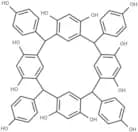
CAS:<p>HPCR exhibits antiproliferative activity against various cancer cells and is involved in apoptosis (apoptosis).</p>Fórmula:C52H40O12Forma y color:SolidPeso molecular:856.867Barakol
CAS:<p>Barakol, a primary compound found in Cassia siamea, inhibits MMP-3 activity and enhances the anti-metastatic effects of doxorubicin. Additionally, Barakol induces apoptosis (Apoptosis), generates reactive oxygen species, increases the Bax/Bcl-2 expression ratio, and activates caspase-9. This compound also exhibits laxative, anti-anxiety, central nervous system depressant, antioxidant, and anticancer properties.</p>Fórmula:C13H12O4Forma y color:SolidPeso molecular:232.23Zamzetoclax
CAS:<p>Zamzetoclax (compound 1) acts as a potential inhibitor of Mcl-1.</p>Fórmula:C38H46ClN5O6SForma y color:SolidPeso molecular:736.32Thalidomide-N-C3-O-C4-O-C3-OH
<p>Thalidomide-N-C3-O-C4-O-C3-OH is a conjugate of an E3 ligase ligand and a linker, used in the synthesis of the Aster-APROTAC degrader.</p>Fórmula:C23H31N3O7Peso molecular:461.2162Anticancer agent 204
<p>Anticanceragent 204 (Compound 6) is a fluorinated derivative of cinnamamides with anticancer activity. It can arrest the cell cycle of HepG2 cells in the G1 phase and induces apoptosis by reducing mitochondrial membrane polarization (MMP) levels.</p>Fórmula:C26H18FN5O3SPeso molecular:499.11144Emfizatamab
CAS:<p>Emfizatamab (GNC-038) is a tetravalent antibody that activates CD3 and 4-1BB on T cells while targeting CD19 or PD-L1 on tumor cells, resulting in T-cell-mediated cytotoxicity against human leukemia and lymphoma cells.</p>Forma y color:LiquidPROTAC GPX4 degrader-2
<p>PROTACGPX4 degrader-2 (compound 18a) is a proteolysis-targeting chimera (PROTAC) that targets the degradation of glutathione peroxidase 4 (GPX4), with a DC50, 48h value of 1.68 μM. It induces the accumulation of lipid peroxides and mitochondrial depolarization, subsequently triggering ferroptosis. Additionally, PROTACGPX4 degrader-2 exhibits antiproliferative activity.</p>Fórmula:C50H61ClN8O9Peso molecular:952.425ASK1-IN-4
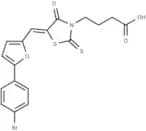
CAS:<p>ASK1-IN-4 is an ASK1 inhibitor, IC50 = 0.2 μM.</p>Fórmula:C18H14BrNO4S2Pureza:99.756%Forma y color:SolidPeso molecular:452.34OPBP-1
<p>OPBP-1 is a D-peptide developed through phage display screening, molecular docking, and molecular dynamics simulations. It exhibits high stability, strong antitumor activity, and oral bioavailability. OPBP-1 selectively binds to the PD-L1 protein, significantly blocking the interaction between PD-1 and PD-L1, which helps restore and enhance T lymphocyte function while reducing the proportion of myeloid-derived suppressor cells (MDSCs), counteracting tumor-induced immune evasion. OPBP-1 is applicable for research in cancer immunotherapy.</p>Fórmula:C64H92N20O19SPeso molecular:1476.65683IRF1-IN-2
CAS:<p>IRF1-IN-2 is a small molecule IRF1 inhibitor that suppresses pyroptosis, protecting against radiation-induced skin damage.</p>Fórmula:C18H20N2O4SPureza:99.85%Forma y color:SolidPeso molecular:360.43Anticancer agent 153
<p>Anticancer Agent 153 (Compound 3) promotes apoptosis through the generation of Reactive Oxygen Species (ROS) and elevates the loss of Mitochondrial Membrane</p>Fórmula:C16H11Cl2N3O3Pureza:98%Forma y color:SolidPeso molecular:364.18Antitumor agent-103
<p>Antitumor Agent-103 (compound 24l) induces apoptosis and possesses antiproliferative and anti-colony formation properties.</p>Fórmula:C36H36N8O9S2Pureza:98%Forma y color:SolidPeso molecular:788.85Anticancer agent 132
<p>Compound Rh1 (Anticancer agent 132) acts as an inducer of apoptosis and autophagy, exhibiting both antitumor and antimetastatic activities.</p>Fórmula:C24H16Cl3F3N5ORhPureza:98%Forma y color:SolidPeso molecular:656.68PRMT5-IN-33
PRMT5-IN-33 (compound A8) is a selective inhibitor of PRMT5 that competes with SAM, exhibiting an IC50 of 10.9 nM. It induces apoptosis and inhibits the proliferation of Z-138 and MOLM-13 cells, demonstrating antitumor activity.Fórmula:C25H24BrN5O3SPeso molecular:553.07832Aphidicolin
CAS:<p>Aphidicolin blocks DNA synthesis, hinders herpes virus growth, and stimulates apoptosis in leukemia cells; it's a mold-derived DNA polymerase inhibitor.</p>Fórmula:C20H34O4Pureza:>99.99%Forma y color:SolidPeso molecular:338.48cpm-1285
CAS:<p>CPM-1285 induces apoptosis by effectively inhibiting the function of intracellular Bcl-2 and associated death antagonists.</p>Fórmula:C153H240N44O42SPureza:98%Forma y color:SolidPeso molecular:3399.88YX0798
<p>YX0798 is a selective, orally active CDK9 inhibitor (Kd: 0.28 nM). It downregulates the oncogenic protein c-MYC and the pro-survival protein MCL-1. YX0798 disrupts the cell cycle and causes transcriptome reprogramming, ultimately leading to apoptosis. The compound exhibits antitumor activity.</p>Fórmula:C21H19ClF3N5O2Forma y color:SolidPeso molecular:465.86Thalidomide-O-amido-PEG1-(C1-PEG)2-C2-NH2
<p>Thalidomide-PEG conjugate for E3 ligase in PROTACs; has cereblon ligand and 3-unit PEG linker.</p>Fórmula:C27H35F3N4O11Pureza:98%Forma y color:SolidPeso molecular:648.58DJ4
CAS:<p>DJ4 induces a dose-dependent pro-apoptotic effect in the micromolar range.</p>Fórmula:C19H16N4OSPureza:≥98%Forma y color:SoildPeso molecular:348.42Antitumor agent-113
<p>Antitumor Agent-113 exhibits cytotoxicity in A549 cells, with an IC50 of 46.60 μM, and induces apoptosis, making it applicable for research in non-small cell</p>Fórmula:C21H22ClN5O2SPureza:98%Forma y color:SolidPeso molecular:443.95Apoptosis inducer 13
<p>Apoptosis Inducer 13 (Compound Ru4) promotes apoptosis in cancer cells while also suppressing their migration and invasion.</p>Fórmula:C59H54ClF6N8O4PRuPureza:98%Forma y color:SolidPeso molecular:1220.6TP4 (Nile tilapia piscidin)
CAS:<p>TP4 (Nile tilapia piscidin) is an orally active piscidin-like antimicrobial peptide that exhibits inhibition of various gram-positive and negative bacterial</p>Fórmula:C135H226N50O27Pureza:98%Forma y color:SolidPeso molecular:2981.56TAT-NEP1-40 TFA
<p>TAT-NEP1-40 TFA, a blood-brain barrier-permeable peptide, safeguards PC12 cells against oxygen and glucose deprivation (OGD) and fosters neurite outgrowth.</p>Fórmula:C268H438N88O77·xC2HF3O2Pureza:98%Forma y color:SolidPeso molecular:6124.89 (free base)TNF-α Antagonist
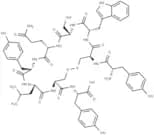
CAS:<p>TNF-α antagonist is an exocyclic peptide that mimics the critical TNF-α recognition loop on TNF receptor I complex and, thus, prevents ligand interaction with</p>Fórmula:C58H71N11O15S2Forma y color:SolidPeso molecular:1226.39PBE-AMF
PBE-AMF is a prodrug that activates H2O2 and exhibits anticancer activity. It impedes tumor proliferation by inhibiting DNA synthesis, reducing ATP levels, inducing cell death (apoptosis), and blocking the cell cycle. PBE-AMF effectively and selectively inhibits the proliferation of MDA-MB-231 cells (IC50=6.4 μM) while sparing non-cancerous MCF-10A cells.Forma y color:Odour SolidBoc-Asp(OBzl)-CMK
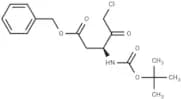
CAS:Boc-Asp(OBzl)-CMK, an inhibitor of IL-1 converting enzyme (ICE, caspase1), prevents the death of CHP100 neuroblastoma cells and inhibits IL-1β release induced by the viral coat protein [1].Fórmula:C17H22ClNO5Forma y color:SolidPeso molecular:355.81Trilexium
CAS:<p>Trilexium (TRX-E-009-1), a third-generation benzopyran structurally related to TRX-E-002-1, increases p21 protein expression, induces apoptosis, depolymerizes microtubules, and demonstrates broad anti-cancer activity [1] [2].</p>Fórmula:C24H23FO6Forma y color:SolidPeso molecular:426.43Sandalore
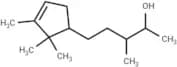
CAS:<p>Sandalore boosts hair growth, reduces cell death, and raises IGF-1, acting on olfactory receptor OR2AT4.</p>Fórmula:C14H26OPureza:97.96%Forma y color:Light Yellow Viscous LiquidPeso molecular:210.36UNC10245380
<p>UNC10245380 is a CIB1 inhibitor with an IC50 of 8 μM. It also inhibits the phosphorylation of AKT and ERK while upregulating the expression of TRAIL-R1/D5. UNC10245380 specifically kills cancer cells that are dependent on CIB1, demonstrating its potential value in the development of CIB1 probes and cancer research.</p>Forma y color:Odour SolidBIIB023
<p>BIIB023 is a human monoclonal antibody (mAb) that targets TNFRSF12A/TWEAKR/CD266. It is applicable for research in lupus nephritis and rheumatoid arthritis.</p>Forma y color:Odour LiquidPantinin-1
CAS:<p>Pantinin-1 is an antimicrobial peptide found in the venom of the emperor scorpion (Pandinus imperator). This compound exhibits strong antibacterial activity against Gram-positive bacteria and fungi, but has weaker effects on Gram-negative bacteria. Additionally, Pantinin-1 demonstrates very low hemolytic activity on human red blood cells and possesses anticancer properties, specifically inducing apoptosis in tumor cells.</p>Fórmula:C75H119N17O18Forma y color:SolidPeso molecular:1546.85CPT2
CAS:<p>Carnitine palmitoyltransferase 2 (CPT2), an enzyme involved in fatty acid oxidation, serves as a prognostic biomarker for colorectal cancer (CRC).</p>Pureza:98%Forma y color:SolidTAT-NEP1-40
<p>TAT-NEP1-40, a blood-brain barrier (BBB) permeable peptide, confers protection to PC12 cells against oxygen and glucose deprivation (OGD) while promoting</p>Fórmula:C268H438N88O77Pureza:98%Forma y color:SolidPeso molecular:6124.89RWJ-56110 dihydrochloride
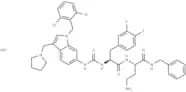
CAS:<p>RWJ-56110 dihydrochloride is a potent PAR-1 inhibitor (IC50=0.44μM), blocking platelet aggregation, angiogenesis, and induces apoptosis. No PAR-2/3/4 effect.</p>Fórmula:C41H44Cl3F2N7O3Forma y color:SolidPeso molecular:827.2WEHI-3773
<p>WEHI-3773 is an inhibitor of the interaction between VDAC2 and either BAK or BAX. It prevents BAX-mediated apoptosis (Apoptosis) by blocking the recruitment of BAX to the mitochondria through VDAC2. Conversely, WEHI-3773 promotes BAK-mediated apoptosis (Apoptosis) by limiting VDAC2's inhibitory sequestration of BAK. This compound shows promise for research in the field of cancer therapy.</p>Forma y color:Odour Solid