Apoptosis
Los inhibidores de la apoptosis son compuestos que previenen o retrasan el proceso de muerte celular programada, conocido como apoptosis. Estos inhibidores son vitales para estudiar los mecanismos de supervivencia celular y se utilizan para investigar enfermedades donde la apoptosis está desregulada, como el cáncer, los trastornos neurodegenerativos y las enfermedades autoinmunes. Al modular la apoptosis, estos inhibidores pueden ayudar en el desarrollo de terapias dirigidas a controlar la muerte celular. En CymitQuimica, ofrecemos una amplia selección de inhibidores de la apoptosis de alta calidad para apoyar su investigación en biología celular, oncología y campos relacionados.
Subcategorías de "Apoptosis"
- ASK(6 productos)
- BCL(11 productos)
- Caspasa(127 productos)
- FOXO1(3 productos)
- IAP(65 productos)
- Mdm2(12 productos)
- PD-1 / PD-L1(126 productos)
- PDK(9 productos)
- PERK(24 productos)
- Serina / treonina quinasa(15 productos)
- Survivin(13 productos)
- TNF(91 productos)
- c-RET(51 productos)
- p53(62 productos)
Mostrar 6 subcategorías más
Se han encontrado 5622 productos de "Apoptosis"
Ordenar por
Pureza (%)
0
100
|
0
|
50
|
90
|
95
|
100
Antitumor photosensitizer-3
<p>Antitumor Photosensitizer-3 (Compound I), a chlorin derivative, effectively induces apoptosis and necrosis in tumor cells upon exposure to 650 nm laser</p>Fórmula:C48H34N4O4Forma y color:SolidPeso molecular:730.81MDM2-IN-21
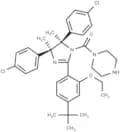
CAS:<p>MDM2-IN-21 is a potent MDM2 inhibitor. MDM2-IN-21 can be used for the research of cancer.</p>Fórmula:C34H40Cl2N4O2Forma y color:SolidPeso molecular:607.62USP7-IN-9
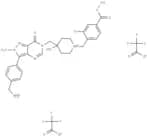
<p>USP7-IN-9 is a potent USP7 inhibitor (IC50 = 40.8 nM), induces apoptosis, arrests RS4;11 cells, and modulates key oncoproteins.</p>Fórmula:C32H33ClF6N6O8Forma y color:SolidPeso molecular:779.08Anticancer agent 157
<p>Anticancer Agent 157 (compound 15) is a nitric oxide (NO) inhibitor with IC50 values of 0.62 μg/mL, exhibiting both anti-inflammatory and anticancer effects.</p>Fórmula:C14H20O2Pureza:98%Forma y color:SolidPeso molecular:220.31LD4172
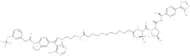
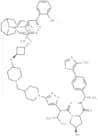
CAS:<p>LD4172 is a PROTAC degrader capable of degrading RIP kinase (RIPK1) with a DC50 in the nanomolar range. When used in combination with TNF-α, LD4172 can induce apoptosis in B16F10 cells. In mouse models, it demonstrates antitumor activity. (Pink: ligand for target protein; Black: linker; Blue: ligand for E3 ligase VHL)</p>Fórmula:C61H75F3N10O7SForma y color:SolidPeso molecular:1149.37p38α inhibitor 6
<p>p38α inhibitor6 (compound 19) is a p38α inhibitor with an IC50 value of 0.68 μM. It induces apoptosis, arrests the cell cycle in the G0 and G2/M phases, reduces TNF-α concentration, upregulates the expression of the tumor suppressor gene p53, increases the Bax/BCL-2 ratio, and activates caspase3/7.</p>Forma y color:Odour SolidDB2313
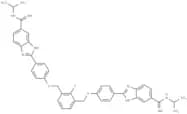
CAS:<p>DB2313 is a potent PU.1 inhibitor (IC50=14 nM) that disrupts gene binding, induces AML cell apoptosis, and has anticancer properties.</p>Fórmula:C42H41FN8O2Pureza:98.63% - 99.29%Forma y color:SolidPeso molecular:708.83Pralnacasan
CAS:<p>Pralnacasan blocks IL-18, IL-1β, IFN-γ. It’s a potent oral enzyme inhibitor with use in arthritis therapy (Ki: 1.4 nM).</p>Fórmula:C26H29N5O7Pureza:98%Forma y color:SolidPeso molecular:523.54FW-1
<p>FW-1 is a type I inhibitor of FLT3, with an IC50 of approximately 1 μM. It exhibits cytotoxic effects in FLT3-mutant AML cells, causes cell cycle arrest at the G0/G1 phase, and induces apoptosis in MV4-11 and MOLM-13 cells.</p>Fórmula:C24H27N7OForma y color:SolidPeso molecular:429.517K-252c
CAS:<p>K-252c is a staurosporine analog isolated from Nocardiopsis sp.</p>Fórmula:C20H13N3OPureza:98%Forma y color:SolidPeso molecular:311.34CST626
CAS:<p>CST626 is a PROTAC degrader that targets XIAP, cIAP1, and cIAP2.</p>Fórmula:C61H82N8O9SPureza:95.87%Forma y color:SolidPeso molecular:1103.42JGB1741
CAS:<p>JGB1741, a SIRT1 inhibitor (IC50=15µM), modulates apoptosis markers and p53 acetylation in breast cancer research.</p>Fórmula:C27H24N2O2SPureza:99.86%Forma y color:SolidPeso molecular:440.56Aphidicolin
CAS:<p>Aphidicolin blocks DNA synthesis, hinders herpes virus growth, and stimulates apoptosis in leukemia cells; it's a mold-derived DNA polymerase inhibitor.</p>Fórmula:C20H34O4Pureza:>99.99%Forma y color:SolidPeso molecular:338.48Fascaplysin chloride
CAS:<p>Fascaplysin inhibits CDK4/D1 (IC50=0.35μM), triggers caspase-activated autophagy-apoptosis crosstalk, and blocks PI3K/AKT/mTOR in HL-60 cells.</p>Fórmula:C18H11ClN2OForma y color:SolidPeso molecular:306.75EGFR-IN-151
<p>EGFR-IN-151 (Compound 10) inhibits EGFR and its downstream signaling pathways ERK/STAT3. It effectively suppresses the proliferation of various lung cancer cells, with IC50 values of 11.7, 5.19, 7.32, and 1.53 μM for NCI-H1781, HCC827, NCI-H3255, and NCI-H1975, respectively. Additionally, EGFR-IN-151 hinders colony formation and cell migration in H1975, induces G1 phase cell cycle arrest, and triggers apoptosis in H1975 cells.</p>Forma y color:Odour Solidα-Tubulin polymerization-IN-1
<p>α-Tubulin polymerization-IN-1 (Compound 8l) functions as an inhibitor of α-tubulin polymerization. This compound modulates the NRF2/KEAP-1 signaling pathway and induces ROS production in PC-3 cells, leading to apoptosis. It inhibits the proliferation of PC-3 cells with a GI50 of 0.17 µM, causing cell cycle arrest in the G2/M phase. Additionally, α-Tubulin polymerization-IN-1 demonstrates antitumor activity in mouse models.</p>Forma y color:Odour SolidPROTAC Bcl-xL ligand-1
<p>PROTAC Bcl-xL ligand-1 serves as a ligand targeting Bcl-xL, essential in synthesizing PROTACs [1].</p>Fórmula:C32H29IN4O4S2Forma y color:SolidPeso molecular:724.63PARP1-IN-15
<p>PARP1-IN-15 (Compound 6) is a PARP1 inhibitor that also inhibits tankyrase (TNKS) and promotes DNA double-strand breaks, leading to tumor cell apoptosis.</p>Fórmula:C16H12N2O2Pureza:98%Forma y color:SolidPeso molecular:264.28Zapalog
CAS:<p>Zapalog: photocleavable dimerizer controlling instant protein interactions.</p>Fórmula:C58H73N7O15Pureza:98%Forma y color:SolidPeso molecular:1108.24DJ4
CAS:<p>DJ4 induces a dose-dependent pro-apoptotic effect in the micromolar range.</p>Fórmula:C19H16N4OSPureza:≥98%Forma y color:SoildPeso molecular:348.42BRAFV600E/JNK-IN-1
<p>BRAFV600E/JNK-IN-1 (Compound 14c) is an inhibitor of JNK1, JNK2, JNK3, and BRAFV600E, with IC50 values of 0.51 μM, 0.53 μM, 1.02 μM, and 0.009 μM, respectively. It also inhibits the phosphorylation of MEK1/2 and ERK1/2. Additionally, BRAFV600E/JNK-IN-1 suppresses tumor cell proliferation, NO release, and PGE2 production, exhibiting both antitumor and anti-inflammatory activities.</p>Forma y color:Odour SolidThiocolchicine
CAS:Thiocolchicine inhibits tubulin polymerization (IC50: 2.5 µM, Ki: 0.7 µM), induces apoptosis, and serves as an ADC cytotoxin.Fórmula:C22H25NO5SPureza:98.19%Forma y color:SolidPeso molecular:415.5Eriosematin
CAS:<p>Eriosematin has anti-proliferative and apoptosis-inducing properties and is a compound extracted from the root of Flemingia philippinensis in the Philippines.</p>Fórmula:C19H20O4Pureza:98%Forma y color:SolidPeso molecular:312.36SL-01
CAS:<p>SL-01, an oral gemcitabine derivative, potently induces apoptosis to hinder breast cancer more effectively than gemcitabine.</p>Fórmula:C18H18ClNO3Pureza:98%Forma y color:White PowderPeso molecular:331.79Bcl-2-IN-22
<p>Bcl-2-IN-22 (compound 1), a gold (I) NHC complex, exhibits anticancer activity. It induces cell death (apoptosis) via the mitochondrial pathway with an IC50 value of 0.014 μM. Additionally, Bcl-2-IN-22 targets members of the BCL-2 family, promoting apoptosis and sensitization in multidrug-resistant leukemia cells overexpressing BCL-2.</p>Forma y color:Odour SolidEGFR/BRAFV600E-IN-4
<p>EGFR/BRAFV600E-IN-4 (Compound 10f) is a dual inhibitor of EGFR and BRAFV600E, with IC50 values of 61 nM and 43 nM, respectively. It halts the cell cycle, induces apoptosis in both early and late stages, and inhibits cancer cell growth in vitro, showing broad-spectrum anticancer activity.</p>Fórmula:C22H16N4OSForma y color:SolidPeso molecular:384.45Bcl-2-IN-15
<p>Bcl-2-IN-15 (Compound 13d) is a Bcl-2 inhibitor with an IC50 of 363 nM, which impedes the proliferation of the NCI leukemia cancer cell line [1].</p>Forma y color:Odour SolidBursehernin
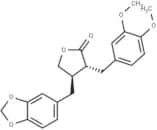
CAS:<p>Bursehernin is a useful organic compound for research related to life sciences and the catalog number is T124894.</p>Fórmula:C21H22O6Forma y color:SolidPeso molecular:370.401Anti-inflammatory agent 61
<p>Compound 5b (Anti-inflammatory agent 61) is a potent anti-inflammatory agent that diminishes TNF-α expression in LPS-induced inflammation within RAW 264.7 cells</p>Forma y color:Odour SolidAntibiotic DC 81
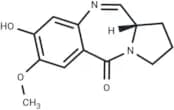
CAS:<p>DC 81: Streptomyces-derived antitumor antibiotic, potent nucleic acid synthesis inhibitor, binds DNA sequences, forms covalent adducts.</p>Fórmula:C13H14N2O3Forma y color:SolidPeso molecular:246.2612-Deoxyphorbol 13-palmitate
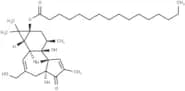
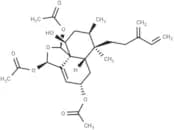
CAS:<p>12-Deoxyphorbol 13-palmitate, a monomer derived from the roots of Euphorbia fischeriana, exhibits notable antitumor activity. This compound induces cell cycle arrest and apoptosis in gastric cancer cells by modulating key cell cycle regulators, such as cyclin B, cyclin A, and CDC2. Additionally, 12-Deoxyphorbol 13-palmitate significantly diminishes liver fibrosis by targeting APOL2 and impairing the APOL2–SERCA2–PERK–HES1 signaling pathway.</p>Fórmula:C36H58O6Forma y color:SolidPeso molecular:586.84Antagonist G TFA
<p>Potent vasopressin blocker, Antagonist G TFA also mildly inhibits GRP & Bradykinin, triggers AP-1, enhances chemo response.</p>Fórmula:C51H67F3N12O8SForma y color:SolidPeso molecular:1065.21HG-7-85-01
CAS:<p>HG-7-85-01 is a novel ATP-competitive and type II tyrosine kinase inhibitor targeting both wild-type and watchman mutant BCR-ABL, PDGFRα, Kit, and Src kinases.</p>Fórmula:C31H31F3N6O2SPureza:98.08%Forma y color:SolidPeso molecular:608.68TPP-1 TFA
<p>TPP-1 TFA is a high-affinity PD-L1 inhibitor (KD=95nM) that boosts T-cell function to curb tumor growth.</p>Fórmula:C109H151F3N34O34S2Forma y color:SolidPeso molecular:2602.69Azalamellarin N
CAS:<p>Azalamellarin N is a pyroptosis inhibitor that exhibits varying inhibitory effects on different pyroptosis inducers. It functions by targeting molecules upstream of NLRP3 inflammasome activation, instead of directly affecting the components of the NLRP3 inflammasome. Its inhibitory potency against various inducers is ranked as follows: Nigericin > R837 [1].</p>Fórmula:C28H22N2O7Forma y color:SolidPeso molecular:498.48EGFR-IN-86
<p>EGFR-IN-86 (compound 4i), an EGFR inhibitor (IC50: 1.5 nM), demonstrates potent activity against glioblastoma by inducing apoptosis and causing G2/M phase cell</p>Fórmula:C20H21N7O2SPureza:98%Forma y color:SolidPeso molecular:423.49JPS014 TFA
<p>JPS014 TFA, a benzamide-based Von Hippel-Lindau (VHL) E3-ligase proteolysis targeting chimera (PROTAC), effectively degrades class I histone deacetylase (HDAC</p>Fórmula:C48H60F3N7O9SPureza:98%Forma y color:SolidPeso molecular:968.09Eciskafusp alfa
CAS:<p>Eciskafusp alfa, a cis-targeted IL2v immunocytokine, acts on programmed cell death 1 (PDCD1, commonly known as PD-1), preferentially targeting antigen-specific</p>Pureza:98%Forma y color:SolidHDAC3-IN-6
<p>HDAC3-IN-6 (Compound SC26) is a selective HDAC3 inhibitor with an IC50 of 53 nM. It induces PD-L1 expression in a dose-dependent manner and leads to significant apoptosis and reactive oxygen species (ROS) production. HDAC3-IN-6 exhibits strong antitumor efficacy against colorectal cancer.</p>Fórmula:C23H23N5O3Forma y color:SolidPeso molecular:417.46A011
<p>A011, a potent and selective ataxia-telangiectasia mutated (ATM) inhibitor, exhibits an IC50 of 1.0 nM and triggers apoptosis as well as G2/M phase cell cycle</p>Fórmula:C27H28N6OPureza:98%Forma y color:SolidPeso molecular:452.557-epi-Isogarcinol
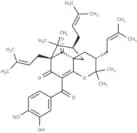
CAS:<p>7-epi-Isogarcinol, a PPAP, hinders STAT3 to induce apoptosis and curbs cell migration with moderate antiproliferative effects.</p>Fórmula:C38H50O6Forma y color:SolidPeso molecular:602.8YW-N-7 TFA
<p>YW-N-7 (TFA) is a PROTAC designed to target, inhibit, and degrade RET kinase, demonstrating a DC50 of 88 nM. It exhibits antitumor activity in xenograft mouse models driven by KIF5B-RET, making it a valuable compound for cancer research.</p>Fórmula:C58H63F3N12O9Forma y color:SolidPeso molecular:1129.19β-Glucuronide-dPBD-PEG5-NH2
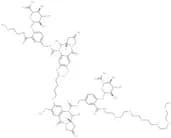
CAS:<p>β-Glucuronide-dPBD-PEG5-NH2 is a β-glucuronide-linked pyrrolobenzodiazepine dimer that functions as a proagent for the synthesis of the antibody-drug conjugate</p>Fórmula:C78H101N7O35Forma y color:SolidPeso molecular:1696.66hCAIX-IN-23
<p>hCAIX-IN-23 (Compound 27) is a human carbonic anhydrase (hCA) inhibitor with Ki values of 10.4 nM for hCA IX and 8.5 nM for hCA XII. It not only inhibits hCA activity but also releases NO, exerting dual anti-tumor effects. By reducing the expression of hCA IX and iron regulatory proteins, hCAIX-IN-23 regulates mitochondrial caspase activity and the ferroptosis pathway, thereby inducing apoptosis. This compound is utilized in research focused on renal cancer.</p>Forma y color:Odour SolidKurzipene D
CAS:<p>Kurzipene D: anticancer, induces apoptosis, halts HepG2 at S phase, anti-tumor in zebrafish, inhibits tumor growth and spread.</p>Fórmula:C26H36O8Forma y color:SolidPeso molecular:476.56MET/PDGFRA-IN-1
<p>MET/PDGFRA-IN-1 (compound 8c) serves as an inhibitor of MET and PDGFRA proteins, displaying an IC50 of 36 μM against MET.</p>Fórmula:C26H23N7OPureza:98%Forma y color:SolidPeso molecular:449.51Trilexium
CAS:<p>Trilexium (TRX-E-009-1), a third-generation benzopyran structurally related to TRX-E-002-1, increases p21 protein expression, induces apoptosis, depolymerizes microtubules, and demonstrates broad anti-cancer activity [1] [2].</p>Fórmula:C24H23FO6Forma y color:SolidPeso molecular:426.43A947
CAS:<p>A947 is a potent and selective SMARCA2 PROTAC that induces the degradation of SMARCA2, with significant antitumor activity in SMARCA4-mutant NSCLC cells.</p>Fórmula:C61H76N12O7SPureza:98.84%Forma y color:SolidPeso molecular:1121.4Ub4ix
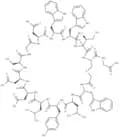
CAS:<p>Ub4ix, a DUB/26S proteasome inhibitor, safeguards K48-linked Ub chains against cleavage by deubiquitinating enzymes (DUBs) and inhibits the proteasomal degradation of Ub-tagged proteins. Additionally, it diminishes the viability of Hela cells and triggers apoptosis, exhibiting an IC 50 value of 1.6 μM.</p>Fórmula:C84H106N18O23SForma y color:SolidPeso molecular:1767.91Nauclefine
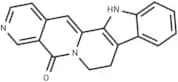
CAS:<p>Nauclefine, a plant alkaloid, triggers cancer cell death through PDE3A-SLFN12, binding but not inhibiting PDE3A.</p>Fórmula:C18H13N3OPureza:99.92%Forma y color:SolidPeso molecular:287.32