Apoptosis
Los inhibidores de la apoptosis son compuestos que previenen o retrasan el proceso de muerte celular programada, conocido como apoptosis. Estos inhibidores son vitales para estudiar los mecanismos de supervivencia celular y se utilizan para investigar enfermedades donde la apoptosis está desregulada, como el cáncer, los trastornos neurodegenerativos y las enfermedades autoinmunes. Al modular la apoptosis, estos inhibidores pueden ayudar en el desarrollo de terapias dirigidas a controlar la muerte celular. En CymitQuimica, ofrecemos una amplia selección de inhibidores de la apoptosis de alta calidad para apoyar su investigación en biología celular, oncología y campos relacionados.
Subcategorías de "Apoptosis"
- ASK(9 productos)
- BCL(11 productos)
- Caspasa(142 productos)
- FOXO1(3 productos)
- IAP(67 productos)
- Mdm2(12 productos)
- PD-1 / PD-L1(138 productos)
- PDK(9 productos)
- PERK(25 productos)
- Serina / treonina quinasa(14 productos)
- Survivin(14 productos)
- TNF(89 productos)
- c-RET(56 productos)
- p53(63 productos)
Mostrar 6 subcategorías más
Se han encontrado 5903 productos de "Apoptosis"
Ordenar por
Pureza (%)
0
100
|
0
|
50
|
90
|
95
|
100
Taltobulin
CAS:<p>Taltobulin (HTI-286) is a synthetic analog of the tripeptide cysteine, a microtubule protein inhibitor that inhibits liver tumor cell proliferation in vitro and tumor growth in vivo.Taltobulin is cytotoxic, induces mitotic arrest and apoptosis, and may be used in the study of breast cancer and microtubule tissue-related diseases.</p>Fórmula:C27H43N3O4Pureza:99.86%Forma y color:SolidPeso molecular:473.65DETD-35
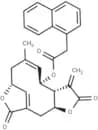
CAS:<p>DETD-35 is a promising chemical compound in anti-melanoma therapy, functioning as an inhibitor of the MEK-ERK, Akt, and STAT3 signaling pathways. It enhances cancer cell apoptosis (Apoptosis) and diminishes resistance to Vemurafenib in cancer cells. The compound exhibits IC 50 values of 2.7, 6.0, 3.9, 3.1, and 2.5 μM against melanoma cell lines B16-F10, MeWo, SK-MEL-2, A2058c, and A375c, respectively. DETD-35 offers significant potential for advancing research in melanoma treatment strategies.</p>Fórmula:C27H24O6Forma y color:SolidPeso molecular:444.48CHMFL-48
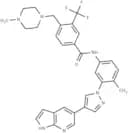
CAS:<p>CHMFL-48, an orally active inhibitor of BCR-ABL kinase, demonstrates efficacy against both the wild-type (wt) and various imatinib-resistant mutants. It exhibits potent inhibitory activity, with IC 50 values of 1 nM for the ABL wild-type and 0.8 nM for the ABL T315I mutant. CHMFL-48 operates by inhibiting the autophosphorylation of both wild-type and mutant BCR-ABL, affecting downstream signaling mediators including STAT5 and CRKL. This disruption leads to cell cycle arrest and triggers apoptosis. Given its properties, CHMFL-48 is a promising candidate for research on chronic myeloid leukemia (CML).</p>Fórmula:C31H30F3N7OForma y color:SolidPeso molecular:573.61