Apoptosis
Los inhibidores de la apoptosis son compuestos que previenen o retrasan el proceso de muerte celular programada, conocido como apoptosis. Estos inhibidores son vitales para estudiar los mecanismos de supervivencia celular y se utilizan para investigar enfermedades donde la apoptosis está desregulada, como el cáncer, los trastornos neurodegenerativos y las enfermedades autoinmunes. Al modular la apoptosis, estos inhibidores pueden ayudar en el desarrollo de terapias dirigidas a controlar la muerte celular. En CymitQuimica, ofrecemos una amplia selección de inhibidores de la apoptosis de alta calidad para apoyar su investigación en biología celular, oncología y campos relacionados.
Subcategorías de "Apoptosis"
- ASK(6 productos)
- BCL(11 productos)
- Caspasa(125 productos)
- FOXO1(3 productos)
- IAP(66 productos)
- Mdm2(12 productos)
- PD-1 / PD-L1(125 productos)
- PDK(9 productos)
- PERK(25 productos)
- Serina / treonina quinasa(15 productos)
- Survivin(13 productos)
- TNF(92 productos)
- c-RET(51 productos)
- p53(62 productos)
Mostrar 6 subcategorías más
Se han encontrado 5600 productos de "Apoptosis"
Ordenar por
Pureza (%)
0
100
|
0
|
50
|
90
|
95
|
100
PD-L1-IN-1
<p>PD-L1-IN-1, potent PD-L1 inhibitor with 115 nM IC50, suppresses tumors, boosts immune response, and spares healthy cells.</p>Fórmula:C21H23N5O2Forma y color:SolidPeso molecular:377.44Keap1-Nrf2-IN-4
<p>Keap1-Nrf2-IN-4 hinders MGC-803 cell growth (IC50=2.55μM), migration, and induces apoptosis with low toxicity.</p>Fórmula:C26H34N2OForma y color:SolidPeso molecular:390.56Lonitoclax
CAS:<p>Lonitoclax is an inhibitor of B-cell lymphoma 2 (Bcl-2). It demonstrates antitumor activity in B-cell and myeloid malignancy models comparable to Venetoclax. Lonitoclax holds potential for research in relapsed or refractory chronic lymphocytic leukemia (CLL), small lymphocytic lymphoma, and certain low-grade lymphomas.</p>Fórmula:C43H45ClN4O5Forma y color:SolidPeso molecular:733.294CRT0066101
CAS:<p>CRT0066101 is a potent, orally active PKD inhibitor with IC 50 values of 1 nM, 2.5 nM, and 2 nM for PKD1, PKD2, and PKD3, respectively [1]. Additionally, it inhibits PIM2 with an IC 50 of approximately 135.7 nM and demonstrates anticancer effects [2].</p>Fórmula:C18H22N6OForma y color:SolidPeso molecular:338.41RET-IN-1
CAS:<p>RET-IN-1 is a RET kinase inhibitor (IC50s: 1 nM, 7 nM, and 101 nM for RET (WT), RET (V804M) , and RET (G810R), respectively).</p>Fórmula:C29H31N9O3Pureza:98%Forma y color:SolidPeso molecular:553.61MNK1/2-IN-6
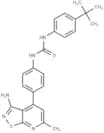
<p>MNK1/2-IN-6: Strong, selective MNK1/2 inhibitor; IC50s: MNK1 at 2.3 nM, MNK2 at 3.4 nM; triggers dose-dependent apoptosis.</p>Fórmula:C27H24N6OForma y color:SolidPeso molecular:448.52Rezatapopt
CAS:<p>Rezatapopt (PC14586) is a p53 reactivator with antitumor activity for the study of locally advanced or metastatic solid tumors.</p>Fórmula:C28H31F4N5O2Pureza:98.12%Forma y color:SolidPeso molecular:545.57YL-1-9
CAS:<p>YL-1-9 is an inhibitor that prevents the degradation of p53 by MDM2 through tight binding to the crucial hydrophobic pocket of MDM2. It can induce cell cycle arrest and apoptosis in breast cancer cells [1].</p>Fórmula:C22H23F3N2O3Forma y color:SolidPeso molecular:420.425HP590
CAS:<p>HP590: potent oral STAT3 inhibitor, IC50=27.8 nM, blocks ATP, IC50=24.7 nM, hinders gastric cancer growth, triggers cell death.</p>Fórmula:C29H24F6N4O3Forma y color:SolidPeso molecular:590.52Ketorolac hydrochloride
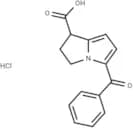
CAS:<p>Ketorolac (RS37619) hydrochloride is a nonsteroidal anti-inflammatory drug and a non-selective COX inhibitor, exhibiting IC50 values of 20 nM for COX-1 and 120 nM for COX-2. This compound is utilized in a 0.5% ophthalmic solution format for the investigation of allergic conjunctivitis, cystoid macular edema, intraoperative miosis, and post-operative ocular inflammation pain. Additionally, Ketorolac hydrochloride serves as a DDX3 inhibitor, making it pertinent for research in cancer therapies.</p>Fórmula:C15H14ClNO3Forma y color:SolidPeso molecular:291.73SILA-123
CAS:<p>SILA-123, an inhibitor of FLT3 (FLT3-WT: IC50=2.1 nM; FLT3-ITD: IC50=1.0 nM), induces cell apoptosis by hindering the cell cycle progression at the G0/G1 phase through the suppression of FLT3 phosphorylation and its downstream signaling pathways. This compound is utilized in the study of acute myeloid leukemia.</p>Fórmula:C24H25N5O2Forma y color:SolidPeso molecular:415.49p53-MDM2-IN-6
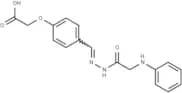
CAS:<p>p53-MDM2-IN-6, an LSM-83177 hydrazone analog, acts as an efficacious p53-MDM2 inhibitor with an IC50 of 11.08 µg/mL. This compound inhibits the p53-MDM2 interaction leading to an increase in p-53 levels while concurrently decreasing GST enzyme expression. It halts the cell cycle at the S phase and induces early and late apoptosis (Apoptosis), exhibiting antiproliferative activity against the HT29 cell line with an IC50 of 10.44 µg/mL. p53-MDM2-IN-6 holds promise for research in colorectal cancer.</p>Fórmula:C17H17N3O4Forma y color:SolidPeso molecular:327.33Ferroptosis-IN-18
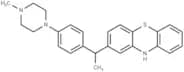
CAS:<p>Ferroptosis-IN-18 (51) is a phenothiazine derivative known for its potent anti-ferroptotic and antioxidant properties. It is useful for research related to intracerebral hemorrhage (ICH).</p>Fórmula:C25H27N3SForma y color:SolidPeso molecular:401.567Nur77 agonist-1
CAS:<p>Nur77 agonist-1 (Compound 8f) is an orally active Nur77 agonist. It induces ferroptosis by upregulating Nur77 protein expression, increasing reactive oxygen species (ROS) and lipid peroxidation levels, while decreasing GPX4 protein expression. Nur77 agonist-1 binds with affinity to the ligand binding domain of Nur77, with a KD of 13.80 μM. It demonstrates significant antiproliferative activity against various breast cancer cells (IC50: 2.15-3.26 μM) and exhibits low cytotoxicity towards normal cells. This compound is useful for breast cancer research.</p>Fórmula:C24H18ClN5O2Forma y color:SolidPeso molecular:443.885Isoforretin A
CAS:<p>Isoforretin A is a potent inhibitor of thioredoxin-1 (Trx1) with significant biological activity, inducing anti-tumor effects mediated by reactive oxygen species (ROS). The compound inhibits Trx1 activity by covalently binding to the activation site residues Cys32/Cys35, which triggers ROS accumulation, leading to DNA damage and apoptosis (Apoptosis) in cancer cells. Additionally, Isoforretin A has demonstrated the ability to suppress the growth of HepG2 tumors in a mouse hepatic cell carcinoma xenograft model.</p>Fórmula:C28H38O10Forma y color:SolidPeso molecular:534.6SC428
CAS:<p>SC428 acts as an inhibitor of the androgen receptor (AR), specifically targeting the N-terminal domain of AR. This compound effectively diminishes the transactivation of various AR forms, including AR-V7, ARv567es, full-length AR (AR-FL), and its LBD mutants. Additionally, SC428 significantly inhibits AR-FL nuclear translocation, chromatin binding, and AR-regulated gene transcription under androgen stimulation. In vitro, SC428 suppresses the proliferation of tumor cells. In vivo, it inhibits tumor growth in mice transplanted with 22Rv1 cells by inducing apoptosis.</p>Fórmula:C15H10F3N3OSForma y color:SolidPeso molecular:337.32HC-5404-Fu
CAS:HC-5404-Fu is an inhibitor of PERK with anti-tumor activity. This compound inhibits the signaling pathway of the endoplasmic reticulum stress response. Additionally, HC-5404-Fu increases the sensitivity of renal cell carcinoma cells to vascular endothelial growth factor (VEGF) receptor tyrosine kinase inhibitors (TKIs). It holds potential for research into renal cell carcinoma, stomach cancer, metastatic breast cancer, small cell lung cancer, and other solid tumors.Fórmula:C28H28F2N4O7Forma y color:SolidPeso molecular:570.54Gallium 8-Hydroxyquinolinate
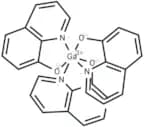
CAS:<p>Gallium 8-Hydroxyquinolinate is an inducer of apoptosis that initiates both p53-dependent and independent cell death in cancer cells through the induction of Ca2+ signaling transduction. In addition to its apoptotic properties, this compound's nanostructures exhibit excellent optical performance, making it suitable for use in tumor research.</p>Fórmula:C27H18GaN3O3Forma y color:SolidPeso molecular:502.17XSJ05
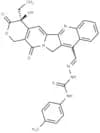
CAS:<p>XSJ05, a derivative of camptothecin (CPT), exhibits anti-cancer activity by inhibiting topoisomerase I (Topo I). This compound induces DNA double-strand breaks, leading to DNA damage. Furthermore, XSJ05 stifles the growth of colorectal cancer (CRC), halts the cell cycle in the G2/M phase, and induces apoptosis.</p>Fórmula:C29H25N5O4SForma y color:SolidPeso molecular:539.60Ac-DMLD-CMK
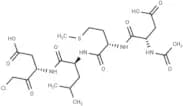
CAS:<p>Ac-DMLD-CMK is a peptide designed to target the caspase3-Gsdme signaling pathway in mice. It specifically inhibits the activation of caspase 3 and Gsdme, preventing the cleavage of Gsdme by caspase 3, which reduces pyroptosis. This process helps alleviate damage to renal tubular epithelial cells and decrease the secretion of inflammatory cytokines. Ac-DMLD-CMK can lower serum creatinine and blood urea nitrogen levels in mice induced by Cisplatin, thereby mitigating the progression of renal dysfunction. It holds potential for research into chemotherapy-induced nephrotoxicity.</p>Fórmula:C22H35ClN4O9SForma y color:SolidPeso molecular:567.053