Apoptosis
Los inhibidores de la apoptosis son compuestos que previenen o retrasan el proceso de muerte celular programada, conocido como apoptosis. Estos inhibidores son vitales para estudiar los mecanismos de supervivencia celular y se utilizan para investigar enfermedades donde la apoptosis está desregulada, como el cáncer, los trastornos neurodegenerativos y las enfermedades autoinmunes. Al modular la apoptosis, estos inhibidores pueden ayudar en el desarrollo de terapias dirigidas a controlar la muerte celular. En CymitQuimica, ofrecemos una amplia selección de inhibidores de la apoptosis de alta calidad para apoyar su investigación en biología celular, oncología y campos relacionados.
Subcategorías de "Apoptosis"
- ASK(9 productos)
- BCL(1 productos)
- Caspasa(154 productos)
- FOXO1(2 productos)
- IAP(67 productos)
- Mdm2(12 productos)
- PD-1 / PD-L1(115 productos)
- PDK(9 productos)
- PERK(24 productos)
- Serina / treonina quinasa(18 productos)
- Survivin(14 productos)
- TNF(65 productos)
- c-RET(61 productos)
- p53(63 productos)
Mostrar 6 subcategorías más
Se han encontrado 6112 productos de "Apoptosis"
Ordenar por
Pureza (%)
0
100
|
0
|
50
|
90
|
95
|
100
pan-KRAS-IN-5
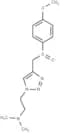
CAS:Pan-KRAS-IN-5 (compound 15a) is a pan-KRAS translation inhibitor targeting 5′-UTR RNA G-quadruplexes (rG4s). It induces cell cycle arrest and promotes apoptosis in KRAS-driven cancer cells [1].Fórmula:C31H36FIN4O2Forma y color:SolidPeso molecular:642.55c-Myc inhibitor 16 iodide
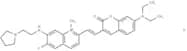
CAS:c-Myc inhibitor16 iodide (Compound W11) is a selective inhibitor of the c-MycG-quadruplex (c-MycG4). It suppresses the transcription and translation of the c-Myc gene, disrupts the tumor cell cycle by halting growth at the G0/G1 phase, and activates mitochondrial apoptotic pathways, leading to early apoptosis in cancer cells. This compound shows potential for research in breast cancer.Fórmula:C26H24INOForma y color:SolidPeso molecular:493.379FAK-IN-4
FAK-IN-4 (Compound 7d) has anticancer activities that can induce cell apoptosis. FAK-IN-4 is potential inhibitor of FAK [1].Fórmula:C20H22N4OForma y color:SolidPeso molecular:334.41VDX-111
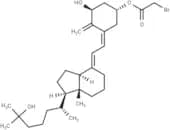
CAS:VDX-111, an analog of vitamin D, exhibits cytotoxicity in ovarian cancer cells by upregulating the RIPK1/RIPK3 pathway and inducing necroptosis. It also promotes the expression of cytokines and demonstrates antitumor activity in a mouse model [1].
Fórmula:C29H45BrO4Forma y color:SolidPeso molecular:537.57PD-L1-IN-7
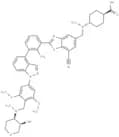
CAS:PD-L1-IN-7 (compound CB31) serves as a PD-L1 inhibitor, effectuating PD-L1 internalization and retention within cells. It restrains the PD-1/PD-L1 interaction (IC 50: 0.2 nM), alters glycosylation patterns, and facilitates PD-L1 degradation. Additionally, PD-L1-IN-7 enhances T cell infiltration, boosts T cell function, and augments the capacity to destroy tumor cells.Fórmula:C46H50N6O7Forma y color:SolidPeso molecular:798.93Tubulin polymerization-IN-61
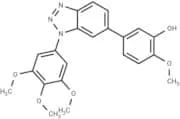
CAS:Tubulin polymerization-IN-61 (Compound 9a), a tubulin polymerization inhibitor, disrupts the microtubule skeleton, arrests the cell cycle at the G2/M phase, induces Apoptosis, and impedes cancer cell migration and colony formation. This compound demonstrates antitumor efficacy in vivo within the 4T1 xenograft model [1].Fórmula:C22H21N3O5Forma y color:SolidPeso molecular:407.42Apoptosis inducer 42
CAS:Apoptosis inducer42 is an apoptosis inducer that triggers late-stage apoptosis and inhibits the secretion of IL-6. It exhibits high cytotoxicity toward cancer cells and is applicable in cancer research, including studies on colon cancer.Fórmula:C11H13OPSForma y color:SolidPeso molecular:224.26Siphonaxanthin
CAS:Siphonaxanthin is a carotenoid found in green algae, known for targeting the death receptor 5 (DR5) on cancer cells to induce apoptosis. In human leukemia HL-60 cells, it increases DR5 expression, reduces Bcl-2 levels, and activates caspase-3. It also inhibits fibroblast growth factor receptor-1 (FGFR-1) signaling in endothelial cells. Siphonaxanthin suppresses the proliferation, migration, and tubular formation of human umbilical vein endothelial cells (HUVECs), as well as the growth of microvessels in rat aorta rings. Additionally, it has anti-inflammatory properties by blocking the translocation of high-affinity IgE receptors (FcεRI) to lipid rafts in mast cells. Siphonaxanthin shows potential for research into diseases such as cancer, diabetic retinopathy, and rheumatoid arthritis.Fórmula:C40H56O4Forma y color:SolidPeso molecular:600.87Ac-DMLD-CMK
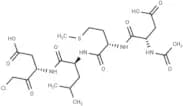
CAS:Ac-DMLD-CMK is a peptide designed to target the caspase3-Gsdme signaling pathway in mice. It specifically inhibits the activation of caspase 3 and Gsdme, preventing the cleavage of Gsdme by caspase 3, which reduces pyroptosis. This process helps alleviate damage to renal tubular epithelial cells and decrease the secretion of inflammatory cytokines. Ac-DMLD-CMK can lower serum creatinine and blood urea nitrogen levels in mice induced by Cisplatin, thereby mitigating the progression of renal dysfunction. It holds potential for research into chemotherapy-induced nephrotoxicity.Fórmula:C22H35ClN4O9SForma y color:SolidPeso molecular:567.053ER covalent antagonist-1
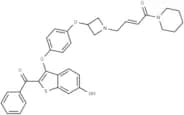
CAS:ER covalent antagonist-1 (Compound 39D) acts as an antagonist of the estrogen receptor α (ERα). This compound inhibits the proliferation of ERα-positive MCF-7 cells with an IC50 of 0.98 μM, induces cell cycle arrest at the G0/G1 phase, and triggers apoptosis. Additionally, ER covalent antagonist-1 demonstrates antitumor activity in mouse models.Fórmula:C33H32N2O5SForma y color:SolidPeso molecular:568.683Topo II/HDAC-IN-1
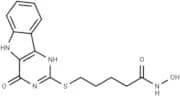
CAS:Topo II/HDAC-IN-1 (7d) demonstrates potent dual inhibitory effects on Topo II and HDAC, while Topo II/HDAC-IN-1 (8d) effectively induces apoptosis [1].Fórmula:C15H16N4O3SForma y color:SolidPeso molecular:332.38CAR-2
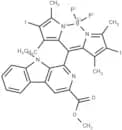
CAS:CAR-2 is a BODIPY-based photosensitizer that induces ferroptosis in photodynamic therapy (PDT) by targeting the endoplasmic reticulum (ER) and lipid droplets (LD). It exhibits phototoxicity against breast cancer cells with an IC50 of 0.01-0.02 μM and demonstrates antitumor efficacy in a 4T1 xenograft mouse model.Fórmula:C27H23BF2I2N4O2Forma y color:SolidPeso molecular:738.114BNN27
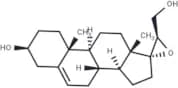
CAS:BNN27 is an agonist of the TrkA receptor (TrkAreceptor) and the p75NTR receptor (p75NTR receptor), exhibiting neurotrophic and anti-apoptotic properties. It enhances levels of glutamate, GABA, and glutamine in the hippocampus and prefrontal cortex of rats, improving glutamate turnover. In a mouse model of amyotrophic lateral sclerosis (ALS), BNN27 demonstrates neuroprotective effects, shows anti-inflammatory properties in an experimental autoimmune encephalomyelitis (EAE) model, and exhibits retinal protection in a rat diabetes model. BNN27 also possesses blood-brain barrier permeability.Fórmula:C21H32O3Forma y color:SolidPeso molecular:332.477MJC13
CAS:MJC13 is an FKBP52-targeting agent with antitumor activity, suitable for prostate cancer research.Fórmula:C13H15Cl2NOForma y color:SolidPeso molecular:272.17Enpp-1-IN-25
CAS:Enpp-1-IN-25 (Compound 30) is an ENPP1 inhibitor with an IC50 of 8.05 nM and exhibits low oral bioavailability. By inhibiting cGAMP degradation, it effectively activates the intracellular STING pathway. Enpp-1-IN-25 can enhance immune cell infiltration and type I interferon response in the tumor microenvironment, thereby increasing the antitumor efficacy of anti-PD-L1 antibodies. It is applicable for research in cancer immunotherapy.Fórmula:C15H21N5O4SForma y color:SolidPeso molecular:367.423Autophagy inducer 7
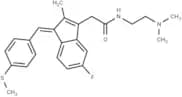
CAS:Autophagyinducer 7 (Compound SSA) serves as an inducer of autophagy (Autophagy) and apoptosis (Apoptosis). It stimulates autophagy by inhibiting Akt/mTOR signaling and the expression of downstream proteins. Additionally, Autophagyinducer 7 suppresses DNA synthesis and causes G0-G1 cell cycle arrest, ultimately inhibiting the growth of tumor cells.Fórmula:C24H27FN2OSForma y color:SolidPeso molecular:410.547Aplysin
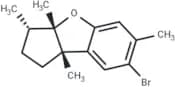
CAS:Aplysin suppresses breast cancer cells and protects liver cells by blocking PI3K/AKT/FOXO3a and preventing oxidative damage.Fórmula:C15H19BrOForma y color:SolidPeso molecular:295.21PD-L1/HDAC-IN-1
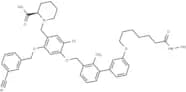
CAS:PD-L1/HDAC-IN-1 (Compound 14) is an inhibitor of PD-L1 and HDAC, effectively blocking PD-1/PD-L1 interaction as well as HDAC2 and HDAC3 with IC50 values of 88.10, 27.98, and 14.47 nM, respectively. It exhibits mild cytotoxicity in MCF-7 cells (IC50=19.34 μM) and enhances the expression of PD-L1 and CXCL10, promoting antitumor immune responses by recruiting T cell infiltration into the tumor microenvironment (TME).Fórmula:C42H46ClN3O7Forma y color:SolidPeso molecular:740.284[D-Leu-4]-OB3
CAS:[D-Leu-4]-OB3 suppresses the expression of genes associated with inflammation, proliferation, and metastasis, as well as the expression of PD-L1.Fórmula:C29H50N8O12SForma y color:SolidPeso molecular:734.82MP-010
CAS:MP-010 is an FKBP12 ligand that regulates cytosolic calcium by stabilizing RyR channel activity. It facilitates functional improvement in SOD1G93A mice with amyotrophic lateral sclerosis (ALS), evidenced by enhanced motor coordination, increased integrity of neuromuscular junctions, and significantly higher spinal motor neuron survival rates. MP-010 is applicable for research in the field of neurological disorders.Fórmula:C14H20N4O2SForma y color:SolidPeso molecular:308.399





![[D-Leu-4]-OB3](/_next/image/?url=https%3A%2Fstatic.cymitquimica.com%2Fproducts%2FTM%2Fthumb-webp%2FT72906.webp&w=3840&q=75)