TLR
Los receptores tipo Toll (TLR) son una clase de proteínas que desempeñan un papel crítico en el sistema inmunitario innato al reconocer patrones moleculares asociados a patógenos (PAMP) e iniciar respuestas inmunitarias. Los TLR están involucrados en la detección de una amplia gama de patógenos, incluidos bacterias, virus y hongos, y son esenciales para la activación de las vías de señalización inflamatorias. La desregulación de la señalización de los TLR se asocia con enfermedades inflamatorias crónicas, trastornos autoinmunes y cáncer. En CymitQuimica, ofrecemos una variedad de moduladores de TLR de alta calidad para apoyar su investigación en inmunidad innata, inflamación y enfermedades infecciosas.
Se han encontrado 93 productos para "TLR".
Filtrar por
Porcentaje de pureza
0
100
|
0
|
50
|
90
|
95
|
100
- Precio más bajo
- Precio más alto
- Pureza más baja
- Pureza más alta
- Entrega estimada más rápida
TLR7/8 agonist 3
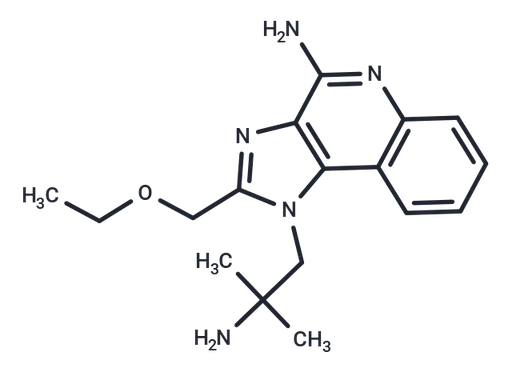
CAS:TLR7/8 agonist 3 is a potent agonist of TLR7 and TLR8.Fórmula:C17H23N5OPureza:99.84%Forma y color:SolidPeso molecular:313.3974CU-CPT22
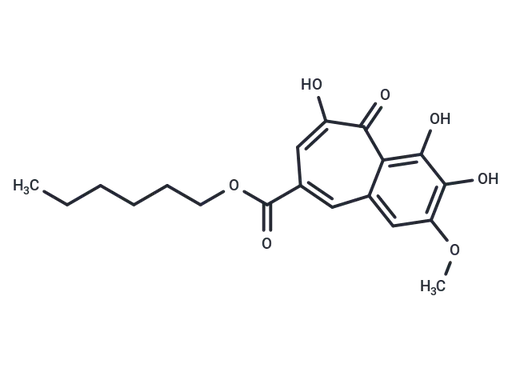
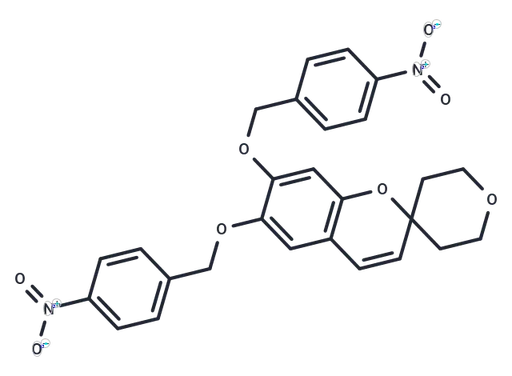
CAS:CU-CPT22: first TLR1/2 complex probe, binds at TLR1/2 interface (IC50=0.58μM), inhibits Pam3CSK4 binding (Ki=0.41μM).Fórmula:C19H22O7Pureza:98.66% - 99.80%Forma y color:Red SolidPeso molecular:362.37BMS-905
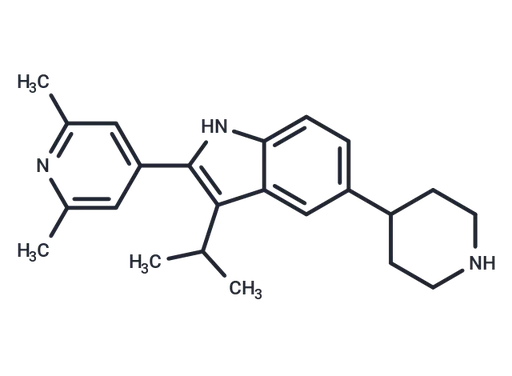
CAS:BMS-905 is a potent dual inhibitors of TLR7 and TLR8 with good selectivity against TLR9 and other family members.Fórmula:C23H29N3Pureza:99.94%Forma y color:White SolidPeso molecular:347.4965CU-T12-9
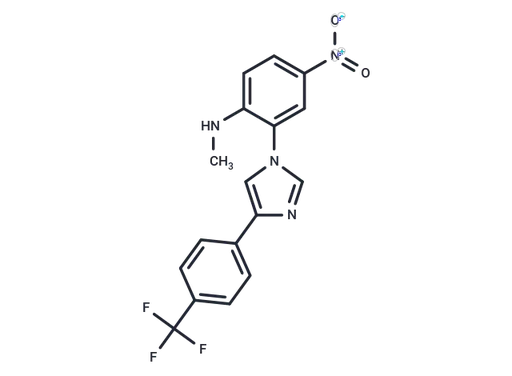
CAS:CU-T12-9 is a potent TLR1/2 agonist(EC50 of 52.9 nM in HEK-Blue hTLR2 SEAP assay).Fórmula:C17H13F3N4O2Pureza:99.84%Forma y color:SolidPeso molecular:362.31CU-CPT17e
CAS:CU-CPT17e is a potent agonist of TLR(TLR3, TLR8, and TLR9).Fórmula:C27H24N2O8Pureza:98.49%Forma y color:White SolidPeso molecular:504.4881Pam2CSK4
CAS:TLR2/6 agonist; boosts TNF-α in human cells & mouse B cell growth/activation.Fórmula:C65H126N10O12SPureza:98%Forma y color:SolidPeso molecular:1271.83MTT5
MTT5, a toll-like receptor 7 (TLR7) agonist, can be conjugated with Deruxtecan to exert antitumor activity in HER2-positive solid tumors through tumor cell killing and immune activation.Fórmula:C22H27N7O4Forma y color:SolidPeso molecular:453.49TLR8 agonist 8
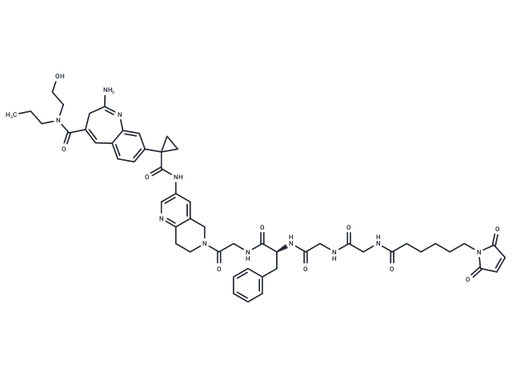
CAS:TLR8 agonist8 (Compound II-72) is an agonist of Toll-like receptor 8 (TLR8) with an EC50 of 0.25-1 μM. It demonstrates stability in both human and mouse plasma and induces the secretion of the cytokine TNFα with an EC50 of less than 1 μM. In the MC38-HER2 xenograft mouse model, TLR8 agonist8 exhibits antitumor activity, achieving a tumor growth inhibition (TGI) rate of 89%.Fórmula:C53H63N11O10Forma y color:SolidPeso molecular:1014.14MTvkPABC-P5 TFA
MTvkPABC-P5d TFA, a TLR7 agonist, functions as an immune stimulant. It is applicable in the synthesis of immune-stimulating antibody conjugates (ISAC).Forma y color:Odour SolidCRX 527
CAS:CRX 527 is a TLR4 ligand and serves as an adjuvant for peptide cancer vaccines, enhancing anti-tumor immune responses. CRX 527 also induces hematopoietic stem cell (HSC) differentiation, increasing the proportion and number of LSK cells, and promotes their differentiation into macrophages. This activation bolsters immune defense and protects intestinal epithelium from radiation damage.Fórmula:C81H151N2O19PForma y color:SolidPeso molecular:1488.04SARM1-IN-6
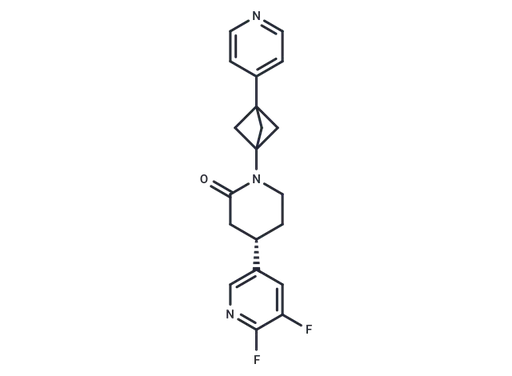
CAS:SARM1-IN-6 (Compound 17a) is a brain-penetrant orthosteric inhibitor of SARM1. It exhibits an IC50 of 14 nM against NAM and 74 nM against HEK cells.Fórmula:C20H19F2N3OPeso molecular:355.38TLR7 agonist 21
TLR7 agonist21 (Compound 27B) is a selective activator of Toll-like receptor 7 (TLR7), with an EC50 of 17.53 nM for human TLR7 and 41.7 nM for mouse TLR7. It induces the secretion of pro-inflammatory cytokines, including IL-6, TNF-α, IFN-α1, and IL-4. Acting as a vaccine adjuvant, TLR7 agonist21 enhances IgG and IgA levels, offering protection for mice against influenza virus infection.Fórmula:C22H33N7OPeso molecular:411.27466TLR2 antagonist-1
TLR2antagonist-1 is a selective antagonist of Toll-like receptor 2 (TLR2). It effectively inhibits excessive activation of TLR2, with an IC50 value of 11.41 μM, and reduces the production of inflammatory factors. TLR2antagonist-1 exhibits metabolic stability, with a half-life (T1/2) of 16.67 minutes in mouse liver microsomes. This compound is useful for research in inflammation, immunology, and neurological disorders.TLR7 agonist 20 hydrochloride
TLR7 agonist20 hydrochloride is an imidazoquinoline analog that functions as a potent and specific agonist for TLR7, with an EC50 value of 0.23 μM against hTLR7. It demonstrates strong adjuvant activity in enhancing spike antibody levels and induces a robust T helper cell 1 (Th1) response. Additionally, it increases levels of IgG2b and IgG2c, aside from IgG1.Fórmula:C22H25ClN4OPeso molecular:396.91PTD-N5-1
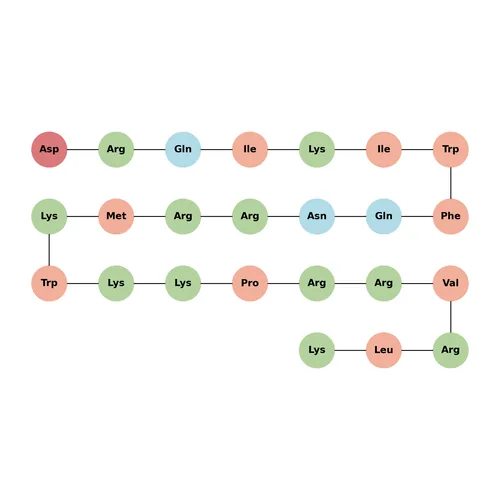
CAS:PTD-N5-1 (N5-1) is an IRF5 inhibitory peptide. It can block the production of IL-12 induced by β-glucan in both wild-type and Clec2d-deficient bone marrow-derived dendritic cells (BMDC) that are activated by IFN-γ. PTD-N5-1 modulates antifungal immunity by inhibiting IRF5-mediated IL-12 production.Fórmula:C148H248N52O30SForma y color:SolidPeso molecular:3267.95Ezeprogind
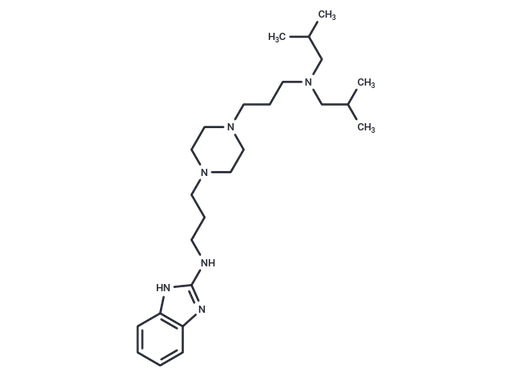
CAS:Ezeprogind, TLR9 inhibitor for Alzheimer's. Affordable Excellence: Reliable Quality You Can TrustFórmula:C25H44N6Pureza:99.28%Forma y color:White SolidPeso molecular:428.66TLR7/8 agonist 11
TLR7/8 agonist 11 (compound 30) serves as a powerful agonist for hTLR7 and hTLR8, exhibiting EC50 values of 31.1 nM and 13.1 nM, respectively. This compound is crucial in the functioning of both adaptive and innate immune responses.Fórmula:C28H38N8O2Peso molecular:518.65TLR7 agonist 26
CAS:TLR7 agonist26 (Compound 4) serves as an effective Toll-like receptor7 (TLR7) agonist with an EC50 value of 225.5 nM. It exhibits immunopotentiating effects.Fórmula:C17H19N5O4Peso molecular:357.36Pam3CSK4-Biotin
CAS:Pam3CSK4-Biotin is a biotinylated derivative of Pam3CSK4, functioning as a Toll-like receptor 1/2 (TLR1/2) agonist.Fórmula:C103H192N14O17S2Pureza:98%Forma y color:SolidPeso molecular:1962.85Pam3CSK4
CAS:Pam3CSK4 is a synthetic triacylated lipopeptide (LP) that mimics the acylated amino terminus of bacterial LPs.Fórmula:C81H156N10O13SPureza:98%Forma y color:SolidPeso molecular:1510.23