Oligosacáridos
Subcategorías de "Oligosacáridos"
- Glicósidos de aminoetilo, glicósidos de aminopropilo(14 productos)
- Glicanos enlazantes de Asn(33 productos)
- Oligosacáridos biotinados(13 productos)
- Grupos sanguíneos y antígenos de Lewis(11 productos)
- Oligosacáridos de tipo sanguíneo(13 productos)
- Celooligosacáridos(1 productos)
- Ciclodextrinas(183 productos)
- Disacáridos(192 productos)
- Oligosacáridos de epítopo(19 productos)
- Fructooligosacáridos(2 productos)
- Oligosacáridos funcionales(554 productos)
- Oligosacáridos funcionalizados(1 productos)
- Galactosamina(41 productos)
- Galactosa(261 productos)
- Galb (1-3) GalNAc(21 productos)
- Serie Ganglio(11 productos)
- Serie Globo e Isoglobo(17 productos)
- Glucosamina(128 productos)
- Ácidos glucurónicos(51 productos)
- Glicoproteínas, Glicopéptidos(59 productos)
- Glicosaminoglicano(26 productos)
- Oligosacáridos de la leche materna(22 productos)
- O-glicanos marcados(9 productos)
- Oligosacáridos marcados(36 productos)
- LacNAc(53 productos)
- Series Lacto y Neolacto(14 productos)
- Lacto-N-biosa(10 productos)
- Lactooligosacáridos(7 productos)
- Oligosacáridos unidos al linker(19 productos)
- Maltooligosacáridos(6 productos)
- Oligosacáridos de leche(31 productos)
- N-glicanos(149 productos)
- Glucósidos naturales(177 productos)
- Oligosacáridos naturales(103 productos)
- O-glicano(18 productos)
- Building Blocks de Oligosacáridos(7 productos)
- Reemplazo de oligosacáridos(2 productos)
- Oligosacáridos por componente de azúcar(225 productos)
- Oligosis(24 productos)
- Otros Oligosacáridos(14 productos)
- Oligómeros de PEG(33 productos)
- Azúcares fosfatados(17 productos)
- Azúcares protegidos(526 productos)
- Reactivos para la síntesis de oligosacáridos(254 productos)
- Ser, Thr Glucanos de unión(9 productos)
- Oligosacáridos sialilados(3 productos)
- Esfingoglucolípidos(42 productos)
- Aminoácidos de azúcar, péptidos de azúcar(20 productos)
- Antígenos de azúcar(31 productos)
- Building Blocks de Azúcares por Oligosacáridos objetivo(225 productos)
- Conjugados de azúcar(100 productos)
- Azúcares sulfatados(16 productos)
- Tetrasacáridos(34 productos)
- Trisacáridos y superiores(95 productos)
- Xilooligosacáridos(5 productos)
Se han encontrado 2278 productos de "Oligosacáridos"
Methyl 4-O-[4,6-O-benzylidene)-b-D-galactopyranosyl] b-D-glucopyranoside
CAS:Methyl 4-O-[4,6-O-benzylidene)-b-D-galactopyranosyl] b-D-glucopyranoside is a synthetic sugar with a high purity and custom synthesis. It has been modified by fluorination, methylation, glycosylation, and click modification. This product can be used as a pharmaceutical ingredient for the treatment of tuberculosis.
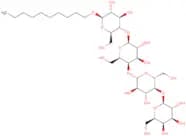
Fórmula:C20H28O11Pureza:Min. 95%Peso molecular:444.43 g/molDecyl 4-O-b-D-lactopyranosyl-b-D-lactopyranoside
CAS:Decyl 4-O-b-D-lactopyranosyl-b-D-lactopyranoside is a high purity, custom synthesis, glycosylated oligosaccharide. It has been modified with Click chemistry to incorporate a fluorine atom on the sugar ring. This complex carbohydrate has a CAS No. of 1858224-00-6 and is synthesized by methylation and fluorination reactions. Decyl 4-O-b-D-lactopyranosyl-b-D-lactopyranoside can be used in biomedical research as a model for glycans and glycolipids, as well as in industrial applications such as food production.Fórmula:C34H62O21Pureza:Min. 95%Peso molecular:806.84 g/mol2-Acetamido-2-deoxy-6-a-O-sialyl-D-galactopyranose
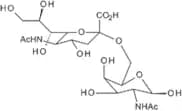
CAS:2-Acetamido-2-deoxy-6-a-O-sialyl-D-galactopyranose is a monosaccharide that is synthesized from D-galactose and acetamide. It has a molecular weight of 388.13 and an empirical formula of C8H14N2O4. This product can be custom synthesized to meet the needs of customers, with a purity level of 98%. 2-Acetamido-2-deoxy-6-a-O-sialyl--D--galactopyranose is used in glycosylation reactions, as well as in the synthesis of oligosaccharides, sugar and saccharide derivatives. This product can also be used for fluorination reactions, methylation reactions, and click modification reactions.
Fórmula:C19H32N2O14Pureza:Min. 95%Peso molecular:512.46 g/molAllyl β-D-lactose
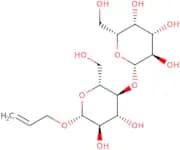
CAS:Allyl β-D-lactose is a disaccharide with an aliphatic alkene functional handle. This can be used as a functionalised monomer in the synthesis of glycopolymers.Fórmula:C15H26O11Pureza:Min. 95 Area-%Forma y color:PowderPeso molecular:382.36 g/mol4-Methoxyphenyl 6-O-(methyl 5-acetamido-4,7,8,9-tetra-O-acetyl-3,5-dideoxy-D-glycero-a-D-galacto-2-nonulopyranosylonate)-2,3-di-O-be nzyl-b-D-galactopyranoside
4-Methoxyphenyl 6-O-(methyl 5-acetamido-4,7,8,9-tetra-O-acetyl-3,5-dideoxy-D-glycero-a-D-galacto-2-nonulopyranosylonate)-2,3 -di O benzyl b D galactopyranoside is a modified oligosaccharide that is synthesized from the sugar galactose. The methyl group on the 4 position of the phenol end of the molecule is substituted with an acetamide group to form 4 methoxyphenyl 6 O (methyl 5 acetamido 4 7 8 9 tetra O acetyl 3 5 dideoxy D glycero a D galacto 2 nonulopyranosylonate)-2 3 di O benzyl b D galactopyranoside. This molecule has been fluorinated at the 2 and 3 positionsFórmula:C47H57NO19Pureza:Min. 95%Peso molecular:939.95 g/mol1,3:1,4-b-Glucotetraose (A)
CAS:1,3:1,4-B-glucotetraose (A) is a high purity and custom synthesis of Oligosaccharide. It is an oligosaccharide sugar derived from glucose. The chemical structure contains an alpha-(1,4)-linked 1,4-alpha-D-glucopyranosyl residue with a glycosylation at the 3 position. 1,3:1,4-B-glucotetraose (A) is synthesized by methylation of 1,3:1,4-B-glucotetraose (B), followed by fluorination and then click modification. This compound has CAS No. 58484-04-1 and can be used in applications such as Fluorination or Click Modification.Fórmula:C24H42O21Pureza:Min. 95%Peso molecular:666.58 g/molPrimeverose
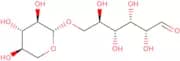
CAS:Primeverose is a p-hydroxybenzoic acid that is found in the genus Primula and mammalian tissue. Primeverose has been shown to inhibit the activity of an enzyme called fatty acid activated, which is involved in the biosynthesis of anthraquinone glycosides. Primeverose is also able to hydrolyze enzymes such as primeverose and may act as a signal peptide for biological samples. The hydroxyl group on primeverose can form hydrogen bonds with other molecules and is present in food composition.
Fórmula:C11H20O10Pureza:Min. 95%Peso molecular:312.27 g/molHeparin disaccharide I-P trisodium salt
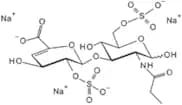
CAS:Heparin disaccharide I-P trisodium salt is a synthetic, highly pure, custom-synthesized heparin derivative with a unique sequence of saccharides. It has been fluorinated and methylated to increase its stability and resistance to degradation by enzymes. Heparin disaccharide I-P trisodium salt is glycosylated, which increases its solubility in water and reduces the risk of precipitation. This product is also modified using click chemistry to introduce an oligosaccharide at one end of the molecule.Fórmula:C15H20NO17S2Na3Pureza:Min. 95%Forma y color:White To Off-White SolidPeso molecular:619.42 g/mol3-O-(2-Acetamido-3,4,6-tri-O-acetyl-2-deoxy-D-glucopyranosyl)-1,2-di-O-benzyl-4,6-O-benzylidene-D-mannopyranoside
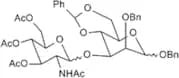
3-O-(2-Acetamido-3,4,6-tri-O-acetyl-2-deoxy-D-glucopyranosyl)-1,2-di-O-benzyl-4,6-O-benzylidene--D--mannopyranoside is an oligosaccharide that has a high purity and custom synthesis. This compound is synthesized by Click modification of the sugar with fluorination. The glycosylation and methylation reactions are then carried out to obtain the final product. 3--0-(2--Acetamido--3,4,6--tri--O--acetyl--2--deoxy---D----glucopyranosyl)--1,2--di--O-----benzyl----4,6---O------benzylidene----D--------mannopyranoside is used in the synthesis of oligosaccharides forFórmula:C41H47NO14Pureza:Min. 95%Peso molecular:777.83 g/molHyaluronate biotin - Molecular Weight - 1000kDa
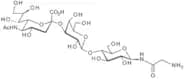
Hyaluronate biotin (HB) is a modified form of hyaluronic acid. It is produced by the methylation and glycosylation of hyaluronic acid and it has an average molecular weight of 1000 kDa. HB is used in tissue engineering, cell culture, and as a contrast agent for magnetic resonance imaging. The modification of hyaluronate with biotin allows for the visualization of HB using immunofluorescence microscopy. Hyaluronate biotin is a synthetic product that can be custom-synthesized to customer specifications, such as purity level, oligosaccharide content, and monosaccharide content.Pureza:Min. 95%NeuAc-a2,3-Gal-b-1,4-Glc-GlycineNH2
NeuAc-a2,3-Gal-b-1,4-Glc-GlycineNH2 is a carbohydrate that belongs to the group of saccharides. It is an oligosaccharide that has been synthesized via a custom synthesis. This product is high purity and has been modified with methylation, glycosylation, and click modification.Fórmula:C25H43N3O19Pureza:Min. 95%Forma y color:PowderPeso molecular:689.62 g/mol8-Methoxycarbonyl-3-benzyl-3',4',6',6-tetra-O-acetyl-N,N'-diacetyl-b-chitobioside
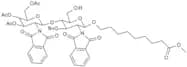
CAS:8-Methoxycarbonyl-3-benzyl-3',4',6',6-tetra-O-acetyl-N,N'-diacetyl b-chitobioside is a synthetic product that belongs to the class of glycosides. This compound has been modified by the incorporation of methyl and fluorine atoms. It is used as an intermediate in the synthesis of oligosaccharides and saccharides for use in biotechnology research.Fórmula:C39H58N2O16Pureza:Min. 95%Peso molecular:810.88 g/mol8-Methoxycarbonyloctyl-3-O-benzyl-2,2'-dideoxy-2,2'-diphthalimido-3',4',6-tri-O-acetyl-b-cellobiose
CAS:8-Methoxycarbonyloctyl-3-O-benzyl-2,2'-dideoxy-2,2'-diphthalimido-3',4',6-tri-O-acetyl-b -cellobiose is a cellobiose with an 8 methoxycarbonyl group at the C8 position. It can be used in the synthesis of oligosaccharides and polysaccharides. The compound has been synthesized by methylation, click modification, and fluorination. The CAS number is 106445-30-1. 8MCOBBIOSE has a purity of > 98% and may have a white to off white powder appearance.Fórmula:C51H58N2O18Pureza:Min. 95%Peso molecular:987.01 g/molMaltotetraose-APD-HSA
Maltotetraose-APD-HSA is a complex carbohydrate with a high purity. Maltotetraose-APD-HSA is a synthetic oligosaccharide that has been modified by glycosylation, methylation, and fluorination. It is an alpha 1,4 linked maltotetraose that has been conjugated to HSA. Maltotetraose-APD-HSA has the CAS number 113789-04-8 and its molecular weight is 495.7 Da. Maltotetraose-APD-HSA can be found in the monosaccharides saccharide and carbohydrate categories.
Pureza:Min. 95%1,2,3,6,2',3',6'-Hepta-O-acetyl-4'-O-(2-acetamido-3,4,6-tri-O-acetyl-2-deoxy-a-D-galactopyranosyl)-b-D-lactopyranoside
This is an oligosaccharide that has been modified with a fluorinated saccharide. It is a complex carbohydrate that has been synthesized through custom synthesis and is high purity with a CAS No. This monosaccharide has been methylated and glycosylated, and it can be used in the synthesis of polysaccharides.Pureza:Min. 95%D-Cellohexaose
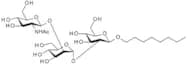
CAS:Substrate for β-glucosidaseFórmula:C36H62O31Pureza:Min. 95%Forma y color:White Off-White PowderPeso molecular:990.86 g/molOctyl 2-acetamido-2-deoxy-b-D-glucopyranosyl-(1-2)-a-D-mannopyranosyl-(1-2)-b-D-glucopyranoside
CAS:Octyl 2-acetamido-2-deoxy-b-D-glucopyranosyl-(1-2)-a-D-mannopyranosyl-(1-2)-b-D-glucopyranoside is a custom synthetic sugar that is used in the synthesis of complex carbohydrates. This product has been fluorinated to give it a high level of purity and is available for purchase at CAS No. 1268248-67-4. Octyl 2 acetamido 2 deoxy b D glucopyranosyl (1 2) a D mannopyranosyl (1 2) b D glucopyranoside has been modified with methylation, Click modification, and glycosylation. It can be used in polysaccharide synthesis or glycosylation reactions to produce polysaccharides with different properties.Fórmula:C28H51NO16Pureza:Min. 95%Peso molecular:657.7 g/mola1,2-Mannobiose-BSA
a1,2-Mannobiose-BSA is a glycosylation that can be used for the synthesis of complex carbohydrate. It is methylated and click modified with fluorine, which renders it resistant to proteolytic degradation. This product is also available in various purities and modifications.Pureza:Min. 95%Sucrose monopalmitate
CAS:Sucrose monopalmitate is a fatty acid that is used as a surfactant and emulsifier. It has been shown to have surface-active properties in vitro, which may be due to its ability to interact with the surface of cells. Sucrose monopalmitate is used in diagnostic agents such as active analogues, which are compounds that bind specifically to an analyte or target molecule. These compounds can then be detected by other methods such as radioactive labelling or enzyme-linked immunosorbent assay (ELISA). This product also has been shown to be useful in detergent compositions, including nanoemulsions and solid dispersions.
Fórmula:C28H52O12Pureza:Min. 95%Peso molecular:580.71 g/mol2-Acetamido-6-O-(a-2-N-acetylneuraminyl)-2-deoxy-a-D-galactopyranose-sp-biotin
2-Acetamido-6-O-(a-2-N-acetylneuraminyl)-2-deoxy-a-D-galactopyranose (Neu5Ac) is a methylated saccharide that is synthesized by the enzyme glycosylase. The acetamido group on the sugar reacts with the amino group at position 6 of the sugar to form a Schiff base, which then undergoes an elimination reaction to generate 2,6-dideoxygalactose. This product can be modified using click chemistry or other modification techniques such as Glycosylation, High purity, Carbohydrate, sugar, Synthetic, Fluorination and more.Pureza:Min. 95%Forma y color:Solid
![Methyl 4-O-[4,6-O-benzylidene)-b-D-galactopyranosyl] b-D-glucopyranoside](/_next/image/?url=https%3A%2Fstatic.cymitquimica.com%2Fproducts%2F3D%2Fthumb-webp%2FOM30780.webp&w=3840&q=75)