Estándares farmacéuticos
Los estándares farmacéuticos son un conjunto integral de materiales de referencia esenciales para garantizar la seguridad, eficacia y calidad de los productos farmacéuticos. Esta categoría incluye estándares para ingredientes farmacéuticos activos (APIs), que son los componentes centrales responsables de los efectos terapéuticos. Además, abarca compuestos y metabolitos relevantes tanto para las industrias farmacéutica como veterinaria, proporcionando puntos de referencia para la medición y análisis precisos de estas sustancias. Los estándares de control de nitrosaminas son cruciales para detectar y mitigar las nitrosaminas potencialmente dañinas en las formulaciones de medicamentos. Los estándares de toxicología ayudan a evaluar la seguridad y los posibles efectos adversos de los compuestos farmacéuticos. Además, los estándares de activadores e inhibidores enzimáticos son vitales para la investigación y el desarrollo, permitiendo estudios precisos de las vías bioquímicas y los mecanismos de acción de los medicamentos. Estos estándares farmacéuticos son herramientas indispensables para el cumplimiento normativo, el control de calidad y la investigación, asegurando que los productos farmacéuticos cumplan con estrictos criterios de seguridad y eficacia.
Subcategorías de "Estándares farmacéuticos"
- APIs para investigación e impurezas(274.923 productos)
- Activadores e inhibidores de enzimas(2.827 productos)
- Nitrosaminas(2.606 productos)
- Compuestos y metabolitos farmacéuticos y veterinarios(2.873 productos)
- Toxicología(13.652 productos)
Se han encontrado 7836 productos de "Estándares farmacéuticos"
Ordenar por
Pureza (%)
0
100
|
0
|
50
|
90
|
95
|
100
Cholesterol Butyl Carbonate
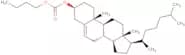
CAS:Producto controladoCholesterol butyl carbonate is a high-melting organic solvent. It has a particle diameter of 3.2 micrometers, an average particle size of 4.5 micrometers, and a section of 1.4. This product is used to form microcapsules with various coatings for the treatment of bacteria and fungi. It is also used as a molecule for the production of functional groups such as polyethylene glycol ethers or polyurethanes. The structural formula contains three functional groups: one ester group and two sterol groups (cholesterol). This product has enhanced properties due to its inorganic components that are added during processing.Pureza:Min. 95%2,2’,3,3’,4,4’,5,5’,6-Nonabromobiphenyl
CAS:Producto controlado<p>Please enquire for more information about 2,2’,3,3’,4,4’,5,5’,6-Nonabromobiphenyl including the price, delivery time and more detailed product information at the technical inquiry form on this page</p>Fórmula:C12HBr9Pureza:Min. 95%Peso molecular:864.27 g/molCholesterol Nonyl Carbonate
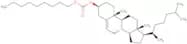
CAS:Producto controlado<p>Cholesterol Nonyl Carbonate is a fatty acid with a carbon chain of 12-18 carbons. It is a section, which enhances the microcapsules’ ability to adhere to surfaces and prevents them from being washed away by water. This compound can be used as a coating for inorganic materials, such as metals and polymers, and organic solvents, such as polypropylene. Cholesterol Nonyl Carbonate has functional groups that are polar, which allow it to dissolve in organic solvents and create coatings on objects. The molecule is comprised of an average particle diameter of 1 micrometer with a particle size distribution ranging from 0.5-10 micrometers. The treatment method for this compound involves thermal energy and conformational changes.END></p>Pureza:Min. 95%Biotinyl-(Cys1,Lys(biotinyl)18)-Calcitonin (human) trifluoroacetate salt
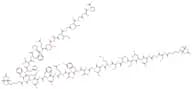
CAS:Please enquire for more information about Biotinyl-(Cys1,Lys(biotinyl)18)-Calcitonin (human) trifluoroacetate salt including the price, delivery time and more detailed product information at the technical inquiry form on this pageFórmula:C171H254N44O49S5Pureza:Min. 95%Peso molecular:3,870.44 g/mol3',4'-(Methylenedioxy)butyrophenone
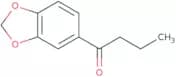
CAS:Producto controlado<p>3',4'-(Methylenedioxy)butyrophenone is a compound that has been shown to exist in four different conformations. It has been shown to form hydrogen bonds and chains with itself, as well as hydrogen bonds with other molecules. The crystal structure of 3',4'-(methylenedioxy)butyrophenone has been determined, and it's conformation has been shown to be dependent on the nature of the solvent.</p>Fórmula:C11H12O3Pureza:Min. 95%Peso molecular:192.21 g/mol3-Bromo-2-methylbenzoic acid methyl ester
CAS:3-Bromo-2-methylbenzoic acid methyl ester is a serotonin transporter and reuptake inhibitor. It has selectivities for serotonin, dopamine and norepinephrine transporters. 3-Bromo-2-methylbenzoic acid methyl ester acts as a linker molecule in the synthesis of complex molecules like neurotransmitters. It is also a bifunctional molecule that can act as an antidepressant or anti-anxiety drug by increasing serotonin levels in the brain. 3-Bromo-2-methylbenzoic acid methyl ester’s function as a ligand is to bind to receptors on cells, which may be linked with its effects on depression and anxiety.Fórmula:C9H9BrO2Pureza:Min. 95%Peso molecular:229.07 g/mol4,5-Dihydro-19-nortestosterone-17b-decanoate
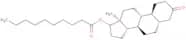
CAS:Producto controlado<p>Please enquire for more information about 4,5-Dihydro-19-nortestosterone-17b-decanoate including the price, delivery time and more detailed product information at the technical inquiry form on this page</p>Fórmula:C28H46O3Pureza:Min. 95%Peso molecular:430.66 g/molVitamin B12 c-lactone
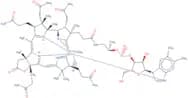
CAS:<p>Please enquire for more information about Vitamin B12 c-lactone including the price, delivery time and more detailed product information at the technical inquiry form on this page</p>Fórmula:C63H85CoN13O15PPureza:Area-% Min. 95 Area-%Peso molecular:1,354.33 g/mol2-(4-Bromophenyl)-2,2'-dimethylacetic acid
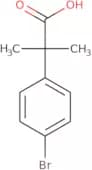
CAS:2-Bromo-2-(4-bromophenyl)-2,2'-dimethylacetic acid (2bpd) is the sodium salt of 2-(4-bromophenyl)-2,2'-dimethylacetic acid. It is a metabolite of terfenadine and thionyl chloride. 2bpd has been shown to be an inhibitor of the histamine H1 receptor. This drug is also a brominated derivative of 2-amino-2-methyl-1-propanol, which has been shown to be an inhibitor of the histamine H1 receptor.Fórmula:C10H11BrO2Pureza:Min. 95%Peso molecular:243.1 g/mol4-(2-Chlorophenyl)-9-methyl-6H-thieno[3,2-f][1,2,4]triazolo[4,3-a][1,4]diazepine-2-propanoic acid methyl ester
CAS:Producto controladoPlease enquire for more information about 4-(2-Chlorophenyl)-9-methyl-6H-thieno[3,2-f][1,2,4]triazolo[4,3-a][1,4]diazepine-2-propanoic acid methyl ester including the price, delivery time and more detailed product information at the technical inquiry form on this pageFórmula:C19H17ClN4O2SPureza:Min. 95%Peso molecular:400.88 g/molAcetyl-D-methionine
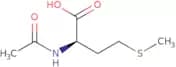
CAS:Acetyl-D-methionine is a type strain that belongs to the class of amino acids. It is necessary for protein synthesis and can be found in dietary concentrations. Acetyl-D-methionine has been shown to have enzyme activities, such as malonic acid formation and racemase activity, which are dependent on the bacterial strain. Acetyl-D-methionine has been demonstrated to be able to form a chelate with copper ions, which may contribute to its antimicrobial properties. Acetyl-D-methionine has been shown to inhibit the growth of Stenotrophomonas maltophilia in vitro and in vivo. Acetyl-D-methionine also inhibits the growth of Sprague Dawley rats infected with S. maltophilia when administered intravenously or orally.Fórmula:C7H13NO3SPureza:Min. 95%Peso molecular:191.25 g/mol5-Octanoylsalicylic acid
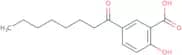
CAS:<p>5-Octanoylsalicylic acid is an anti-inflammatory and antioxidant agent that has been shown to have skin-conditioning properties. It has been found to be effective in the treatment of skin diseases, such as erythema, scaling, and itching, due to its ability to inhibit tyrosinase activity. 5-Octanoylsalicylic acid has also been shown to increase cellular proliferation and lymphocyte transformation in vitro. This compound is a precursor of all-trans-retinoic acid (a form of vitamin A), which is used for the treatment of acne. 5-Octanoylsalicylic acid can be synthesized from methyl ethyl ketone and potassium dichromate by a Friedel-Crafts reaction. It is also found in fruits such as apples, bananas, peaches, and oranges. Animal studies have shown that chronic oral administration may lead to a decrease in dehydroascorbic acid levels and an increased risk</p>Fórmula:C15H20O4Pureza:Min. 95%Peso molecular:264.32 g/molErythropoietin - lyophilized powder
CAS:Erythropoietin is a hormone that stimulates the production of red blood cells, and is used for patients with anemia. It is a recombinant human erythropoietin (rhEPO) that has been produced by genetic engineering. Erythropoietin binds to receptors on the surface of many types of cells, including those in the bone marrow. This binding stimulates the production of red blood cells from precursor cells in the bone marrow, and increases oxygen-carrying capacity in blood. The half-life of erythropoietin is approximately 36 hours. This drug also can be used to reduce high blood pressure and improve responsiveness to other drugs that are given intravenously. Erythropoietin can cause an increase in asialoglycoprotein levels in serum, which may be due to its effects on hepatocytes or erythrocytes.Pureza:(Capillary Zone Electrophoresis) Min. 98.0%2-Amino-4-chloro-3-nitropyridine
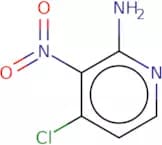
CAS:2-Amino-4-chloro-3-nitropyridine is a potent inhibitory molecule that inhibits the activity of the enzyme acetylcholinesterase. It has been used in the treatment of chronic pain, and has been shown to be effective for inhibiting malonate esters and amino acid esters. This drug is an ethyl ester that can be synthesized from chlorobenzene and malonic acid by chlorinating it with chlorine gas. 2-Amino-4-chloro-3-nitropyridine has also been shown to have a high affinity for malonic acid diethyl esters.Fórmula:C5H4ClN3O2Pureza:Min. 98 Area-%Forma y color:PowderPeso molecular:173.56 g/molCholesterol propionate
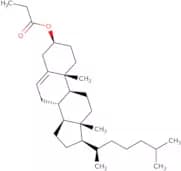
CAS:Producto controlado<p>Cholesterol Propionate is a monolayer film-forming polymer that forms a polymeric matrix when combined with water. The thermal expansion of this material is dependent on the concentration of cholesterol propionate and can be used as a target tissue for multi-walled carbon nanotubes (MWCNTs). In addition, Cholesterol Propionate has been shown to have light emission properties due to its hydroxyl group and fatty acid content. The phase transition temperature of the material is dependent on the concentration of benzoate in the formulation. When it reaches the phase transition temperature, cholesteryl benzoate undergoes a phase change from crystalline to liquid at room temperature. This property can be used to activate MWCNTs within Cholesterol Propionate films, which then emit light.</p>Fórmula:C30H50O2Pureza:Min. 95%Peso molecular:442.7 g/molR-(-)-Apocodeine hydrochloride
CAS:Producto controlado<p>Apocodeine hydrochloride is a natural product that is used in the treatment of cancer. It has been shown to have antiproliferative effects on cho-k1 cells, which are human colon carcinoma cells. Apocodeine hydrochloride also inhibits the production of dopamine in rat brain and has been shown to inhibit bromocriptine-induced prolactin release from rat pituitary cells in vitro. Apocodeine hydrochloride has been extensively studied in epidemiological studies and has been found to be effective against cancer, with no adverse side effects.</p>Fórmula:C18H20ClNO2Pureza:Min. 95%Forma y color:PowderPeso molecular:317.81 g/mol4'-Acetamido-2'-hydroxyacetophenone
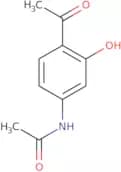
CAS:An acetophenone analogueFórmula:C10H11NO3Pureza:Min. 95%Peso molecular:193.2 g/mol(S)-1,2,3,4-Tetrahydro-5-methoxy-N-propyl-2-naphthalenamine hydrochloride
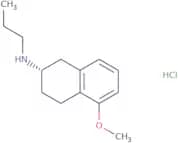
CAS:Producto controlado<p>Please enquire for more information about (S)-1,2,3,4-Tetrahydro-5-methoxy-N-propyl-2-naphthalenamine hydrochloride including the price, delivery time and more detailed product information at the technical inquiry form on this page</p>Fórmula:C14H22ClNOPureza:Min. 95%Peso molecular:255.78 g/mol2-Naphthol
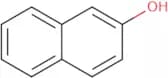
CAS:<p>2-Naphthol is an organic compound with the chemical formula C10H7O. It is a derivative of naphthalene, and is produced by the condensation of two molecules of malonic acid in the presence of a reducing agent such as sodium borohydride. 2-Naphthol is used as a pesticide and as a chemical intermediate in the production of other chemicals. 2-Naphthol has been shown to be toxic to humans and animals; it may cause liver damage, kidney damage, and skin irritation. The acute oral LD50 for rats is 690 mg/kg body weight. 2-Naphthol binds to cell receptors that are involved in a variety of physiological processes including heme transport, phagocytosis, oxidative burst, chemotaxis, and respiratory burst. This binding inhibits these functions leading to cell death.</p>Fórmula:C10H8OPureza:Min. 95%Forma y color:White To Yellow To Pink To Light Brown SolidPeso molecular:144.17 g/mol3-Cyanopropionic acid methyl ester
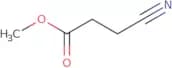
CAS:3-Cyanopropionic acid methyl ester is a compound that belongs to the class of aliphatic carboxylic acids. It is an intermediate in the production of adiponitrile and acrylonitrile. This compound is used as a feedstock for the manufacture of vinylene, which can be used to produce c1-6 alkyl. 3-Cyanopropionic acid methyl ester can be produced from propylene and hydrogen cyanide in a high salt, activated reaction system. It has been shown that this compound may have metabolic disorders due to its ability to inhibit fatty acid oxidation and increase viscosity. 3-Cyanopropionic acid methyl ester is a colorless liquid at room temperature with a boiling point of 154°C and a molecular weight of 98.14 g/mol.Fórmula:C5H7NO2Pureza:Min. 95%Forma y color:Clear LiquidPeso molecular:113.11 g/mol



![4-(2-Chlorophenyl)-9-methyl-6H-thieno[3,2-f][1,2,4]triazolo[4,3-a][1,4]diazepine-2-propanoic acid …](/_next/image/?url=https%3A%2Fstatic.cymitquimica.com%2Fproducts%2F3D%2Fthumb-webp%2FFC20337.webp&w=3840&q=75)