Estándares farmacéuticos
Los estándares farmacéuticos son un conjunto integral de materiales de referencia esenciales para garantizar la seguridad, eficacia y calidad de los productos farmacéuticos. Esta categoría incluye estándares para ingredientes farmacéuticos activos (APIs), que son los componentes centrales responsables de los efectos terapéuticos. Además, abarca compuestos y metabolitos relevantes tanto para las industrias farmacéutica como veterinaria, proporcionando puntos de referencia para la medición y análisis precisos de estas sustancias. Los estándares de control de nitrosaminas son cruciales para detectar y mitigar las nitrosaminas potencialmente dañinas en las formulaciones de medicamentos. Los estándares de toxicología ayudan a evaluar la seguridad y los posibles efectos adversos de los compuestos farmacéuticos. Además, los estándares de activadores e inhibidores enzimáticos son vitales para la investigación y el desarrollo, permitiendo estudios precisos de las vías bioquímicas y los mecanismos de acción de los medicamentos. Estos estándares farmacéuticos son herramientas indispensables para el cumplimiento normativo, el control de calidad y la investigación, asegurando que los productos farmacéuticos cumplan con estrictos criterios de seguridad y eficacia.
Subcategorías de "Estándares farmacéuticos"
- APIs para investigación e impurezas(274.920 productos)
- Activadores e inhibidores de enzimas(2.827 productos)
- Nitrosaminas(2.606 productos)
- Compuestos y metabolitos farmacéuticos y veterinarios(2.871 productos)
- Toxicología(13.652 productos)
Se han encontrado 7836 productos de "Estándares farmacéuticos"
Ordenar por
Pureza (%)
0
100
|
0
|
50
|
90
|
95
|
100
γ-Dodecalactone
CAS:Gamma-dodecalactone is a naturally occurring fatty acid that exhibits antifungal and antitumor properties. The molecule is hydroxylated in vivo, forming an acid complex with the addition of water. This reaction produces a hydroxylate group, which increases the solubility of the compound. In vitro studies have shown that when gamma-dodecalactone is metabolized, it forms oxidation products such as nepeta cataria.Pureza:Min. 95%3-Methylglutaric acid
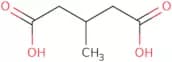
CAS:<p>3-Methylglutaric acid is an organic compound that belongs to the group of alkanocarboxylic acids. It has been shown to reduce the formation of malonic acid, which can be toxic to the heart and cause congestive heart failure. 3-Methylglutaric acid also inhibits oxidation catalysts and increases the production of energy in cells by providing electrons. The kinetic data for 3-methylglutaric acid have been determined using a gas chromatography technique on a high-temperature conversion reactor at a pH of 7.0 with a concentration of 0.1 M potassium phosphate buffer (pH 7) and a temperature of 70°C. 3-Methylglutaric acid has been shown to inhibit monoclonal antibody cationic polymerization, which may be due to its reactive nature and its ability to donate hydrogen ions or electrons.</p>Fórmula:C6H10O4Pureza:Min. 95%Peso molecular:146.14 g/mol2-Methyl-5-nitropyridin-3-amine
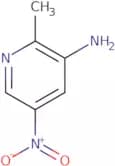
CAS:<p>2-Methyl-5-nitropyridin-3-amine is a heterocyclic compound that is synthesized by the cyclization of 2-methylpyridine with sodium nitrite. The reaction product is hydrolyzed to yield the desired compound, 5-nitropyridine. The synthesis of this compound can be used as a target for organic synthesis.</p>Fórmula:C6H7N3O2Pureza:Min. 95%Peso molecular:153.14 g/mol2-Bromo-3'-hydroxyacetophenone
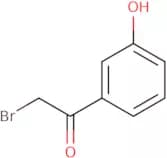
CAS:<p>2-Bromo-3'-hydroxyacetophenone is a molecule that has been shown to be cytotoxic and effective in inhibiting the growth of cancer cells. 2-Bromo-3'-hydroxyacetophenone inhibits the production of kynurenine, an amino acid that is used in the production of proteins, by competitively binding to the enzyme IDO1. This binding prevents the conversion of tryptophan into kynurenine, leading to cell death. The cytotoxicity of 2-bromo-3'-hydroxyacetophenone was also confirmed by testing its ability to inhibit cellular interaction with human erythrocytes (blood cells) and by measuring its effects on crystallography efficiency.</p>Fórmula:C8H7BrO2Pureza:Min. 95%Forma y color:Slightly Yellow PowderPeso molecular:215.04 g/mol1-Hexyl-3-(1-naphthoyl)pyrrole
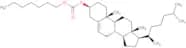
CAS:Producto controladoPlease enquire for more information about 1-Hexyl-3-(1-naphthoyl)pyrrole including the price, delivery time and more detailed product information at the technical inquiry form on this pageFórmula:C21H23NOPureza:Min. 95%Peso molecular:305.41 g/molCholesterol Heptyl Carbonate
CAS:Producto controladoCholesterol heptyl carbonate is a cholesteric liquid crystal with a high melting point, which can be used as a coating for pharmaceutical tablets and other products. Cholesteric liquid crystals are composed of molecules that have different shapes in the solid phase and in the liquid phase, forming an ordered structure. The conformational state of the molecule determines the optical properties of cholesteric liquid crystals. This product has an average particle diameter of around 200 nm and is made from organic solvent. The treatment method for this product is not specified, but it may be treated by heating with thermal energy or using optical energy to create a cross-linked polymer network.Pureza:Min. 95%5-Bromo-1H-indole-2-carboxylic acid methyl ester
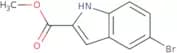
CAS:<p>5-Bromo-1H-indole-2-carboxylic acid methyl ester is a drug that belongs to the class of carboxylates. It has been shown to inhibit the growth of tumor cells in vitro and in vivo. The antitumor activity of this compound may be due to its ability to stabilize planar indole moieties, which are cytotoxic. 5-Bromo-1H-indole-2-carboxylic acid methyl ester interacts with other molecules through intermolecular interactions and can form an indole ring system that has a trifluoromethyl group and a carboxylate group in its structure.</p>Fórmula:C10H8BrNO2Pureza:Min. 95%Peso molecular:254.08 g/molCholesterol Butyl Carbonate
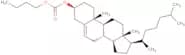
CAS:Producto controladoCholesterol butyl carbonate is a high-melting organic solvent. It has a particle diameter of 3.2 micrometers, an average particle size of 4.5 micrometers, and a section of 1.4. This product is used to form microcapsules with various coatings for the treatment of bacteria and fungi. It is also used as a molecule for the production of functional groups such as polyethylene glycol ethers or polyurethanes. The structural formula contains three functional groups: one ester group and two sterol groups (cholesterol). This product has enhanced properties due to its inorganic components that are added during processing.Pureza:Min. 95%(2-Chloro-4-nitrophenyl)methanol
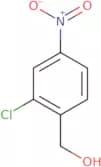
CAS:<p>Please enquire for more information about (2-Chloro-4-nitrophenyl)methanol including the price, delivery time and more detailed product information at the technical inquiry form on this page</p>Fórmula:C7H6ClNO3Pureza:Min. 95%Forma y color:PowderPeso molecular:187.58 g/mol7-Amino-4-(trifluoromethyl)coumarin
CAS:<p>7-Amino-4-(trifluoromethyl)coumarin is a coumarin derivative that has been used as a fluorescence probe for the study of enzyme activities. It can be used as a potential biomarker for autoimmune diseases, and has also been shown to have tyrosine kinase domain binding activity. 7-Amino-4-(trifluoromethyl)coumarin can bind to the hydroxyl group in tyrosine residues with high affinity, and binds to the nitrogen atoms in protein kinases with low affinity. This compound is able to form intermolecular hydrogen bonds and steric interactions with peptide hormones.</p>Fórmula:C10H6F3NO2Pureza:Min. 95%Peso molecular:229.16 g/mol4-(4-Formyl-3-methoxyphenoxy)butanoic acid
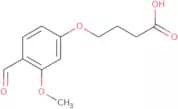
CAS:Producto controlado4-(4'-Formyl-3'-methoxyphenoxy)butanoic acid is a carboxylate that can be used as a preloaded reagent for the synthesis of peptides, proteins, and other organic molecules. 4-(4'-Formyl-3'-methoxyphenoxy)butanoic acid has been shown to be an efficient linker for solid-phase peptide synthesis. 4-(4'-Formyl-3'-methoxyphenoxy)butanoic acid is labile to hydrolysis and so should be stored in an organic solvent such as dimethylsulfoxide. The carboxylate group is readily available in the form of its sodium salt, which can be synthesized by reacting sodium acetate with formaldehyde.Fórmula:C12H14O5Pureza:Min. 95%Forma y color:PowderPeso molecular:238.24 g/molDibenz[a,h]anthracene
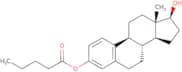
CAS:<p>Dibenz[a,h]anthracene is a polycyclic aromatic hydrocarbon that has been classified as a human carcinogen. It is used in the analytical method for determining the presence of epoxides. Dibenz[a,h]anthracene has been shown to cause skin cancer in mice. This agent binds to DNA and forms covalent adducts with guanine residues. Dibenz[a,h]anthracene also causes short-term exposure to skin cancer in rats exposed to subcutaneous tumors and has been shown to cause tumorigenesis studies in mice.</p>Fórmula:C22H14Pureza:Min. 95%Peso molecular:278.35 g/molEstradiol 3-valerate
CAS:Producto controlado<p>Please enquire for more information about Estradiol 3-valerate including the price, delivery time and more detailed product information at the technical inquiry form on this page</p>Fórmula:C23H32O3Pureza:Min. 95%Forma y color:PowderPeso molecular:356.5 g/molFmoc-(S)-3-amino-3-(2-naphthyl)propionic acid
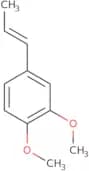
CAS:<p>Please enquire for more information about Fmoc-(S)-3-amino-3-(2-naphthyl)propionic acid including the price, delivery time and more detailed product information at the technical inquiry form on this page</p>Fórmula:C28H23NO4Pureza:Min. 95%Peso molecular:437.49 g/molIsoeugenol methyl ether
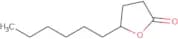
CAS:<p>Isoeugenol methyl ether is a plant-derived natural compound that is used in vitro as an antioxidant. It has been shown to inhibit the activity of enzymes such as hydroxylase, glucuronidase, and cytochrome P450. Isoeugenol methyl ether has also been shown to have anti-inflammatory properties and may be useful for treatment of colorectal adenocarcinoma. The mechanism by which isoeugenol methyl ether inhibits the enzyme activity is not clear but it may be due to its ability to bind reversibly with free enzyme form.</p>Fórmula:C11H14O2Pureza:Min. 95%Forma y color:LiquidPeso molecular:178.23 g/molγ-Decalactone
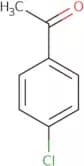
CAS:gamma-Decalactone is a cationic surfactant that is biosynthesized by the addition of an alkynyl group to isovaleric acid. It has been shown to have antimicrobial properties against type strain and wild-type strains of Escherichia coli, as well as Pseudomonas aeruginosa. The nmr spectra of gamma-Decalactone show a type of carbon source that may be natural compounds or fatty acids. Gamma-Decalactone can form through the action of pancreatic lipase on fatty acids, which are found in the pancreas. When gamma-Decalactone was tested for its ability to inhibit hydrogen bonding interactions, it was found to have no effect on these interactions.Fórmula:C10H18O2Pureza:Min. 95%Forma y color:Clear LiquidPeso molecular:170.25 g/mol4'-Chloroacetophenone
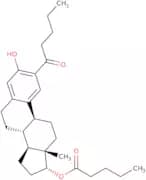
CAS:<p>4'-Chloroacetophenone is a chemical substance that is used in the synthesis of other substances. It has been shown to be an effective tool for cell-specific reactions, such as methyl ketones and benzaldehyde. 4'-Chloroacetophenone reacts with hydrochloric acid and palladium complexes to produce electron reduction, which leads to the activation of methyl ketones. This reaction provides a method for synthesizing molecules with a carbonyl group. The isolated yield of this reaction is dependent on the reaction solution temperature and concentration. The mechanism of this reaction appears to be Suzuki coupling reaction.</p>Fórmula:C8H7ClOPureza:Min. 95%Forma y color:Clear Colourless To Pale Yellow LiquidPeso molecular:154.59 g/mol2-Valeryl-17'-estradiol 17-valerate
CAS:Producto controlado<p>Please enquire for more information about 2-Valeryl-17'-estradiol 17-valerate including the price, delivery time and more detailed product information at the technical inquiry form on this page</p>Fórmula:CHOPureza:Min. 95%Cholesterol Hydrocinnamate
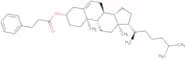
CAS:Producto controladoCholesterol hydrocinnamate is a non-polar, microcapsule-encapsulated solid that has been shown to be reversibly endothermic. The transition from the solid phase to the liquid phase occurs at approximately 20°C and is accompanied by a change in color from red to yellow. The coating on the surface of the microcapsules are composed of polymers with optical properties such as high refractive index, low absorption, and low scattering. These properties are used to alter light transmission and reflection in order to evaluate the particle size distribution. Cholesterol hydrocinnamate can be prepared by thermal treatment of cholesterol cinnamate with cinnamaldehyde in solvents such as ethanol or acetone. This method produces particles that are not only non-polar but also soluble in nonpolar solvents such as hexane or heptane.Pureza:Min. 95%2,6-Bis(hydroxymethyl)-p-cresol
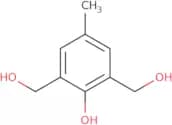
CAS:2,6-Bis(hydroxymethyl)-p-cresol (BHMC) is a cross-linking agent that reacts with the hydroxyl groups of polymers to form covalent bonds. This reaction is irreversible and has been shown to be effective in thermal expansion applications. BHMC is insoluble in water and so can be used as a proton donor for the synthesis of polymer hydrogels. BHMC has also been used as a molecular modeling probe for studying protein structure and function. This compound reacts with nucleophiles by nucleophilic attack on the carbonyl carbon atom, producing an intermediate that tautomerizes to the corresponding enone. The reaction mechanism involves formation of a tetranuclear transition state followed by acid catalysis. Functional groups such as -OH, -NH2, or -COOH are required for this reaction to occur. NMR spectra have shown that there are three different chemical structuresFórmula:C9H12O3Pureza:Min. 95%Forma y color:PowderPeso molecular:168.19 g/mol




![Dibenz[a,h]anthracene](/_next/image/?url=https%3A%2Fstatic.cymitquimica.com%2Fproducts%2F3D%2Fthumb-webp%2FFD62414.webp&w=3840&q=75)