Ácidos grasos
Los ácidos grasos son ácidos carboxílicos con largas cadenas de hidrocarburos, que pueden ser saturados o insaturados. Son componentes esenciales de los lípidos, sirviendo como building blocksclave para lípidos complejos, fuentes de energía y moléculas de señalización. Los ácidos grasos están involucrados en varios procesos biológicos, incluyendo el metabolismo, la estructura de las membranas celulares y la inflamación. En CymitQuimica, ofrecemos una amplia gama de ácidos grasos de alta calidad para apoyar su investigación en bioquímica de lípidos, nutrición y campos relacionados.
Subcategorías de "Ácidos grasos"
- Acilgliceroles / Glicéridos(42 productos)
- Eicosanoides(6 productos)
- Ésteres de ácidos grasos(850 productos)
- Ácidos grasos halogenados(32 productos)
Se han encontrado 2455 productos de "Ácidos grasos"
Ordenar por
Pureza (%)
0
100
|
0
|
50
|
90
|
95
|
100
3-Oxodecanoic acid ethyl ester
CAS:<p>3-Oxodecanoic acid ethyl ester is a selenium compound that can be catalytic. It has been shown to produce lactones by the cyclization of an anthranilic acid. Selenium compounds are often used as research catalysts in organic synthesis, specifically for the elimination and cyclization reactions. 3-Oxodecanoic acid ethyl ester is also a natural product that can be found in various plants and animals. It has been found to have an active role in many natural products, such as benzyne and heterocycles.</p>Fórmula:C12H22O3Pureza:Min. 95%Forma y color:PowderPeso molecular:214.3 g/molPalmitoleyl alcohol
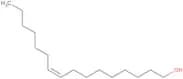
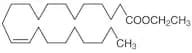
CAS:<p>Palmitoleyl alcohol is a natural compound that is found in the human body and in palm oil. Palmitoleyl alcohol has been shown to have anti-inflammatory properties and may be useful for the treatment of cancer, inflammation, and other diseases. It is a cationic surfactant that is used in detergent compositions and pharmaceutical preparations. Palmitoleyl alcohol also has a reactive group that can be detected with chemical ionization. This reactive group can undergo biodegradation in the body due to its biocompatibility and hydrophilicity.</p>Fórmula:C16H32OPureza:Min. 95%Forma y color:Colorless PowderPeso molecular:240.42 g/mol2-Fluoro-5-hydroxybenzoic acid ethyl ester
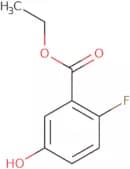
CAS:<p>2-Fluoro-5-hydroxybenzoic acid ethyl ester is a fine chemical that is used as a versatile building block, complex compound, and reagent. It has been used in the synthesis of novel drugs, such as oseltamivir. 2-Fluoro-5-hydroxybenzoic acid ethyl ester has been shown to have useful properties in research, such as being an intermediate for the synthesis of other compounds. This chemical can also be used as a scaffold for the synthesis of other compounds.</p>Fórmula:C9H9FO3Pureza:Min. 95%Peso molecular:184.16 g/molCholest-5-en-3b-yl hexadecanoate
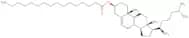
CAS:Producto controlado<p>Cholest-5-en-3b-yl hexadecanoate is a fatty acid that is used to synthesize dextran sulfate. It is a subcutaneous tumor model and has been shown to be effective against human body mass index (BMI) with human serum in vitro. Cholest-5-en-3b-yl hexadecanoate has also been found to inhibit atherosclerotic lesions in vivo and can be used as a fluorescence probe for cholesteryl. This fatty acid also inhibits the growth of infectious diseases, such as Staphylococcus aureus, which infects humans. The melting point of this compound is around 100°C and it becomes liquid at room temperature.</p>Fórmula:C43H76O2Pureza:Min. 95%Forma y color:PowderPeso molecular:625.06 g/mol6-Bromohexanoic acid ethyl ester
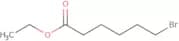
CAS:<p>6-Bromohexanoic acid ethyl ester is a fluorescent compound that has been used to assess the presence of azobenzene in urine samples. This product is also used as a marker for capsicum annuum, which is an edible plant. 6-Bromohexanoic acid ethyl ester has been shown to be effective in the diagnosis of cancer, especially carcinoma cells. Coumarin derivatives have been found to possess fluorescence properties similar to 6-bromohexanoic acid ethyl ester and are also used as markers for cancer cells. The use of polyclonal antibodies and hydrochloric acid for this product can lead to fluorescence properties that are specific for cancer cells.</p>Fórmula:C8H15BrO2Pureza:Min. 95%Forma y color:Colourless To Pale Yellow LiquidPeso molecular:223.11 g/molChrysanthemum monocarboxylic acid ethyl ester
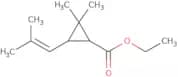
CAS:<p>Chrysanthemum monocarboxylic acid ethyl ester is a chemical compound that belongs to the group of chrysanthemic acid derivatives. It is synthesized by reacting the carboxylic acid with an alcohol in the presence of hydrochloric acid and sodium ethoxide. Chrysanthemum monocarboxylic acid ethyl ester has been shown to have genotoxic effects, as well as fatty acids that can induce lysine residues. This drug also has a pharmaceutical use for tissue culture, which may be due to its ability to inhibit l-tartaric acid, an alkanoic acid.</p>Fórmula:C12H20O2Pureza:Min. 95%Peso molecular:196.29 g/mol1,16-Hexadecanediol
CAS:<p>1,16-Hexadecanediol is a plant hormone that is structurally related to abscisic acid and gibberellins. It is found in the tissues of plants. 1,16-Hexadecanediol has been shown to have the ability to regulate plant growth and development. The diffusional properties of this molecule suggest that it may be a model system for studying other molecules with similar properties. The conformational properties of this molecule are also important because they allow for hydrogen bonding, which stabilizes the molecule and prevents it from decomposing. This property also makes 1,16-hexadecanediol an excellent candidate as a low-energy sweetener. The molecule can be seen in nmr spectra as having two peaks at different chemical shifts because it contains intramolecular hydrogen bonds. The formula weight of 1,16-hexadecanediol is 270.27 g/mol.</p>Fórmula:C16H34O2Pureza:Min. 95%Forma y color:White/Off-White SolidPeso molecular:258.44 g/molEthyl Erucate
CAS:Fórmula:C24H46O2Pureza:>95.0%(GC)Forma y color:Colorless to Light yellow to Light orange clear liquidPeso molecular:366.63Sodium Palmitate
CAS:<p>Sodium palmitate is a saturated fatty acid that has been shown to induce phase transition temperature in the range of 37-40°C. The Toll-like receptor 4 (TLR4) is a pattern recognition receptor that has been found to be important in the pathogenesis of infectious diseases. Sodium palmitate enhances TLR4-mediated responses, and as such can be used for the treatment of infectious diseases. Sodium palmitate also has significant cytotoxicity and potent inducers of polymer compositions. It is also an effective agonist for toll-like receptor 4, which may be due to its ability to stimulate RhoA activity, leading to increased production of reactive oxygen species.</p>Fórmula:C16H31NaO2Pureza:Min. 95%Forma y color:White PowderPeso molecular:278.41 g/molLubiprostone
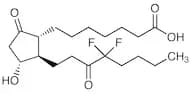
CAS:Fórmula:C20H32F2O5Pureza:>97.0%(HPLC)Forma y color:White to Light yellow powder to crystalPeso molecular:390.47Methyl Heptadecanoate
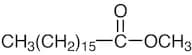
CAS:Fórmula:C18H36O2Pureza:>98.0%(GC)Forma y color:White or Colorless to Light yellow powder to lump to clear liquidPeso molecular:284.48Propargyl methanesulfonate ester
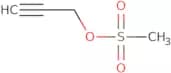
CAS:<p>Propargyl methanesulfonate ester is an organic compound that is used as a cross-coupling reagent in the synthesis of chiral mesylates. It is prepared by treatment of propargyl alcohol with methanesulfonyl chloride and sodium hydroxide in an organic solvent. The product is purified by removal of the solvent, followed by crystallization or distillation. The mesylate group reacts with an amine to give a secondary amine, which can be converted to a carbamate or mediated reaction product. This process can also generate genotoxic impurities, such as dioxane and 1,4-dioxane, which are removed by transfer to an inert solvent.</p>Fórmula:C4H6O3SPureza:Min. 95%Forma y color:Clear LiquidPeso molecular:134.15 g/molPalmitoleic acid - 98%
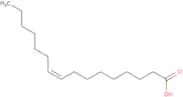
CAS:<p>Palmitoleic acid is a fatty acid with a molecular weight of 256. It is an unsaturated fatty acid that contains 16 carbon atoms and two double bonds. Palmitoleic acid has been shown to be effective in treating bowel disease, such as ulcerative colitis and Crohn's disease, by influencing the production of inflammatory cytokines. This active form inhibits the activity of toll-like receptor 4 (TLR4) and lipopolysaccharide (LPS)-induced signal peptide activation of nuclear factor kappa B (NF-κB), which leads to reduced inflammation. Palmitoleic acid has also been shown to have anti-inflammatory properties in vitro and in vivo, which may be due to its ability to inhibit IL-1β production by macrophages.</p>Fórmula:C16H30O2Pureza:Min. 95%Forma y color:Clear Colourless To Pale Yellow LiquidPeso molecular:254.41 g/molFmoc-D-propargylglycine
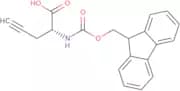
CAS:<p>D-propargylglycine is a chemical compound that belongs to the group of valency modifiers. It is a modulator that can be used in cancer research and as an anti-inflammatory agent. It has been shown to have protein–protein interaction by binding to casein kinase, which may lead to its use in cancer therapy. D-propargylglycine can also interact with other proteins and inflammatory agents, leading to potential applications in the treatment of inflammatory conditions such as arthritis.</p>Fórmula:C20H17NO4Pureza:Min. 95%Forma y color:PowderPeso molecular:335.35 g/molDL-Propargylglycine
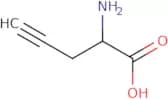
CAS:<p>DL-Propargylglycine is a molecule that has been used as a model system for studying the interaction of neurokinin-1 receptor with response elements. It has also been shown to have inhibitory properties on polymerase chain, which is important in the process of energy metabolism. This compound has been shown to increase cytosolic Ca2+ and inhibit nuclear DNA synthesis in certain cells. DL-Propargylglycine can be used to study the effects of growth factor-β1 on myocardial infarcts and bowel disease.</p>Fórmula:C5H7NO2Pureza:Min. 95%Forma y color:White Off-White PowderPeso molecular:113.11 g/molSodium Decanoate
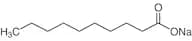
CAS:Fórmula:C10H19NaO2Pureza:>99.0%(T)Forma y color:White to Light yellow powder to crystalPeso molecular:194.25Bimatoprost
CAS:Fórmula:C25H37NO4Pureza:>98.0%(HPLC)Forma y color:White to Almost white powder to crystalPeso molecular:415.57Pimeloyl-CoA
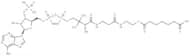
CAS:<p>Pimeloyl-CoA is a CoA derivative formed from pimelate, serving as a precursor in the biotin biosynthesis pathway of certain bacteria.</p>Fórmula:C28H46N7O19P3SPureza:100%Forma y color:SolidPeso molecular:909.695-Bromo-2-methylbenzoic acid ethyl ester
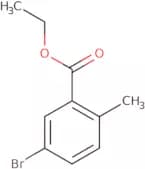
CAS:<p>5-Bromo-2-methylbenzoic acid ethyl ester is a fine chemical used as a versatile building block in organic synthesis. It is also used as a reagent for the conversion of alcohols to alkyl bromides, and for the preparation of 2-bromoacetophenones from 2-bromobenzenes. 5-Bromo-2-methylbenzoic acid ethyl ester can be used as a useful intermediate in the synthesis of other compounds or in reactions with other chemicals. This product has high quality and can be used as a useful scaffold for synthesizing new compounds.</p>Fórmula:C10H11BrO2Pureza:Min. 95%Peso molecular:243.1 g/mol1,2-Didocosahexaenoyl-3-palmitoyl Glycerol
CAS:Producto controladoFórmula:C63H98O6Forma y color:NeatPeso molecular:951.4491-Hexadecane-d33-thiol
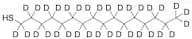
CAS:Producto controlado<p>Applications 1-Hexadecane-d33-thiol (CAS# 218956-22-0) is a useful isotopically labeled research compound.<br></p>Fórmula:C16HD33SForma y color:NeatPeso molecular:291.71tert-Butyl (1-Chloro-2-oxo-7,10,13-trioxa-3-azahexadecan-16-yl)carbamate
CAS:Producto controladoFórmula:C17H33ClN2O6Forma y color:NeatPeso molecular:396.9072-[4-(4,4,5,5-Tetramethyl-[1,3,2]dioxaborolan-2-yl)phenyl]butyric Acid Ethyl Ester
CAS:Producto controladoFórmula:C18H27BO4Forma y color:NeatPeso molecular:318.2161-Cyclopropyl-6,7-difluoro-1,4-dihydro-8-hydroxy-4-oxo-3-quinolinecarboxylic Acid Ethyl Ester
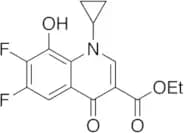
CAS:Producto controlado<p>Applications 1-Cyclopropyl-6,7-difluoro-1,4-dihydro-8-hydroxy-4-oxo-3-quinolinecarboxylic Acid Ethyl Ester is used in the synthesis of antibacterials.<br>References Phillips, O. et al.: Exp. Opin. Ther. Pat., 19, 529 (2009);<br></p>Fórmula:C15H13F2NO4Forma y color:NeatPeso molecular:309.2653,3,12,12-Tetramethyl-1,5,10,14-tetraoxadispiro[5.2.5.2]hexadecane
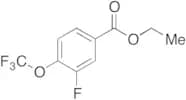
CAS:Producto controladoFórmula:C16H28O4Forma y color:NeatPeso molecular:284.393-Fluoro-4-(trifluoromethoxy)benzoic Acid Ethyl Ester
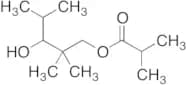
CAS:Producto controladoFórmula:C10H8F4O3Forma y color:NeatPeso molecular:252.162-Methyl-propanoic Acid 3-Hydroxy-2,2,4-trimethylpentyl Ester
CAS:Producto controlado<p>Applications 2-Methyl-propanoic acid 3-Hydroxy-2,2,4-trimethylpentyl Ester is a plasticizer. It can also be used to synthesize hard and flexible nanocomposite coatings.<br>References Dieckmann, D., et al.:J. Vinyl Addit. Technol., 12, 217 (1990); Fogelstroem, L., et al.: ACS Appl. Mater. Interfaces, 2, 1679 (2010)<br></p>Fórmula:C12H24O3Forma y color:NeatPeso molecular:216.32(Z,Z)-5,11-Eicosadienoic Acid Ethyl Ester-d5
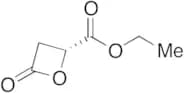
CAS:Producto controladoFórmula:C22H35D5O2Forma y color:NeatPeso molecular:316.435(2R)-4-Oxo-2-oxetanecarboxylic Acid Ethyl Ester
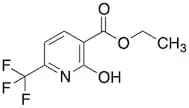
CAS:Producto controladoFórmula:C6H8O4Forma y color:NeatPeso molecular:144.1251,2-Dihydro-2-oxo-6-(trifluoromethyl)-3-pyridinecarboxylic Acid Ethyl Ester
CAS:Producto controlado<p>Applications 1,2-DIHYDRO-2-OXO-6-(TRIFLUOROMETHYL)-3-PYRIDINECARBOXYLIC ACID ETHYL ESTER (cas# 116548-02-8) is a useful research chemical.<br></p>Fórmula:C9H8F3NO3Forma y color:NeatPeso molecular:235.163-Bromo-4-fluoro-benzoic Acid Ethyl Ester
CAS:Producto controladoFórmula:C9H8BrFO2Forma y color:NeatPeso molecular:247.06n-Hexadecyl-1,1,2,2-d4 Hexadecanoate-16,16,16-d3
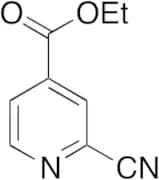
CAS:Producto controlado<p>Applications n-Hexadecyl-1,1,2,2-d4 Hexadecanoate-16,16,16-d3 (CAS# 1398066-15-3) is a useful isotopically labeled research compound.<br></p>Fórmula:C32H57D7O2Forma y color:NeatPeso molecular:487.92-Cyano-4-pyridinecarboxylic Acid Ethyl Ester
CAS:Producto controladoFórmula:C9H8N2O2Forma y color:NeatPeso molecular:176.1721,2-Dipalmitoyl-3-docosahexaenoyl Glycerol-d5
CAS:Producto controladoFórmula:C57D5H93O6Forma y color:NeatPeso molecular:884.4151-Hexadecanamine-15N
CAS:Producto controladoFórmula:C16H3515NForma y color:NeatPeso molecular:242.449Dimethyl Trimethylsilyl Propargylphosphonate
CAS:Producto controlado<p>Applications Dimethyl Trimethylsilyl Propargylphosphonate (cas# 228120-29-4) is a compound useful in organic synthesis.<br></p>Fórmula:C8H17O3PSiForma y color:NeatPeso molecular:220.28rac 2-Isopropyl Pentanoic Acid Ethyl Ester-d5
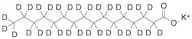
Producto controladoFórmula:C10H15D5O2Forma y color:NeatPeso molecular:367.398Potassium Hexadecanoate-d31
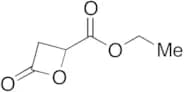
CAS:Producto controlado<p>Applications Potassium Hexadecanoate-d31 (CAS# 63074-47-5) is a useful isotopically labeled research compound.<br></p>Fórmula:C16D31KO2Forma y color:NeatPeso molecular:325.714-Oxo-2-oxetanecarboxylic Acid Ethyl Ester
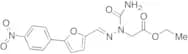
CAS:Producto controladoFórmula:C6H8O4Forma y color:NeatPeso molecular:144.125Ethyl N-hydrazinyl Acetate Dantrolene
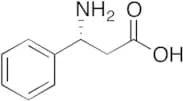
CAS:Producto controladoFórmula:C16H16N4O6Forma y color:NeatPeso molecular:360.321(betaR)-β-Aminobenzenepropanoic Acid Ethyl Ester
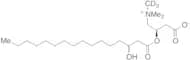
CAS:Producto controladoFórmula:C11H15NO2Forma y color:NeatPeso molecular:193.2423-Hydroxyhexadecanoyl-d3-carnitine Chloride
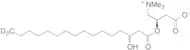
CAS:Producto controladoFórmula:C23D3H43NO5·ClForma y color:NeatPeso molecular:455.0873-Hydroxyhexadecanoylcarnitine-d3
CAS:Producto controladoFórmula:C23D3H42NO5Forma y color:NeatPeso molecular:418.6261,4-Phenylenediacetic Acid Ethyl Ester
CAS:Producto controlado<p>Applications 1,4-Phenylenediacetic Acid Eethyl Ester is an arendiacetic ester used in the preparation of potent β-3 receptor agonist.<br>References Badland, M. et al.: Green Chem., 13, 2888 (2011)<br></p>Fórmula:C12H14O4Forma y color:NeatPeso molecular:222.24Hexacosanoic Acid Ethyl Ester-d5
CAS:Producto controladoFórmula:C28H51D5O2Forma y color:NeatPeso molecular:884.3634-Chloro-5H-pyrrolo[3,2-d]pyrimidine-6-carboxylic Acid Ethyl Ester
CAS:Producto controladoFórmula:C9H8ClN3O2Forma y color:NeatPeso molecular:225.6323-Tridecylhexadecanoic Acid
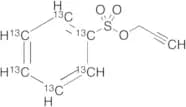
CAS:Producto controladoFórmula:C29H58O2Forma y color:NeatPeso molecular:438.77Propargyl Benzenesulfonate-13C6
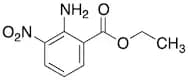
CAS:Producto controladoFórmula:C6C3H8O3SForma y color:NeatPeso molecular:202.1792-Amino-3-nitrobenzoic Acid Ethyl Ester
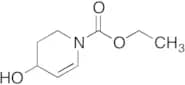
CAS:Producto controladoFórmula:C9H10N2O4Forma y color:NeatPeso molecular:210.1873,4-Dihydro-4-hydroxy-1(2H)-pyridinecarboxylic Acid Ethyl Ester
CAS:Producto controlado<p>Applications 3,4-Dihydro-4-hydroxy-1(2H)-pyridinecarboxylic Acid Ethyl Ester is a synthetic intermediate/reactant in the synthesis of streptazolin.<br>References Kozikowski, A., Park, P.: J. Org. Chem., 55, 4668 (1990);<br></p>Fórmula:C8H13NO3Forma y color:NeatPeso molecular:171.194










![2-[4-(4,4,5,5-Tetramethyl-[1,3,2]dioxaborolan-2-yl)phenyl]butyric Acid Ethyl Ester](/_next/image/?url=https%3A%2Fstatic.cymitquimica.com%2Fproducts%2FTR%2Fthumb-webp%2FT302660.webp&w=3840&q=75)
![3,3,12,12-Tetramethyl-1,5,10,14-tetraoxadispiro[5.2.5.2]hexadecane](/_next/image/?url=https%3A%2Fstatic.cymitquimica.com%2Fproducts%2FTR%2Fthumb-webp%2FT305450.webp&w=3840&q=75)









![4-Chloro-5H-pyrrolo[3,2-d]pyrimidine-6-carboxylic Acid Ethyl Ester](/_next/image/?url=https%3A%2Fstatic.cymitquimica.com%2Fproducts%2FTR%2Fthumb-webp%2FC380835.webp&w=3840&q=75)