Terpenoides
Los terpenoides, también conocidos como isoprenoides, son la clase más grande de compuestos orgánicos naturales, derivados de unidades de isopreno de cinco carbonos. Se encuentran en una variedad de plantas y son conocidos por sus propiedades aromáticas, así como por su papel en la defensa y señalización de las plantas. Los terpenoides han sido ampliamente estudiados por sus efectos terapéuticos, incluidas sus propiedades antiinflamatorias, antimicrobianas y anticancerígenas. Se utilizan en las industrias farmacéutica, cosmética y alimentaria por sus beneficios para la salud y sus cualidades aromáticas. En CymitQuimica, encontrarás una amplia selección de terpenoides, esenciales para la investigación en biología vegetal, farmacología y síntesis de productos naturales.
Subcategorías de "Terpenoides"
- Diterpenos (C₂₀)(671 productos)
- Hemiterpenos (C₅)(21 productos)
- Monoterpenos (C₁₀)(709 productos)
- Sesquiterpenos (C₂₅)(452 productos)
- Tetraterpenos (C₄₀)(63 productos)
- Triterpenos (C₃₀)(1.130 productos)
Se han encontrado 1423 productos de "Terpenoides"
Ordenar por
Pureza (%)
0
100
|
0
|
50
|
90
|
95
|
100
Saikosaponin B
CAS:<p>Saikosaponin B is a bioactive compound, classified as a triterpenoid saponin, which is derived from the roots of the Bupleurum chinense plant. It exerts its effects primarily by modulating immune responses and inhibiting inflammatory pathways, including the downregulation of pro-inflammatory cytokines and the inhibition of the NF-κB signaling pathway.</p>Pureza:Min. 95%Albiflorin
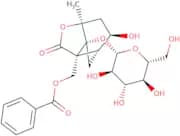
CAS:<p>Albiflorin is a bioactive compound, which is a monoterpene glucoside extracted from the roots of Paeonia species, specifically Paeonia lactiflora. Its primary mechanism of action involves the modulation of neurotransmitter systems, including serotonergic, dopaminergic, and GABAergic pathways. Such interactions are believed to underpin its effects on neural activity and psychological states.</p>Fórmula:C23H28O11Pureza:Min. 98 Area-%Forma y color:PowderPeso molecular:480.46 g/molGnidimacrin
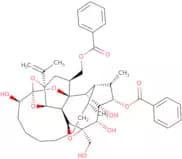
CAS:<p>Gnidimacrin is a natural diterpenoid ester, which is derived from the plant genus *Gnidia*. It is known for its intricate molecular structure and potent biological activities. As a plant-derived compound, it is sourced primarily from the shrubs native to Africa and Asia, belonging to the Thymelaeaceae family.</p>Fórmula:C44H54O12Pureza:Min. 95%Peso molecular:774.89 g/molHotrienol
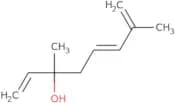
CAS:Hotrienol is a sesquiterpene alcohol, which is a naturally occurring organic compound. It is primarily sourced from certain essential oils, such as those derived from Cypress species and various aromatic plants. These oils are obtained through steam distillation or cold pressing methods, allowing for the extraction of volatile compounds where Hotrienol is present.Fórmula:C10H16OPureza:Min. 95%Forma y color:PowderPeso molecular:152.23 g/molBilobalide
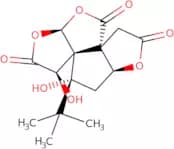
CAS:<p>Bilobalide is a sesquiterpene trilactone, which is a secondary metabolite isolated from the leaves of the Ginkgo biloba tree. The source of bilobalide, Ginkgo biloba, is one of the oldest tree species, extensively studied for its wide array of bioactive compounds. Bilobalide exerts its mode of action predominantly through modulation of various neurotransmitter systems and protection against neuronal injury. It has demonstrated the ability to antagonize the GABAA receptor and inhibit excitotoxicity related to excessive glutamate release, thereby providing neuroprotective effects.</p>Fórmula:C15H18O8Pureza:Min. 95%Forma y color:White PowderPeso molecular:326.3 g/molForskolin
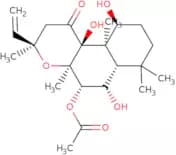
CAS:<p>Forskolin is a diterpene compound from Asian medicinal plant Coleus forskohlii. It is an activator of adenylate cyclase, causing increase in cellular levels of cAMP. It has anti-neuroinflammatory activity since it reduced microglial activation and astrocyte activation in the brain of rodent models for cerebral amyloidosis. Forskolin also reduced amyloid beta plaques deposition in cortex and hippocampus.</p>Fórmula:C22H34O7Pureza:Min. 97 Area-%Forma y color:White Off-White PowderPeso molecular:410.5 g/molLinalool - Natural grade
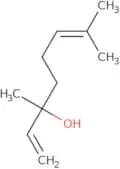
CAS:Linalool - Natural grade is a terpene alcohol, which is a naturally occurring compound found in over 200 plant species, including lavender, mint, and cinnamon. This compound is extracted from essential oils of these plants through steam distillation or solvent extraction, ensuring the retention of its natural properties.Fórmula:C10H18OPureza:Min. 98 Area-%Forma y color:Colorless Clear LiquidPeso molecular:154.25 g/molBetulinic acid methyl ester
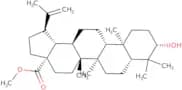
CAS:Betulinic acid methyl ester is a synthetic chemical compound, which is a derivative of betulinic acid, primarily sourced from the bark of birch trees. This compound retains the influential bioactive properties of its precursor, acting primarily through the induction of apoptosis in cancerous cells by modulating mitochondrial pathways. Its ability to disrupt cancer cell proliferation and promote programmed cell death makes it a subject of interest in cancer research.Fórmula:C31H50O3Pureza:Min. 95%Forma y color:White Off-White PowderPeso molecular:470.73 g/molIriversical
CAS:<p>Iriversical is a synthetic compound, which is derived from a combination of bioactive organic molecules. It operates through intricate biochemical interactions, specifically targeting cellular pathways involved in signal transduction. These interactions are facilitated by the compound's affinity for binding sites on specific enzymes, thereby modulating their activity.</p>Fórmula:C31H52O3Pureza:Min. 95%Peso molecular:472.74 g/molIsoforskolin
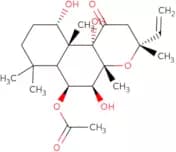
CAS:Isoforskolin is a forskolin derivative diterpenoid, which is extracted from the roots of *Coleus forskohlii*. This bioactive compound acts primarily by stimulating adenylate cyclase activity, leading to increased levels of cyclic adenosine monophosphate (cAMP) within cells. The elevated cAMP serves as a secondary messenger that can modulate various physiological responses, including lipolysis and vasodilation.Fórmula:C22H34O7Pureza:Min. 95%Forma y color:White Off-White PowderPeso molecular:410.5 g/molEscin sodium
CAS:<p>Escin sodium is a phytopharmaceutical agent, which is a derivative of the saponin complex found in the seeds of the horse chestnut tree, Aesculus hippocastanum. Its mode of action involves anti-inflammatory and vasoactive processes, primarily exerted through reducing vascular permeability and increasing venous tone. These mechanisms facilitate the reduction of edema and improve venous return.</p>Fórmula:C32H34O7Pureza:Min. 95%Peso molecular:530.61 g/molEffusanin A
CAS:<p>Effusanin A is a specialized fungal metabolite, which is derived from fungal endophytes, particularly those originating from the genus Phyllosticta. This compound exhibits a unique mode of action by interfering with microbial cell walls or membranes, thereby demonstrating significant antimicrobial properties. Its biochemical activity is primarily linked to its ability to inhibit the proliferation of various pathogenic microorganisms, including bacteria and fungi.</p>Fórmula:C20H28O5Pureza:Min. 95%Forma y color:White PowderPeso molecular:348.43 g/molGinkgolide J
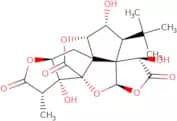
CAS:<p>Ginkgolide J is a terpene lactone, which is a compound derived from the leaves of the Ginkgo biloba tree. This compound is a part of the ginkgolides, a group of terpenoids that possess a unique chemical structure, characterized by a diterpene skeleton and a plethora of lactone moieties. Ginkgolide J, like other ginkgolides, is isolated through a multifaceted extraction process that involves the pulverization of leaves followed by solvent-based extraction and chromatography.</p>Fórmula:C20H24O10Pureza:Min. 95%Forma y color:PowderPeso molecular:424.4 g/molOrthosphenic acid
CAS:Please enquire for more information about Orthosphenic acid including the price, delivery time and more detailed product information at the technical inquiry form on this pageFórmula:C30H48O5Pureza:Min. 95%Forma y color:PowderPeso molecular:488.7 g/molSoyasaponin III
CAS:<p>Soyasaponin III is a bioactive compound, which is a naturally occurring saponin derived from soybeans. These glycosides are primarily found in the seeds of the soybean plant, Glycine max. Soyasaponins are known for their amphiphilic nature, which enables them to interact with both lipid and aqueous phases, affecting membrane dynamics and cellular processes.</p>Fórmula:C42H68O14Pureza:Min. 95%Forma y color:PowderPeso molecular:796.98 g/molAgnuside
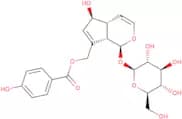
CAS:<p>Agnuside is a diterpenoid compound, which is a phytoconstituent primarily sourced from the plant Vitex agnus-castus, commonly known as chaste tree. This compound is extracted from the fruit of the plant through a series of isolation and purification processes aimed at preserving its chemical integrity.</p>Fórmula:C22H26O11Pureza:Min. 95 Area-%Forma y color:Brown PowderPeso molecular:466.44 g/mol(R)-Pulegone - 95%
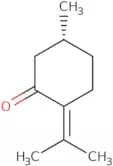
CAS:<p>(R)-Pulegone - 95% is a monoterpene ketone, which is a type of organic compound commonly found in essential oils of mint plants, particularly in Mentha species. This compound is naturally derived from the aromatic leaves of these plants and is a major component contributing to their characteristic scent.</p>Fórmula:C10H16OPureza:Min. 95%Forma y color:Colourless To Yellow LiquidPeso molecular:152.23 g/molAlantolactone
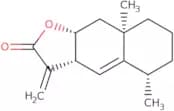
CAS:Alantolactone is a bioactive sesquiterpene lactone, which is derived from the roots of Inula helenium, a plant commonly known as elecampane. This compound is characterized by its complex bicyclic structure and exhibits a range of biological activities. The mode of action of alantolactone involves multiple biochemical pathways, including the inhibition of nuclear factor kappa B (NF-κB) and the modulation of reactive oxygen species (ROS) production. These pathways contribute to its anti-inflammatory, anti-cancer, and antimicrobial properties.Fórmula:C15H20O2Pureza:Min. 95%Forma y color:PowderPeso molecular:232.32 g/molUrsolic acid acetate
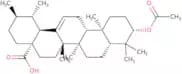
CAS:<p>Ursolic acid acetate is a natural triterpenoid compound, which is derived from the acetylation of ursolic acid. This compound is sourced from a variety of medicinal plants, including apples, rosemary, and holy basil. Its mode of action involves modulating multiple cellular pathways, including the inhibition of nuclear factor-kappa B (NF-κB) and the activation of AMP-activated protein kinase (AMPK). These actions contribute to its anti-inflammatory, anticancer, and antioxidant properties.</p>Fórmula:C32H50O4Pureza:Min. 95 Area-%Forma y color:PowderPeso molecular:498.74 g/molCostus lactone
CAS:<p>Costus lactone is a naturally occurring sesquiterpene lactone, which is derived from the roots of the plant Saussurea lappa, commonly known as costus. This sesquiterpene is a secondary metabolite that exhibits various bioactive properties. Costus lactone achieves its effects primarily through interactions with microbial cell membranes and can inhibit growth and replication by disrupting cellular processes crucial to microbial survival.</p>Fórmula:C15H20O2Pureza:Min. 98 Area-%Forma y color:PowderPeso molecular:232.32 g/mol