Carotenoides
Los carotenoides son una clase de tetraterpenos (C₄₀) que son pigmentos naturales presentes en plantas, algas y bacterias fotosintéticas. Desempeñan roles cruciales en la fotosíntesis y proporcionan colores vibrantes que van desde el amarillo hasta el rojo en diversas frutas y verduras. Los carotenoides son conocidos por sus propiedades antioxidantes y sus posibles beneficios para la salud, incluyendo la promoción de la salud ocular y la reducción del riesgo de ciertas enfermedades. En CymitQuimica, puedes encontrar una variedad de carotenoides para aplicaciones de investigación en nutrición, biología vegetal y ciencias farmacéuticas.
Se han encontrado 59 productos de "Carotenoides"
Ordenar por
Pureza (%)
0
100
|
0
|
50
|
90
|
95
|
100
Zeaxanthin - 10%
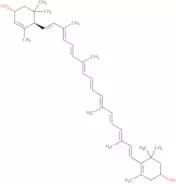
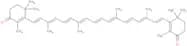
CAS:<p>Zeaxanthin - 10% is a concentrated carotenoid formulation, specifically derived from natural sources such as marigold flowers. It functions primarily as a potent antioxidant within the human body, playing an essential role in quenching free radicals and reducing oxidative stress. This protective action is particularly concentrated in the macular region of the eye, where zeaxanthin and its isomer lutein are vital components.</p>Fórmula:C40H56O2Pureza:Min. 95%Peso molecular:568.87 g/molα-Carotene
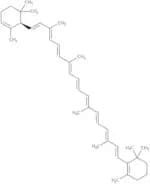
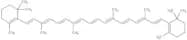
CAS:<p>α-Carotene is a carotenoid antioxidant, which is a naturally occurring pigment found primarily in fruits and vegetables. It is derived from plant sources, prominently present in carrots, pumpkins, and other orange-colored produce. As an isomer of β-carotene, α-carotene shares similar properties yet exhibits distinct biological activities due to its unique structure.</p>Fórmula:C40H56Pureza:Min. 95%Peso molecular:536.87 g/molLutein - 5%
CAS:<p>Lutein - 5% is a carotenoid compound, which is derived primarily from the petals of marigold flowers (Tagetes erecta). This natural source is known for its high concentration of xanthophylls, which are essential for the product's activity. The mode of action of Lutein involves its capacity to absorb blue light and quench reactive oxygen species, thereby exerting protective antioxidant effects. This mechanism is vital in preventing oxidative stress in biological tissues.</p>Fórmula:C40H56O2Pureza:Min. 95%Peso molecular:568.87 g/moltrans-Crocetin-98%
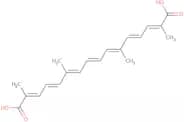
CAS:<p>trans-Crocetin-98% is a high-purity carotenoid, which is a type of organic pigment. It is derived from the stigmas of the saffron (Crocus sativus) flower, where it is obtained through meticulous extraction processes to ensure its purity and efficacy. trans-Crocetin acts primarily as an antioxidant, neutralizing free radicals and reducing oxidative stress within biological systems. It modulates various signaling pathways, which can result in neuroprotective, anti-inflammatory, and potential anti-cancer activities.</p>Fórmula:C20H24O4Pureza:Min. 95%Forma y color:Orange Red PowderPeso molecular:328.4 g/molFucoxanthine - 50%
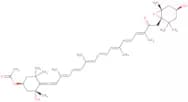
CAS:<p>Fucoxanthine - 50% is a carotenoid compound typically derived from brown seaweeds, such as Undaria pinnatifida and Laminaria japonica. This naturally occurring xanthophyll is recognized for its role in promoting metabolic health due to its unique mode of action. Fucoxanthine enhances the expression of uncoupling protein 1 (UCP1) in white adipose tissue, leading to increased thermogenesis and fat oxidation. This process is largely mediated through the activation of antioxidant pathways and modulation of metabolic regulators.</p>Fórmula:C42H58O6Pureza:Min. 95%Forma y color:PowderPeso molecular:658.91 g/molβ-Carotene - >95%
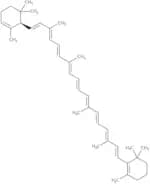
CAS:<p>beta-Carotene - >95% is a high-purity carotenoid compound, which is a naturally occurring pigment found in plants and fruits. This compound is primarily sourced from natural plant derivatives, such as carrots, sweet potatoes, and other colorful vegetables and fruits, where it functions as a photosynthetic pigment. The mode of action of beta-Carotene lies in its ability to convert enzymatically into retinol (vitamin A) in the human body, a crucial component for vision, immune function, and skin health.</p>Fórmula:C40H56Pureza:>95%Peso molecular:536.87 g/molall-trans-Canthaxanthin - Technical grade
CAS:<p>All-trans-Canthaxanthin - Technical grade is a carotenoid compound, which is a naturally occurring pigment. It is typically sourced through chemical synthesis or extraction from microorganisms such as algae or fungi. This compound functions as an antioxidant, donating electrons to neutralize free radicals, thereby preventing oxidative damage within cellular structures.</p>Fórmula:C40H52O2Pureza:Min. 95%Forma y color:Red PowderPeso molecular:564.84 g/molZeaxanthin
CAS:<p>Zeaxanthin is a naturally occurring carotenoid, which is primarily derived from various plant sources such as leafy green vegetables, corn, and yellow fruits. As a xanthophyll carotenoid, Zeaxanthin plays a significant role in the light-absorption processes of plants, contributing to their photosynthetic efficiency and protection against light-induced oxidative damage.</p>Fórmula:C40H56O2Pureza:(%) Min. 80%Forma y color:PowderPeso molecular:568.87 g/mola-Carotene - 10%
CAS:<p>α-Carotene - 10% is a carotenoid compound, which is a natural pigment found predominantly in the orange and yellow fruits and vegetables such as pumpkins and carrots. This compound is synthesized by plants and microorganisms through the isoprenoid biosynthetic pathway. It works primarily as an antioxidant, neutralizing free radicals and protecting cells from oxidative stress, which can lead to cellular damage.</p>Fórmula:C40H56Pureza:Min. 95%Peso molecular:536.87 g/mol