APIs para investigación e impurezas
Subcategorías de "APIs para investigación e impurezas"
- Aminoácidos y derivados(12.349 productos)
- Antraquinonas y derivados(407 productos)
- Derivados de Benzimidazol e Imidazol(10.464 productos)
- Derivados de Benzodiazepinas(335 productos)
- Carbohidratos y glucoconjugados(5.050 productos)
- Ésteres y derivados(42.305 productos)
- Ácidos Grasos y Derivados Lipídicos(32.455 productos)
- Flavonoides y Polifenoles(17.100 productos)
- Radicales libres y agentes oxidantes/reductores(214 productos)
- Cetonas y Derivados(2.405 productos)
- Antibióticos naturales y semisintéticos(6.402 productos)
- Nitrilos y Cianoderivados(3.070 productos)
- Nitrosaminas y derivados(55 productos)
- Nucleósidos y Nucleótidos(3.490 productos)
- Fosfatos y Fosfonatos Orgánicos(1.203 productos)
- Sulfonatos y Sulfatos Orgánicos(10.448 productos)
- Organometálicos(4.425 productos)
- Otros(6.326 productos)
- Péptidos y Proteínas(3.153 productos)
- Polímeros y derivados(100 productos)
- Derivados de Purinas y Pirimidinas(8.960 productos)
- Derivados de Quinazolina y Quinolina(66.164 productos)
- Quinonas y derivados(24.376 productos)
- Sales y derivados de API(81.299 productos)
- Esteroides y derivados(4.982 productos)
- Sulfonamidas y derivados(2.607 productos)
- Terpenoides y derivados(3.859 productos)
- Tiazolidinedionas y Tiopiranos(2.755 productos)
- Compuestos β-adrenérgicos(231 productos)
Se han encontrado 57634 productos de "APIs para investigación e impurezas"
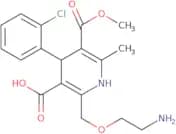
5-O-Desethyl amlodipine
CAS:5-O-Desethyl amlodipine is a metabolite of amlodipine. It has been used as an analytical reference standard for the determination of amlodipine and its metabolites in human plasma and urine. 5-O-Desethyl amlodipine has been reported to be excreted in human breast milk at a concentration that is about 20% of that found in maternal plasma. The drug product is manufactured by HPLC and is classified as a high purity pharmaceutical drug, which means it is free from extraneous substances such as other drugs, proteins, or bacteria.
Fórmula:C18H21ClN2O5Pureza:Min. 95%Peso molecular:380.82 g/molRef: 3D-ID153422
Producto descatalogadoDioctyl carbonate
CAS:Dioctyl carbonate is a pharmaceutical preparation used to treat skin conditions. It is a fatty acid ester of carbonic and carbonyl groups in which the two esters are in the same molecule. Dioctyl carbonate is a reaction product obtained by reacting an inorganic acid, such as hydrochloric acid or sulfuric acid, with an alcohol containing two hydroxyl groups and one double bond. This reaction may be facilitated by heating. The film-forming polymer may be polyvinylpyrrolidone, polyvinyl alcohol, or polyacrylic acid. Dioctyl carbonate has been shown to stimulate colony-stimulating factor production and inhibit the proliferation of human epidermal keratinocytes.
Fórmula:C17H34O3Pureza:Min. 95%Forma y color:Clear LiquidPeso molecular:286.4 g/molSitagliptin Hydrazine Diamide impurity
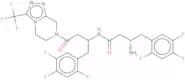
CAS:Sitagliptin Hydrazine Diamide impurity is an analytical reference material that has been manufactured in accordance with the requirements of the United States Pharmacopeia (USP) and the European Pharmacopoeia (EP). The material is a white to off-white crystalline powder. It has a purity of 99.9% with a specific gravity of 1.06 g/cm3 and a melting point of 176-177°C. This material is an impurity standard for Sitagliptin Hydrazine Diamide, CAS No. 2072867-07-1, which is used as an anti-diabetic drug product in niche markets.
Fórmula:C26H23F9N6O2Pureza:Min. 95%Peso molecular:622.49 g/molRef: 3D-IS106474
Producto descatalogadoSr 33805 oxalate
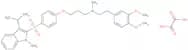
CAS:Sr 33805 oxalate is a potent inhibitor of cell proliferation that is used in the treatment of cancer. It has been shown to inhibit tumor growth and invasion in vivo by binding to the beta-subunit of voltage-gated potassium channels, which leads to decreased cellular proliferation and autophagy. Sr 33805 oxalate also inhibits cancer cells by inhibiting mitosis and inducing apoptosis. This agent has cytotoxic effects on brain cells, with an IC50 value of 0.1 μM in vitro against rat cerebellar neurons. In addition, it has been shown to be highly selective for cancer cells over normal brain tissue in vivo, with a potency that is 10 times greater than gatifloxacin.
Fórmula:C34H42N2O9SPureza:Min. 95%Peso molecular:654.8 g/molRef: 3D-WEA34633
Producto descatalogadoChloromethyl olanzapinium chloride
CAS:Chloromethyl olanzapinium chloride is an analytical reference material that can be used as a standard for HPLC-UV analysis. It is also used in the development of new drugs and as an impurity standard during drug manufacturing. Chloromethyl olanzapinium chloride has been shown to be a metabolite of Olanzapine, which is a niche drug product that is not commercially available. Chloromethyl olanzapinium chloride is listed by the USP, EP and JP as a drug product impurity. It can be synthesized from natural or synthetic sources.
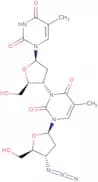
Fórmula:C18H22Cl2N4SPureza:Min. 95%Forma y color:PowderPeso molecular:397.37 g/mol3'-[3-(3-Azido-2,3-dideoxy-b-D-erythro-pentofuranosyl)-3,6-dihydro-5-methyl-2,6-dioxo-1(2H)-pyrimidinyl]-3'-deoxy-thymidine
CAS:3'-[3-(3-Azido-2,3-dideoxy-b-D-erythro-pentofuranosyl)-3,6-dihydro-5-methyl-2,6-dioxo-1(2H)-pyrimidinyl]-3'-deoxythymidine is an analytical standard used in the R&D and drug development of 3'-azido derivatives of thymidine. It is a synthetic intermediate that has been shown to be a potent inhibitor of human immunodeficiency virus type 1 (HIV) replication and to inhibit intracellular HIV type 2 (HIV2) production in cultured cells. 3'-[3-(3-Azido-2,3,-dideoxy--b erythro--pentofuranosyl)-3,6--dihydro--5--methyl--2,6--dioxo--1(2H)--pyrimidinyl]-
Fórmula:C20H25N7O8Pureza:95%NmrPeso molecular:491.45 g/molRef: 3D-IA145570
Producto descatalogado4-Hydoxymethyl-5-methylimidazol
CAS:4-Hydroxymethyl-5-methylimidazol (HMMI) is a corrosion inhibitor that is used in the production of nanomaterials. It has been shown to be an effective treatment for wastewater containing hydrochloric acid and organic solvents. The reaction between HMMI and the acids in wastewater forms a complex that prevents the corrosion of metal surfaces. HMMI can be synthesized by reacting aesculus with formaldehyde in an organic solvent, such as acetone or chloroform, at room temperature. HMMI has also been shown to have antiviral potency and is used in skin care products, such as lotions and shampoos, due to its ability to penetrate the skin barrier. Magnetic resonance spectroscopy (MRS) was used to study the effect of HMMI on skin cells, while electrochemical methods were used to investigate how it inhibits viral activity.
Fórmula:C5H8N2OPureza:Min. 95%Peso molecular:112.13 g/molRef: 3D-IH58266
Producto descatalogadoRetinyl retinoate
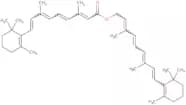
CAS:Producto controladoRetinyl retinoate is a synthetic retinoid that is chemically stable and has been shown to be effective in clinical studies. Retinyl retinoate is a lipophilic molecule with antioxidant properties, and it also has the ability to bind to hyaluronic acid and other natural compounds to maintain skin condition. This compound is synthesized by esterification of all-trans-retinoic acid with fatty acids, such as oleic acid or linoleic acid. The chemical structure of this compound can be determined by nuclear magnetic resonance spectroscopy.
Fórmula:C40H56O2Pureza:Min. 95%Peso molecular:568.9 g/molRef: 3D-QAA49886
Producto descatalogadoEthyl 2-(6-amino-2,3-dichlorobenzyl)glycine
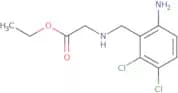
CAS:Ethyl 2-(6-amino-2,3-dichlorobenzyl)glycine is a drug product with a CAS number of 70406-92-7. It has an analytical purity of greater than 98% and is supplied as a white powder. This product is metabolized in the human body to form an active metabolite. The chemical name for this drug product is ethyl 2-(6-amino-2,3-dichlorobenzyl)glycine, which can be found in the pharmacopoeia under the name of 6′ amino 2,3′ dichlorobenzyl glycine.
Fórmula:C11H14Cl2N2O2Pureza:Min. 95%Peso molecular:277.15 g/mol2-[2-[4-(5,5-Dioxidodibenzo[b,f][1,4]thiazepin-11-yl)-1-piperazinyl]ethoxy]ethanol
CAS:Quetiapine is a drug that belongs to the class of sulfoxides. It is usually administered orally, but can also be given intravenously or intramuscularly. Quetiapine has been studied for its clinical use in the treatment of schizophrenia and bipolar disorder. The plasma concentrations of quetiapine are determined by high-performance liquid chromatography (HPLC) with tandem mass spectrometry (LC-MS/MS) detection. Validation studies have shown that the HPLC-MS/MS method is accurate and precise, with good linearity over a range of concentrations. Analysis was performed on plasma samples from healthy volunteers who were administered either 2 mg or 10 mg doses of quetiapine by intravenous injection. Concentrations were calculated and compared to those found in patients with schizophrenia and bipolar disorder who had been given oral doses of 300 mg per day for four weeks, yielding a therapeutic plasma concentration range from 100 to 300 ng/mL.
Fórmula:C21H25N3O4SPureza:Min. 95%Peso molecular:415.51 g/molTetracosanoic-d47 acid
CAS:Producto controladoTetracosanoic acid is a drug product that is used in the development of drugs and as an analytical standard. Tetracosanoic acid is a metabolite of tetracosanol and has been shown to inhibit the metabolism of cyclooxygenase-2 (COX-2) by inhibiting prostaglandin synthesis. Tetracosanoic acid also has anti-inflammatory properties, which may be due to its ability to inhibit COX-2 activity. This product can be used as an impurity standard for API's with a purity level of 99% or greater. Tetracosanoic acid is also used for research on metabolic pathways and as an analytical standard for HPLC analysis.
Fórmula:C24HD47O2Pureza:Min. 95%Peso molecular:415.93 g/molRef: 3D-TCA06000
Producto descatalogadoPhenothiazine S,S-dioxide
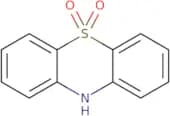
CAS:Phenothiazine S,S-dioxide is a fluorescent anion that can be used as a buffer. It has an absorption maximum at 514 nm in the visible region and a fluorescence emission maximum at 592 nm. Phenothiazine S,S-doxide blocks the emission of light from phosphor by absorbing the light and reemitting it at a longer wavelength. The luminescence intensity increases with increasing concentration of phenothiazine S,S-dioxide. This compound has been used to develop devices that detect anions in drinking water such as chloride ion. Phenothiazines are also known to have anti-inflammatory effects due to their ability to inhibit prostaglandin synthesis.
Fórmula:C12H9NO2SPureza:Min. 95%Peso molecular:231.27 g/molRef: 3D-BAA20966
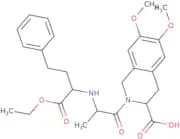
Producto descatalogadoMoexipril-d5
CAS:Please enquire for more information about Moexipril-d5 including the price, delivery time and more detailed product information at the technical inquiry form on this page
Fórmula:C27H34N2O7Pureza:Min. 95%Peso molecular:503.6 g/molRef: 3D-GEC92949
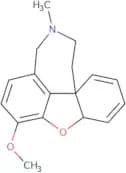
Producto descatalogadoAnhydro galanthamine
CAS:Producto controladoAnhydro galanthamine is a drug product that is custom synthesized to meet the needs of researchers. The purity of this compound can range from 99% to 99.99%. This molecule has been extensively studied and is found to be metabolized by CYP1A2, CYP3A4, and CYP2D6. Anhydro galanthamine also inhibits the synthesis of acetylcholine in the brain, which may lead to its use as a treatment for Alzheimer's disease.
Fórmula:C17H19NO2Pureza:Min. 95%Peso molecular:269.34 g/molRef: 3D-PBB99565
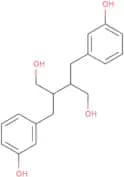
Producto descatalogadorac Enterodiol-d6
CAS:Racemic Enterodiol-d6 is a high purity synthetic racemic compound that is used as an impurity standard for use in HPLC. The CAS number for Racemic Enterodiol-d6 is 104411-12-3. Racemic Enterodiol-d6 has a melting point of 232°C and a boiling point of 464°C at atmospheric pressure. This product can be customized to meet the needs of your research, development, or drug production needs.
Fórmula:C18H22O4Pureza:Min. 95%Peso molecular:308.4 g/molRef: 3D-EEA41112
Producto descatalogadoDi(2-(4-(dibenzo[b,f][1,4]thiazepin-11-yl)piperazin-1-yl))-2-propoxyethyl propionate
CAS:Di(2-(4-(dibenzo[b,f][1,4]thiazepin-11-yl)piperazin-1-yl))-2-propoxyethyl propionate is a synthetic compound that is used in research and development for the analytical standard of dibenzothiazepine 11 (DBT). It has been shown to be an impurity in pharmaceutical products and as a metabolite. Di(2-(4-(dibenzo[b,f][1,4]thiazepin-11-yl)piperazin-1-yl))-2-propoxyethyl propionate is also used as a pharmacopoeia reference material in the manufacture of analytical standards of DBZ. CAS No. 1798840-31-9
Fórmula:C40H42N6O3S2Pureza:Min. 95%Peso molecular:718.90 g/molRef: 3D-YWC84031
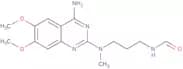
Producto descatalogadoN-(4-Amino-6,7-dimethoxyquinazol-2-yl)-N-methylpropylenediamine formamide hydrochloride
CAS:N-(4-Amino-6,7-dimethoxyquinazol-2-yl)-N-methylpropylenediamine formamide hydrochloride is an impurity in the synthesis of N-(4-amino-6,7-dimethoxyquinazol-2-yl)-N'-methylpropylenediamine formamide hydrochloride. It is a white solid that can be used as an analytical reference standard for HPLC. It has been detected in the urine of people taking this drug and can be used to identify the presence of this drug in urine samples.
Fórmula:C14H17N5O2·HClPureza:Min. 95%Peso molecular:323.78 g/molHydroxy cyclophosphamide semicarbazone-d4
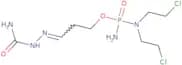
CAS:Hydroxy cyclophosphamide semicarbazone-d4 is an analytical standard used to monitor the purity of a drug product. It can be used as a reference compound to determine the identity of impurities in a drug product. Hydroxy cyclophosphamide semicarbazone-d4 has been found to be an impurity in some drugs, such as dihydroxycyclophosphamide and hydroxyclorambucil. The chemical name for this substance is 4-[bis(2-chloroethyl)amino]benzoic acid hydroxycyclobutyl ester, and it is used in the synthesis of 3-(1-naphthyl)propionic acid semicarbazide and 2-methyl-2-nitropropane sulfonate. Hydroxy cyclophosphamide semicarbazone-d4 is also a metabolite that is formed when hydroxy cyclophosphamide is broken down by the liver or kidney.
Fórmula:C8H18Cl2N5O3PPureza:Min. 95%Peso molecular:334.14 g/molRef: 3D-DCA94846
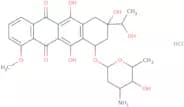
Producto descatalogadoDaunorubicinol hydrochloride
CAS:Daunorubicin metabolite
Fórmula:C27H31NO10•HClPureza:Min. 95 Area-%Forma y color:PowderPeso molecular:566 g/molRef: 3D-ID165374
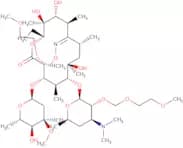
Producto descatalogadoRoxithromycin impurity I
CAS:Roxithromycin impurity I is a natural metabolite of roxithromycin. The substance has been synthesized in order to serve as an analytical impurity standard for HPLC. Roxithromycin impurity 1 is also a metabolite of roxithromycin, which has been shown to produce pharmacological effects similar to those seen with the parent compound. Roxithromycin impurity I is not an API, but has been developed as a HPLC analytical impurity standard and will be used for metabolism studies.
Fórmula:C45H84N2O17Pureza:Min. 95%Forma y color:PowderPeso molecular:925.15 g/molRef: 3D-IR106455
Producto descatalogado




![2-[2-[4-(5,5-Dioxidodibenzo[b,f][1,4]thiazepin-11-yl)-1-piperazinyl]ethoxy]ethanol](/_next/image/?url=https%3A%2Fstatic.cymitquimica.com%2Fproducts%2F3D%2Fthumb-webp%2FID27366.webp&w=3840&q=75)
![Di(2-(4-(dibenzo[b,f][1,4]thiazepin-11-yl)piperazin-1-yl))-2-propoxyethyl propionate](/_next/image/?url=https%3A%2Fstatic.cymitquimica.com%2Fproducts%2F3D%2Fthumb-webp%2FYWC84031.webp&w=3840&q=75)