APIs para investigación e impurezas
Los ingredientes farmacéuticos activos (API) son las sustancias en los medicamentos responsables de sus efectos terapéuticos. En esta sección, encontrarás una amplia variedad de API destinados a uso en investigación. Estos compuestos son esenciales para el desarrollo, prueba y validación de nuevas formulaciones farmacéuticas. En CymitQuimica, ofrecemos API de alta calidad para apoyar la investigación en el descubrimiento y desarrollo de fármacos.
Subcategorías de "APIs para investigación e impurezas"
- Aminoácidos y derivados(12.329 productos)
- Antraquinonas y derivados(405 productos)
- Derivados de Benzimidazol e Imidazol(10.442 productos)
- Derivados de Benzodiazepinas(335 productos)
- Carbohidratos y glucoconjugados(5.017 productos)
- Ésteres y derivados(42.241 productos)
- Ácidos Grasos y Derivados Lipídicos(32.400 productos)
- Flavonoides y Polifenoles(17.087 productos)
- Radicales libres y agentes oxidantes/reductores(213 productos)
- Cetonas y Derivados(2.404 productos)
- Antibióticos naturales y semisintéticos(6.388 productos)
- Nitrilos y Cianoderivados(3.067 productos)
- Nitrosaminas y derivados(55 productos)
- Nucleósidos y Nucleótidos(3.433 productos)
- Fosfatos y Fosfonatos Orgánicos(1.202 productos)
- Sulfonatos y Sulfatos Orgánicos(10.435 productos)
- Organometálicos(4.422 productos)
- Otros(6.294 productos)
- Péptidos y Proteínas(3.159 productos)
- Polímeros y derivados(100 productos)
- Derivados de Purinas y Pirimidinas(8.949 productos)
- Derivados de Quinazolina y Quinolina(66.000 productos)
- Quinonas y derivados(24.350 productos)
- Sales y derivados de API(79.753 productos)
- Esteroides y derivados(4.976 productos)
- Sulfonamidas y derivados(2.595 productos)
- Terpenoides y derivados(3.846 productos)
- Tiazolidinedionas y Tiopiranos(2.752 productos)
- Compuestos β-adrenérgicos(230 productos)
Mostrar 21 subcategorías más
Se han encontrado 57067 productos de "APIs para investigación e impurezas"
Ordenar por
Pureza (%)
0
100
|
0
|
50
|
90
|
95
|
100
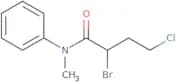
2-Bromo-4-chloro-N-methyl-N-phenyl-butanamide
CAS:<p>2-Bromo-4-chloro-N-methyl-N-phenyl-butanamide is an analog of saxagliptin, a protein inhibitor that has been shown to induce apoptosis in cancer cells. This compound has demonstrated potent anticancer activity in vitro and in vivo, inhibiting the growth of tumor cells by targeting kinases involved in cell proliferation and survival. It has also been found to be effective against a variety of human cancer types, including breast, prostate, and lung cancer. Additionally, 2-Bromo-4-chloro-N-methyl-N-phenyl-butanamide has been shown to have potential as a urine biomarker for detecting early-stage Chinese bladder cancer. Overall, this compound shows promise as a potent inhibitor of cancer cell growth and may have important applications in the development of novel anticancer therapies.</p>Fórmula:C11H13BrClNOPureza:Min. 95%Peso molecular:290.58 g/molRef: 3D-DNA93618
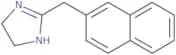
Producto descatalogado2-(Naphthalen-2-ylmethyl)-4,5-dihydro-1H-imidazole
CAS:<p>2-(Naphthalen-2-ylmethyl)-4,5-dihydro-1H-imidazole is a medicinal compound that has shown promising results in cancer research. It works as an inhibitor of cyclin-dependent kinases, which are essential for cancer cell proliferation. This compound induces apoptosis in cancer cells by inhibiting the activity of certain proteins involved in tumor growth. Studies have shown that 2-(Naphthalen-2-ylmethyl)-4,5-dihydro-1H-imidazole analogs have potent anticancer activity and can inhibit the growth of human cancer cells. This compound has also been found to be present in urine samples from Chinese patients with cancer. Further research on this compound may lead to the development of new and effective treatments for various types of cancers.</p>Fórmula:C14H14N2Pureza:Min. 95%Peso molecular:210.27 g/molRef: 3D-XAA12667
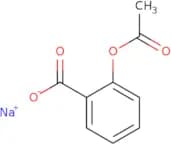
Producto descatalogadoAcetylsalicylic acid sodium salt
CAS:<p>Acetylsalicylic acid sodium salt is a potent inhibitor of kinases in both human and Chinese cells. It is an analog of salicylic acid and has been shown to inhibit the growth of cancer cells in vitro. Acetylsalicylic acid sodium salt also induces apoptosis, or programmed cell death, in cancer cells. Additionally, it has been shown to inhibit heparin-induced platelet aggregation and reduce the risk of blood clots. This drug has potential anticancer properties due to its ability to inhibit chitin synthesis, which is necessary for tumor growth and survival. Acetylsalicylic acid sodium salt may be useful as a therapeutic agent for the treatment of cancer and other diseases associated with abnormal kinase activity.</p>Fórmula:C9H7NaO4Pureza:Min. 95%Peso molecular:202.14 g/molRef: 3D-AAA49353
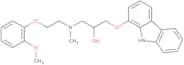
Producto descatalogadoN2-Methyl carvedilol
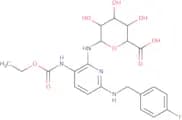
CAS:<p>N2-Methyl carvedilol is a drug product that is used for the treatment of hypertension. It belongs to the class of beta blockers and it has been shown to be metabolized in vitro by both human hepatic and intestinal cytochrome P450 enzymes. N2-Methyl carvedilol is an impurity standard for HPLC analysis. This compound is also synthesized from natural sources, but can also be synthetically reproduced.</p>Fórmula:C25H28N2O4Pureza:Min. 95%Peso molecular:420.5 g/molFlupirtine-N2-β-D-glucuronide
CAS:<p>Please enquire for more information about Flupirtine-N2-β-D-glucuronide including the price, delivery time and more detailed product information at the technical inquiry form on this page</p>Fórmula:C21H25FN4O8Pureza:Min. 95%Peso molecular:480.4 g/molRef: 3D-XVB28974
Producto descatalogadoDesmethoxyamino hydroxy gemifloxacin
CAS:<p>Desmethoxyamino hydroxy gemifloxacin is a drug product that belongs to the class of fluoroquinolones. It is a synthetic compound with a molecular weight of 551.4 g/mol and an empirical formula of C21H25FN3O2. Desmethoxyamino hydroxy gemifloxacin has been shown to inhibit bacterial DNA gyrase and topoisomerase IV in vitro, which are enzymes that maintain the integrity of bacterial DNA. The compound binds to 16S ribosomal RNA and inhibits protein synthesis, leading to cell death by inhibiting the production of proteins vital for cell division. This drug product is metabolized into gemifloxacin, desmethoxyamino acid, and desmethylgemifloxacin. These metabolites have not been shown to be active against bacterial DNA gyrase or topoisomerase IV in vitro, but may be active against other targets in</p>Fórmula:C17H19FN4O4Pureza:Min. 95%Peso molecular:362.40 g/molUlimorelin hydrochloride hydrate
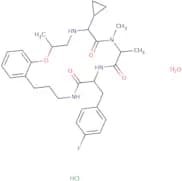
CAS:<p>Ulimorelin hydrochloride hydrate is an inhibitor that has been shown to selectively induce apoptosis in cancer cells. This medicinal compound is a protein analog that inhibits the activity of kinases, which are enzymes that play a critical role in tumor growth and progression. Ulimorelin hydrochloride hydrate has been tested on human cancer cell lines and has demonstrated potent anticancer activity. Additionally, it has been found to have inhibitory effects on Chinese hamster ovary (CHO) cells, which suggests potential therapeutic applications beyond cancer treatment. Ulimorelin hydrochloride hydrate is excreted primarily via urine and may be the basis for future research in developing new kinase inhibitors for treating various types of cancer.</p>Fórmula:C30H42ClFN4O5Pureza:Min. 95%Peso molecular:593.1 g/molSalmeterol Dimer Impurity (Mixture of Diastereomers)
CAS:<p>Salmeterol dimer impurity is a drug product. It is a custom synthesis with high purity. The metabolite of this compound is salmeterol, which is an active ingredient in the asthma medication Serevent (salmeterol xinafoate). Salmeterol dimer impurity has been shown to be a natural metabolite of salmeterol. Salmeterol dimer impurity has also been shown to have anti-inflammatory properties. This compound can be found as an analytical standard for HPLC and used for research and development purposes.</p>Fórmula:C50H72N2O7Pureza:Min. 95%Peso molecular:812.53395Ref: 3D-FS178211
Producto descatalogadoTrans-haloperidol N-oxide
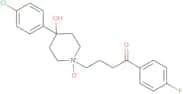
CAS:<p>Trans-haloperidol N-oxide is a pyridinium salt that has been used in the synthesis of other compounds. It is an intermediate in the formation of the anion, which arises due to hydrolysis of haloperidol. The anion can be converted to an n-oxide by treatment with hydrogen peroxide and acetic acid. Trans-haloperidol N-oxide can also be prepared by chromatography or kinetic studies. The analytical techniques employed include high performance liquid chromatography (HPLC) and gas chromatography/mass spectrometry (GC/MS).</p>Fórmula:C21H23ClFNO3Pureza:Min. 95%Peso molecular:391.9 g/molPBT Impurity 2
CAS:<p>Please enquire for more information about PBT Impurity 2 including the price, delivery time and more detailed product information at the technical inquiry form on this page</p>Fórmula:C36H38O13Peso molecular:678.69 g/molRef: 3D-FP184416
Producto descatalogadoAmiodarone impurity E
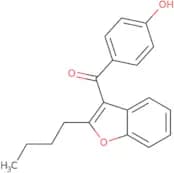
CAS:<p>Amiodarone impurity E is a nucleophilic compound that is synthesized by the acylation of a diazonium salt with an amine. It has been shown to be active against staphylococci, but not against subtilis. The reaction may be catalyzed by acid or chloride. Amiodarone impurity E is also demethylated and dehydrated to form the final product, amiodarone.</p>Fórmula:C19H18O3Pureza:Min. 95%Forma y color:PowderPeso molecular:294.34 g/molEmtricitabine impurity 17
CAS:<p>Please enquire for more information about Emtricitabine impurity 17 including the price, delivery time and more detailed product information at the technical inquiry form on this page</p>Fórmula:C8H10FN3O4SPureza:Min. 95%Peso molecular:263.24 g/molAmlodipine EP Impurity F maleate
CAS:<p>Amlodipine EP Impurity F maleate is an impurity of amlodipine, a drug product. It is a natural substance that has been classified as an API impurity in the United States Pharmacopeia (USP). The chemical name for this drug is 3-(2-chlorophenyl)-1-methyl-5-(o-tolyloxy)-2,4-dihydro-6H-[1,3]thiazolo[3,2-a]pyrimidin-7-one. Amlodipine EP Impurity F maleate has the following properties: C12H9ClNO2S and a melting point of 210°C with a purity of 99.5%. This compound was synthesized by custom synthesis and is used as an analytical standard for HPLC. This compound was also used during the development of amlodipine to determine its metabolism studies.</p>Fórmula:C19H23ClN2O5•C4H4O4Pureza:Min. 95%Peso molecular:510.92 g/molSitagliptin monohydrochloride monohydrate
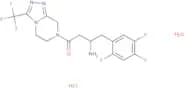
CAS:<p>Sitagliptin monohydrochloride monohydrate is an inhibitor of dipeptidyl peptidase-4 (DPP-4), which is responsible for the degradation of incretin hormones. It is used in the treatment of type 2 diabetes mellitus, as it increases insulin secretion and reduces blood glucose levels. Recent studies have shown that Sitagliptin has anticancer properties, as it induces apoptosis in cancer cells. It also inhibits protein kinases, which are involved in tumor growth and metastasis. Capsaicin, a compound found in chili peppers, has been shown to enhance the anticancer activity of Sitagliptin in Chinese hamster ovary cells. The drug is excreted primarily through urine and has a low potential for drug interactions with other kinase inhibitors. Overall, Sitagliptin monohydrochloride monohydrate shows great promise as both a diabetes medication and an anticancer agent.</p>Fórmula:C16H18ClF6N5O2Pureza:Min. 95%Forma y color:PowderPeso molecular:461.79 g/mol7'-Methyl-2'-propyl-2,5'-bi-1H-benzimidazole
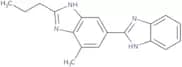
CAS:<p>7'-Methyl-2'-propyl-2,5'-bi-1H-benzimidazole (7'-MPB) is a benzimidazole derivative that is used as a medicine. It is made from recycled chemicals and has shown to have industrial applications as a catalyst for cyclization reactions. 7'-MPB is also used in the production of benzenesulfonic acid, which is an organic solvent. This chemical has been shown to be effective against high blood pressure, but has not been tested on humans yet. Telmisartan, which belongs to the angiotensin II receptor blocker class of drugs, can inhibit the synthesis of prostaglandins.</p>Fórmula:C18H18N4Pureza:Min. 95%Peso molecular:290.36 g/molRef: 3D-IM25660
Producto descatalogado2,2',4,4',6,6'-Hexachlorobiphenyl
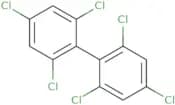
CAS:Producto controlado<p>2,2',4,4',6,6'-Hexachlorobiphenyl (PCB-136) is a potent anticancer agent that has been shown to induce apoptosis in cancer cells. It acts as a kinase inhibitor by blocking the activity of specific kinases involved in tumor growth and progression. PCB-136 has been studied extensively in human and Chinese hamster ovary cells and has been found to be highly effective against various types of cancer. This medicinal analog also exhibits inhibitory effects on the protein kinases that regulate cell division and proliferation, making it a promising candidate for cancer therapy. In addition, PCB-136 shows potential for use as a urinary biomarker for exposure to environmental pollutants due to its persistence in the environment and ability to accumulate in body tissues.</p>Fórmula:C12H4Cl6Pureza:Min. 95%Peso molecular:360.9 g/mol(-)-Sabinene
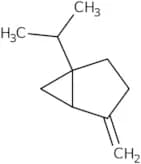
CAS:<p>(-)-Sabinene is a natural compound found in urine and various medicinal plants, including Chinese herbs. It has been identified as an analog of another natural compound that exhibits potent anticancer activity. (-)-Sabinene has been shown to inhibit the activity of certain proteins involved in cell cycle regulation and apoptosis, which are important processes for the growth and survival of cancer cells. In addition, (-)-Sabinene has been found to have inhibitory effects on tumor kinase activity, making it a promising candidate for the development of new anticancer drugs. Studies have shown that (-)-Sabinene can effectively inhibit the growth of various types of cancer cells, making it a potential therapeutic agent for the treatment of cancer.</p>Fórmula:C10H16Pureza:Min. 95%Forma y color:Clear LiquidPeso molecular:136.23 g/molRef: 3D-KAA40816
Producto descatalogado