APIs para investigación e impurezas
Subcategorías de "APIs para investigación e impurezas"
- Aminoácidos y derivados(12.333 productos)
- Antraquinonas y derivados(404 productos)
- Derivados de Benzimidazol e Imidazol(10.446 productos)
- Derivados de Benzodiazepinas(334 productos)
- Carbohidratos y glucoconjugados(5.047 productos)
- Ésteres y derivados(42.250 productos)
- Ácidos Grasos y Derivados Lipídicos(32.413 productos)
- Flavonoides y Polifenoles(17.083 productos)
- Radicales libres y agentes oxidantes/reductores(213 productos)
- Cetonas y Derivados(2.401 productos)
- Antibióticos naturales y semisintéticos(6.382 productos)
- Nitrilos y Cianoderivados(3.068 productos)
- Nitrosaminas y derivados(55 productos)
- Nucleósidos y Nucleótidos(3.480 productos)
- Fosfatos y Fosfonatos Orgánicos(1.201 productos)
- Sulfonatos y Sulfatos Orgánicos(10.433 productos)
- Organometálicos(4.421 productos)
- Otros(6.305 productos)
- Péptidos y Proteínas(3.148 productos)
- Polímeros y derivados(100 productos)
- Derivados de Purinas y Pirimidinas(8.948 productos)
- Derivados de Quinazolina y Quinolina(66.025 productos)
- Quinonas y derivados(24.362 productos)
- Sales y derivados de API(80.543 productos)
- Esteroides y derivados(4.954 productos)
- Sulfonamidas y derivados(2.595 productos)
- Terpenoides y derivados(3.848 productos)
- Tiazolidinedionas y Tiopiranos(2.753 productos)
- Compuestos β-adrenérgicos(231 productos)
Se han encontrado 57821 productos de "APIs para investigación e impurezas"
rac-1,2,3,4-Tetrahydro-5-methoxy-N-propyl-2-naphthalenamine
CAS:Rac-1,2,3,4-Tetrahydro-5-methoxy-N-propyl-2-naphthalenamine is an organic compound with the molecular formula C10H14N. Racemic rac-1,2,3,4-tetrahydro-5-methoxy-N propyl 2 naphthalenamine has been used in the synthesis of rotigotine. The enantiomers can be separated by means of an electrophoretic method. Racemic rac 1,2 3 4 tetrahydro 5 methoxy n propyl 2 naphthalenamine has a melting point range of 138 to 141 °C and a boiling point range of 285 to 288 °C at atmospheric pressure. This compound is soluble in organic solvents such as chloroform and ethanol and insoluble in water. It has a density of 1.07 g/cm3 at 20 °C and it isFórmula:C14H21NOPureza:Min. 95%Peso molecular:219.32 g/molRef: 3D-DAA89907
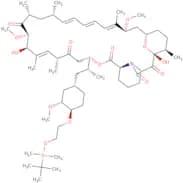
Producto descatalogado42-o-tert-Butyldimethylsilyloxyethyl rapamycin
CAS:Rapamycin is a natural product from Streptomyces hygroscopicus. It has been shown to inhibit T- and B-lymphocyte proliferation, induce apoptosis of lymphocytes, and suppress both humoral and cell-mediated immune responses. Rapamycin is also an immunosuppressant that decreases the incidence of rejection in organ transplant patients. Rapamycin is used as a drug product in the form of a sterile solution for injection. The purity of rapamycin should be at least 99%, with less than 1% impurities, such as 42-O-tert-butyldimethylsilyloxyethyl rapamycin (TBDMS). Rapamycin is not currently available on the market as an API, but it may be custom synthesized for research purposes or for clinical trials.Fórmula:C59H97NO14SiPureza:Min. 95%Peso molecular:1,072.49 g/mol1-(4-((2,4-Dimethylphenyl)thio)phenyl)piperazine hydrobromide
1-(4-((2,4-dimethylphenyl)thio)phenyl)piperazine hydrobromide is a synthetic drug that has been used in the research and development of drugs. It is a metabolite of 1-(4-((2,4-dimethylphenyl)thio)-phenyl)piperazine (1DMPP). The impurity standard for 1-(4-((2,4-dimethylphenyl)thio)-phenyl)piperazine hydrobromide is 0.5% (w/w). It has been shown to be effective in metabolism studies.Pureza:Min. 95%Pantoprazole sulfone N-oxide
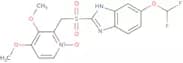
CAS:Pantoprazole sulfone N-oxide is a prodrug that is converted to the active form pantoprazole in the stomach where it inhibits gastric acid secretion. Pantoprazole sulfone N-oxide has been shown to be genotoxic, and can cause polyvinyl chloride to degrade when stored together. Reconstituted solution of this drug should be used within 24 hours after reconstitution, as the chemical stability of this drug decreases rapidly. Validation studies have been conducted on different analytical methods for determining pantoprazole concentrations in reconstituted solutions, and these methods have been harmonized with those published by the United States Pharmacopeia (USP). The pump inhibitor activity of pantoprazole sulfone N-oxide has been demonstrated in dogs, and it is also useful for treating acid reflux disease in humans. Pantoprazole sulfone N-oxide is unstable at high temperatures (>25°C), so should not be refrigerated or
Fórmula:C16H15F2N3O6SPureza:Min. 95%Peso molecular:415.37 g/molRef: 3D-ID26757
Producto descatalogado1,4-Bis[(tetrahydro-2-furanyl)carbonyl]-piperazine
CAS:1,4-Bis[(tetrahydro-2-furanyl)carbonyl]-piperazine is a synthetic drug product. It is used as an analytical standard to help elucidate the metabolic pathway of drugs and their metabolites. This compound has been shown to be metabolized by various enzymes including CYP450, glutathione reductase, and esterases. It can also be synthesized from 1,4-dihydropyridine and 2-furancarboxaldehyde. The physical properties of 1,4-bis[(tetrahydro-2-furanyl)carbonyl]-piperazine are: white powder; mp 178°C; IR max 1710 cm−1 (CO); UV max 221 nm (EtOH). The impurities in this product are: 1-(2H)-Quinolinone (CAS No. 2467-94-1) which may have a maximum concentration
Fórmula:C14H22N2O4Pureza:Min. 95%Peso molecular:282.34 g/mol2-[2-[4-(5,5-Dioxidodibenzo[b,f][1,4]thiazepin-11-yl)-1-piperazinyl]ethoxy]ethanol
CAS:Quetiapine is a drug that belongs to the class of sulfoxides. It is usually administered orally, but can also be given intravenously or intramuscularly. Quetiapine has been studied for its clinical use in the treatment of schizophrenia and bipolar disorder. The plasma concentrations of quetiapine are determined by high-performance liquid chromatography (HPLC) with tandem mass spectrometry (LC-MS/MS) detection. Validation studies have shown that the HPLC-MS/MS method is accurate and precise, with good linearity over a range of concentrations. Analysis was performed on plasma samples from healthy volunteers who were administered either 2 mg or 10 mg doses of quetiapine by intravenous injection. Concentrations were calculated and compared to those found in patients with schizophrenia and bipolar disorder who had been given oral doses of 300 mg per day for four weeks, yielding a therapeutic plasma concentration range from 100 to 300 ng/mL.
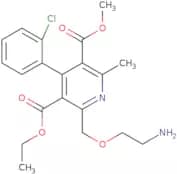
Fórmula:C21H25N3O4SPureza:Min. 95%Peso molecular:415.51 g/molAmlodipine besilate impurity D
CAS:Amlodipine besilate impurity D is a diluent, additive, and stabilizer. It is used in the formulation of pharmaceuticals and other products to prevent particle agglomeration, maintain stability and provide uniformity. Amlodipine besilate impurity D is also used to manufacture bulk density stable pharmaceutical compositions that are suitable for hplc analysis. This product contains magnesium hydroxide as an impurity.
Fórmula:C20H23ClN2O5Pureza:Min. 95%Peso molecular:406.86 g/molMonobenzyl fosaprepitant
CAS:Monobenzyl fosaprepitant is a drug product that is used for research and development purposes. It is an impurity standard for the analysis of API (Active Pharmaceutical Ingredient) impurities, which are synthetic products. Monobenzyl fosaprepitant has been shown to be metabolized in vitro. The metabolism studies have shown that this compound can be hydrolyzed by esterases or glucuronidases, oxidized by cytochrome P450 enzymes, reduced by glutathione reductase, or conjugated with glucuronic acid. Monobenzyl fosaprepitant is a high-purity analytical standard and is used as a pharmacopoeia monograph material.
Fórmula:C30H28F7N4O6PPureza:Min. 95%Peso molecular:704.50 g/molRef: 3D-PKB85202
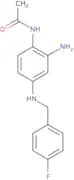
Producto descatalogadoN-Acetyl N-descarboxyethyl retigabine d4
CAS:N-Acetyl N-descarboxyethyl retigabine (D4) is a pharmaceutical drug that is used for the treatment of epilepsy. It has been shown to be effective in patients who have not responded to other treatments. D4 binds to voltage-gated potassium channels and inhibits their opening, which leads to a decrease in neurotransmitter release from nerve cells. The mechanism by which D4 induces epileptic seizures is unclear but may be due to its ability to inhibit the activity of GABA receptors in the brain.Fórmula:C15H16FN3OPureza:Min. 95%Peso molecular:273.3 g/molRef: 3D-EJA97068
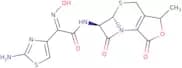
Producto descatalogadoCefdinir impurity E
CAS:Cefdinir impurity E is a research and development, impurity standard, custom synthesis, drug product, synthetic, high purity, pharmacopoeia, drug development and analytical standard. CAS No. 946573-41-7 is the metabolite of cefdinir. It is used to study metabolism of cefdinir in vitro and in vivo. HPLC standards are available for this compound.
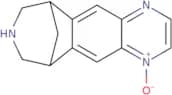
Pureza:Min. 95%Varenicline N-oxide
CAS:Varenicline N-oxide is a synthetic drug product. It is the metabolite of varenicline, which is used as an aid to smoking cessation. Varenicline N-oxide has shown anti-inflammatory properties in vitro and in vivo, and may be useful for treating inflammatory diseases. Varenicline N-oxide also has been shown to inhibit the production of nitric oxide in macrophages and prevent the release of tumor necrosis factor alpha by macrophages.
Fórmula:C13H13N3OPureza:Min. 95%Peso molecular:227.26 g/molRef: 3D-IV177544
Producto descatalogadoVortioxetine Impurity 25
CAS:Vortioxetine Impurity 25 is a drug product that is an analytical impurity. It is a natural impurity found in the synthetic process of Vortioxetine, which is an active pharmaceutical ingredient (API). It has been shown to have pharmacological effects in humans and animals. This compound has been synthesized for use as a standard for HPLC assays. The CAS number for this substance is 1639263-80-1.
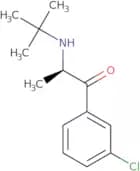
Fórmula:C18H22N2O2SPureza:Min. 95%Peso molecular:330.4 g/molBupropion (R)-Isomer
CAS:Producto controladoBupropion is a racemic mixture of two enantiomers. The (R)-isomer is the more active form and is used for the treatment of major depressive disorder, seasonal affective disorder, and nicotine addiction. Bupropion has been shown to inhibit monoamine oxidase type A in humans and other mammals. This inhibition may be responsible for its antidepressant effects. The drug also has an effect on the liver, which can lead to serious side effects such as seizures or death if not monitored carefully. Bupropion has a high affinity for α1-acid glycoprotein, which plays a role in drug interactions with other drugs that are metabolized by this protein.
Fórmula:C13H18ClNOPureza:Min. 95%Peso molecular:239.74 g/molFR183998
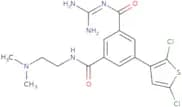
CAS:FR183998 is an anticancer drug that is derived from Chinese urine. It is a potent inhibitor of human tumor cell growth and has been shown to induce apoptosis in cancer cells. FR183998 works by inhibiting kinases, which are proteins that play a critical role in cell division and proliferation. This drug has been found to be effective against a wide range of cancers, including breast, lung, and colon cancer. Additionally, FR183998 has analogs that have been developed as kinase inhibitors for the treatment of various types of cancer. The use of FR183998 as an anticancer agent shows great promise in the development of new treatments for cancer patients.
Fórmula:C17H19Cl2N5O2SPureza:Min. 95%Peso molecular:428.3 g/molRef: 3D-PJA44020
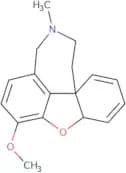
Producto descatalogadoAnhydro galanthamine
CAS:Producto controladoAnhydro galanthamine is a drug product that is custom synthesized to meet the needs of researchers. The purity of this compound can range from 99% to 99.99%. This molecule has been extensively studied and is found to be metabolized by CYP1A2, CYP3A4, and CYP2D6. Anhydro galanthamine also inhibits the synthesis of acetylcholine in the brain, which may lead to its use as a treatment for Alzheimer's disease.
Fórmula:C17H19NO2Pureza:Min. 95%Peso molecular:269.34 g/molRef: 3D-PBB99565
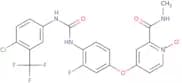
Producto descatalogadoRegorafenib metabolite M2 oxide
CAS:Regorafenib metabolite M2 oxide (M2O) is a cancer drug that is an inhibitor of multikinase. It was developed as a prodrug for regorafenib, which is used to treat patients with metastatic colorectal cancer and has been shown to be effective against other cancers, such as lung and pancreatic cancer. M2O inhibits the efflux of drugs from cells by binding to the transporter protein P-glycoprotein. This prevents the accumulation of toxic concentrations of regorafenib in cells, which are responsible for its side effects, such as diarrhea and liver damage. The uptake of M2O by cells is also inhibited by light and acidic conditions. Oral administration of M2O leads to increased exposure to regorafenib in the body because it is not metabolized by CYP3A4 enzymes.
Fórmula:C21H15ClF4N4O4Pureza:Min. 95%Peso molecular:498.81 g/molRef: 3D-IR164114
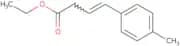
Producto descatalogadoOzagrel impurity III
CAS:Please enquire for more information about Ozagrel impurity III including the price, delivery time and more detailed product information at the technical inquiry form on this page
Fórmula:C13H16O2Pureza:Min. 95%Peso molecular:204.26 g/molRef: 3D-JIA33421
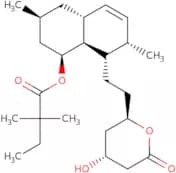
Producto descatalogadoSimvastatin impurity K
Simvastatin impurity K is a research and development substance that is used for the synthesis of drug products. This compound is custom synthesized, and its CAS number is 607-33-0. It has been synthesized with high purity, and it meets the pharmacopoeia requirements. Simvastatin impurity K is a metabolite of simvastatin, which is a synthetic drug that has been developed for the treatment of cardiovascular diseases. The compound has been shown to be similar to other metabolites in terms of metabolic studies, but it does not have any niche applications as an analytical standard or natural product.
Fórmula:C25H40O5Pureza:Min. 95%Peso molecular:420.58 g/molRef: 3D-IS45166
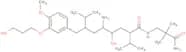
Producto descatalogado3’-o-Desmethyl aliskiren hydrochloride
CAS:Please enquire for more information about 3’-o-Desmethyl aliskiren hydrochloride including the price, delivery time and more detailed product information at the technical inquiry form on this page
Fórmula:C29H51N3O6Pureza:Min. 95%Peso molecular:537.7 g/molRef: 3D-ZMB92576
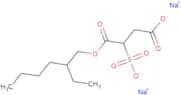
Producto descatalogadoDisodium monooctyl sulfosuccinate
CAS:Disodium monooctyl sulfosuccinate (DSMS) is a sodium-based surfactant that is used as an excipient in tablets and capsules. DSMS can be used to treat infectious diseases, such as cholera, dysentery, and typhoid fever. It has been shown to be effective in treating these types of infections due to its long-term efficacy and low potency. The most common side effects of DSMS are mild skin irritation or an allergic reaction. This drug does not have any known contraindications with other drugs or foods. It is also biocompatible with a variety of polymers and fatty acids.
Fórmula:C12H20Na2O7SPureza:Min. 95%Peso molecular:354.33 g/molRef: 3D-LDA87853
Producto descatalogado

![1,4-Bis[(tetrahydro-2-furanyl)carbonyl]-piperazine](/_next/image/?url=https%3A%2Fstatic.cymitquimica.com%2Fproducts%2F3D%2Fthumb-webp%2FIB63853.webp&w=3840&q=75)
![2-[2-[4-(5,5-Dioxidodibenzo[b,f][1,4]thiazepin-11-yl)-1-piperazinyl]ethoxy]ethanol](/_next/image/?url=https%3A%2Fstatic.cymitquimica.com%2Fproducts%2F3D%2Fthumb-webp%2FID27366.webp&w=3840&q=75)