APIs para investigación e impurezas
Subcategorías de "APIs para investigación e impurezas"
- Aminoácidos y derivados(12.318 productos)
- Antraquinonas y derivados(402 productos)
- Derivados de Benzimidazol e Imidazol(10.387 productos)
- Derivados de Benzodiazepinas(324 productos)
- Carbohidratos y glucoconjugados(5.046 productos)
- Ésteres y derivados(42.242 productos)
- Ácidos Grasos y Derivados Lipídicos(32.369 productos)
- Flavonoides y Polifenoles(17.071 productos)
- Radicales libres y agentes oxidantes/reductores(210 productos)
- Cetonas y Derivados(2.395 productos)
- Antibióticos naturales y semisintéticos(6.314 productos)
- Nitrilos y Cianoderivados(3.068 productos)
- Nitrosaminas y derivados(55 productos)
- Nucleósidos y Nucleótidos(3.434 productos)
- Fosfatos y Fosfonatos Orgánicos(1.193 productos)
- Sulfonatos y Sulfatos Orgánicos(10.418 productos)
- Organometálicos(4.417 productos)
- Otros(6.270 productos)
- Péptidos y Proteínas(3.132 productos)
- Polímeros y derivados(99 productos)
- Derivados de Purinas y Pirimidinas(8.895 productos)
- Derivados de Quinazolina y Quinolina(65.644 productos)
- Quinonas y derivados(24.337 productos)
- Sales y derivados de API(81.387 productos)
- Esteroides y derivados(4.915 productos)
- Sulfonamidas y derivados(2.560 productos)
- Terpenoides y derivados(3.832 productos)
- Tiazolidinedionas y Tiopiranos(2.752 productos)
- Compuestos β-adrenérgicos(227 productos)
Se han encontrado 58741 productos de "APIs para investigación e impurezas"
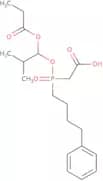
2-((2-Methyl-1-(propionyloxy)propoxy)(4-phenylbutyl)phosphoryl)acetic acid
CAS:2-((2-Methyl-1-(propionyloxy)propoxy)(4-phenylbutyl)phosphoryl)acetic acid (KZPBA) is a zoonotic antibiotic that has been shown to be active against agalactiae. It is a prodrug, which is metabolized to the active form, KZPBA, in humans and other mammals. The mechanism of action of KZPBA is not yet known; however, it has been hypothesized that its activity may be due to inhibition of DNA gyrase and topoisomerase IV. This drug has also been shown to have an effect on mastitis in dairy cows.Fórmula:C19H29O6PPureza:Min. 95%Peso molecular:384.4 g/molRef: 3D-IM27637
Producto descatalogadoDexamethasone Impurity A
Impurity A is an impurity of the drug product, dexamethasone. The impurity is a natural metabolite of dexamethasone that is found in the urine of patients taking this medication. Impurity A is chemically identified using HPLC and its purity verified using GC-MS and LC-MS. This impurity can be used as a reference standard for analytical purposes and as an impurity standard for pharmacopoeia testing.
Fórmula:C22H29FO5Pureza:Min. 95 Area-%Forma y color:White Off-White PowderPeso molecular:392.46 g/molRef: 3D-ID176574
Producto descatalogado3-(2-Fluorophenyl) ezetimibe
CAS:3-(2-Fluorophenyl) ezetimibe is an impurity of the drug product Ezetimibe. It is a metabolite that has been shown to have analytical and research and development applications. 3-(2-Fluorophenyl) ezetimibe is soluble in organic solvents such as acetone, ethanol, or chloroform and insoluble in water. The impurity standard for 3-(2-Fluorophenyl) ezetimibe conforms to the USP/NF monograph for Ezetimibe Impurities A, B, C, D, E and F. The CAS number for this impurity is 1798008-25-9.
Fórmula:C24H21F2NO3Pureza:Min. 95%Peso molecular:409.40 g/molRef: 3D-YWC00825
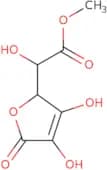
Producto descatalogadoL-Threo-hex-2-enaric acid 1,4-lactone 6-methyl ester
CAS:L-Threo-hex-2-enaric acid 1,4-lactone 6-methyl ester is a research and development compound. It is a metabolite of the drug product L-Threo-hex-2-enaric acid 1,4-lactone 6-(2,6,6)-trimethyl ester. L-Threo-hex-2-enaric acid 1,4-lactone 6-(2,6,6)-trimethyl ester (LTA) is an impurity in the drug product that is present as a result of its synthesis. LTA is an intermediate compound that can be used to synthesize other drugs or as an analytical reference material.
Fórmula:C7H8O7Pureza:Min. 95%Peso molecular:204.13 g/molRef: 3D-XEA04679
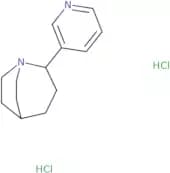
Producto descatalogadoTc 1698 dihydrochloride
CAS:Tc 1698 dihydrochloride is a tumor-promoting agent that inhibits the growth of tumor tissues. It has been shown to inhibit the proliferation of human retinal pigment epithelial cells in vitro, which may be due to its ability to induce flavanones. Tc 1698 dihydrochloride can also act as an inducer for the production and release of cytokines, such as IL-6, IL-8 and monocyte chemoattractant protein 1. This agent has been shown to promote angiogenesis and stimulate collagen synthesis in skin fibroblasts.
Fórmula:C13H20Cl2N2Pureza:Min. 95%Peso molecular:275.21 g/molRef: 3D-MGB58706
Producto descatalogadoAcyclovir Impurity O
Acyclovir Impurity O is an impurity found in the drug Acyclovir. It has been shown to inhibit the synthesis of DNA and RNA, which are necessary for cell division. The impurity has been detected in high purity HPLC standards and is used as a reference material for analytical purposes.
Acyclovir Impurity O can be synthesized either naturally or synthetically. It is an impurity that is regulated by the USP, BP, and EP pharmacopeias.Fórmula:C9H13N5O4Pureza:Min. 95%Peso molecular:255.23 g/molRef: 3D-IA158674
Producto descatalogado2-[[[3-Methyl-4-(methylthio)-2-pyridinyl]methyl]sulfinyl]-1H-benzimidazole
CAS:2-[[[3-Methyl-4-(methylthio)-2-pyridinyl]methyl]sulfinyl]-1H-benzimidazole is a synthetic, nonsteroidal anti-inflammatory drug. It is soluble in methanol and ethanol, not soluble in water. The impurity standard of 2-[[[3-Methyl-4-(methylthio)-2-pyridinyl]methyl]sulfinyl]-1H-benzimidazole is 3-[2-[(3,4,5-trimethoxyphenyl)amino]-1H-benzimidazolium methyl sulfate].
Fórmula:C15H15N3OS2Pureza:Min. 95%Peso molecular:317.43 g/molSr 33805 oxalate
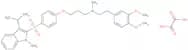
CAS:Sr 33805 oxalate is a potent inhibitor of cell proliferation that is used in the treatment of cancer. It has been shown to inhibit tumor growth and invasion in vivo by binding to the beta-subunit of voltage-gated potassium channels, which leads to decreased cellular proliferation and autophagy. Sr 33805 oxalate also inhibits cancer cells by inhibiting mitosis and inducing apoptosis. This agent has cytotoxic effects on brain cells, with an IC50 value of 0.1 μM in vitro against rat cerebellar neurons. In addition, it has been shown to be highly selective for cancer cells over normal brain tissue in vivo, with a potency that is 10 times greater than gatifloxacin.
Fórmula:C34H42N2O9SPureza:Min. 95%Peso molecular:654.8 g/molRef: 3D-WEA34633
Producto descatalogadocis-Tadalafil
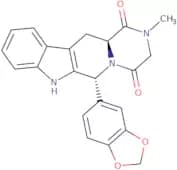
CAS:Cis-Tadalafil is a potent inhibitor of phosphodiesterase 5, which is used to treat erectile dysfunction (ED) and primary pulmonary hypertension (PPH). It works by increasing blood flow to the penis, allowing men with ED to achieve and maintain an erection. Cis-Tadalafil is also used to treat symptoms of prostatic hyperplasia (enlarged prostate) in men. This drug has been shown to be effective in treating PPH by reducing pulmonary arterial pressure and improving exercise capacity. Cis-Tadalafil belongs to the carboline class of drugs and is a phosphodiesterase 5 inhibitor that selectively inhibits cGMP-specific phosphodiesterase type 5 (PDE5). This drug has been shown to be highly effective in treating both ED and PPH with minimal side effects.
Fórmula:C22H19N3O4Pureza:Min. 95%Forma y color:White/Off-White SolidPeso molecular:389.4 g/mol(S)-Rabeprazole sodium
CAS:(S)-Rabeprazole sodium is an anticancer drug that acts as a kinase inhibitor. It is an analog of Rabeprazole and has been shown to inhibit the growth of cancer cells in vitro and in vivo. (S)-Rabeprazole sodium inhibits the activity of kinases, which are enzymes that play a key role in cell signaling pathways. This inhibition leads to apoptosis, or programmed cell death, in cancer cells. (S)-Rabeprazole sodium has been tested against various types of cancer, including Chinese hamster ovary cells and tumor xenografts in mice. It has also been shown to inhibit elastin degradation, which is important for preventing metastasis of cancer cells. (S)-Rabeprazole sodium may be a promising candidate for the development of new anticancer drugs that target specific kinases and proteins involved in cancer cell growth and survival.
Fórmula:C18H21N3O3S•NaPureza:Min. 95%Peso molecular:382.43 g/molRef: 3D-IR183125
Producto descatalogadoN-Benzyl albuterol
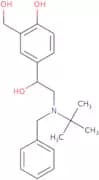
CAS:N-Benzyl albuterol is a drug product that is custom synthesized to be of high purity with an analytical standard. It is used in research and development, pharmaceutical development, and as a pharmacopoeia or analytical standard. N-Benzyl albuterol has been found to be a metabolite of the drug product Albuterol Sulfate. It is also used in metabolism studies and natural product research. The CAS number for this compound is 24085-03-8.
Fórmula:C20H27NO3Pureza:Min. 95%Peso molecular:329.4 g/molRoflumilast Impurity A
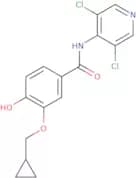
CAS:Roflumilast impurity A is a metabolite of roflumilast. It is a drug product that is used as an analytical standard for the determination of roflumilast in HPLC analysis. Roflumilast impurity A is not natural and is synthetic. It has been shown to be a substrate for CYP1A2, CYP2C8, CYP2C9, and CYP3A4 enzymes. Studies have shown that it may be involved in the metabolism of roflumilast through hydroxylation and deamination.
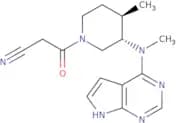
Fórmula:C16H14Cl2N2O3Pureza:Min. 95%Peso molecular:353.2 g/molTofacitinib dihydro impurity
CAS:Tofacitinib dihydro impurity is a research and development impurity standard for the synthesis of Tofacitinib. It is a custom synthesis with high purity, pharmacopoeia grade, and synthetic. This product is also used in drug development for metabolism studies and analytical applications.
Fórmula:C16H22N6OPureza:Min. 95%Peso molecular:314.39 g/molDicyclopropylamine hydrochloride
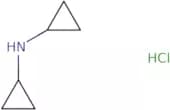
CAS:Dicyclopropylamine hydrochloride is a tyrosine kinase inhibitor that blocks the activity of jak2. It is an innovative molecule with the potential to be used in cancer treatment. Dicyclopropylamine hydrochloride has been shown to inhibit activation of tyrosine kinases, which are involved in cell signaling and proliferation. Dicyclopropylamine hydrochloride also has anti-inflammatory properties, which may be due to its ability to inhibit prostaglandin synthesis. This drug is not expected to have any toxicity or side effects because it can be easily metabolized by the liver.br>br> Dicyclopropylamine hydrochloride is a white solid with a melting point of 175°C. It has no detectable odor, and it is soluble in water and ethanol. The impurities found in this compound include myristic acid and amines, which can cause inflammatory diseases.br>br> D
Fórmula:C6H11N•HClPureza:Min. 95%Forma y color:PowderPeso molecular:133.62 g/molRef: 3D-FD141573
Producto descatalogado(4-Chlorophenyl)diphenylmethanol
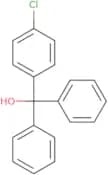
CAS:Please enquire for more information about (4-Chlorophenyl)diphenylmethanol including the price, delivery time and more detailed product information at the technical inquiry form on this page
Fórmula:C19H15ClOPureza:Min. 95%Peso molecular:294.8 g/molRef: 3D-GAA92289
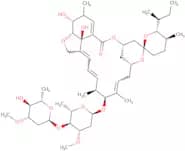
Producto descatalogadoIvermectin impurity I
CAS:Ivermectin impurity I is an analytical standard that is used for pharmacopoeia and custom synthesis. It is a natural metabolite of the drug Ivermectin, which has been shown to have anti-inflammatory properties in mice. Ivermectin impurity I binds to nicotinic acetylcholine receptors, leading to muscle paralysis and death. This compound is found in high purity for research and development purposes.
Fórmula:C48H74O14Pureza:Min. 95%Forma y color:PowderPeso molecular:875.09 g/molRef: 3D-II167729
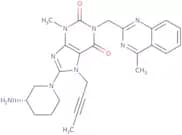
Producto descatalogadoLinagliptin impurity G
CAS:Linagliptin impurity G is an impurity in the drug product Linagliptin. It is a natural substance and its CAS number is 668270-11-9. Impurity G can be synthesized from L-phenylalanine and cyclohexane carboxaldehyde in a two step process. The first step involves the reaction of L-phenylalanine with cyclohexane carboxaldehyde to yield methylcyclohexanecarboxylate, which then undergoes hydrolysis to give phenylcyclohexanol. In the second step, phenylcyclohexanol reacts with hydrochloric acid to produce phenylcyclohexanone, which is then oxidized with hydrogen peroxide to yield impurity G. Impurity G can also be found in the pharmacopoeia as a high purity HPLC standard for linagliptin.
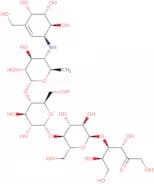
Fórmula:C25H28N8O2Pureza:Min. 95%Forma y color:PowderPeso molecular:472.54 g/molAcarbose Impurity E
CAS:Acarbose Impurity E is an impurity found in acarbose. It is a natural, API impurity and is a synthetic impurity standard. Acarbose Impurity E has been used in drug development research and development, as well as in the HPLC analysis of acarbose to generate a pharmacopoeia-grade purity standard.
Pureza:Min. 95%Ref: 3D-FA175652
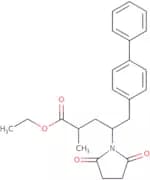
Producto descatalogadoSacubitril Impurity 2
CAS:Sacubitril Impurity 2 is a drug product that is an analytical impurity in Sacubitril. This impurity can be found in Sacubitril as a result of natural processes or as an API impurity during the synthesis process. Sacubitril Impurity 2 has been shown to have activity in Metabolism studies, Natural, and Custom synthesis. It has been shown to be a Synthetic impurity standard and HPLC standard. Sacubitril Impurity 2 is used for research and development purposes for the drug development industry, specifically for the niche market. It is also used as an analytical standard for pharmacopoeia methods.
Fórmula:C24H27NO4Pureza:Min. 95%Peso molecular:393.48 g/mol(3S,4R)-Tofacitinib
CAS:(3S,4R)-Tofacitinib is a rhombic and paramagnetic compound with a Curie point of approximately 10.6°C. It is soluble in nonpolar solvents such as benzene and toluene. (3S,4R)-Tofacitinib has been shown to have magnetic properties that are dependent on the temperature and the frequency of the applied magnetic field. The paramagnetic resonance spectra were observed at 18°C and 32°C, while the paramagnetic resonance spectrum was observed at -2°C. The octahedral interactions are likely due to the presence of six different types of iron ions in the crystal structure.
Fórmula:C16H20N6OPureza:Min. 95%Peso molecular:312.37 g/mol


![2-[[[3-Methyl-4-(methylthio)-2-pyridinyl]methyl]sulfinyl]-1H-benzimidazole](/_next/image/?url=https%3A%2Fstatic.cymitquimica.com%2Fproducts%2F3D%2Fthumb-webp%2FIM21229.webp&w=3840&q=75)