APIs para investigación e impurezas
Los ingredientes farmacéuticos activos (API) son las sustancias en los medicamentos responsables de sus efectos terapéuticos. En esta sección, encontrarás una amplia variedad de API destinados a uso en investigación. Estos compuestos son esenciales para el desarrollo, prueba y validación de nuevas formulaciones farmacéuticas. En CymitQuimica, ofrecemos API de alta calidad para apoyar la investigación en el descubrimiento y desarrollo de fármacos.
Subcategorías de "APIs para investigación e impurezas"
- Aminoácidos y derivados(12.330 productos)
- Antraquinonas y derivados(405 productos)
- Derivados de Benzimidazol e Imidazol(10.444 productos)
- Derivados de Benzodiazepinas(335 productos)
- Carbohidratos y glucoconjugados(5.017 productos)
- Ésteres y derivados(42.242 productos)
- Ácidos Grasos y Derivados Lipídicos(32.403 productos)
- Flavonoides y Polifenoles(17.087 productos)
- Radicales libres y agentes oxidantes/reductores(213 productos)
- Cetonas y Derivados(2.404 productos)
- Antibióticos naturales y semisintéticos(6.388 productos)
- Nitrilos y Cianoderivados(3.067 productos)
- Nitrosaminas y derivados(55 productos)
- Nucleósidos y Nucleótidos(3.433 productos)
- Fosfatos y Fosfonatos Orgánicos(1.202 productos)
- Sulfonatos y Sulfatos Orgánicos(10.435 productos)
- Organometálicos(4.422 productos)
- Otros(6.294 productos)
- Péptidos y Proteínas(3.154 productos)
- Polímeros y derivados(100 productos)
- Derivados de Purinas y Pirimidinas(8.950 productos)
- Derivados de Quinazolina y Quinolina(66.011 productos)
- Quinonas y derivados(24.351 productos)
- Sales y derivados de API(79.811 productos)
- Esteroides y derivados(4.977 productos)
- Sulfonamidas y derivados(2.596 productos)
- Terpenoides y derivados(3.846 productos)
- Tiazolidinedionas y Tiopiranos(2.752 productos)
- Compuestos β-adrenérgicos(230 productos)
Mostrar 21 subcategorías más
Se han encontrado 57078 productos de "APIs para investigación e impurezas"
Ordenar por
Pureza (%)
0
100
|
0
|
50
|
90
|
95
|
100
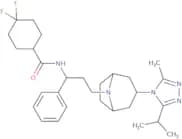
Maraviroc-d6
CAS:<p>Maraviroc-d6 is a medicinal compound that has been developed as an inhibitor of kinases, which are enzymes involved in cell cycle regulation and apoptosis. This molecule has been shown to have potent anticancer activity in human cancer cells, including those from Chinese origin. Maraviroc-d6 works by inhibiting the activity of protein kinases, which are involved in the regulation of cell proliferation and survival. This inhibition leads to the induction of apoptosis, or programmed cell death, in cancer cells. Additionally, this compound has been shown to be effective as an inhibitor of tumor growth in animal models. The use of Maraviroc-d6 may represent a promising strategy for the development of novel anticancer therapies.</p>Fórmula:C29H41F2N5OPureza:Min. 95%Peso molecular:519.7 g/molRef: 3D-IRB69922
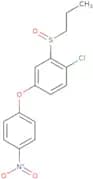
Producto descatalogadoPhenproxide
CAS:<p>Phenproxide is an analog of testosterone that has been used traditionally in Chinese medicine to treat tumors. It has been found to induce apoptosis in cancer cells by inhibiting kinases, which are enzymes that regulate cellular processes such as cell division and growth. Phenproxide has also been shown to inhibit the activity of somatostatin, a hormone that regulates the release of other hormones. This inhibition may contribute to its anti-cancer properties. In addition, Phenproxide has been shown to have an effect on hyaluronan metabolism, a substance involved in tissue repair and inflammation. It is excreted in urine and may be used as a potential biomarker for cancer diagnosis or monitoring.</p>Fórmula:C15H14ClNO4SPureza:Min. 95%Peso molecular:339.8 g/molRef: 3D-ZBA82875
Producto descatalogado2S-OMPT
CAS:<p>2S-OMPT is a protein that is expressed in the cell. It is involved in transcriptional regulation, and can be assayed using k562 cells. 2S-OMPT has been shown to be associated with cancer. It also increases resistance to chemotherapeutic agents by inhibiting cation channels or inducing apoptosis of leukemia cells. 2S-OMPT may also play an important role in intracellular calcium ion concentrations, as it binds to the extracellular domain of sphingosine kinase and inhibits its activity. This inhibition leads to decreased levels of intracellular calcium ions, which may modulate chemokine production by chemoresistant cancer cells.</p>Fórmula:C22H43O6PSPureza:Min. 95%Peso molecular:466.61 g/molCaptopril EP Impurity N
CAS:<p>Captopril EP Impurity N is a synthetic impurity found in Captopril EP, which is used as a drug product for the treatment of hypertension. The impurity standard for Captopril EP Impurity N is available on request.</p>Fórmula:C8H14O4S2Pureza:Min. 95%Peso molecular:238.33 g/molRef: 3D-IC182781
Producto descatalogadoTadalafil spiro-urethane impurity (EP impurity F)
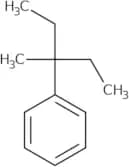
CAS:<p>Please enquire for more information about Tadalafil spiro-urethane impurity (EP impurity F) including the price, delivery time and more detailed product information at the technical inquiry form on this page</p>Fórmula:C22H19N3O6Pureza:Min. 95%Peso molecular:421.4 g/mol(1-Ethyl-1-methylpropyl)benzene
CAS:<p>(1-Ethyl-1-methylpropyl)benzene is an impurity of some drugs. It is a metabolite of the drug, and can be found in urine or blood samples as a result of its excretion from the body. (1-Ethyl-1-methylpropyl)benzene is used as an analytical standard for HPLC analysis. This chemical is not on the USP list of impurities, but it is listed on the pharmacopoeia. The CAS number for (1-Ethyl-1-methylpropyl)benzene is 1985-97-3.</p>Fórmula:C12H18Pureza:Min. 95%Peso molecular:162.27 g/molCycrimine hydrochloride
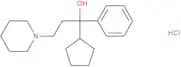
CAS:<p>Cycrimine hydrochloride is a molecule that is used as an anticholinergic drug. It has been shown to be effective in humans, with a half life of 3 hours and a duration of action of 8 hours. Cycrimin hydrochloride is also used as a diagnostic agent for irritant contact dermatitis and may be useful in the diagnosis of other allergic reactions. The molecule is also used as a diagnostic aid for cardiac arrhythmias.</p>Fórmula:C19H30ClNOPureza:Min. 95%Peso molecular:323.9 g/molRef: 3D-AAA12602
Producto descatalogado1,5-Bis(4-amidinophenoxy)-2-pentanol
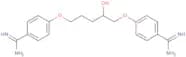
CAS:<p>Please enquire for more information about 1,5-Bis(4-amidinophenoxy)-2-pentanol including the price, delivery time and more detailed product information at the technical inquiry form on this page</p>Fórmula:C19H24N4O3Pureza:Min. 95%Peso molecular:356.4 g/molRef: 3D-IFA99132
Producto descatalogadoEmtricitabine impurity 17
CAS:<p>Please enquire for more information about Emtricitabine impurity 17 including the price, delivery time and more detailed product information at the technical inquiry form on this page</p>Fórmula:C8H10FN3O4SPureza:Min. 95%Peso molecular:263.24 g/molMycophenolate mofetil EP Impurity C
CAS:<p>Please enquire for more information about Mycophenolate mofetil EP Impurity C including the price, delivery time and more detailed product information at the technical inquiry form on this page</p>Fórmula:C23H31NO7Pureza:Min. 95%Peso molecular:433.5 g/molGaramine acetate salt
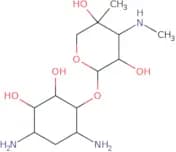
CAS:<p>Gentamicin Impurity</p>Fórmula:C13H27N3O6•(C2H4O2)xPureza:Min. 95%Forma y color:Off-White PowderPeso molecular:321.37 g/molRef: 3D-OG46090
Producto descatalogadoPantoprazole sulphide
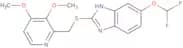
CAS:<p>Pantoprazole sulphide is a benzimidazole derivative that has been synthesized in an asymmetric synthesis. The purified compound was characterized by its nmr spectra, which showed the presence of the carboethoxy group and the chromatographic method. The compound belongs to a family of inhibitors known as benzimidazole derivatives and has shown inhibitory activity against a number of bacterial species including Staphylococcus aureus, Clostridium perfringens, and Mycobacterium tuberculosis. Pantoprazole sulphide has been used as an inhibitor to treat gastric acid pump disorders such as Zollinger-Ellison syndrome. It is also used for treating pathological conditions such as duodenal ulcers or gastroesophageal reflux disease.</p>Fórmula:C16H15F2N3O3SPureza:Min. 95%Forma y color:PowderPeso molecular:367.37 g/molAmlodipine EP Impurity F maleate
CAS:<p>Amlodipine EP Impurity F maleate is an impurity of amlodipine, a drug product. It is a natural substance that has been classified as an API impurity in the United States Pharmacopeia (USP). The chemical name for this drug is 3-(2-chlorophenyl)-1-methyl-5-(o-tolyloxy)-2,4-dihydro-6H-[1,3]thiazolo[3,2-a]pyrimidin-7-one. Amlodipine EP Impurity F maleate has the following properties: C12H9ClNO2S and a melting point of 210°C with a purity of 99.5%. This compound was synthesized by custom synthesis and is used as an analytical standard for HPLC. This compound was also used during the development of amlodipine to determine its metabolism studies.</p>Fórmula:C19H23ClN2O5•C4H4O4Pureza:Min. 95%Peso molecular:510.92 g/molSitagliptin monohydrochloride monohydrate
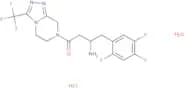
CAS:<p>Sitagliptin monohydrochloride monohydrate is an inhibitor of dipeptidyl peptidase-4 (DPP-4), which is responsible for the degradation of incretin hormones. It is used in the treatment of type 2 diabetes mellitus, as it increases insulin secretion and reduces blood glucose levels. Recent studies have shown that Sitagliptin has anticancer properties, as it induces apoptosis in cancer cells. It also inhibits protein kinases, which are involved in tumor growth and metastasis. Capsaicin, a compound found in chili peppers, has been shown to enhance the anticancer activity of Sitagliptin in Chinese hamster ovary cells. The drug is excreted primarily through urine and has a low potential for drug interactions with other kinase inhibitors. Overall, Sitagliptin monohydrochloride monohydrate shows great promise as both a diabetes medication and an anticancer agent.</p>Fórmula:C16H18ClF6N5O2Pureza:Min. 95%Forma y color:PowderPeso molecular:461.79 g/molAmiodarone impurity E
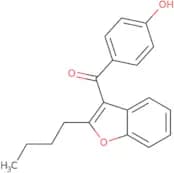
CAS:<p>Amiodarone impurity E is a nucleophilic compound that is synthesized by the acylation of a diazonium salt with an amine. It has been shown to be active against staphylococci, but not against subtilis. The reaction may be catalyzed by acid or chloride. Amiodarone impurity E is also demethylated and dehydrated to form the final product, amiodarone.</p>Fórmula:C19H18O3Pureza:Min. 95%Forma y color:PowderPeso molecular:294.34 g/mol2,2',4,4',6,6'-Hexachlorobiphenyl
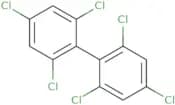
CAS:Producto controlado<p>2,2',4,4',6,6'-Hexachlorobiphenyl (PCB-136) is a potent anticancer agent that has been shown to induce apoptosis in cancer cells. It acts as a kinase inhibitor by blocking the activity of specific kinases involved in tumor growth and progression. PCB-136 has been studied extensively in human and Chinese hamster ovary cells and has been found to be highly effective against various types of cancer. This medicinal analog also exhibits inhibitory effects on the protein kinases that regulate cell division and proliferation, making it a promising candidate for cancer therapy. In addition, PCB-136 shows potential for use as a urinary biomarker for exposure to environmental pollutants due to its persistence in the environment and ability to accumulate in body tissues.</p>Fórmula:C12H4Cl6Pureza:Min. 95%Peso molecular:360.9 g/mol7'-Methyl-2'-propyl-2,5'-bi-1H-benzimidazole
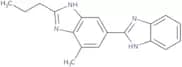
CAS:<p>7'-Methyl-2'-propyl-2,5'-bi-1H-benzimidazole (7'-MPB) is a benzimidazole derivative that is used as a medicine. It is made from recycled chemicals and has shown to have industrial applications as a catalyst for cyclization reactions. 7'-MPB is also used in the production of benzenesulfonic acid, which is an organic solvent. This chemical has been shown to be effective against high blood pressure, but has not been tested on humans yet. Telmisartan, which belongs to the angiotensin II receptor blocker class of drugs, can inhibit the synthesis of prostaglandins.</p>Fórmula:C18H18N4Pureza:Min. 95%Peso molecular:290.36 g/molRef: 3D-IM25660
Producto descatalogado(-)-Sabinene
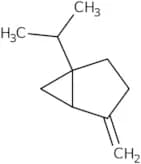
CAS:<p>(-)-Sabinene is a natural compound found in urine and various medicinal plants, including Chinese herbs. It has been identified as an analog of another natural compound that exhibits potent anticancer activity. (-)-Sabinene has been shown to inhibit the activity of certain proteins involved in cell cycle regulation and apoptosis, which are important processes for the growth and survival of cancer cells. In addition, (-)-Sabinene has been found to have inhibitory effects on tumor kinase activity, making it a promising candidate for the development of new anticancer drugs. Studies have shown that (-)-Sabinene can effectively inhibit the growth of various types of cancer cells, making it a potential therapeutic agent for the treatment of cancer.</p>Fórmula:C10H16Pureza:Min. 95%Forma y color:Clear LiquidPeso molecular:136.23 g/molRef: 3D-KAA40816
Producto descatalogado