Enzyme
Sous-catégories appartenant à la catégorie "Enzyme"
- Anhydrase carbonique(197 produits)
- Hydroxylase(36 produits)
- MPO(2 produits)
- Réductase(51 produits)
- Tyrosinase(71 produits)
3621 produits trouvés pour "Enzyme"
Sucrose phosphorylase, liquid
CAS :Please enquire for more information about Sucrose phosphorylase, liquid including the price, delivery time and more detailed product information at the technical inquiry form on this page
EUCODIS® Peroxidase 12, from bacterial, fungal and plant origin, recombinant - EP012
CAS :Peroxidase 12 recombinantly expressed in P. pastoria comes in a freeze-dried formulation. It has its pH optimum at 5-8 and temp. optimum at 20-40°C. Peroxidases can be utilized as enzymes catalyzing e.g. aromatic ring hydroxylation, epoxidation, halogenation, N- or S-oxidation, ether cleavage and alcohol/aldehyde oxidation reactions. Peroxidase 12 was shown to act on styrene, veratryl alcohol, vanillyl alcohol, n-methyl anthranilate and thioanisole.
Couleur et forme :PowderLacBuster® - S 50 IU, beta-lactamase I & II, lyophilized, gamma irradiated - EBL021.2
LacBuster®-S 50 is a solid and Gamma-irradiated, freeze-dried, broad range beta-lactamase formulation with 50 IU beta-lactamase II and 500 IU beta-lactamase I activity per vial.
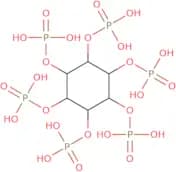
Phytate 1-phosphatase
CAS :Phytate 1-phosphatase is a phosphatase enzyme that cleaves orthophosphate groups from phytic acid's inositol ring. This releases inorganic phosphate.
Degré de pureté :Min. 95%Couleur et forme :Clear LiquidImmobilized lipase
CAS :Immobilized lipase is an advanced enzymatic product, which is derived from lipases, enzymes primarily sourced from microbial, plant, or animal origins. This product operates through a catalytic mechanism where the lipase is attached to a solid support, enhancing its stability and reusability in various reactions. This immobilization allows the enzyme to maintain activity over a wide range of conditions, including different pH levels and temperatures.
L-Leucine dehydrogenase from bacillus cereus
CAS :L-Leucine dehydrogenase (Leucine dehydrogenase, systematic name L-leucine:NAD+ oxidoreductase (deaminating); EC 1.4.1.9) is an enzyme that catalyzes the following reaction: L-leucine + H2O + NAD+ ⇌ 4-methyl-2-oxopentanoate + NH3 + NADH + H+ One unit of L-Leucine dehydrogenase will convert 1.0 µmole of L‑leucine into 4-methyl-2-oxopentanoate per min at pH 10.5 and 37 °C in the presence of NAD+. The enzyme requires NAD+ as a cofactor, it is available here.
Degré de pureté :Min. 95%LacBuster™-S 2000 (β-lactamase)
CAS :LacBuster™-S 2000 is an enzyme preparation, specifically a beta-lactamase, which is derived from bacterial sources known for their capacity to degrade beta-lactam antibiotics. Through hydrolytic cleavage of the beta-lactam ring, this enzyme neutralizes the efficacy of beta-lactam antibiotics, thereby rendering them inactive.
LacBuster™-S 50 (β-lactamase)
CAS :LacBuster™-S 50 is a beta-lactamase formulation, which is an enzyme of microbial origin with the ability to hydrolyze beta-lactam antibiotics. This enzymatic product is derived from specific bacterial species known for their resistance mechanisms, providing a robust capability to deactivate compounds such as penicillins and cephalosporins. Its mode of action involves the cleavage of the beta-lactam ring, a crucial structural component of these antibiotics, effectively neutralizing their antibacterial properties.
EUCODIS® Lipase 016, screening grade, recombinant, from microbial sources - EL016
Lipase 16 recombinantly expressed in E. coli comes in a spray-dried formulation. It has its pH optimum at 7-8 and temp. optimum at >40°C. Lipases belong to the family of esterases and naturally act on triglycerides at lipid-water interfaces catalyzing hydrolytic reactions, esterifications and transesterification reactions in industrial and food applications. Lipase 16 was shown to hydrolyze p-Nitrophenyl esters of butyrate (58 % activity compared to octanoate), octanoate (100 %), laurate (40 %), palmitate (27 %), stearate (13 %), arachidate (2 %) and behenate (0.2 %).
Phospholipase D 040
CAS :Phospholipases D belong to the family of esterases and act on phosphatidylcholine in the plasma membrane to release phosphatidic acid (PA) and choline. Phospholipases D can be used as versatile tools in hydrolysis and transphosphatidylation reactions for industrial, chemical and food applications.
EUCODIS® Lipase 037, screening grade, recombinant, from microbial sources - EL037
Lipase 37 recombinantly expressed in E. coli comes in a spray-dried formulation. It has its pH optimum at 8-9 and temp. optimum at <50°C. Lipases belong to the family of esterases and naturally act on triglycerides at lipid-water interfaces catalyzing hydrolytic reactions, esterifications and transesterification reactions in industrial and food applications. Lipase 37 was shown to hydrolyze p-Nitrophenyl esters of butyrate (48 % activity), octanoate (100 %), laurate (85 %), palmitate (5 %) and stearate (1 %).
EUCODIS® Lipase 014, screening grade, recombinant, from microbial sources - EL014
Lipase 14 recombinantly expressed in E. coli comes in a spray-dried formulation. It has its pH optimum at 6-8 and temp. optimum at 30-40°C. Lipases belong to the family of esterases and naturally act on triglycerides at lipid-water interfaces catalyzing hydrolytic reactions, esterifications and transesterification reactions in industrial and food applications. Lipase 14 was shown to hydrolyze p-Nitrophenyl esters of butyrate (74 % activity compared to octanoate), octanoate (100 %), laurate (8 %), palmitate (5 %), stearate (4 %), arachidate (1 %) and behenate (0.6 %).
α-Glucosidase, from yeast
CAS :α-Glucosidase (EC 3.2.1.20) is a glycoside hydrolase enzyme that hydrolyzes α-1,4-linked D-glucose residues (e.g. in starch or oligosaccharides) to produce α-D-glucose. One unit of α-Glucosidase will release 1.0 µmole of p-nitrophenol from the chromogenic substrate mimic 4-nitrophenyl α-D-glucopyranoside per minute at pH 6.8 and 37 °C.
Couleur et forme :White PowderEUCODIS® Lipase 068, screening grade, recombinant, from microbial sources - EL068
Lipase 68 recombinantly expressed in E. coli comes in a spray-dried formulation. It has its pH optimum at 7-9 and temp. optimum at 30°C. Lipases belong to the family of esterases and naturally act on triglycerides at lipid-water interfaces catalyzing hydrolytic reactions, esterifications and transesterification reactions in industrial and food applications. Lipase 68 was shown to hydrolyze p-Nitrophenyl esters of butyrate (100 % activity), octanoate (75 %), laurate (8 %), palmitate (1 %) and stearate (0.1 %).
EUCODIS® Lipase 015, screening grade, recombinant, from microbial sources - EL015
Lipase 15 recombinantly expressed in E. coli comes in a spray-dried formulation. It has its pH optimum at 6-8 and temp. optimum at 25°C. Lipases belong to the family of esterases and naturally act on triglycerides at lipid-water interfaces catalyzing hydrolytic reactions, esterifications and transesterification reactions in industrial and food applications. Lipase 15 was shown to hydrolyze p-Nitrophenyl esters of butyrate (100 % activity), octanoate (13 %), laurate (1 %), palmitate (1 %), stearate (<1 %), arachidate (<1 %) and behenate (<1 %).
Catalase 01
CAS :A catalase product which neutralizes hydrogen peroxide at much higher concentrations (>10 %) compared to pyruvate, which is only capable of completely neutralizing hydrogen peroxide at the lowest concentration tested (2 %). Catalase (EC 1.11.1.6) catalyzes the following reaction:2H2O2 → 2H2O + O21 unit of catalase will decompose 1.0 μmole of H2O2 per min at pH 7.0 and 25 °C.
ApStar Taq DNA Polymerase, 1250 units
ApStar Taq DNA Polymerase is a thermostable DNA polymerase, originally derived from the thermophilic bacterium Thermus aquaticus. It operates by synthesizing new strands of DNA through the extension of primers in the 5' to 3' direction, utilizing a DNA template. This enzyme is specifically engineered to withstand high temperatures, making it ideal for the denaturation phases of PCR.
Aldehyde dehydrogenase, ≥2.0 units/mg protein potassium-activated
CAS :Aldehyde dehydrogenase (EC 1.2.1.3) is the enzyme that catalyzes oxidation of aldehydes to carboxilic acids, using NAD+ as a cofactor in the following reaction: R-CHO + NAD+ + H2O → R-COOH + NADH + H+ One enzyme unit will oxidize 1.0 μmole of acetaldehyde to acetic acid per min at 25 °C at pH 8.0 in the presence of β-NAD+, potassium and thiols.
Couleur et forme :PowderRef: 3D-JAA02888
Produit arrêtéEUCODIS® Lipase 030, screening grade, recombinant, from microbial sources - EL030
Lipase 30 recombinantly expressed in E. coli comes in a spray-dried formulation. It has its pH optimum at 5.5-8 and temp. optimum at >55°C. Lipases belong to the family of esterases and naturally act on triglycerides at lipid-water interfaces catalyzing hydrolytic reactions, esterifications and transesterification reactions in industrial and food applications. Lipase 30 was shown to hydrolyze p-Nitrophenyl esters of butyrate (100 % activity), octanoate (72 %), laurate (38 %), palmitate (7 %) and stearate (2 %).