Enzyme
Sous-catégories appartenant à la catégorie "Enzyme"
- Anhydrase carbonique(196 produits)
- Hydroxylase(36 produits)
- MPO(2 produits)
- Réductase(51 produits)
- Tyrosinase(71 produits)
3620 produits trouvés pour "Enzyme"
Amidase, from Pseudomonase aeruginosa, recombinant, lyophilized - EAM01
CAS :Amidase is a hydrolase acting on carbon-nitrogen bonds in linear amides, and can be used in hydrolysis of amides to acids. Amidase 01 is of bacterial origin (P. aeruginosa) and has been produced in E.coli.Adenosine deaminase, type X, buffered aqueous glycerol solution, >130units/mg
CAS :Adenosine deaminase catalyzes deamination of adenosine, converting it to inosine. It happens by the substituting of the amino group by a keto group. One Unit of the enzyme converts one micromole of adenosine to inosine per minute at 25°C, pH 7.4. Adenosine deaminase is also known by names of adenosine aminohydrolase, and ADA, EC 3.5.4.4.Degré de pureté :Min. 95%Masse moléculaire :1,000 g/molα-Glucosidase from bacillus stearothermophilus, lyophilized powder, 300000U/g
CAS :α-Glucosidase (EC 3.2.1.20) is a glycoside hydrolase enzyme that hydrolyzes α-1,4-linked D-glucose residues to produce α-D-glucose. This enzyme has been isolated from Bacillus stearothermophilus and is used as an industrial catalyst in the production of glucose syrups. One Unit of α-Glucosidase will release 1.0 µmole of p-nitrophenol from the chromogenic substrate mimic 4-nitrophenyl α-D-glucopyranoside per minute under optimum conditions.Couleur et forme :PowderTyrosinase
CAS :Copper-containing enzyme that catalyzes the first step in the synthesis of melanin
Couleur et forme :PowderSuperoxide dismutase, porcine erythrocytes
CAS :Please enquire for more information about Superoxide dismutase, porcine erythrocytes including the price, delivery time and more detailed product information at the technical inquiry form on this pageeconoLuciferase, buffered aqueous solution
CAS :Cymit Quimica’s econoLuciferase™ (econoLuc Cymit Quimica Cat. No. L-8090) is a recombinant luciferase from the firefly Luciola lateralis that has been expressed as a luciferase-GFP fusion protein in E. coli.The luciferase enzyme has been optimized for increased thermo-stability by genetic modification to be stable for one hour at 37°C and up to two days at room temperature.Stabilized econoLuciferase™ thus overcomes the disadvantages and limitations of wild-type Luciferase, notably its short active life, outperforming enzyme from the Photinus pyralis firefly for both performance and stability.This optimized luciferase is the perfect enzyme for ATP detection assays in hygiene control, microbial tests using caged luciferins and it is the luciferase of choice for biochemical tests measuring ATP consumption and production in diverse enzymatic reactions.The product L-8090 is available on a large scale and is intended for use in the chemical, diagnostic, pharmaceutical and related industries.
Degré de pureté :(Spec. Activity. U/Mg) Min. 5 X 10^8Isoamylase 01
CAS :Isoamylase (also known as debranching enzyme, systemic name glycogen α-1,6-glucanohydrolase; EC 3.2.1.68) is the enzyme that cleaves α-1,6-glucosidic branch linkages in carbohydrates, namely amylopectin or glycogen.
Proteinase K Solution
CAS :20mg/ml aq. solution. Proteinase K is used for the general digestion of proteins and removal of protein contamination in nucleic acids. Addition of Protease K also stabilizes nucleic acids but degrading any nucleases present. Proteinase K is active in wide range of pH range, in the presence of SDS, urea and Guanidinium chloride at low to moderate concentrations. Proteinase K is also known under names of protease K and endopeptidase K.
Couleur et forme :Clear LiquidElastase
CAS :Elastase (EC 3.4. 21.36) is a serine protease that breaks down elastin fibers. One unit of Elastase release 1 nmol of p-nitrophenol per sec from BOC-L-alanine p-nitrophenyl ester at pH 6.5 and 37°C
EUCODIS® Lipase 001, screening grade, recombinant, from microbial sources - EL001
Lipase 01 recombinantly expressed in E. coli comes in a spray-dried formulation. It has its pH optimum at 6-7 and temp. optimum at 25-45°C. Lipases belong to the family of esterases and naturally act on triglycerides at lipid-water interfaces catalyzing hydrolytic reactions, esterifications and transesterification reactions in industrial and food applications. Lipase 01 was shown to hydrolyze p-Nitrophenyl esters of butyrate (100 % activity), octanoate (57 %), laurate (13 %), palmitate (9 %), stearate (6 %), arachidate (2 %) and behenate (0.1 %).Deoxyribonuclease II from porcine spleen
CAS :Deoxyribonuclease II (DNase II, deoxyribonucleate 3'-nucleotidohydrolase, acid deoxyribonuclease, acid DNase, EC 3.1.22.1) is an endonuclease that cleaves DNA, yielding 3'-phosphate-terminated polynucleotides with a free hydroxyl group on position 5'. One unit of the DNase II will increase the absorbance of 260nm light at a rate of 0.001/minute in 1 ml reaction volume at pH 4.6 and 25°C.Degré de pureté :Min. 95%L-Glutamate oxidase from streptomyces sp.
CAS :L-Glutamate oxidase is a deaminating oxidoreductase that catalyzes the conversion of L-glutamate to ketoglutarate, ammonia and hydrogen peroxide. The enzyme has been shown to have significant potential for immobilization on an insoluble support such as silica gel, which would allow it to be used in assays requiring higher concentrations of substrate. This property is important for industrial applications such as biosensor development for clinical biochemistry and the food industry.Degré de pureté :Min. 95%Couleur et forme :PowderMutanolysin - lyophilized powder, >4000 units/mg
CAS :A N-Acetyl Muramidase enzyme that cleaves N-acetylmuramyl-β(1-4)-N-acetylglucosamine linkage in peptidoglycan within the bacterial cell wall.Degré de pureté :Min. 95%Catalase ECAT01™, EUCODIS® Patent: US 9951306 and EP2861715
CAS :A proprietary potent and stable alternative to chemical neutralizers such as pyruvate - for the utilization in environmental monitoring applications. Use of catalase as a supplement in media plates offers a more effective and reliable solution for safe and secure environmental monitoring of sterilization in clean rooms, isolators or production facilities by also removing remaining traces and spots of high concentration of H2O2. Currently, agar plates for monitoring disinfection or sterilization are supplemented with pyruvate, which is consumed during the neutralization of hydrogen peroxide. One of the main benefits of this catalase is its high stability in agar media at 50°C, which allows easy preparation of media and processing into plates. Due to the high stability no special storage conditions are needed and a shelf-life of > 6 months at 4-25°C can be guaranteed. Key features are:α Amylase, Porcine Pancreatic
Porcine Pancreatic Alpha Amylase is an enzyme that catalyses hydrolysis of large polysacharides into smaller fragments. Alpha amylase targets alpha bonds of 1→4 glycosidic linkages of poly- and oligosaccharides with three or more D-glucose units. Systematic name of alpha-amylase is 4-α-D-glucan glucanohydrolase, EC 3.2.1.1. One unit of Alpha Amylase will produce 1.0 mg of maltose from starch in 1 minute at pH 4.9 and 40 °C. Please enquire for more information about Alpha Amylase, Porcine Pancreatic including the price, delivery time and more detailed product information at the technical inquiry form on this pageProtein kinase LATS2
CAS :Protein kinase LATS2 is a serine/threonine kinase, which is a crucial component sourced intrinsically from cellular kinase cascades involved in cell regulation. This protein kinase is pivotal in the Hippo signaling pathway, which regulates cell growth, apoptosis, and stem cell renewal. LATS2 is part of the core kinase cascade that, upon activation, phosphorylates and inhibits the activity of the transcriptional co-activators YAP and TAZ, thereby controlling their transcriptional activity. This inhibition is key to maintaining proper cell proliferation and preventing uncontrolled cell growth that could lead to tumorigenesis.Degré de pureté :Min. 95%α Amylase, Porcine Pancreatic
Alpha Amylase is an enzyme that catalyses hydrolysis of large polysacharides into smaller fragments. Alpha amylase targets alpha bonds of 1→4 glycosidic linkages of poly- and oligosaccharides with three or more D-glucose units. Systematic name of alpha-amylase is 4-α-D-glucan glucanohydrolase, EC 3.2.1.1. One unit of Alpha Amylase will produce 1.0 mg of maltose from starch in 1 minute at pH 4.9 and 40 °C.Collagenase
CAS :Collagenase is an enzymes that is responsible for breaking peptide bonds in collagen
Formule :C12H18ClNO3Couleur et forme :Brown Slightly Yellow PowderMasse moléculaire :259.73 g/molXylanase, powder
CAS :Xylanase is an enzymatic product, which is typically derived from microbial sources such as fungi or bacteria. Its primary function involves catalyzing the hydrolysis of xylan, a major hemicellulose component found in plant cell walls. Through breaking down xylan into xylose and other oligosaccharides, xylanase significantly modifies plant material structure.Cellulase, powder
CAS :Cellulase, powder is an enzymatic product derived from microbial fermentation, specifically sourced from fungi or bacteria known for their cellulolytic activity. Cellulase acts by catalyzing the hydrolysis of cellulose, breaking it down into smaller polysaccharides and glucose. This decomposition occurs through synergistic action by three main components: endoglucanases, exoglucanases, and β-glucosidases, each targeting specific bonds in the cellulose structure, resulting in its complete breakdown.PNGaseF, wildtype, liquid, recombinant, from Elizabethkingia miricola
CAS :PNGase F is an endoglycosidase that can remove all N-linked carbohydrates from proteins, which is useful if you are uncertain whether the carbohydrate is N-linked or O-linked to the protein or is a high mannose type. It is also the enzyme of choice when you need to study or use the naked protein in your application. PNGase functions as a glycoamidase and hydrolyzes the amide bond between the innermost GlcNac of mammalian asparagine-linked mannose oligosaccharides, whether they are high, complex or hybrid. Specifically, the glycan is removed from the asparagine residue which through the deamination reactions becomes aspartic acid.This enzyme is available as a large-scale bulk supply of liquid enzyme solution. See our PNGase F available as vials for research applications with pre-defined quantities (>250 kU/vial) of liquid enzyme solution.Also available is our endoH enzymes (EEH01.3 - research quantities and EEH01.7 - large scale bulk supply).Streptodornase
CAS :Streptodornase is a DNase that is often present as in the streptokinase preparations as an impurity.
Heat Labile Uracil-DNA Glycosylase, 500 units
Heat Labile Uracil-DNA Glycosylase, 500 units, is an enzyme designed for molecular biology applications, primarily derived from a recombinant bacterial source. This enzyme effectively removes uracil from DNA molecules at temperatures that preserve the integrity of the DNA. With its heat-labile properties, the enzyme can be inactivated at moderately elevated temperatures, making it ideal for processes that require precise control over enzyme activity.PNGaseF, wildtype, liquid, recombinant, from Elizabethkingia miricola
CAS :PNGase F is an endoglycosidase that can remove all N-linked carbohydrates from proteins, which is useful if you are uncertain whether the carbohydrate is N-linked or O-linked to the protein or is a high mannose type. It is also the enzyme of choice when you need to study or use the naked protein in your application. PNGase functions as a glycoamidase and hydrolyzes the amide bond between the innermost GlcNac of mammalian asparagine-linked mannose oligosaccharides, whether they are high, complex or hybrid. Specifically, the glycan is removed from the asparagine residue which through the deamination reactions becomes aspartic acid.This enzyme is available as vials for research applications with pre-defined quantities (>250 kU/vial) of liquid enzyme solution . See our large-scale bulk supply of PNGase F for the deglycosylation of proteins in manufacture.Also available is our endoH enzymes (EEH01.3 - vials for research and EEH01.7 - large scale bulk supply).Xylanase 1, thermostable
CAS :Xylanase (Endo-1,4-β-xylanase, 1,4-β-D-Xylanxylanohydrolase, systematic name 4-β-D-xylan xylanohydrolase; EC 3.2.1.8) is an enzyme that digests polysaccharide xylan by hydrolyzing (1→4)-β-D-xylosidic linkages. One unit of Xylanase will hydrolyze 1.0 μmole of chromogenic substrate mimic per minute (available here) under optimal reaction conditions.
Couleur et forme :Powderβ-Lactamase Kit 01
CAS :Beta-lactamase enzymes demonstrate activity against clinically relevant beta-lactam antibiotics such as penicillins, carbapenems and cephalosporins. This product may be of particular interest for laboratory teams who require the sterility testing of biological specimens or for environmental monitoring applications.Lipase 009
CAS :Lipases belong to the family of esterases and naturally act on triglycerides at lipid-water interfaces. Lipases/esterases can be used as versatile tools in hydrolytic reactions, esterifications and transesterification reactions in industrial and food applications.EndoH, wildtype, liquid, recombinant, from Streptomyces plicatus
CAS :Endoglycosidase H (Endo H) is a highly specific enzyme that cleaves N-linked oligosaccharides from glycoproteins, targeting high-mannose and certain hybrid-type N-glycans. It does not act on complex-type N-glycans, which are typically processed further in the Golgi apparatus. Due to its specificity, Endo H is widely used in research to study intracellular protein trafficking and post-translational modifications, particularly those occurring during glycoprotein maturation.This product is available as vials for research applications with pre-defined quantities (>250 kU/vial) of liquid enzyme solutionSee our EndoH (EEH01.7) available for large-scale bulk supply of liquid enzyme solution for the deglycosylation of proteins in manufacture.For removal of all N-linked carbohydrates from proteins see Cymit Quimica's PNGase F enzymes (PNG01.3 - vials for research and PNG01.7 - large-scale bulk supply)EUCODIS® Lipase 064, screening grade, recombinant, from microbial sources - EL064
Lipase 64 recombinantly expressed in E. coli comes in a spray-dried formulation. It has its pH optimum at 7 and temp. optimum at 40-50°C. Lipases belong to the family of esterases and naturally act on triglycerides at lipid-water interfaces catalyzing hydrolytic reactions, esterifications and transesterification reactions in industrial and food applications. Lipase 64 was shown to hydrolyze p-Nitrophenyl esters of butyrate (100 % activity), octanoate (0.5 %) and laurate (0.1 %).Cocarboxylase tetrahydrate
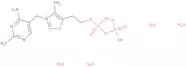
CAS :Cocarboxylase tetrahydrate is a coenzyme form of vitamin B1; cofactor for enzymes involved in carbohydrate catabolismFormule :C12H18N4O7P2S·4H2ODegré de pureté :Min 96%Couleur et forme :White PowderMasse moléculaire :496.37 g/molFructose-6-phosphate Kinase
CAS :Fructose-6-phosphate kinase (Phosphofructokinase, PFK, EC 2.7.1.11) is an enzyme that catalyzes the following reaction: F6P + ATP ⇌ F1,6BP + ATP One unit of PFK will convert 1.0 μmole of fructose 6-phosphate and ATP to fructose 1,6-diphosphate and ADP per minute at pH 9.0 at 30 °C.Degré de pureté :Min. 95%Glucose oxidase from aspergillus niger - activity > 6000 u/g
CAS :Glucose oxidase is an enzyme thata catalyses the rapid conversion of glucose into non-fermentable gluconic acid in the presence of oxygen (O2). Its used is widely expanded with many applications in the chemical and pharmaceutical industry, food and beverage, clinical studies and biotechnology, among others. It medical diagnosis, glucose oxidase serves as a biosensor for detecting and determining the different levels of glucose in blood samples.Formule :C6H12O6Couleur et forme :PowderMasse moléculaire :180.16 g/molLipase
CAS :Porcine pancreatic lipase is an enzyme that has been shown to have antioxidative properties. It is used as an additive in biodiesel production, where it prevents the formation of trans fatty acids and reduces the amount of free radicals. This enzyme has been shown to have lipase, protease, and amylase activities by using surface methodology. Porcine pancreatic lipase can be used for the treatment of autoimmune diseases such as multiple sclerosis and rheumatoid arthritis. This enzyme interacts with other enzymes such as lipases, proteases, and amylases to catalyze reactions on surfaces. It can be used for asymmetric synthesis by hydrogen bonding or by forming an intermediate complex with metal ions.Degré de pureté :Min. 95%Couleur et forme :SolidAdenosine deaminase, type X, buffered aqueous glycerol solution
CAS :Adenosine deaminase catalyzes deamination of adenosine, converting it to inosine. It happens by the substituting of the amino group by a keto group. One Unit of the enzyme converts one micromole of adenosine to inosine per minute at 25°C, pH 7.4. Adenosine deaminase is also known by names of adenosine aminohydrolase, and ADA, EC 3.5.4.4.Masse moléculaire :1,000 g/molLacBuster™ TSA broad range β-lactamase contact plates, 10 plates per pack, barcoded
CAS :A general purpose growth medium supplemented with LacBuster™ to effectively neutralize beta-lactam antibiotics. This product is suitable for the cultivation of a wide variety of microorganisms for environmental monitoring within the pharmaceutical industry and for high performance monitoring of your isolators and clean rooms during beta lactam manufactureLacBuster™ TSA broad range β-lactamase settle plates, 10 plates per pack, barcoded
CAS :A general purpose growth medium supplemented with LacBuster™ to effectively neutralize beta-lactam antibiotics. This product is suitable for the cultivation of a wide variety of microorganisms for environmental monitoring within the pharmaceutical industry and for high performance monitoring of your isolators and clean rooms during beta lactam manufactureLuciferase - from Photinus pyralis (firefly)
CAS :Luciferase enzyme from Photinus pyralis (firefly), which catalyzes the oxidation of firefly luciferin. This reaction depends on the presence of oxygen and ATP and causes the bioluminescence seen in firefliesDegré de pureté :(Gel Electrophoresis) Min. 98%Couleur et forme :PowderLacBuster™ TSA broad range β-lactamase contact plates, 10 plates per pack, barcoded
CAS :A general purpose growth medium supplemented with LacBuster™ to effectively neutralize beta-lactam antibiotics. This product is suitable for the cultivation of a wide variety of microorganisms for environmental monitoring within the pharmaceutical industry and for high performance monitoring of your isolators and clean rooms during beta lactam manufactureLipase 014
CAS :Lipases belong to the family of esterases and naturally act on triglycerides at lipid-water interfaces. Lipases/esterases can be used as versatile tools in hydrolytic reactions, esterifications and transesterification reactions in industrial and food applications.LacBuster™ TSA broad range β-lactamase settle plates, 10 plates per pack, barcoded
CAS :A general purpose growth medium supplemented with LacBuster™ to effectively neutralize beta-lactam antibiotics. This product is suitable for the cultivation of a wide variety of microorganisms for environmental monitoring within the pharmaceutical industry and for high performance monitoring of your isolators and clean rooms during beta lactam manufactureEUCODIS® Lipase 044, screening grade, recombinant, from microbial sources - EL044
Lipase 44 recombinantly expressed in E. coli comes in a spray-dried formulation. It has its pH optimum at 7-10 and temp. optimum at 50°C. Lipases belong to the family of esterases and naturally act on triglycerides at lipid-water interfaces catalyzing hydrolytic reactions, esterifications and transesterification reactions in industrial and food applications. Lipase 44 was shown to hydrolyze p-Nitrophenyl esters of butyrate (70 % activity compared to octanoate), octanoate (100 %), laurate (88 %), palmitate (6 %) and stearate (2 %).
Phosphoenolpyruvate carboxylase
CAS :Phosphoenolpyruvate carboxylase is an enzyme, often found naturally in the cytosol of plant cells, which is derived primarily from various plant species. It plays a crucial role in the photosynthetic process, particularly in C4 and CAM plants. By catalyzing the irreversible carboxylation of phosphoenolpyruvate (PEP) to oxaloacetate, this enzyme facilitates the fixation of carbon dioxide, a vital step in the conversion of carbon dioxide into organic compounds during photosynthesis.Degré de pureté :Min. 95%Lipase 016
CAS :Lipases belong to the family of esterases and naturally act on triglycerides at lipid-water interfaces. Lipases/esterases can be used as versatile tools in hydrolytic reactions, esterifications and transesterification reactions in industrial and food applications.
Lipase 065
CAS :Lipases belong to the family of esterases and naturally act on triglycerides at lipid-water interfaces. Lipases/esterases can be used as versatile tools in hydrolytic reactions, esterifications and transesterification reactions in industrial and food applications.Lipase 038
CAS :Lipases belong to the family of esterases and naturally act on triglycerides at lipid-water interfaces. Lipases/esterases can be used as versatile tools in hydrolytic reactions, esterifications and transesterification reactions in industrial and food applications.Lipase 003
CAS :Lipases belong to the family of esterases and naturally act on triglycerides at lipid-water interfaces. Lipases/esterases can be used as versatile tools in hydrolytic reactions, esterifications and transesterification reactions in industrial and food applications.
EUCODIS® Lipase 003, screening grade, recombinant, from microbial sources - EL003
Lipase 03 recombinantly expressed in E. coli comes in a spray-dried formulation. It has its pH optimum at 6-7 and temp. optimum at 20-50°C. Lipases belong to the family of esterases and naturally act on triglycerides at lipid-water interfaces catalyzing hydrolytic reactions, esterifications and transesterification reactions in industrial and food applications. Lipase 03 was shown to hydrolyze p-Nitrophenyl esters of butyrate (100 % activity), octanoate (90 %), laurate (28 %), palmitate (14 %), stearate (9 %), arachidate (2 %) and behenate (3 %).Lipase 044
CAS :Lipases belong to the family of esterases and naturally act on triglycerides at lipid-water interfaces. Lipases/esterases can be used as versatile tools in hydrolytic reactions, esterifications and transesterification reactions in industrial and food applications.Dihydrofolate reductase
CAS :Dihydrofolate reductase (DHFR, 1.5.1.3) is a NADP+/NADPH-dependent oxidoreductase, that reduces dihydrofolate to tetrahydrofolate in the following reaction: dihydrofolate + NADPH + H+ ⇌ tetrahydrofolate + NADP+One unit of dihydrofolate reductase will convert 1.0 μmole of dihydrofolic acid into tetrahydrofolic acid in 1 minute at pH 7.5, 22°C and presence of NADPH.
Degré de pureté :Min. 95%