Enzyme
Sous-catégories appartenant à la catégorie "Enzyme"
- Anhydrase carbonique(196 produits)
- Hydroxylase(36 produits)
- MPO(2 produits)
- Réductase(51 produits)
- Tyrosinase(71 produits)
3619 produits trouvés pour "Enzyme"
Phospholipase D 40, from Streptomyces antibioticus, recombinant - EPLD040
CAS :Phospholipases D belong to the family of esterases and act on phosphatidylcholine in the plasma membrane to release phosphatidic acid (PA) and choline. Phospholipases D can be used as versatile tools in hydrolysis and transphosphatidylation reactions for industrial, chemical and food applications.Spray dried version of EPLD840.6_R
Couleur et forme :PowderImmobilized lipase
CAS :Immobilized lipase is an advanced enzymatic product, which is derived from lipases, enzymes primarily sourced from microbial, plant, or animal origins. This product operates through a catalytic mechanism where the lipase is attached to a solid support, enhancing its stability and reusability in various reactions. This immobilization allows the enzyme to maintain activity over a wide range of conditions, including different pH levels and temperatures.
EUCODIS® Lipase 004, screening grade, recombinant, from microbial sources - EL004
Lipase 04 recombinantly expressed in E. coli comes in a spray-dried formulation. It has its pH optimum at 6-7 and temp. optimum at 60-70°C. Lipases belong to the family of esterases and naturally act on triglycerides at lipid-water interfaces catalyzing hydrolytic reactions, esterifications and transesterification reactions in industrial and food applications. Lipase 04 was shown to hydrolyze p-Nitrophenyl esters of butyrate (100 % activity), octanoate (68 %), laurate (2 %), palmitate (2 %), stearate (2 %), arachidate (2 %) and behenate (2 %).
EUCODIS® Lipase 012, screening grade, recombinant, from microbial sources - EL012
Lipase 12 recombinantly expressed in E. coli comes in a spray-dried formulation. It has its pH optimum at 6-7.5 and temp. optimum at >60°C. Lipases belong to the family of esterases and naturally act on triglycerides at lipid-water interfaces catalyzing hydrolytic reactions, esterifications and transesterification reactions in industrial and food applications. Lipase 12 was shown to hydrolyze p-Nitrophenyl esters of butyrate (60 % activity compared to octanoate), octanoate (100 %), laurate (51 %), palmitate (30 %), stearate (14 %), arachidate (0.2 %) and behenate (0.2 %).Catalase ECAT01™, EUCODIS® Patent: US 9951306 and EP2861715
CAS :A proprietary potent and stable alternative to chemical neutralizers such as pyruvate - for the utilization in environmental monitoring applications. Use of catalase as a supplement in media plates offers a more effective and reliable solution for safe and secure environmental monitoring of sterilization in clean rooms, isolators or production facilities by also removing remaining traces and spots of high concentration of H2O2. Currently, agar plates for monitoring disinfection or sterilization are supplemented with pyruvate, which is consumed during the neutralization of hydrogen peroxide. One of the main benefits of this catalase is its high stability in agar media at 50°C, which allows easy preparation of media and processing into plates. Due to the high stability no special storage conditions are needed and a shelf-life of > 6 months at 4-25°C can be guaranteed.
Key features are:Dextranase
CAS :Dextranase (alternative names dextran hydrolase, endo-dextranase, endodextranase, dextranase DL 2, α-D-1,6-glucan-6-glucanohydrolase, 1,6-α-D-glucan 6-glucanohydrolase, EC 3.2.1.11) is dextran-degrading enzyme that hydrolyzes the α(1→6) glycosidic linkage of dextran, cutting it into progressively shorter fragments, ultimaly producing isomaltose (a disaccharide) and glucose. One unit of dextranase will cleave dextrane to yield 1.0 μmole of isomaltose per min at pH 6.0 and 37 °C.
Formule :C66H56N4Degré de pureté :Min. 95%Lipase Y 01
CAS :Lipase Y 01 is an enzymatic catalyst, which is derived from microbial fermentation with a specific mode of action involving the hydrolysis of triglycerides into glycerol and free fatty acids. This enzyme operates by breaking ester bonds in fats, facilitating their breakdown and conversion into simpler molecules.
Penase, 3300 IU, β-lactamase I, lyophilized - EBL051.2
Freeze-dried powder with 3300 IU beta-lactamase I activity per vial against all relevant penicillins. Our penase (penicillinase) posesses a specific substrate range solely against all relevant penicillins.
Couleur et forme :PowderPyruvate oxidase from microorganisms
CAS :Pyruvate oxidase is a phosphorylating oxidoreductase which uses FAD as a cofactor to convert pyruvate into acetate and CO2. Pyruvate oxidase (PoxB) is used in metabolism studies in bacteria and in clinical assays for pyruvate, and requires thiamine pyrophosphate (TPP) and magnesium alongside FAD for optimum activity.
Degré de pureté :(Sds-Page) Min. 90%Couleur et forme :PowderRef: 3D-JAA00196
Produit arrêtéEUCODIS® Peroxidase 12, from bacterial, fungal and plant origin, recombinant - EP012
CAS :Peroxidase 12 recombinantly expressed in P. pastoria comes in a freeze-dried formulation. It has its pH optimum at 5-8 and temp. optimum at 20-40°C. Peroxidases can be utilized as enzymes catalyzing e.g. aromatic ring hydroxylation, epoxidation, halogenation, N- or S-oxidation, ether cleavage and alcohol/aldehyde oxidation reactions. Peroxidase 12 was shown to act on styrene, veratryl alcohol, vanillyl alcohol, n-methyl anthranilate and thioanisole.
Couleur et forme :PowderLacBuster® - Settle Plates, available via other suppliers in cooperation with EUCODIS® - EB010.1
LacBuster® Settle Plates contain a general purpose growth medium (tryptone soya agar) supplemented with LacBuster®, a high-performing beta-lactamase to effectively neutralize beta-lactam antibiotics. The media plates are suitable for the cultivation of a wide variety of microorganisms in environmental monitoring within the pharmaceutical industry.
Cholesterol dehydrogenase from nocardia sp.
CAS :Cholesterol dehydrogenase (EC 1.1.1.840) is NADP+-dependant oxidoreductase, that catalyses the following reaction:cholesterol + NADP+ + H2O → cholest-4-en-3-one + NADPH + H+This is achieved by oxidizing alcohol hydroxy-group into ketone. One unit of cholesterol dehydrogenase will produce 1.0 μmole of cholest-4-en-3-one per minute at pH 8.5 and 25 °C.
Degré de pureté :Min. 95%EUCODIS® Lipase 015, screening grade, recombinant, from microbial sources - EL015
Lipase 15 recombinantly expressed in E. coli comes in a spray-dried formulation. It has its pH optimum at 6-8 and temp. optimum at 25°C. Lipases belong to the family of esterases and naturally act on triglycerides at lipid-water interfaces catalyzing hydrolytic reactions, esterifications and transesterification reactions in industrial and food applications. Lipase 15 was shown to hydrolyze p-Nitrophenyl esters of butyrate (100 % activity), octanoate (13 %), laurate (1 %), palmitate (1 %), stearate (<1 %), arachidate (<1 %) and behenate (<1 %).
L-Leucine dehydrogenase from bacillus cereus
CAS :L-Leucine dehydrogenase (Leucine dehydrogenase, systematic name L-leucine:NAD+ oxidoreductase (deaminating); EC 1.4.1.9) is an enzyme that catalyzes the following reaction: L-leucine + H2O + NAD+ ⇌ 4-methyl-2-oxopentanoate + NH3 + NADH + H+ One unit of L-Leucine dehydrogenase will convert 1.0 µmole of L‑leucine into 4-methyl-2-oxopentanoate per min at pH 10.5 and 37 °C in the presence of NAD+. The enzyme requires NAD+ as a cofactor, it is available here.
Degré de pureté :Min. 95%EUCODIS® Lipase 067, screening grade, recombinant, from microbial sources - EL067
Lipase 67 recombinantly expressed in E. coli comes in a spray-dried formulation. It has its pH optimum at 7-8 and temp. optimum at 30°C. Lipases belong to the family of esterases and naturally act on triglycerides at lipid-water interfaces catalyzing hydrolytic reactions, esterifications and transesterification reactions in industrial and food applications. Lipase 67 was shown to hydrolyze p-Nitrophenyl esters of butyrate (100 % activity), octanoate (37 %), laurate (3 %) and palmitate (0.2 %).Endopeptidase, liquid, food grade
CAS :Endopeptidase, liquid, food grade is an enzymatic product that functions as a crucial component in the hydrolysis of protein substrates. This enzyme is typically derived from microbial sources, such as bacteria or fungi, and is cultivated under controlled fermentation processes to ensure high purity and activity levels. The primary mode of action of endopeptidases involves the cleavage of peptide bonds within protein molecules, effectively breaking down long protein chains into smaller peptides and amino acids.
LacBuster™-S 2000 (β-lactamase)
CAS :LacBuster™-S 2000 is an enzyme preparation, specifically a beta-lactamase, which is derived from bacterial sources known for their capacity to degrade beta-lactam antibiotics. Through hydrolytic cleavage of the beta-lactam ring, this enzyme neutralizes the efficacy of beta-lactam antibiotics, thereby rendering them inactive.
alpha-L-Iduronidase, recombinant, aqueous solution with glycerol
CAS :Alpha-L-iduronidase is a glycoside hydrolase enzyme that cleaves the non-reducing, terminal alpha-L-iduronic acid residues from polysaccharides and oligosaccharides. Alpha-L-iduronidase is involved in the lysosomal degradation of glycosaminoglycans and its deficiency leads to the accumulation of dermatan sulphate and heparan sulphate in tissues, a condition known as mucopolysaccharidosis I (MPS I). Alpha-L-iduronidase activity can be detected and quantified in an assay using a fluorogenic substrate 4MU-alpha-L-idopyranosiduronic acid. Alpha-L-iduronidase is also used in a 2-step assay for Hunter syndrome (MPS II) testing in combination with 4-MU-alpha-L-idopyranosiduronic acid 2-sulphate.
This enzyme is supplied as a 2 mg/mL aqueous solution in 25 mM sodium acetate, 150 mM NaCl, 50% glycerol, pH 5.0 from a bacterial source, recombinantly expressed in Escherichia coli (see application notes for more details). Alpha-L-iduronidase is also available as lyophilisate (FA181881)Couleur et forme :PowderRef: 3D-FI179383
Produit arrêtéApStar Taq DNA Polymerase, 1250 units
ApStar Taq DNA Polymerase is a thermostable DNA polymerase, originally derived from the thermophilic bacterium Thermus aquaticus. It operates by synthesizing new strands of DNA through the extension of primers in the 5' to 3' direction, utilizing a DNA template. This enzyme is specifically engineered to withstand high temperatures, making it ideal for the denaturation phases of PCR.
LacBuster® - S 50 IU, beta-lactamase I & II, lyophilized, gamma irradiated - EBL021.2
LacBuster®-S 50 is a solid and Gamma-irradiated, freeze-dried, broad range beta-lactamase formulation with 50 IU beta-lactamase II and 500 IU beta-lactamase I activity per vial.
Aldehyde dehydrogenase, ≥2.0 units/mg protein potassium-activated
CAS :Aldehyde dehydrogenase (EC 1.2.1.3) is the enzyme that catalyzes oxidation of aldehydes to carboxilic acids, using NAD+ as a cofactor in the following reaction: R-CHO + NAD+ + H2O → R-COOH + NADH + H+ One enzyme unit will oxidize 1.0 μmole of acetaldehyde to acetic acid per min at 25 °C at pH 8.0 in the presence of β-NAD+, potassium and thiols.
Couleur et forme :PowderRef: 3D-JAA02888
Produit arrêtéEUCODIS® Lipase 014, screening grade, recombinant, from microbial sources - EL014
Lipase 14 recombinantly expressed in E. coli comes in a spray-dried formulation. It has its pH optimum at 6-8 and temp. optimum at 30-40°C. Lipases belong to the family of esterases and naturally act on triglycerides at lipid-water interfaces catalyzing hydrolytic reactions, esterifications and transesterification reactions in industrial and food applications. Lipase 14 was shown to hydrolyze p-Nitrophenyl esters of butyrate (74 % activity compared to octanoate), octanoate (100 %), laurate (8 %), palmitate (5 %), stearate (4 %), arachidate (1 %) and behenate (0.6 %).
VIM-15 (β-Lactamase)
CAS :VIM-15 (β-Lactamase) is an enzyme product, specifically a metallo-beta-lactamase, which is sourced from certain resistant bacterial strains. This enzyme functions by hydrolyzing the beta-lactam ring of antibiotics, rendering them ineffective. The primary mode of action involves the coordination of zinc ions at its active site, enabling the breakdown of a broad spectrum of beta-lactam antibiotics including penicillins, cephalosporins, and carbapenems. This enzymatic activity significantly contributes to antibiotic resistance, posing a challenge in the treatment of bacterial infections. Its prevalence is noted in healthcare settings, where multidrug-resistant organisms are a concern. VIM-15 is of particular interest in clinical microbiology research and antimicrobial resistance studies, where understanding its structure and function can aid in the development of new inhibitors, potentially restoring the efficacy of beta-lactam antibiotics against resistant strains. Its characterization and study are critical for developing strategies to combat antibiotic-resistant infections effectively.
LacBuster™-S 50 (β-lactamase)
CAS :LacBuster™-S 50 is a beta-lactamase formulation, which is an enzyme of microbial origin with the ability to hydrolyze beta-lactam antibiotics. This enzymatic product is derived from specific bacterial species known for their resistance mechanisms, providing a robust capability to deactivate compounds such as penicillins and cephalosporins. Its mode of action involves the cleavage of the beta-lactam ring, a crucial structural component of these antibiotics, effectively neutralizing their antibacterial properties.
Phospholipase D
CAS :Phospholipases D belong to the family of esterases and act on phosphatidylcholine in the plasma membrane to release phosphatidic acid (PA) and choline. Phospholipases D can be used as versatile tools in hydrolysis and transphosphatidylation reactions for industrial, chemical and food applications.
Pancreatin from porcine pancreas, powder
CAS :Pancreatin is an enzyme preparation, which is derived from the porcine pancreas. This product contains a mixture of several digestive enzymes, including amylase, lipase, and protease. It is typically obtained through the extraction and purification of these enzymes from the pancreas of pigs, providing a natural and effective source for enzymatic activity.
EUCODIS® Lipase 017, screening grade, recombinant, from microbial sources - EL017
Lipase 17 recombinantly expressed in E. coli comes in a spray-dried formulation. It has its pH optimum at 7-8. Lipases belong to the family of esterases and naturally act on triglycerides at lipid-water interfaces catalyzing hydrolytic reactions, esterifications and transesterification reactions in industrial and food applications. Lipase 17 was shown to hydrolyze p-Nitrophenyl esters of butyrate (2 % activity compared to octanoate), octanoate (100 %), laurate (20 %), palmitate (3 %), stearate (1 %), arachidate (1 %) and behenate (1 %).
ALPK1 Protein, Human, Recombinant (His & Myc)
ALPK1 Protein, Human, Recombinant (His & Myc) is expressed in Baculovirus.
Couleur et forme :Lyophilized PowderMasse moléculaire :29.9 kDa (predicted)Ref: TM-TMPH-00922
Produit arrêtéProtocatechuate 3,4-dioxygenase from pseudomonas sp.
CAS :Protocatechuate 3,4-dioxygenase is a bacterial enzyme, which is sourced from Pseudomonas sp. This enzyme operates by catalyzing the cleavage of aromatic rings in protocatechuate, a derivative of catechol. Its mode of action involves the incorporation of oxygen into protocatechuate, resulting in the formation of beta-carboxy-cis,cis-muconate. This reaction is crucial for the microbial degradation of aromatic compounds, thereby playing a significant role in the biodegradation pathways of lignin-derived aromatic pollutants.
Degré de pureté :Min. 95%Peroxidase Kit, 2 peroxidases with different substrate specificities
Peroxidases can be utilized as enzymes catalyzing e.g. aromatic ring hydroxylation, epoxidation, halogenation, N- or S-oxidation, ether cleavage and alcohol/aldehyde oxidation reactions. The Peroxidase Kit contains 2 recombinant peroxidases of bacterial and fungal origin with a temperature optimum in the 20-40 °C range and pH optimum between pH 5 and 8.Degré de pureté :Min. 95%Glucosyltransferase Kit
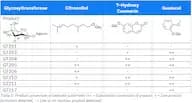
CAS :The kit contains 8 different Glucosyltransferases (GTases), which are enzymes that transfer glucose to another organic molecule (aglycon), establishing glycosidic linkage. UDP-glucose dependent GTases are part of the enzyme family of glucosyltransferases, they are versatile tools in glucosylation reactions. Different GTases have different substrate specificities, as shown on Table 1. The kit is especially designed for screening and finding the most well-suited GTase for your specific process. All GTases in the kit are also available individually for bulk purchase.
Urease from Canavalia ensiformis
CAS :Urease from Canavalia ensiformis (Jack bean urease, EC 3.5.1.5) is an enzyme that catalyses the following reaction: (NH2)2CO + H2O → CO2 + 2 NH3 One unit of urease will yield 1.0 µmole of NH3 from urea per min at pH 7.0 and 25 °C.
Masse moléculaire :480 g/molEUCODIS® Nitrilhydratase 17, recombinant enzyme - ENH017
Nitrile hydratase 17 recombinantly expressed in E. coli comes in a freeze-dried formulation. Nitrile hydratases can be utilized to convert nitriles into their corresponding amides, e.g. to produce acrylamide from acrylonitrile. Additional applications include the removal of nitriles from industrial wastewater. Our nitrile hydratases have been tested for hydrolysis of the following substrates:cyclohexanecarbonitrile, cinnamonitrile, benzonitrile, methacrylonitrile, pivalonitrile.
EUCODIS® Nitrilhydratase 22, recombinant enzyme - ENH022
Nitrile hydratase 22 recombinantly expressed in E. coli comes in a freeze-dried formulation. Nitrile hydratases can be utilized to convert nitriles into their corresponding amides, e.g. to produce acrylamide from acrylonitrile. Additional applications include the removal of nitriles from industrial wastewater. Our nitrile hydratases have been tested for hydrolysis of the following substrates:cyclohexanecarbonitrile, cinnamonitrile, benzonitrile, methacrylonitrile, pivalonitrile.
Degré de pureté :Min. 95%EUCODIS® Nitrilhydratase 20, recombinant enzyme - ENH020
Nitrile hydratase 20 recombinantly expressed in E. coli comes in a freeze-dried formulation. Nitrile hydratases can be utilized to convert nitriles into their corresponding amides, e.g. to produce acrylamide from acrylonitrile. Additional applications include the removal of nitriles from industrial wastewater. Our nitrile hydratases have been tested for hydrolysis of the following substrates:cyclohexanecarbonitrile, cinnamonitrile, benzonitrile, methacrylonitrile, pivalonitrile.
Degré de pureté :Min. 95%EUCODIS® Nitrilhydratase 21, recombinant enzyme - ENH021
Nitrile hydratase 21 recombinantly expressed in E. coli comes in a freeze-dried formulation. Nitrile hydratases can be utilized to convert nitriles into their corresponding amides, e.g. to produce acrylamide from acrylonitrile. Additional applications include the removal of nitriles from industrial wastewater. Our nitrile hydratases have been tested for hydrolysis of the following substrates:cyclohexanecarbonitrile, cinnamonitrile, benzonitrile, methacrylonitrile, pivalonitrile.
Aldolase from rabbit muscle
CAS :One unit of aldolase (EC 4.1.2.13) will convert 1.0 µmol of Fructose-1,6-Diphosphate to Dihydroxyacetone phosphate and Glyceraldehyde-3-phosphate per min at 25 °C and pH 7.4. Lyophilized Powder.
Masse moléculaire :161 g/molD-Ribulose 1,5-diphosphate carboxylase from spinach
CAS :D-Ribulose 1,5-diphosphate carboxylase, commonly known as RuBisCO, is an essential enzyme that catalyzes the first major step of carbon fixation, a process by which inorganic carbon from the atmosphere is converted into organic molecules. This enzyme is derived from spinach, a common model organism used in plant biology research due to its accessibility and well-characterized photosynthetic pathways.
Degré de pureté :Min. 95%Creatinase
Creatinase is an enzyme (EC 3.5.3.3) that catalyzes the conversion of creatine to sarcosine and urea.L-Methionine γ-lyase
CAS :A pyridoxal phosphate-containing enzyme that converts L-methionine to α-ketobutyrate, ammonia and methyl mercaptan. Recombinant from e.coli source.
EC 4.4.1.11Degré de pureté :Min. 95%EUCODIS® CalB02, engineered variant of Candida antarctica Lipase B - ELCB02
Lipases belong to the family of esterases and naturally act on triglycerides at lipid-water interfaces. Lipases/esterases can be used as versatile tools in hydrolytic reactions, esterifications and transesterification reactions in industrial and food applications. The CalB02 lipase has a temperature optimum in the 40 - 50 °C range and pH optimum between pH 5 and 8.
EUCODIS® CalB01 ICE, engineered variant of Candida antarctica Lipase B, covalent immobilization on hydrophobic carrier - ELCB01ICE
Lipases belong to the family of esterases and naturally act on triglycerides at lipid-water interfaces. Lipases/esterases can be used as versatile tools in hydrolytic reactions, esterifications and transesterification reactions in industrial and food applications. The CalB01 ICE lipase has been immobilized on a hydrophobic carrier by a covalent linkage. The immobilized CalB01 lipase has a temperature optimum in the 40 - 50 °C range and pH optimum between pH 5 and 8.EUCODIS® CalB02 IA, engineered variant of Candida antarctica Lipase B, immobilized by adsorption on hydrophobic carrier - ELCB02IA
Lipases belong to the family of esterases and naturally act on triglycerides at lipid-water interfaces. Lipases/esterases can be used as versatile tools in hydrolytic reactions, esterifications and transesterification reactions in industrial and food applications. The CalB02 IA lipase has been immobilized on a hydrophobic carrier by adsorption. The immobilized CalB02 lipase has a temperature optimum in the 40 - 50 °C range and pH optimum between pH 5 and 8.
Lipase 077, acidic lipase - recombinant
Lipase 77 recombinantly expressed in P. pastoris comes in a spray-dried formulation. It has its pH optimum at 4-5. Lipases belong to the family of esterases and naturally act on triglycerides at lipid-water interfaces catalyzing hydrolytic reactions, esterifications and transesterification reactions in industrial and food applications. Lipase 77 was shown to hydrolyze p-Nitrophenyl esters of butyrate and triglycerides.
Recombinant Isocitrate Dehydrogenase
CAS :Recombinant Isocitrate Dehydrogenase is a bioengineered enzyme, which is derived from microbial or eukaryotic expression systems designed to mirror its naturally occurring form. This enzyme catalyzes the oxidative decarboxylation of isocitrate to alpha-ketoglutarate, utilizing NADP+ as a cofactor in the process. Its mode of action involves the conversion of isocitrate to alpha-ketoglutarate with the concomitant reduction of NADP+ to NADPH.
Degré de pureté :Min. 95%Phosphoglucose isomerase from baker′s yeast (S. cerevisiae), Type III, ammonium sulfate suspension, ≥400 units/mg protein (biuret)
CAS :Glucose-6-phosphate isomerase (GPI, phosphoglucose isomerase/phosphoglucoisomerase, PGI, phosphohexose isomerase, PHI; EC 5.3.1.9) is an enzyme that catalyses isomerisation between Glucose-6-phosphate and Fructose-6-phosphate: G6P ⇌ F6P One unit of GPI will convert 1.0 mmole of Fructose-6-phosphate to Glucose-6-phosphate per minute at pH 7.4 and 25 °C.
Degré de pureté :Min. 95%Couleur et forme :SuspensionRibonuclease T1 from aspergillus oryzae
CAS :Ribonuclease T1 is an endonuclease enzyme, which is derived from the fungus Aspergillus oryzae. It specifically cleaves single-stranded RNA at the 3' end of guanosine residues, which involves hydrolyzing the phosphodiester bond to produce 3′-phosphomononucleotides and 5′-hydroxylated oligonucleotides. This enzyme’s high specificity and catalytic efficiency make it valuable for various applications.Degré de pureté :Min. 95%EUCODIS® CalB01, engineered variant of Candida antarctica Lipase B - ELCB01
Lipases belong to the family of esterases and naturally act on triglycerides at lipid-water interfaces. Lipases/esterases can be used as versatile tools in hydrolytic reactions, esterifications and transesterification reactions in industrial and food applications. The CalB01 lipase has a temperature optimum in the 40 - 50 °C range and pH optimum between pH 5 and 8.
Alcohol dehydrogenase, from yeast
CAS :Alcohol dehydrogenase (EC 1.1.1.1) is the enzyme that catalyzes interconversion between alcohols and aldehydes or ketones, using NAD+/NADH as a cofactor in the following reaction: CH3CH2OH + NAD+ ⇔ CH3CHO + NADH + H+ One unit of alcohol dehydrogenase will convert 1.0 µmol of ethanol to acetaldehyde per minute at pH 8.8 and 25 °C.
Phospholipase D Kit, 4 unique EUCODIS® PLDs, recombinant - EPLD Kit
Phospholipases D belong to the family of esterases and act on phosphatidylcholine in the plasma membrane to release phosphatidic acid (PA) and choline. Phospholipases D can be used as versatile tools in hydrolysis and transphosphatidylation reactions for industrial, chemical and food applications. The Phospholipase D Kit contains 4 enzymes with a broad pH range for transphosphatidylation activity.