Building Blocks
Sous-catégories appartenant à la catégorie "Building Blocks"
- Acides boroniques et dérivés de l'acide boronique(5.805 produits)
- Building Blocks Chiraux(1.248 produits)
- Building Blocks Hydrocarbonés(6.118 produits)
- Building Blocks organiques(61.447 produits)
208423 produits trouvés pour "Building Blocks"
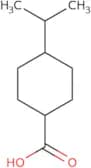
cis-4-Isopropylcyclohexanecarboxylic acid
CAS :cis-4-Isopropylcyclohexanecarboxylic acid is a sulfurous, industrial chemical that is produced by the oxidation of terephthalic acid. It is used in the production of medicines and as a reagent for organic synthesis. cis-4-Isopropylcyclohexanecarboxylic acid can be synthesized from β-pinene, methylmagnesium chloride, and methyl ester. The high yield and stability make it an attractive synthetic intermediate for pharmaceuticals and cyclic peptides.Formule :C10H18O2Degré de pureté :Min. 95%Masse moléculaire :170.25 g/mol1-Phenylcycloheptane-1-carboxylic acid
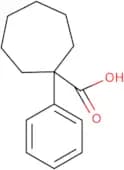
CAS :Versatile small molecule scaffold
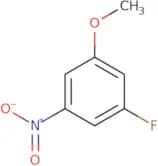
Formule :C14H18O2Degré de pureté :Min. 95%Masse moléculaire :218.29 g/mol1-Fluoro-3-methoxy-5-nitrobenzene
CAS :Versatile small molecule scaffoldFormule :C7H6FNO3Degré de pureté :Min. 95%Masse moléculaire :171.13 g/mol1,4-Dioxaspiro[4.5]dec-7-ene
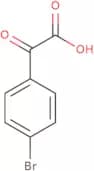
CAS :Versatile small molecule scaffoldFormule :C8H12O2Degré de pureté :Min. 95%Masse moléculaire :140.18 g/mol2-(4-bromophenyl)-2-oxoacetic acid
CAS :2-(4-Bromophenyl)-2-oxoacetic acid is an acetylcholinesterase inhibitor. It binds to the active site of acetylcholinesterase, preventing the breakdown of acetylcholine and leading to increased concentrations in the synaptic cleft. 2-(4-Bromophenyl)-2-oxoacetic acid has been shown to have high reactivity with the phenyl ring, which may be due to its ability to form hydrogen bonds. This compound also has a number of modifications that can affect its colorimetric and spectral properties. 2-(4-Bromophenyl)-2-oxoacetic acid also has a number of hydroxy groups, which can be important for biological activity.Formule :C8H5BrO3Degré de pureté :Min. 95%Masse moléculaire :229 g/mol2-(4-tert-Butylphenyl)-2-oxoacetic acid
CAS :Versatile small molecule scaffold
Formule :C12H14O3Degré de pureté :Min. 95%Masse moléculaire :206.24 g/mol4-Methylquinoline-6-carboxylic acid
CAS :Versatile small molecule scaffoldFormule :C11H9NO2Degré de pureté :Min. 95%Masse moléculaire :187.2 g/molMethyl 4-oxo-1,4-dihydroquinoline-2-carboxylate
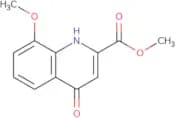
CAS :Versatile small molecule scaffoldFormule :C11H9NO3Degré de pureté :Min. 95%Masse moléculaire :203.19 g/molMethyl 4-hydroxy-8-methoxyquinoline-2-carboxylate
CAS :Methyl 4-hydroxy-8-methoxyquinoline-2-carboxylate is a methyl ester of 8-methoxyquinoline. It can be synthesized from the acid methyl ester of 8-methoxyquinoline and methanol, or by heating quinoline with formaldehyde and hydrochloric acid. Methyl 4-hydroxy-8-methoxyquinoline-2-carboxylate has been shown to inhibit protein synthesis in animal cells.Formule :C12H11NO4Degré de pureté :Min. 95%Masse moléculaire :233.2 g/mol{2-Methylbicyclo[2.2.1]heptan-2-yl}methanamine
CAS :Versatile small molecule scaffold
Formule :C9H17NDegré de pureté :Min. 95%Masse moléculaire :139.24 g/mol5-Iodo-6-nitro-1,3-dioxaindane
CAS :Versatile small molecule scaffoldFormule :C7H4INO4Degré de pureté :Min. 95%Masse moléculaire :293.02 g/molBenzyl N-(4-hydroxyphenyl)carbamate
CAS :Versatile small molecule scaffoldFormule :C14H13NO3Degré de pureté :Min. 95%Masse moléculaire :243.26 g/mol2'-Methylbiphenyl-2-carboxaldehyde
CAS :Versatile small molecule scaffold
Formule :C14H12ODegré de pureté :Min. 95%Masse moléculaire :196.25 g/mol2'-Methyl-biphenyl-2-carboxylic acid
CAS :2'-Methyl-biphenyl-2-carboxylic acid is a diacyl peroxide that can be synthesized by the cyclization of benzene and triphenylene. It has been used in the synthesis of biphenyl-2-carboxylic acid.Formule :C14H12O2Degré de pureté :Min. 95%Masse moléculaire :212.25 g/molDecahydronaphthalene-4a-carboxylic acid
CAS :Versatile small molecule scaffoldFormule :C11H18O2Degré de pureté :Min. 95%Masse moléculaire :182.3 g/mol7-Nitro-1,3-dioxaindane-5-carboxylic acid
CAS :Versatile small molecule scaffoldFormule :C8H5NO6Degré de pureté :Min. 95%Masse moléculaire :211.13 g/mol3-Methyl-2H-isoquinolin-1-one
CAS :3-Methyl-2H-isoquinolin-1-one is an analog of a natural molecule that can be used to treat autoimmune diseases. It is a small molecule with antiviral and immunomodulatory properties. 3-Methyl-2H-isoquinolin-1-one inhibits the expression of genes involved in the inflammatory response, such as Caspase 9 and IL6, and stimulates the expression of genes involved in tissue repair, such as MMP3 and TIMP3. 3-Methyl-2H-isoquinolin-1-one also has antihepatitis effects by acting on viral replication and targeting virus particles for destruction. The drug blocks the synthesis of new virus particles, which reduces inflammation caused by chronic hepatitis B or C infection. 3MIIQ inhibits the production of DNA from RNA templates during mRNA translation by binding to RNA polymerase III to block transcriptional elongation. This inhibition prevents viral gene expression and replication, leading to cellFormule :C10H9NODegré de pureté :Min. 95%Masse moléculaire :159.18 g/molIsoquinoline-4-carboxamide
CAS :Versatile small molecule scaffoldFormule :C10H8N2ODegré de pureté :Min. 95%Masse moléculaire :172.18 g/mol1-Chloro-3-methyl-isoquinoline
CAS :1-Chloro-3-methyl-isoquinoline is a cytotoxic compound with potent anti-cancer activity. It exhibits cytotoxicity against cancer cell lines and alkylation of DNA, which may be due to its ability to bind to the colchicine binding site on the cancer cell. 1-Chloro-3-methyl-isoquinoline has been shown to exhibit low yields in synthesis, but these can be improved by using phthalidyl as an intermediate. The chlorination of 1-chloro-3-methyl isoquinoline leads to the production of a heterocycle that is subsequently decarboxylated.Formule :C10H8ClNDegré de pureté :Min. 95%Masse moléculaire :177.63 g/molN-Methyl-2-(propan-2-yl)aniline
CAS :Versatile small molecule scaffoldFormule :C10H15NDegré de pureté :Min. 95%Masse moléculaire :149.23 g/mol1H-Benzo[c][1,2]thiazin-4(3H)-one 2,2-dioxide
CAS :Methylene blue is a dye that has been used in the treatment of methemoglobinemia and as an antimalarial drug. It has also been used as a stain for microscope slides, as a reagent in biochemical experiments, and as a diagnostic agent. Methylene blue is a triethylamine salt of the methylene blue molecule, which consists of a benzothiazine ring system with two methylene groups attached to it. The compound can reversibly bind to the active site of most known enzymes that contain heme groups, such as hemoglobin, cytochrome c oxidase, catalase, and xanthine oxidase. This binding inhibits these enzymes' activity by preventing substrate access to the active site. This property makes methylene blue useful in biochemistry research for studying enzyme function and mechanisms.Formule :C8H7NO3SDegré de pureté :Min. 95%Masse moléculaire :197.21 g/mol1-Methyl-1,2,3,4-tetrahydro-2lambda~6~,1-benzothiazine-2,2,4-trione
CAS :1-Methyl-1,2,3,4-tetrahydro-2lambda~6~,1-benzothiazine-2,2,4-trione is a heterocyclic compound that contains a benzene ring and a heterocyclic ring. It has an asymmetric carbon atom with two different substituents (a hydrogen and a sulfonyl group). The carbonyl group is bonded to the sulfur atom of the sulfonyl group. The molecule also has two hydrogen bonds in its geometry. This molecule has a dimerized conformation and can be found as a dimerized crystal structure.Formule :C9H9NO3SDegré de pureté :Min. 95%Masse moléculaire :211.24 g/mol6-(4-Nitrophenyl)imidazo[2,1-b][1,3]thiazole
CAS :Versatile small molecule scaffold
Formule :C11H7N3O2SDegré de pureté :Min. 95%Masse moléculaire :245.26 g/mol2,3-Dimethylquinoline-4-carboxylic acid
CAS :Versatile small molecule scaffoldFormule :C12H11NO2Degré de pureté :Min. 95%Masse moléculaire :201.22 g/mol3-Cyclohexylcyclohexan-1-one
CAS :Versatile small molecule scaffold
Formule :C12H20ODegré de pureté :Min. 95%Masse moléculaire :180.29 g/mol4-(1-Adamantanyl)aniline hydrochloride
CAS :Versatile small molecule scaffoldFormule :C16H22ClNDegré de pureté :Min. 95%Masse moléculaire :263.81 g/mol3,5-Dimethylcyclohexane-1-carboxylic acid
CAS :Versatile small molecule scaffoldFormule :C9H16O2Degré de pureté :Min. 95%Masse moléculaire :156.22 g/mol1,2,3,4,5,6-Hexahydro-2-benzazocine
CAS :Hexahydro-2-benzazocine is a narcotic substance that is an anhydrous form of its dihydrochloride salt. It has strong analgesic properties and is used as an anesthetic for minor surgery. The drug is also used to treat spasticity, anxiety disorders, and addiction to other narcotics. Hexahydro-2-benzazocine may be habit forming and should be used with caution.
Formule :C11H15NDegré de pureté :Min. 95%Masse moléculaire :161.24 g/mol6,7-Dihydro-5H-benzo[7]annulene
CAS :6,7-Dihydro-5H-benzo[7]annulene is a synthetic derivative of the naphthalene group of compounds. It has been shown to have antiestrogenic activity and was used as a lead compound in the development of a new class of pharmaceutical preparations for the treatment of endometriosis and prostate cancer. This compound binds to estrogen receptors and inhibits their transcriptional activity. 6,7-Dihydro-5H-benzo[7]annulene also inhibits cell proliferation by binding to DNA and preventing RNA synthesis.Formule :C11H12Degré de pureté :Min. 95%Masse moléculaire :144.21 g/mol1H-Pyrrole-2-carboxamide,N,N-dimethyl-(9CI)
CAS :1H-Pyrrole-2-carboxamide,N,N-dimethyl (1) is a chemical compound that belongs to the pyrrole class. It has been shown to be able to form intermolecular hydrogen bonds with its neighboring molecules, which is due to the presence of a carbonyl group and an amide group. The x-ray crystal structure of 1H-pyrrole-2-carboxamide,N,N-dimethyl (1) shows that it has all the properties necessary for a successful hydrogen bond donor: electron density in the vicinity of the carbonyl group and electron density in the vicinity of the amide group. These two groups are located on opposite sides of a planar pyrrole ring system. This configuration gives 1H-pyrrole-2-carboxamide,N,N-dimethyl (1) an axial geometry and makes it centrosymmetric. The dimers formedFormule :C7H10N2ODegré de pureté :Min. 95%Masse moléculaire :138.17 g/mol5-Methanesulfonylfuran-2-carbaldehyde
CAS :Versatile small molecule scaffold
Formule :C6H6O4SDegré de pureté :Min. 95%Masse moléculaire :174.18 g/molSpiro[3.5]nonan-5-one
CAS :Versatile small molecule scaffoldFormule :C9H14ODegré de pureté :Min. 95%Masse moléculaire :138.21 g/molMethyl 2-bromo-3-(4-methylphenyl)propanoate
CAS :Versatile small molecule scaffoldFormule :C11H13BrO2Degré de pureté :Min. 95%Masse moléculaire :257.12 g/molMethyl 2-bromo-3-(4-chlorophenyl)propanoate
CAS :Versatile small molecule scaffold
Formule :C10H10BrClO2Degré de pureté :Min. 95%Masse moléculaire :277.54 g/mol1,4-Dioxaspiro[4.5]decan-7-ylmethanamine
CAS :Versatile small molecule scaffold
Formule :C9H17NO2Degré de pureté :Min. 95%Masse moléculaire :171.24 g/mol4-Methylphenyl cyclopropyl ketone
CAS :4-Methylphenyl cyclopropyl ketone is a dipole that can be found as a solute in cyclohexane. It has been analysed for conformations and methyl ketones, phenyl ketones and polarisability constants. It is also known to be a dicyclopropyl ketone, mesityl or cyclopropyl ketone.
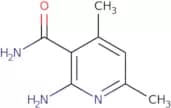
Formule :C11H12ODegré de pureté :Min. 95%Masse moléculaire :160.22 g/mol2-Amino-4,6-dimethylnicotinamide
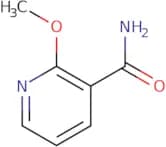
CAS :Versatile small molecule scaffoldFormule :C8H11N3ODegré de pureté :Min. 95%Masse moléculaire :165.19 g/mol2-Methoxypyridine-3-carboxamide
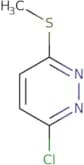
CAS :2-Methoxypyridine-3-carboxamide (2MP) is a novel antitumor agent that inhibits cell growth and induces rapid apoptosis in different types of cancer cells. 2MP inhibits tumor growth by inhibiting the synthesis of nicotinamide adenine dinucleotide (NAD), which is important for energy production in cells. 2MP also inhibits the activity of the enzyme, DNA topoisomerase II, which is involved in DNA replication and repair. This drug has been shown to be effective against lung cancer, colon cancer, breast cancer and MCF-7 human breast carcinoma cells.Formule :C7H8N2O2Degré de pureté :Min. 95%Masse moléculaire :152.15 g/mol3-Chloro-6-(methylsulfanyl)pyridazine
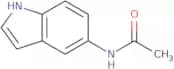
CAS :3-Chloro-6-(methylsulfanyl)pyridazine is a nucleophilic compound that is used as a reagent in organic synthesis. It can be used to form thiourea derivatives, which are nucleophilic and react with potassium to form potassium thiocyanate. 3-Chloro-6-(methylsulfanyl)pyridazine reacts with methanethiolate in the presence of nitrogen nucleophile to form 3-(methylthio)pyridine. This reaction can also be carried out with ethanethiolate, phenylmethanethiolate, or benzylmethanethiolate.>>END>>Formule :C5H5ClN2SDegré de pureté :Min. 95%Masse moléculaire :160.63 g/molN-(1H-Indol-5-yl)acetamide
CAS :Versatile small molecule scaffold
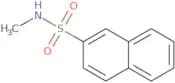
Formule :C10H10N2ODegré de pureté :Min. 95%Masse moléculaire :174.2 g/molN-Methylnaphthalene-2-sulfonamide
CAS :N-Methylnaphthalene-2-sulfonamide is an inhibitor of transcription-polymerase chain reaction (PCR) that binds to the enzyme DNA polymerase. It also inhibits transport and flavonoid biosynthesis. N-Methylnaphthalene-2-sulfonamide has been shown to upregulate the expression of genes that are involved in regulatory, saturating, and tissue modifications. This drug has no effect on hormones or linear model of biosynthesis, and has a phenotype of apical.
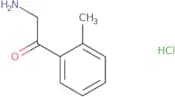
Formule :C11H11NO2SDegré de pureté :Min. 95%Masse moléculaire :221.28 g/mol2-Amino-1-(2-methylphenyl)ethan-1-one hydrochloride
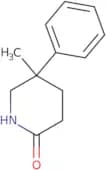
CAS :Produit contrôléVersatile small molecule scaffoldFormule :C9H12ClNODegré de pureté :Min. 95%Masse moléculaire :185.65 g/mol5-Methyl-5-phenylpiperidin-2-one
CAS :Versatile small molecule scaffoldFormule :C12H15NODegré de pureté :Min. 95%Masse moléculaire :189.25 g/mol1,4-Dichloro-2-methyl-5-nitrobenzene
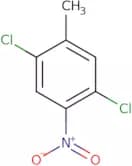
CAS :1,4-Dichloro-2-methyl-5-nitrobenzene is an antipsychotic drug that belongs to the class of phenylpiperazine derivatives. It is a potent serotonin receptor antagonist with actions at dopamine D2 and D3 receptors. This drug has shown to have high affinity for the 5HT2A receptor and moderate affinity for the 5HT1A receptor. 1,4-Dichloro-2-methyl-5-nitrobenzene also has moderate affinity for the alpha1 adrenergic receptor and low affinity for the histamine H1 receptor. Ziprasidone prevents activation of these receptors by binding to them and blocking their ability to activate downstream effects on other cells. 1,4-Dichloro-2-methyl-5-nitrobenzene has been shown to be effective in treating schizophrenia, bipolar disorder, major depressive disorder and other psychotic disorders.Formule :C7H5Cl2NO2Degré de pureté :Min. 95%Masse moléculaire :206.02 g/mol1,5-Dichloro-2-methyl-4-nitrobenzene
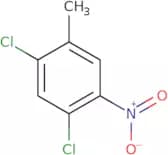
CAS :1,5-Dichloro-2-methyl-4-nitrobenzene is a chemical compound with the molecular formula C6H4Cl2NO. It has a molecular weight of 140.97 g/mol and a density of 1.25 g/cm3 at 20 °C. This compound is an organic solvent that is used as an intermediate in the production of other chemicals such as antifreeze, polyurethane, and nylon. The evaporation rate for this compound is low, making it ideal for use as a coating agent on plastics. 1,5-Dichloro-2-methyl-4-nitrobenzene can also be used to produce polyurethane foam insulation or in the manufacture of rubber products such as tires or hoses. 1,5-Dichloro-2-methyl-4-nitrobenzene can be synthesized by heating calcium carbonate with phosphorus oxychlorFormule :C7H5Cl2NO2Degré de pureté :Min. 95%Masse moléculaire :206.03 g/mol4-Acetamido-2-chloro-5-nitrotoluene
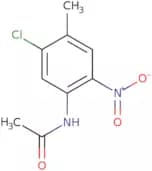
CAS :Versatile small molecule scaffoldFormule :C9H9ClN2O3Degré de pureté :Min. 95%Masse moléculaire :228.63 g/molN-(3-Chloro-4-methylphenyl)acetamide
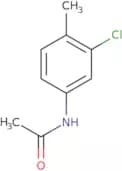
CAS :N-(3-Chloro-4-methylphenyl)acetamide is a pesticide that has been used to control populations of insects, such as cockroaches and ants. It is a member of the amide class of insecticides. N-(3-Chloro-4-methylphenyl)acetamide was first introduced in 1948 and was used until the early 1970s when it was found to be carcinogenic. The chemical is released into the environment through industrial processes, such as coal mining, oil refining, and natural gas production. It can also contaminate drinking water sources through leaching from landfills or through spraying. The chemical has been found in untreated foods and beverages, such as coffee beans and beer. Ingestion can lead to damage to the liver and kidneys, anemia, bone marrow suppression, and damage to red blood cells. Damage can also occur if it comes into contact with unprotected skin or is inhaled.Formule :C9H10ClNODegré de pureté :Min. 95%Masse moléculaire :183.64 g/molEthyl 2-{[(2-ethoxy-2-oxoethyl)carbamoyl]amino}acetate
CAS :Versatile small molecule scaffoldFormule :C9H16N2O5Degré de pureté :Min. 95%Masse moléculaire :232.23 g/mol[(4-Hydroxy-6-methylpyrimidin-2-yl)amino]formonitrile
CAS :[(4-Hydroxy-6-methylpyrimidin-2-yl)amino]formonitrile is a pyrimidine antagonist. It inhibits the activity of guanidines, which are compounds that play a role in the metabolism of nucleotides. This drug also has metabolic stability and in vitro metabolic activity. It is an important tool for studying the structure activity relationship of guanidines.Formule :C6H6N4ODegré de pureté :Min. 95%Masse moléculaire :150.14 g/mol2-(Methylthio)benzimidazole
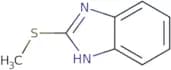
CAS :2-(Methylthio)benzimidazole (MTBZ) is a diazonium salt that is used as a reagent for the introduction of the methylthio group into organic compounds. This reagent can be prepared by reacting sodium carbonate with trifluoroacetic acid in the presence of metal carbonyls to yield a reactive intermediate, which then reacts with diazonium salts. MTBZ is also known to inhibit cytochrome P450 enzymes and to inhibit bacterial growth in vitro. One application for MTBZ is in the synthesis of sulfoxides, benzimidazole compounds, and other heterocyclic compounds.Formule :C8H8N2SDegré de pureté :Min. 95%Masse moléculaire :164.23 g/mol{[4-(Dimethylamino)phenyl]sulfanyl}formonitrile
CAS :Versatile small molecule scaffoldFormule :C9H10N2SDegré de pureté :Min. 95%Masse moléculaire :178.26 g/mol6-Methoxy-5-nitropyrimidine-4-thiol
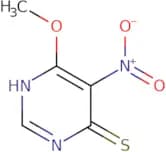
CAS :Versatile small molecule scaffoldFormule :C5H5N3O3SDegré de pureté :Min. 95%Masse moléculaire :187.18 g/molN-Methylquinazolin-4-amine
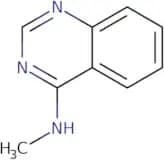
CAS :Versatile small molecule scaffold
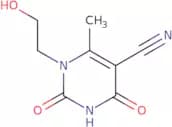
Formule :C9H9N3Degré de pureté :Min. 95%Masse moléculaire :159.19 g/mol1-(2-Hydroxyethyl)-6-methyl-2,4-dioxo-1,2,3,4-tetrahydropyrimidine-5-carbonitrile
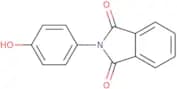
CAS :Versatile small molecule scaffoldFormule :C8H9N3O3Degré de pureté :Min. 95%Masse moléculaire :195.2 g/molN-(4-Hydroxyphenyl)phthalimide
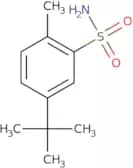
CAS :N-(4-Hydroxyphenyl)phthalimide is a white powder that has a melting point of 140.5°C, and is soluble in chloroform, acetone, and ethanol. It has the chemical formula C6H4N(OH)C6H3(OCH2CH2)2 and is used as a reagent for the synthesis of phthalic anhydride. It reacts with ammonia to form phthalamide. This compound belongs to the family of compounds called phthalimides. The molecule consists of two benzene rings connected by a single bond, which contains two hydroxyl groups on opposite sides of the ring system. Hydrogen bonds are formed between these hydroxyl groups and other atoms in the molecule. These hydrogen bonds contribute to the dihedral angle of this molecule (104°).Formule :C14H9NO3Degré de pureté :Min. 95%Masse moléculaire :239.23 g/mol5-tert-Butyl-2-methylbenzene-1-sulfonamide
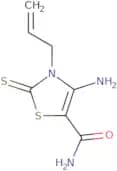
CAS :Versatile small molecule scaffoldFormule :C11H17NO2SDegré de pureté :Min. 95%Masse moléculaire :227.33 g/mol3-Allyl-4-amino-2-thioxo-2,3-dihydro-thiazole-5-carboxylic acid amide
CAS :Versatile small molecule scaffold
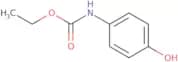
Formule :C7H9N3OS2Degré de pureté :Min. 95%Masse moléculaire :215.3 g/molEthyl N-(4-hydroxyphenyl)carbamate
CAS :Ethyl N-(4-hydroxyphenyl)carbamate is a synthetic compound that is used as an antioxidant to treat erythema, skin redness and inflammation. It also has the ability to decolorize hair. This product is a precursor for the synthesis of aminophenols, which are biologically active compounds that have been found in plants, animals and humans. Ethyl N-(4-hydroxyphenyl)carbamate is metabolized by human enzymes into arbutin, ellagic acid and 4-hydroxyphenylacetic acid. The human body converts ellagic acid into ellagic acid glucuronide, which may be excreted in urine or bile.
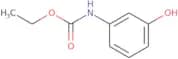
Formule :C9H11NO3Degré de pureté :Min. 95%Masse moléculaire :181.19 g/molEthyl (3-Hydroxyphenyl)carbamate
CAS :Ethyl (3-Hydroxyphenyl)carbamate is a carbonyl group that is produced by the hydrolysis of triticum aestivum. This product has been shown to have a synergistic interaction with retroflexus and bioassay, an imaging technique used to measure the photosynthetic activity of plants. Ethyl (3-Hydroxyphenyl)carbamate has low light fluorescence properties, which are useful for the detection of sugarbeet in low light conditions. The symptoms of ethyl (3-hydroxyphenyl)carbamate exposure include a constant and acceptor, which is a molecule or atom that accepts electrons from an electron donor in chemical reactions. Ethyl (3-hydroxyphenyl)carbamate can react with proton to form arvensis, a sugar found in sugarbeets.
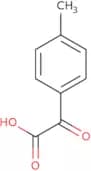
Formule :C9H11NO3Degré de pureté :Min. 95%Masse moléculaire :181.19 g/mol(4-Methylphenyl)(oxo)acetic acid
CAS :(4-Methylphenyl)(oxo)acetic acid is a chlorinated compound that has a reactive functional group. This chemical is used as a reagent in organic synthesis and has been shown to be a useful additive in organic reactions involving chloride compounds. The reaction mechanism of this compound is that it reacts with the oxidant, dehydrogenative or surrogates such as acetonitrile and hydrogen peroxide, to produce the desired product. In addition, (4-methylphenyl)(oxo)acetic acid can also be used as an acylation agent in the synthesis of disulfides.
Formule :C9H8O3Degré de pureté :Min. 95%Masse moléculaire :164.16 g/mol2-{[(2-Chlorophenyl)amino]methyl}phenol
CAS :Versatile small molecule scaffold
Formule :C13H12ClNODegré de pureté :Min. 95%Masse moléculaire :233.69 g/mol(3-Methoxyphenyl)methanethiol
CAS :Versatile small molecule scaffoldFormule :C8H10OSDegré de pureté :Min. 95%Masse moléculaire :154.23 g/molBicyclo[2.2.1]hept-5-ene-2-sulfonamide
CAS :Versatile small molecule scaffoldFormule :C7H11NO2SDegré de pureté :Min. 95%Masse moléculaire :173.24 g/molBicyclo[2.2.2]octane-2-sulfonamide
CAS :Versatile small molecule scaffoldFormule :C8H15NO2SDegré de pureté :Min. 95%Masse moléculaire :189.28 g/mol6-Methoxy-1,3-dioxaindane-5-carboxylic acid
CAS :Versatile small molecule scaffoldFormule :C9H8O5Degré de pureté :Min. 95%Masse moléculaire :196.16 g/mol6,7-Dimethoxy-2,3-dihydro-1-benzofuran-3-one
CAS :Versatile small molecule scaffoldFormule :C10H10O4Degré de pureté :Min. 95%Masse moléculaire :194.18 g/mol2-Methyl-[1,2,4]triazolo[1,5-a]pyridin-6-amine
CAS :Versatile small molecule scaffold
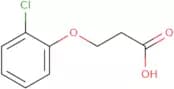
Formule :C7H8N4Degré de pureté :Min. 95%Masse moléculaire :148.17 g/mol3-(2-Chlorophenoxy)propionic acid
CAS :Versatile small molecule scaffold
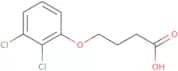
Formule :C9H9ClO3Degré de pureté :Min. 95%Masse moléculaire :200.62 g/mol4-(2,3-Dichlorophenoxy)butanoic acid
CAS :Produit contrôléVersatile small molecule scaffoldFormule :C10H10Cl2O3Degré de pureté :Min. 95%Masse moléculaire :249.09 g/mol(3-Aminopropyl)(octyl)amine
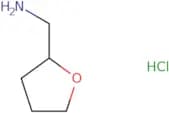
CAS :Versatile small molecule scaffoldFormule :C11H26N2Degré de pureté :Min. 95%Masse moléculaire :186.34 g/mol(2R)-Tetrahydro-2-furanmethanamine hydrochloride
CAS :Versatile small molecule scaffold
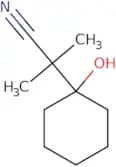
Formule :C5H12ClNODegré de pureté :Min. 95%Masse moléculaire :137.61 g/mol2-(1-Hydroxycyclohexyl)-2-methylpropanenitrile
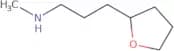
CAS :Versatile small molecule scaffoldFormule :C10H17NODegré de pureté :Min. 95%Masse moléculaire :167.25 g/molN-Methyl-3-(tetrahydrofuran-2-yl)propan-1-amine
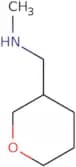
CAS :Versatile small molecule scaffoldFormule :C8H17NODegré de pureté :Min. 95%Masse moléculaire :143.23 g/mol3-(Methylaminomethyl)tetrahydropyran
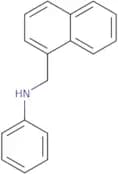
CAS :Versatile small molecule scaffoldFormule :C7H15NODegré de pureté :Min. 95%Masse moléculaire :129.2 g/molN-(Naphthalen-1-ylmethyl)aniline
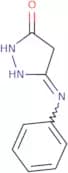
CAS :Versatile small molecule scaffoldFormule :C17H15NDegré de pureté :Min. 95%Masse moléculaire :233.31 g/mol3-(Phenylamino)-4,5-dihydro-1H-pyrazol-5-one
CAS :Versatile small molecule scaffoldFormule :C9H9N3ODegré de pureté :Min. 95%Masse moléculaire :175.19 g/mol{1-[(4-Chlorophenyl)methyl]-1H-1,3-benzodiazol-2-yl}methanol
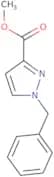
CAS :Produit contrôléVersatile small molecule scaffoldFormule :C15H13ClN2ODegré de pureté :Min. 95%Masse moléculaire :272.73 g/molMethyl 1-benzyl-1H-pyrazole-3-carboxylate
CAS :Versatile small molecule scaffoldFormule :C12H12N2O2Degré de pureté :Min. 95%Masse moléculaire :216.24 g/mol6-Chloro-3-phenyl[1,2,4]triazolo[4,3-b]pyridazine
CAS :Versatile small molecule scaffoldFormule :C11H7ClN4Degré de pureté :Min. 95%Masse moléculaire :230.66 g/mol1-N-[(2-Methylphenyl)methyl]benzene-1,2-diamine
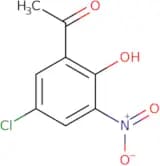
CAS :Versatile small molecule scaffoldFormule :C14H16N2Degré de pureté :Min. 95%Masse moléculaire :212.29 g/mol5-chloro-2-hydroxy-3-nitrobenzoic acid
CAS :5-Chloro-2-hydroxy-3-nitrobenzoic acid (5CHNBA) is a potent inhibitor of the HIV integrase. 5CHNBA inhibits the activity of integrase by binding to the enzyme and preventing it from adding new DNA sequences to the viral genome. It has been shown to be effective against HIV integrase in vitro and in vivo, with inhibitory activities against both wild type and drug resistant HIV integrases. 5CHNBA is not an amide or saponified compound, but it does contain a nitrobenzoic group that reacts with chlorine atoms to form chlorination products, such as dichloro 5-chloro-2-hydroxy-3-nitrobenzoic acid.
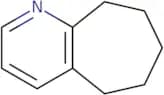
Formule :C7H4ClNO5Degré de pureté :Min. 95%Masse moléculaire :217.6 g/mol2,3-Cycloheptenopyridine
CAS :2,3-Cycloheptenopyridine is a molybdenum metal complex with chloroform. It belongs to the class of nucleophilic complexes. The reaction product of cycloheptenopyridine n-oxide and formaldehyde, it has a spectrum that shows peaks at 521 nm and 609 nm. This complex can be prepared by reacting 2,3-cycloheptenopyridine with hydrogen peroxide in dimethylformamide as a reagent. 2,3-Cycloheptenopyridine is an example of an n-oxide because it contains both oxygen atoms in the same molecule. The two isomers are cis and trans, but only the cis form is known to exist naturally on Earth. The trans isomer can be synthesized through the use of peroxides or trioxides; however, this synthetic form is only stable at temperatures above 300°C.Formule :C10H13NDegré de pureté :Min. 95%Masse moléculaire :147.22 g/mol1,2-Dihydrospiro[indole-3,3'-pyrrolidine]
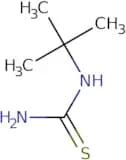
CAS :Versatile small molecule scaffoldFormule :C11H14N2Degré de pureté :Min. 95%Masse moléculaire :174.24 g/mol1-tert-Butyl-2-thiourea
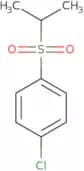
CAS :1-tert-Butyl-2-thiourea is an organosulfur compound that belongs to the group of organic solvents. It can be used in reactions with hydrochloric acid and heat energy, and has a reaction yield of 98%. 1-tert-Butyl-2-thiourea is also used as a mitochondrial inhibitor. It inhibits proton transport through the mitochondrial membrane by reacting with amino groups on the enzyme complex. This prevents the transport of protons across the membrane, which inhibits ATP production, leading to cell death.Formule :C5H12N2SDegré de pureté :Min. 95%Masse moléculaire :132.23 g/mol1-Chloro-4-(propane-2-sulfonyl)benzene
CAS :Versatile small molecule scaffoldFormule :C9H11ClO2SDegré de pureté :Min. 95%Masse moléculaire :218.7 g/mol1-[(Chloromethyl)sulfanyl]-4-methoxybenzene
CAS :Versatile small molecule scaffold
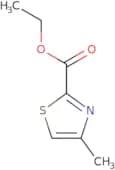
Formule :C8H9ClOSDegré de pureté :Min. 95%Masse moléculaire :188.67 g/molEthyl 4-Methyl-1,3-thiazole-2-carboxylate
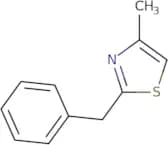
CAS :Versatile small molecule scaffoldFormule :C7H9NO2SDegré de pureté :Min. 95%Masse moléculaire :171.21 g/mol2-Benzyl-4-methyl-1,3-thiazole
CAS :2-Benzyl-4-methyl-1,3-thiazole is a hydroxamic acid that has been shown to have antibacterial and antimicrobial properties. It is a selective inhibitor of the enzyme leishmanase, which is an enzyme that catalyzes the conversion of L-2,4-diaminobutanoate to L-2,4-diaminobutanoic acid. 2MBTT has been shown to have antiproliferative activity in cancer cells and also has antiviral activity against human immunodeficiency virus type 1 (HIV) and herpes simplex virus type 1 (HSV). This compound has shown antifungal activity against Candida albicans and Aspergillus fumigatus in vitro. Molecular modeling studies suggest that this compound binds to a site on the enzyme leishmanase that is not accessible by other inhibitors such as pyridoxal phosphate or EDTA. The maximal responseFormule :C11H11NSDegré de pureté :Min. 95%Masse moléculaire :189.28 g/mol2-Benzoyl-1,3-thiazole
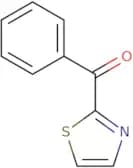
CAS :Versatile small molecule scaffoldFormule :C10H7NOSDegré de pureté :Min. 95%Masse moléculaire :189.24 g/molN-(2,2-Dimethylpropyl)aniline
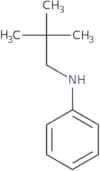
CAS :N-(2,2-Dimethylpropyl)aniline is a heterocyclic compound that belongs to the class of amines. It is used in the synthesis of polymers and copolymers, such as polycarbonate plastics, polyurethane elastomers, and polyester fibers. N-(2,2-Dimethylpropyl)aniline can be used as a catalyst for cross-coupling reactions and also has been shown to catalyze x-ray crystallography studies. This product has also been shown to have carbamate and amide properties.
N-(2,2-Dimethylpropyl)aniline is an intermediate in the production of anilines from benzene derivatives with dimethylformamide or carbonyldiimidazole. It has also been shown to react with alcohols or phosphites to form esters or phosphoramides, respectively.Formule :C11H17NDegré de pureté :Min. 95%Masse moléculaire :163.26 g/mol2-Iodo-N-phenylacetamide
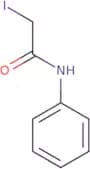
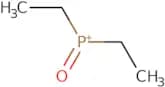
CAS :2-Iodo-N-phenylacetamide (2IA) is a chemical that binds to the substrate binding site of the enzyme. It has been shown to have pro-inflammatory cytokine activity in vitro and in vivo. 2IA is a member of a class of compounds that are able to inhibit chronic viral infections by inhibiting the production of pro-inflammatory cytokines. The chemical diversity of 2IA is due to its functional groups, which include an electrospray ionization quadrupole, a phosphate group, and a disulfide bond. 2IA also has been shown to inhibit phosphorylation reactions in biochemical pathways.Formule :C8H8INODegré de pureté :Min. 95%Masse moléculaire :261.06 g/molDiethylphosphine oxide
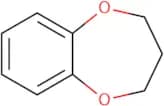
CAS :Versatile small molecule scaffoldFormule :C4H10OPDegré de pureté :Min. 95%Masse moléculaire :105.1 g/mol3,4-dihydro-2H-1,5-benzodioxepine
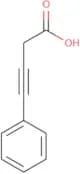
CAS :3,4-Dihydro-2H-1,5-benzodioxepine is a chalcone that has been shown to have organic and inorganic acid properties. It is a natural product that has been shown to inhibit the growth of bacteria. The ultraviolet absorption properties of 3,4-dihydro-2H-1,5-benzodioxepine are due to its conjugated double bond system. This compound is an amide and contains a hydroxyl group and a chloride ion. 3,4-Dihydro-2H-1,5-benzodioxepine also has the ability to bind with amino groups on proteins. 3,4-Dihydro-2H-1,5 benzodioxepine can be found in plants such as "Achillea millefolium" (Yarrow).Formule :C9H10O2Degré de pureté :Min. 95%Masse moléculaire :150.18 g/mol4-Phenylbut-3-ynoic acid
CAS :4-Phenylbut-3-ynoic acid is a mixture of two stereoisomers that are obtained by the reaction of but-3-yne with phenylhalide. The mixture is used as a ligand in asymmetric synthesis and catalytic reactions. 4-Phenylbut-3-ynoic acid is also used as a reagent in organic syntheses, such as alkenylations, to produce an optically pure alkene product. 4-Phenylbut-3-ynoic acid has been shown to be selective for the desired stereoisomer.
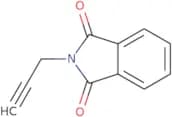
Formule :C10H8O2Degré de pureté :Min. 95%Masse moléculaire :160.17 g/molN-Propargylphthalimide
CAS :N-Propargylphthalimide is a supramolecular compound that has been shown to have antiinflammatory properties. It inhibits the production of prostaglandin E2 (PGE2) in human neutrophils, which can be caused by inhibiting the activity of acetylsalicylic acid (ASA). N-Propargylphthalimide has also been observed to inhibit tyrosinase and amine oxidase, which may be due to its ability to form hydrogen bonds with the enzyme's active site. N-Propargylphthalimide has not yet been tested on animals or humans.Formule :C11H7NO2Degré de pureté :Min. 95%Masse moléculaire :185.18 g/mol9-Methyl-3-oxa-9-azabicyclo[3.3.1]nonan-7-one
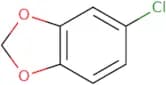
CAS :Versatile small molecule scaffoldFormule :C8H13NO2Degré de pureté :Min. 95%Masse moléculaire :155.2 g/mol1-Chloro-3,4-methylenedioxybenzene
CAS :Produit contrôlé1-Chloro-3,4-methylenedioxybenzene is an organic solvent used in the treatment of various inorganic compounds. The solvent is used to dissolve inorganic compounds that are insoluble in water and other solvents. 1-Chloro-3,4-methylenedioxybenzene can be used as a dehydrating agent or additive to remove water from organic substances such as coal tar or oils. It is also used as a catalyst for alkylation reactions and has been shown to inhibit the growth of bacteria by binding to DNA. This product has been demonstrated to have anti-inflammatory properties.
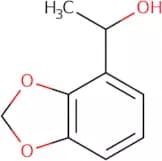
Formule :C7H5ClO2Degré de pureté :Min. 95%Masse moléculaire :156.57 g/mol1-(1,3-Dioxaindan-4-yl)ethan-1-ol
CAS :Versatile small molecule scaffold
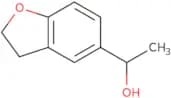
Formule :C9H10O3Degré de pureté :Min. 95%Masse moléculaire :166.2 g/mol1-(2,3-Dihydro-1-benzofuran-5-yl)ethanol
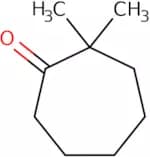
CAS :Versatile small molecule scaffoldFormule :C10H12O2Degré de pureté :Min. 95%Masse moléculaire :164.2 g/mol2,2-Dimethylcycloheptan-1-one
CAS :Versatile small molecule scaffold
Formule :C9H16ODegré de pureté :Min. 95%Masse moléculaire :140.2 g/mol

![1,4-Dioxaspiro[4.5]dec-7-ene](/_next/image/?url=https%3A%2Fstatic.cymitquimica.com%2Fproducts%2F3D%2Fthumb-webp%2FHAA09224.webp&w=3840&q=75)


![{2-Methylbicyclo[2.2.1]heptan-2-yl}methanamine](/_next/image/?url=https%3A%2Fstatic.cymitquimica.com%2Fproducts%2F3D%2Fthumb-webp%2FHAA10600.webp&w=3840&q=75)


![1H-Benzo[c][1,2]thiazin-4(3H)-one 2,2-dioxide](/_next/image/?url=https%3A%2Fstatic.cymitquimica.com%2Fproducts%2F3D%2Fthumb-webp%2FHAA11728.webp&w=3840&q=75)

![6-(4-Nitrophenyl)imidazo[2,1-b][1,3]thiazole](/_next/image/?url=https%3A%2Fstatic.cymitquimica.com%2Fproducts%2F3D%2Fthumb-webp%2FHAA12014.webp&w=3840&q=75)


![6,7-Dihydro-5H-benzo[7]annulene](/_next/image/?url=https%3A%2Fstatic.cymitquimica.com%2Fproducts%2F3D%2Fthumb-webp%2FHAA12562.webp&w=3840&q=75)


![Spiro[3.5]nonan-5-one](/_next/image/?url=https%3A%2Fstatic.cymitquimica.com%2Fproducts%2F3D%2Fthumb-webp%2FHAA14175.webp&w=3840&q=75)


![1,4-Dioxaspiro[4.5]decan-7-ylmethanamine](/_next/image/?url=https%3A%2Fstatic.cymitquimica.com%2Fproducts%2F3D%2Fthumb-webp%2FHAA14313.webp&w=3840&q=75)

![Ethyl 2-{[(2-ethoxy-2-oxoethyl)carbamoyl]amino}acetate](/_next/image/?url=https%3A%2Fstatic.cymitquimica.com%2Fproducts%2F3D%2Fthumb-webp%2FHAA15063.webp&w=3840&q=75)
![[(4-Hydroxy-6-methylpyrimidin-2-yl)amino]formonitrile](/_next/image/?url=https%3A%2Fstatic.cymitquimica.com%2Fproducts%2F3D%2Fthumb-webp%2FHAA15219.webp&w=3840&q=75)
![{[4-(Dimethylamino)phenyl]sulfanyl}formonitrile](/_next/image/?url=https%3A%2Fstatic.cymitquimica.com%2Fproducts%2F3D%2Fthumb-webp%2FHAA15280.webp&w=3840&q=75)
![2-{[(2-Chlorophenyl)amino]methyl}phenol](/_next/image/?url=https%3A%2Fstatic.cymitquimica.com%2Fproducts%2F3D%2Fthumb-webp%2FHAA16637.webp&w=3840&q=75)

![Bicyclo[2.2.1]hept-5-ene-2-sulfonamide](/_next/image/?url=https%3A%2Fstatic.cymitquimica.com%2Fproducts%2F3D%2Fthumb-webp%2FHAA16708.webp&w=3840&q=75)
![Bicyclo[2.2.2]octane-2-sulfonamide](/_next/image/?url=https%3A%2Fstatic.cymitquimica.com%2Fproducts%2F3D%2Fthumb-webp%2FHAA16714.webp&w=3840&q=75)


![2-Methyl-[1,2,4]triazolo[1,5-a]pyridin-6-amine](/_next/image/?url=https%3A%2Fstatic.cymitquimica.com%2Fproducts%2F3D%2Fthumb-webp%2FHAA16994.webp&w=3840&q=75)

![{1-[(4-Chlorophenyl)methyl]-1H-1,3-benzodiazol-2-yl}methanol](/_next/image/?url=https%3A%2Fstatic.cymitquimica.com%2Fproducts%2F3D%2Fthumb-webp%2FHAA18731.webp&w=3840&q=75)
![6-Chloro-3-phenyl[1,2,4]triazolo[4,3-b]pyridazine](/_next/image/?url=https%3A%2Fstatic.cymitquimica.com%2Fproducts%2F3D%2Fthumb-webp%2FHAA19080.webp&w=3840&q=75)
![1-N-[(2-Methylphenyl)methyl]benzene-1,2-diamine](/_next/image/?url=https%3A%2Fstatic.cymitquimica.com%2Fproducts%2F3D%2Fthumb-webp%2FHAA19192.webp&w=3840&q=75)
![1,2-Dihydrospiro[indole-3,3'-pyrrolidine]](/_next/image/?url=https%3A%2Fstatic.cymitquimica.com%2Fproducts%2F3D%2Fthumb-webp%2FHAA19872.webp&w=3840&q=75)
![1-[(Chloromethyl)sulfanyl]-4-methoxybenzene](/_next/image/?url=https%3A%2Fstatic.cymitquimica.com%2Fproducts%2F3D%2Fthumb-webp%2FHAA20589.webp&w=3840&q=75)
![9-Methyl-3-oxa-9-azabicyclo[3.3.1]nonan-7-one](/_next/image/?url=https%3A%2Fstatic.cymitquimica.com%2Fproducts%2F3D%2Fthumb-webp%2FHAA22481.webp&w=3840&q=75)