Nucléosides
Les nucléosides sont des building blocks fondamentaux des acides nucléiques, composés d'une base azotée attachée à une molécule de sucre. Dans cette section, vous trouverez une large gamme de nucléosides essentiels pour la recherche en biologie moléculaire, biochimie et pharmacologie. Ces composés jouent des rôles cruciaux dans la synthèse de l'ADN et de l'ARN, et sont également vitaux dans divers processus métaboliques. Les nucléosides sont utilisés pour étudier le matériel génétique, développer des thérapies antivirales et anticancéreuses, et comprendre les mécanismes cellulaires. Chez CymitQuimica, nous proposons des nucléosides de haute qualité pour soutenir vos besoins en recherche et développement, garantissant pureté et fiabilité pour vos applications expérimentales.
3569 produits trouvés pour "Nucléosides"
Trier par
Degré de pureté (%)
0
100
|
0
|
50
|
90
|
95
|
100
5'-o-Methyl-dt cep
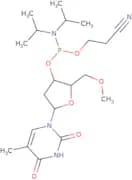
CAS :<p>5'-o-Methyl-dt cep is a modified phosphoramidite that has been synthesized to provide a novel, highly active anticancer and antiviral agent. It is used as an activator for the synthesis of DNA or RNA in the nucleoside or deoxyribonucleoside pathway. 5'-o-Methyl-dt cep could be used in the treatment of HIV, Hepatitis C, and other viral infections.</p>Formule :C20H33N4O6PDegré de pureté :Min. 95%Masse moléculaire :456.5 g/molInosine-3',5'-cyclic-monophosphate free acid
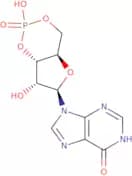
CAS :Inosine-3',5'-cyclic-monophosphate free acid is an ester of inosine 3',5'-cyclic-monophosphate that is structurally related to adenosine. It has been shown to have a physiological function as a cyclic nucleotide phosphodiesterase inhibitor, and also inhibits voltage-dependent calcium channels. Inosine-3',5'-cyclic-monophosphate free acid has been shown to be effective against infectious diseases, such as Mycobacterium tuberculosis and Galleria mellonella. It has also been shown to reduce the production of peptide hormones, nucleotides, and cyclic AMP (cAMP). Inosine-3',5'-cyclic-monophosphate free acid does not exhibit any pharmacological activity on its own but can modulate the activities of other pharmacological agents.Formule :C10H11N4O7PDegré de pureté :Min. 95%Masse moléculaire :330.19 g/mol5-Iodo-1-(2',3',5'-tri-O-acetyl-b-D-ribofuranosyl)-imidazo-4-carbonitrile
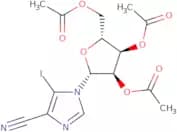
CAS :<p>5-Iodo-1-(2',3',5'-tri-O-acetyl-b-D-ribofuranosyl)-imidazo-4-carbonitrile is a nucleoside phosphoramidite that is synthesized from 2'-deoxyribose, 5'-iodoimidazole and triacetic acid. This compound is a novel phosphoramidite and can be used to synthesize DNA or RNA molecules. It has been shown to have anticancer properties, which may be due to its ability to inhibit DNA replication. 5-Iodo-1-(2',3',5'-tri-O-acetyl-b-D-ribofuranosyl)-imidazo-4-carbonitrile also has antiviral properties and can be used as an activator in the synthesis of modified nucleosides.</p>Formule :C15H16IN3O7Degré de pureté :Min. 95%Masse moléculaire :477.21 g/mol5'-O-DMT-thymidine 3'-O-[(S-acetyl-6-thiohexyl) N,N-diisopropylphosphoramidite
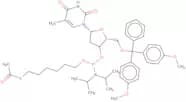
<p>5'-O-DMT-thymidine 3'-O-[(S-acetyl-6-thiohexyl) N,N-diisopropylphosphoramidite] is a novel compound that has been modified to enhance antiviral activity and provide protection against influenza virus. The phosphoramidite monophosphate is prepared by coupling of the 5'-O-DMT-thymidine 3'-O-[(S-acetyl-6-thiohexyl) N,N-diisopropylphosphoramidite] with an appropriate nucleoside phosphorylating agent, such as a thiophosphorylating agent. This product has high purity and quality.</p>Degré de pureté :Min. 95%2',3'-Dideoxyadenosine-5'-monophosphate
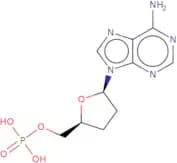
CAS :2',3'-Dideoxyadenosine-5'-monophosphate (ddAMP) is an adenosine analog that is a substrate for the enzyme dideoxyribonucleoside kinase. It is activated by phosphorylation to the 5' ends of DNA molecules and inhibits viral replication. ddAMP has been shown to be effective in treating human immunodeficiency virus (HIV) infection, at least in part, by inhibiting the production of p24 antigen levels and reducing the number of CD4+ lymphocytes. The mechanism of action may involve binding to HIV-1 RNA, which prevents it from interacting with cellular dsDNA and inhibits its transcription into DNA.Formule :C10H14N5O5PDegré de pureté :Min. 95%Masse moléculaire :315.22 g/molLinoleoyl coenzyme A
CAS :<p>Linoleoyl coenzyme A (LCA) is a fatty acid that is a component of the cell membrane. LCA is synthesized from linoleic acid and coenzyme A in the mitochondria. In humans, LCA is an important component of the mitochondrial protein. The production of this enzyme can be enhanced by dietary supplementation with linoleic acid. Linoleoyl coenzyme A has been used as a model system to study energy metabolism in mitochondria. It has been shown to be involved in carthamus tinctorius, human mitochondrial, rat liver microsomes, and dietary models. LCAs have also been used as analytical methods for measuring the amount of fatty acids within cells or tissues.</p>Formule :C39H66N7O17P3SDegré de pureté :Min. 95%Masse moléculaire :1,029.97 g/mol2’,3’-Dideoxy-5-fluorocytidine
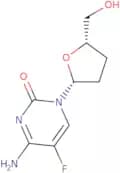
CAS :<p>2’,3’-Dideoxy-5-fluorocytidine is a nucleoside analog that inhibits the growth of tumor cells in animals. It has been shown to inhibit the replication of hepatitis B virus and HIV without affecting normal cell division. 2′,3′-Dideoxy-5-fluorocytidine also has potent antitumor activity against human hematopoietic cells and induces apoptosis.</p>Formule :C9H12FN3O3Degré de pureté :Min. 95%Masse moléculaire :229.21 g/mol2-Benzylthio-6-chloropurine
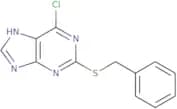
CAS :2-Benzylthio-6-chloropurine is a synthetic nucleoside analogue that is an antiviral agent. It inhibits the synthesis of viral DNA by competitive inhibition of thymidine kinase, which is an enzyme necessary for the conversion of deoxyribonucleotides to their monophosphate form. 2-Benzylthio-6-chloropurine has been found to be effective against herpes simplex virus 1 and 2 (HSV1 and HSV2). The drug is also active against HIV, influenza A virus, and cytomegalovirus.Formule :C15H9CIN4SDegré de pureté :Min. 95%Masse moléculaire :416.24 g/mol3',5'-Di-O-benzoyl-2'-deoxy-2'-fluoro-b-D-arabinocytidine
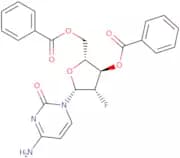
CAS :3',5'-Di-O-benzoyl-2'-deoxy-2'-fluoro-b-D-arabinocytidine is a modified nucleoside that is used as an anticancer agent. This active form has been shown to have antiviral and antitumor activities. The drug is synthesized by reacting 2,4,6-trihydroxybenzoic acid with 2'-deoxyribose and then 2'-fluoroarabinonucleotidase. 3',5'-Di-O-benzoyl-2'-deoxy-2'-fluoro-b-D-arabinocytidine has high purity and high quality, which makes it suitable for use in the synthesis of phosphoramidites.Degré de pureté :Min. 95%4-(2-Methoxyethylamino)-2-(Methylthio)Pyrimidine-5-Carboxylic Acid
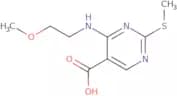
CAS :<p>4-(2-Methoxyethylamino)-2-(methylthio)pyrimidine-5-carboxylic acid (4MEAP) is a novel phosphoramidite that can be used in the synthesis of ribonucleosides and deoxyribonucleosides. 4MEAP has antiviral activity, cytotoxicity, and anticancer properties. It may also have potential as an anti-inflammatory agent due to its ability to inhibit prostaglandin production.</p>Formule :C9H13N3O3SDegré de pureté :Min. 95%Masse moléculaire :243.28 g/molb-Nicotinamide adenine dinucleotide phosphate potassium salt hydrate
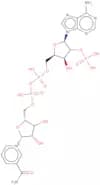
CAS :b-Nicotinamide adenine dinucleotide phosphate potassium salt hydrate is a novel anticancer compound that has been shown to inhibit the growth of cancer cells in vitro. The mechanism of action of b-NADP+ is still unknown, but it may involve the inhibition of ribonucleoside reductase and deoxyribonucleoside reductase. It also inhibits viral DNA synthesis, which can be an effective antiviral drug. b-NADP+ is a nucleotide analogue that is synthesized from diphosphate and monophosphate forms, which are activated by phosphoramidites.Formule :C21H28N7O17P3•K•(H2O)2Degré de pureté :Min. 95%Masse moléculaire :818.5 g/mol7-TFA-ap-7-Deaza-2',3'-dideoxyadenosine
CAS :7-TFA-ap-7-Deaza-2',3'-dideoxyadenosine is a diphosphate nucleoside analogue that can be activated by phosphoramidites. It is a novel, synthetic, and high quality nucleotide with antiviral and anticancer properties. This drug has been shown to inhibit the synthesis of DNA and RNA at the transcriptional level. 7-TFA-ap-7-Deaza-2',3'-dideoxyadenosine is a monophosphate nucleoside analogue that can be used in ribonucleotide synthesis for the treatment of cancer.Formule :C16H16F3N5O3Masse moléculaire :383.33 g/molRef: 3D-J-700297
1gÀ demander50mgÀ demander100mgÀ demander250mgÀ demander500mgÀ demander-Unit-ggÀ demander1,5-Anhydro-3-O-benzoyl-4,6-O-benzylidene-2-deoxy-2-(N6-benzoyladenin-1-yl)-D-altro-hexitol
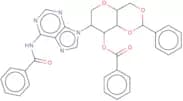
CAS :<p>1,5-Anhydro-3-O-benzoyl-4,6-O-benzylidene-2-deoxy-2-(N6-benzoyladenin-1)-yl)-D-altrohexitol is a novel anticancer and antiviral agent. It is a phosphoramidate nucleotide analog that inhibits viral replication by blocking the synthesis of viral DNA. It also has an inhibitory effect on cancer cells, which may be due to its ability to activate natural killer cells or cytotoxic T lymphocytes.</p>Formule :C32H27N5O6Degré de pureté :Min. 95%Couleur et forme :SolidMasse moléculaire :577.6 g/mol3'-O-tert-Butyldimethylsilyl-2'-deoxy-5'-O-DMT-adenosine
CAS :<p>3'-O-tert-Butyldimethylsilyl-2'-deoxy-5'-O-DMT-adenosine is a nucleoside with a novel chemical structure. It is a deoxyribonucleoside monophosphate, which has antiviral and anticancer properties. 3'-O-tert-Butyldimethylsilyl-2'-deoxy-5'-O-DMT-adenosine inhibits the formation of diphosphate from ATP, which prevents DNA and RNA synthesis in cells. This drug also binds to the enzyme ribonuclease, preventing the breakdown of RNA. The phosphoramidites used for synthesizing 3'-O-tert-Butyldimethylsilyl-2'-deoxy-5'-O-DMT adenosine are of high quality and can be used for making other nucleosides.</p>Formule :C37H45N5O5SiDegré de pureté :Min. 95%Masse moléculaire :667.87 g/molAdenosine-5'-O-diphospho-(1''-(4-nitrophenoxy)-ribose) sodium
CAS :Adenosine-5'-O-diphospho-(1''-(4-nitrophenoxy)-ribose) sodium is a nucleic acid analog that is used in antiviral, anticancer, and gene therapy. It is a modified nucleotide with a phosphoramidite group at the 5' position. The phosphoramidite group is used for the synthesis of DNA or RNA. It has been shown to activate cellular processes such as transcription, translation, and replication in vitro. This compound also inhibits cancer cell growth in vivo and has been shown to be effective against bacterial infections caused by Mycobacterium tuberculosis and Mycobacterium avium complex.Formule :C21H26N6O16P2·xNaDegré de pureté :Min. 95%Masse moléculaire :680.41 g/mol3'-O-Acetyl-5-benzylaminocarbonyl-2'-O-methyl-5'-O-DMT-uridine
<p>3'-O-Acetyl-5-benzylaminocarbonyl-2'-O-methyl-5'-O-DMT-uridine is a novel, modified nucleoside. This product is an activator of the ribonucleotide reductase enzyme and is used as a precursor in the synthesis of deoxyribonucleosides. It has antiviral activity against herpes simplex virus type 1 and cytomegalovirus. It has also been shown to have anticancer properties, as it inhibits DNA synthesis and tumor cell proliferation without affecting healthy cells. 3'-O-Acetyl-5-benzylaminocarbonyl-2'-O-methyl-5'-O-DMT uridine is synthesized from 5-(3,4,5)-trimethoxybenzaldehyde, 2′(2,6 dichloro)amino]methyl]benzeneacetic acid methyl ester and 5</p>Degré de pureté :Min. 95%5-Bromo-2-(2-methoxyethylamino)pyrimidine
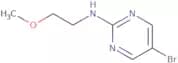
CAS :5-Bromo-2-(2-methoxyethylamino)pyrimidine is a novel, ribonucleoside that exhibits anticancer activity. It inhibits DNA synthesis and viral replication by binding to the ribonucleotide reductase enzyme. 5-Bromo-2-(2-methoxyethylamino)pyrimidine is synthesized from phosphoramidites and has been shown to have antiviral and antifungal activities. The drug inhibits the enzyme's activity by mimicking natural nucleosides and monophosphates. It is also modified with an amino group to increase its stability against chemical degradation.Degré de pureté :Min. 95%4-Chloro-6-imidazol-1-yl-pyrimidine
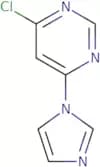
CAS :<p>4-Chloro-6-imidazol-1-yl-pyrimidine is a quaternary ammonium compound that can be used to make antireflection coatings. It has been shown to have a high degree of compatibility with polymers, such as allyl carbonate, which are used in functional groups. 4-Chloro-6-imidazol-1-yl-pyrimidine has also been shown to react with stannous octoate, and the reaction time is dependent on the concentration of both compounds. This molecule has been found to be biodegradable and liquid crystal compositions can be made from it by changing the ratio of molecules to liquid crystals. 4-Chloro-6-imidazol-1-yl pyrimidine reacts with hydroxyl groups in epoxy resins and diolefinic hydrocarbons, forming crosslinks in sealants or coatings. The sealant</p>Formule :C7H5ClN4Degré de pureté :Min. 95%Masse moléculaire :180.59 g/molLamivudine 5'-diphosphate ammonium salt
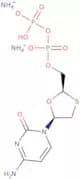
CAS :<p>Lamivudine is a monophosphate antiviral drug that inhibits the synthesis of DNA. It has been shown to inhibit the replication of human immunodeficiency virus-1 (HIV-1) in vitro, and to protect monkeys from simian acquired immune deficiency syndrome (SAIDS). Lamivudine 5'-diphosphate ammonium salt is an antiviral agent that belongs to the group of deoxyribonucleosides. It has been shown to be effective against HIV-1 and SAIDS in animals. The mechanism of action is not fully understood, but it may work by inhibiting viral RNA synthesis or by preventing viral DNA integration into host cell DNA.</p>Formule :C8H19N5O9P2SDegré de pureté :Min. 95%Masse moléculaire :423.28 g/mol1,5-Anhydro-2,3-dideoxy-2-(N6-benzoyladenin-1-yl)-D-glucitol
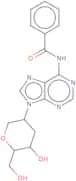
1,5-Anhydro-2,3-dideoxy-2-(N6-benzoyladenin-1-yl)-D-glucitol is a novel modified nucleoside that is used as an activator in the synthesis of oligodeoxynucleotides and ribonucleosides. It is also used for the synthesis of phosphoramidites for DNA and RNA molecules. This product is available in high purity and quality.Formule :C18H19N5O4Degré de pureté :Min. 95%Masse moléculaire :369.38 g/mol