Nucléosides
Les nucléosides sont des building blocks fondamentaux des acides nucléiques, composés d'une base azotée attachée à une molécule de sucre. Dans cette section, vous trouverez une large gamme de nucléosides essentiels pour la recherche en biologie moléculaire, biochimie et pharmacologie. Ces composés jouent des rôles cruciaux dans la synthèse de l'ADN et de l'ARN, et sont également vitaux dans divers processus métaboliques. Les nucléosides sont utilisés pour étudier le matériel génétique, développer des thérapies antivirales et anticancéreuses, et comprendre les mécanismes cellulaires. Chez CymitQuimica, nous proposons des nucléosides de haute qualité pour soutenir vos besoins en recherche et développement, garantissant pureté et fiabilité pour vos applications expérimentales.
3569 produits trouvés pour "Nucléosides"
Trier par
Degré de pureté (%)
0
100
|
0
|
50
|
90
|
95
|
100
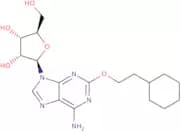
2-(2-Cyclohexylethoxy)adenosine
CAS :<p>2-(2-Cyclohexylethoxy)adenosine (CX-5461) is a new chemical entity that has been shown to have an incremental effect on muscle contraction. The mechanism of action of CX-5461 is not fully understood, but it has been shown to be nonselective and to bind to adenosine receptors. This binding produces a response in the cell similar to that of adenosine, which is a small molecule involved in the regulation of blood pressure and heart rate. CX-5461 also binds with platelet membranes at the site of inflammation and causes vasodilation. It has been shown to be effective in animal models of pertussis, where it reduces the severity of muscle spasms and increases the duration before death. These effects are due to CX-5461's ability to lower intracellular calcium concentrations by preventing calcium release from internal stores or from outside sources such as muscle cells or platelets.</p>Formule :C18H27N5O5Degré de pureté :Min. 95%Masse moléculaire :393.44 g/mol7-Deaza-2'-deoxy-O6-methylguanosine
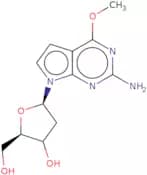
<p>7-Deaza-2'-deoxy-O6-methylguanosine is a novel nucleoside phosphoramidite that is the first of its kind to have been shown to be an antiviral agent. It is also anticancerous and stimulates diphosphate synthesis. 7-Deaza-2'-deoxy-O6-methylguanosine is a highly reactive nucleoside phosphoramidite that reacts with DNA in the same manner as deoxyribonucleotides. The monophosphate form of this compound has been shown to be anticancerous and stimulate diphosphate synthesis. This novel compound has been shown to inhibit replication of human immunodeficiency virus type 1 (HIV-1) in vitro.</p>Formule :C12H16N4O4Degré de pureté :Min. 95%Masse moléculaire :280.28 g/mol7-Deaza-7-iodoguanosine
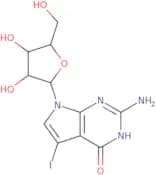
CAS :7-Deaza-7-iodoguanosine is a novel, synthetic nucleoside analog that has antiviral and anticancer activity. It is modified by the addition of a 7-deaza substituent at the 2′ position of the ribose ring. The phosphoramidite form of this compound can be used to synthesize DNA and RNA for use in research and gene therapy. 7-Deaza-7-iodoguanosine may have anticancer activity due to its ability to inhibit protein synthesis by binding to diphosphate kinase, which prevents ATP production and inhibits protein synthesis.Degré de pureté :Min. 95%8-Aza-2'-deoxyadenosine
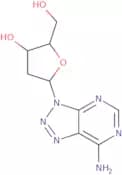
<p>8-Aza-2'-deoxyadenosine is an anion that is cytotoxic to cells and can be activated to form a phosphate ester. It has been shown to have a higher cytotoxicity than adenosine in cell cultures, but is less effective in animal studies. 8-Aza-2'-deoxyadenosine has been shown to have a significant toxicity in rats and mice when administered at doses greater than 500 mg/kg body weight. The activation of 8-aza-2'-deoxyadenosine into the phosphate ester can be stereoselective. This activation has also been shown to cause enhancement of tumor growth inhibition.</p>Degré de pureté :Min. 95%2'-Deoxy-4'-ethynyl-2-fluoroadenosine
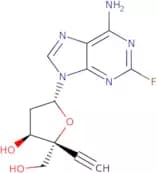
CAS :<p>2'-Deoxy-4'-ethynyl-2-fluoroadenosine (EFdA) is an analog of adenosine. EFdA is a potent inhibitor of HIV replication, and has been shown to be effective against other viruses such as influenza virus, herpes simplex virus, and vesicular stomatitis virus. EFdA was the first nucleoside analog to show antiviral activity in tissue culture against these viruses. This drug also inhibits the synthesis of mitochondrial rRNA and reduces the formation of mitochondrial DNA in human cells by inhibiting mitochondrial DNA polymerase γ. EFdA also prevents the binding of monoclonal antibodies to human B lymphocytes, which may be due to its steric interactions with plasma RNA. This drug is metabolized by cytochrome P450 2C8 and 2C9 into a variety of metabolites that are excreted in urine as glucuronides or sulfates. EFdA has a long</p>Formule :C12H12FN5O3Degré de pureté :Min. 95%Masse moléculaire :293.25 g/mol1-(β-D-Arabinofuranosyl)-5-hydroxymethyluracil
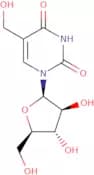
CAS :<p>A hetero-base functionalised ara-nucleoside</p>Formule :C10H14N2O7Degré de pureté :Min. 95%Masse moléculaire :274.23 g/mol4-Chloro-5-iodo-pyrrolo[2,3-d]pyriMidine-7-carboxylic acid tert-butyl ester
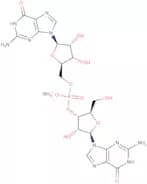
CAS :<p>Focuses is a chemical compound that does not have any known commercial or industrial uses.</p>Degré de pureté :Min. 95%Guanylyl-3',5'-guanosine ammonium salt
CAS :<p>Guanylyl-3',5'-guanosine ammonium salt is a novel antiviral agent that has high antiviral activity against influenza A virus. It is a guanine derivative which has been modified to include an aminopropyl group and an ammonium cation. This compound also acts as an activator for deoxyribonucleosides, nucleotides, and ribonucleosides. Guanylyl-3',5'-guanosine ammonium salt may be used in the manufacture of DNA, RNA, and phosphoramidites. This compound also has anticancer effects by inhibiting the proliferation of tumor cells and inducing apoptosis.</p>Formule :C20H25N10O12P·H3NDegré de pureté :Min. 95%Masse moléculaire :645.48 g/mol5-Methoxyuridine-5'-triphosphate sodium, 100mM aqueous solution
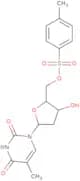
CAS :5-Methoxyuridine-5'-triphosphate is a monophosphate nucleoside that serves as a precursor for the synthesis of 5-methoxyuridine (5MU) and other nucleosides. It has antiviral effects, and is used in the treatment of herpes zoster infection. 5-Methoxyuridine-5'-triphosphate is an analog of uridine and deoxyribonucleosides with antiviral activity, which can be used to treat herpes zoster infection. This drug also has anticancer properties, which may be due to its ability to inhibit DNA synthesis by inhibiting ribonucleotide reductase and DNA polymerase, leading to cell death.Formule :C10H17N2O16P3•NaxDegré de pureté :Min. 95%Couleur et forme :Clear LiquidMasse moléculaire :514.17 g/mol5'-O-Tosylthymidine
CAS :<p>5'-O-Tosylthymidine is a bifunctional reagent that is used in the synthesis of DNA. It is a nucleophilic, inorganic compound that reacts with the electrophilic acrylonitrile group on 5'-hydroxythymidine to form a stable thiophosphate linkage. The reaction takes place stepwise and is catalyzed by an enzyme called DNA polymerase. This product has been used as an antimetabolite in medicine, mainly for treating leukemia.</p>Formule :C17H20N2O7SDegré de pureté :Min. 95%Masse moléculaire :396.42 g/molGuanosine-5'-[(a,beta)-methyleno]triphosphate sodium salt
CAS :<p>Guanosine-5'-[(a,b)-methyleno]triphosphate sodium salt (GpCpp) is a non hydrolyzable nucleoside</p>Degré de pureté :Min. 95%5'-o-DMT-N4-benzoyl-5-methyl-2'-o-methylcytidine 3'-ce phosphoramidite
CAS :<p>5'-O-DMT-N4-benzoyl-5-methyl-2'-O-methylcytidine 3'-ce phosphoramidite is a high purity, diphosphate, CAS No. 166593-57-3, Modified, Anticancer, DNA. It is a novel activator monophosphate that can be used for the synthesis of phosphoramidites for oligonucleotide synthesis and as a novel building block for nucleosides and deoxyribonucleosides. 5'-O-DMT-N4-benzoyl-5-methyl-2'-O-methylcytidine 3'-ce phosphoramidite has been shown to have anticancer activity in vitro. The cytotoxic effect of this compound is mediated by its ability to inhibit DNA replication and induce apoptosis in human leukemia cells.</p>Formule :C48H56N5O9PDegré de pureté :Min. 95%Masse moléculaire :878.00 g/molAdenosine 2',3'-cyclic monophosphate
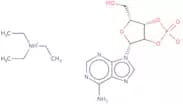
CAS :Adenosine 2',3'-cyclic monophosphate triethylammonium salt (AMP-TEA) is a structural analogue of adenosine. It is a potent inhibitor of protein synthesis by preventing the phosphodiesterase activity of cyclic nucleotide phosphodiesterases and cyclic nucleotide phosphodiesterase. AMP-TEA can be used as a tool to study translation in tissue culture, as well as to examine the effects on protein synthesis and other biochemical reactions that are regulated by cyclic nucleotides. It is also used for the preparation of tissue samples for enzymatic analysis or for radiolabeling experiments. AMP-TEA has an optimum pH of 4.5, but can be used at lower or higher pH values. The optimal temperature range for use is between 0°C and 50°C, with the maximum stability occurring at 37°C.Formule :C10H12N5O6PDegré de pureté :Min. 95%Couleur et forme :PowderMasse moléculaire :329.21 g/molCytidine-5'-O-(1-thiotriphosphate) lithium salt - 100mM aqueous solution
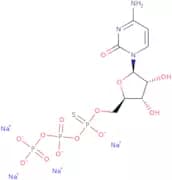
CAS :Cytidine-5'-O-(1-thiotriphosphate) lithium salt is a monophosphate nucleotide analog. It is soluble in water, and is used in the synthesis of DNA and RNA. Cytidine-5'-O-(1-thiotriphosphate) lithium salt has antiviral, anticancer, and anti-inflammatory properties. This compound can be used as an activator for phosphoramidites in the synthesis of DNA or RNA. Cytidine-5'-O-(1-thiotriphosphate) lithium salt is a novel nucleoside that can be used in the synthesis of modified oligonucleotides.Formule :C9H16N3O13P3S·xLiDegré de pureté :Min. 95%Masse moléculaire :499.22 g/mol2'-O-(2-Methoxyethyl)adenosine 5'-α-thiotriphosphate sodium
<p>2'-O-(2-Methoxyethyl)adenosine 5'-a-thiotriphosphate sodium salt is a synthetic nucleoside with antiviral and anticancer properties. It is an analog of adenosine 5'-triphosphate (ATP) in which the ribose sugar has been replaced by a 2'-O-(methoxyethyl) moiety. It has shown to be cytotoxic against cancer cells, and it is a potent activator of human telomerase, the enzyme that synthesizes telomeres at the end of chromosomes. This compound has been shown to have high purity and quality and does not have any CAS numbers assigned to it.</p>Formule :C13H18N5O13P3S·4NaDegré de pureté :Min. 95%Masse moléculaire :669.25 g/mol6-Methyluridine
CAS :<p>Methyluridine is a derivative of uridine that is used in the synthesis of pyrimidine nucleotides. This drug is also an inhibitor of orotidine 5′-monophosphate decarboxylase, which converts orotic acid to uracil. The conformational properties of methyluridine have been studied and found to be similar to those of other purine derivatives, such as adenine and guanine. In addition, methyluridine has been shown to inhibit the growth of typhimurium and increase the production of uracil in human lymphocytes. Methyluridine is metabolized by hydroxylation in liver microsomes, yielding 6-carboxylic acid.</p>Formule :C10H14N2O6Degré de pureté :Min. 95%Couleur et forme :PowderMasse moléculaire :258.23 g/mol1-b-D-Arabinofuranosyluracil 5'-monophosphate
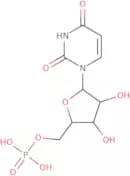
CAS :<p>1-b-D-Arabinofuranosyluracil 5'-monophosphate is a pyrimidine nucleotide analog. Because of its structural similarity to natural nucleotides, it can interact with enzymes involved in nucleic acid synthesis. It is also a metabolite of Ara-U (arabinosyluracil), which is itself a compound studied for its biological activity. Scientists could potentially use this molecule in research to study how cells process and use nucleotides, and to understand how changes in nucleotide structure can affect biological processes.</p>Formule :C9H13N2O9PDegré de pureté :Min. 95%Couleur et forme :PowderMasse moléculaire :324.18 g/mol3-Methyl-8-(2-deoxy-b-D-ribofuranosyl)isoxanthopterin
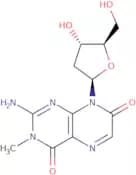
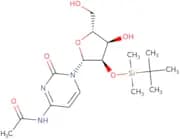
CAS :<p>3-Methyl-8-(2-deoxy-b-D-ribofuranosyl)isoxanthopterin is a nucleoside analog that is used as an activator of phosphoramidite. It can be used as a building block in the synthesis of modified phosphoramidites and it has antiviral, anticancer, and antiinflammatory properties. 3-Methyl-8-(2-deoxy-b-D-ribofuranosyl)isoxanthopterin is a novel nucleoside analog that can be used to synthesize DNA or RNA. It is also an inhibitor of deoxyribonucleoside kinase, preventing the conversion of deoxyribonucleosides into diphosphate monophosphates.</p>Formule :C12H15N5O5Degré de pureté :Min. 95%Couleur et forme :PowderMasse moléculaire :309.28 g/molN4-Acetyl-2'-O-tert-butyldimethylsilylcytidine
CAS :<p>N4-Acetyl-2'-O-tert-butyldimethylsilylcytidine is a novel nucleoside that has been extensively studied for its anticancer and antiviral properties. It is a modified nucleoside that inhibits the production of DNA, RNA, and protein. This product is also used as an activator in the synthesis of oligonucleotides. N4-Acetyl-2'-O-tert-butyldimethylsilylcytidine can be used in vitro to study the effects of different cancer cells on DNA replication. It has been shown to inhibit the growth of human leukemia cells in culture.</p>Formule :C17H29N3O6SiDegré de pureté :Min. 95%Couleur et forme :PowderMasse moléculaire :399.51 g/molN2-Benzoylguanosine
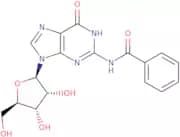
CAS :<p>N2-Benzoylguanosine is a nucleotide derivative that is formed by the acetylation of guanosine. It has been shown to act as a buffer in alkaline solutions and isomerizes to its n-oxide form when heated. N2-Benzoylguanosine reacts with peroxides such as hydrogen peroxide, glyoxal, and organic peroxides, forming hydroperoxide intermediates that can be converted into other products. The acidic hydrolysis of N2-benzoylguanosine yields the corresponding 6-benzoyladenosines. It has been shown to enhance the activity of uridine in inhibiting bacterial growth, while also acting as an inhibitor of viral RNA synthesis. This compound also reacts with nitrous acid to form an n6-benzoyladenosine derivative that inhibits the formation of RNA chains during transcription.</p>Formule :C17H17N5O6Degré de pureté :Min. 95%Couleur et forme :White to beige solid.Masse moléculaire :387.35 g/mol

![4-Chloro-5-iodo-pyrrolo[2,3-d]pyriMidine-7-carboxylic acid tert-butyl ester](/_next/image/?url=https%3A%2Fstatic.cymitquimica.com%2Fproducts%2F3D%2Fthumb-webp%2FNC44293.webp&w=3840&q=75)

![Guanosine-5'-[(a,beta)-methyleno]triphosphate sodium salt](/_next/image/?url=https%3A%2Fstatic.cymitquimica.com%2Fproducts%2F3D%2Fthumb-webp%2FNG171069.webp&w=3840&q=75)