Nucléosides
3569 produits trouvés pour "Nucléosides"
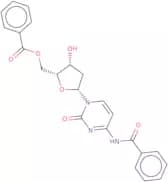
N4-Benzoyl-5'-O-benzoyl-2'-deoxycytidine
CAS :N4-Benzoyl-5'-O-benzoyl-2'-deoxycytidine is a nucleoside monophosphate that is used in the treatment of HIV infection. The antiviral activity of N4-Benzoyl-5'-O-benzoyl-2'-deoxycytidine is due to its ability to inhibit viral DNA synthesis by competing with natural substrates for incorporation into the growing chain. This compound also inhibits cancer cell proliferation and may be useful in the treatment of other forms of cancer. N4-Benzoyl-5'-O-benzoyl-2'-deoxycytidine is synthesized from 2,4,6,-trichlorophenylpiperazine (TCPP) and cyanogen bromide in a two step process using phosphoramidites.Formule :C23H21N3O6Degré de pureté :Min. 95%Masse moléculaire :435.44 g/mol5'-O-p-Anisoyl-N4-benzoyl-3'-fluoro-2',3'-dideoxycytidine
5'-O-p-Anisoyl-N4-benzoyl-3'-fluoro-2',3'-dideoxycytidine is a deoxyribonucleoside that has antiviral, anticancer, and novel properties. It has a CAS No. of 49811-91-7 and a molecular weight of 290.5 g/mol. The chemical formula for 5'-0-p-anisoyl-N4-benzoyl-3'-fluoro-2',3'-dideoxycytidine is C12H14FN2O9. It is synthesized by reacting 2,6-(1H,1'H)-benzoxazinones with 3' -deoxycytidines in the presence of phosphoric acid and anhydrous zinc chloride in methanol at room temperature to form the 5'-0 p anisoyl derivative, which is then reacted withFormule :C24H22FN3O6Degré de pureté :Min. 95%Masse moléculaire :467.45 g/mol6-Amino-4-hydrazino-2-(b-D-ribofuranosyl)-2H-pyrazolo[3,4-d]pyrimidine
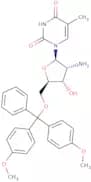
6-Amino-4-hydrazino-2-(b-D-ribofuranosyl)-2H-pyrazolo[3,4-d]pyrimidine is a modified nucleoside which has been shown to be active against HIV and other viruses. It is a phosphoramidate of 2'-deoxyadenosine 5'-monophosphate with an amino group at the 2' position. This compound inhibits the replication of DNA by binding to the enzyme reverse transcriptase and prevents the synthesis of viral DNA. 6-Amino-4-hydrazino-2-(b-D-ribofuranosyl)-2H-pyrazolo[3,4-d]pyrimidine also has anticancer properties, as it inhibits cell proliferation in vitro and in vivo.Degré de pureté :Min. 95%2’-Amino-2’-deoxy-5’-O-DMT-5-methyluridine
CAS :2’-Amino-2’-deoxy-5’-O-DMT-5-methyluridine is a novel nucleoside that has been modified to be phosphorylated on the 5' position. This modification provides the molecule with more stability in vivo and increases its anticancer potential. The synthesis of 2'-amino-2'-deoxy-5'-O-DMT-5 methyluridine is carried out by the conversion of 5'-O-(4,4'-dimethoxytrityl)-N,N-diisopropylphosphoramidite to 5'-O-(4,4'-dimethoxytrityl)-2',3',6'-triisopropylbenzoylphosphate. This compound can also inhibit viral replication by inhibiting dsRNA synthesis and is used to treat patients with chronic hepatitis B virus infection. The molecule has high purity and high quality.Degré de pureté :Min. 95%2',3'-Dideoxy-5-methylcytidine
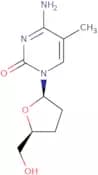
CAS :2',3'-Dideoxy-5-methylcytidine is a synthetic nucleoside analog based on cytidine, a natural building block of DNA and RNA. This molecule is chemically modified to interfere with nucleic acid synthesis, making it a potential tool in antiviral or anticancer therapy, or for studying epigenetics.Formule :C10H15N3O3Degré de pureté :Min. 95%Couleur et forme :PowderMasse moléculaire :225.25 g/molN2,N2,7-Trimethylguanosine
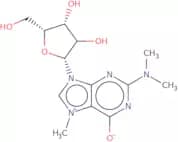
CAS :Trimethylguanosine is a hydrogen-bonded base that is found in the DNA of all living organisms. It has a diagnostic role in cancer and metabolic disorders, as well as in the study of cell culture. Trimethylguanosine can be used to identify cancer cells by measuring its fluorescence properties, which are different from those of healthy cells. This compound also has a role in the diagnosis of metabolic disorders, such as diabetes mellitus and renal disease. Trimethylguanosine is also involved in biological function, and is necessary for the synthesis of proteins and nucleic acids.Formule :C13H20N5O5Degré de pureté :Min. 95 Area-%Couleur et forme :PowderMasse moléculaire :326.33 g/mol2,3'-Anhydro-5'-O-benzoyl-N4-benzoyl-2'-deoxycytidine
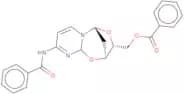
2,3'-Anhydro-5'-O-benzoyl-N4-benzoyl-2'-deoxycytidine is a novel nucleoside analog that has been shown to have anticancer, antiviral and antiretroviral activities. It binds to the ribonucleotide reductase enzyme and inhibits deoxyribonucleoside synthesis in cells. 2,3'-Anhydro-5'-O-benzoyl-N4-benzoyl-2'-deoxycytidine is also an activator of ribonucleotide reductase. This drug has been shown to be effective in treating leukemia, lymphoma, and breast cancer cells.Formule :C23H21N3O5Degré de pureté :Min. 95%Masse moléculaire :419.44 g/mol2'-Deoxy-2'-fluoro-5'-O-trityluridine 3'-CE phosphoramidite
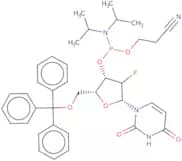
2'-Deoxy-2'-fluoro-5'-O-trityluridine 3'-CE phosphoramidite is a novel, modified nucleoside. It is a monophosphate and can be used as antiviral, activator or diphosphate. It has been shown to inhibit the growth of cancer cells in vitro. 2'-Deoxy-2'-fluoro-5'-O-trityluridine 3'-CE phosphoramidite also has activity against bacterial and viral pathogens and can be used for the synthesis of DNA, RNA, and other oligonucleotide compounds. This product is of high quality and purity with CAS No., Antiviral, Activator, diphosphate, Synthetic, Ribonuclesides, Deoxyribonucleosides.Formule :C37H42FN4O6PDegré de pureté :Min. 95%Masse moléculaire :688.74 g/mol2'-Deoxy-5'-O-DMT-5-iodouridine
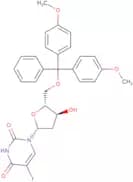
CAS :2'-Deoxy-5'-O-DMT-5-iodouridine is an intercalating agent that binds to DNA and RNA. It can be used as a probe for the detection of specific sequences in human cells. The fluorophore attached to the molecule allows it to be detected by fluorescence microscopy, while the chromophore is responsible for its ability to emit light at a wavelength of 535 nm. 2'-Deoxy-5'-O-DMT-5-iodouridine has been shown to enhance nucleotide excision repair and increase the sensitivity of cancer cells to chemotherapy drugs such as cisplatin. The molecule can also be used as a fluorescent protein marker in her-2 gene amplification and overexpression studies.Formule :C30H29IN2O7Degré de pureté :Min. 95%Couleur et forme :PowderMasse moléculaire :656.48 g/molN6-Benzoyl-2'-deoxy-2'-fluoroadenosine 3'-CE phosphoramidite
N6-Benzoyl-2'-deoxy-2'-fluoroadenosine 3'-CE phosphoramidite is a novel nucleoside that has antiviral and anticancer properties. It is an analog of adenosine and inhibits the action of ribonucleotide reductase, which is an enzyme that converts ribonucleotides to deoxyribonucleotides. N6-Benzoyl-2'-deoxy-2'-fluoroadenosine 3'-CE phosphoramidite also inhibits the synthesis of DNA, which may be due to its inhibition of DNA polymerase. This compound has been shown to inhibit the growth of leukemia cells in culture and induce apoptosis in human tumor cells.
Formule :C47H51FN7O7PDegré de pureté :Min. 95%Masse moléculaire :875.92 g/mol2'-Deoxy-2'-fluoro-5'-O-MMT-uridine 3'-CE phosphoramidite
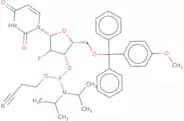
2'-Deoxy-2'-fluoro-5'-O-MMT-uridine 3'-CE phosphoramidite (2'F-5'OMMT-U) is a novel nucleoside analog that has been synthesized as a potential antiviral and anticancer agent. This compound has shown to be effective in inhibiting DNA synthesis and inducing apoptosis of cancer cells. 2'F-5'OMMT-U binds to the viral RNA polymerase, which inhibits the transcription process by preventing the formation of viral mRNA. 2'F-5'OMMT-U also inhibits protein synthesis by binding to the 50S ribosomal subunit, which prevents assembly of the ternary complex with tRNA and mRNA. 2'F-5'OMMT-U is not active against bacterial RNA polymerases or bacterial ribosomes.Formule :C38H44FN4O7PDegré de pureté :Min. 95%Masse moléculaire :718.77 g/mol4-Hydroxy-6-methylpyrimidine
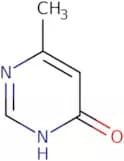
CAS :4-Hydroxy-6-methylpyrimidine (4-OHMP) is a metabolite of trimethyltin. It is formed in the liver by methylation of 4,6-dimethylpyrimidine (4,6-DMPU). The levels of 4-OHMP in urine samples are used to monitor exposure to this agent. The median values for urinary concentrations of 4-OHMP are typically 10 times higher than those found in blood samples. The metabolite can be detected in urine up to 2 weeks after an individual’s last contact with trimethyltin. This compound has been shown to inhibit the synthesis of glycol dimethyl ethers and carbamates.
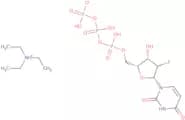
Formule :C5H6N2ODegré de pureté :Min. 95%Masse moléculaire :110.11 g/mol1-(2'-Deoxy-2'-fluoro-b-D-arabinofuranosyl)uracil 5'-triphosphate triethylammonium salt
1-(2'-Deoxy-2'-fluoro-b-D-arabinofuranosyl)uracil 5'-triphosphate triethylammonium salt is an Activator for the synthesis of DNA and RNA. It is a novel synthetic nucleoside that has anticancer activity. 1-(2'-Deoxy-2'-fluoro-b-D-arabinofuranosyl)uracil 5'-triphosphate triethylammonium salt is used as an antiviral agent, inhibiting viral replication by blocking the RNA polymerase enzyme.Formule :C9H13FN2O14P3·C6H16NDegré de pureté :Min. 95%Masse moléculaire :587.32 g/mol2'-O-tert-Butyldimethylsilyladenosine
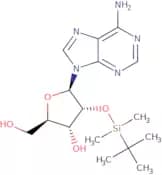
CAS :2'-O-tert-Butyldimethylsilyladenosine is a novel nucleoside. It is an anti-cancer and antiviral agent that is synthesized from ribonucleosides by the phosphoramidite method. 2'-O-tert-Butyldimethylsilyladenosine has been shown to be active against DNA polymerases, RNA polymerases, and enveloped viruses. This drug also inhibits cell proliferation in a variety of human tumor cells in vitro. 2'-O-tert-Butyldimethylsilyladenosine has been shown to exhibit anticancer activity by interfering with DNA synthesis and preventing the replication of damaged cells.Degré de pureté :Min. 95%Adenosine-5'-O-(1-thiotriphosphate) lithium salt - 100 mM aqueous solution
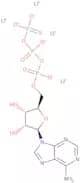
CAS :Adenosine-5'-O-(1-thiotriphosphate) lithium salt is an inhibitor of the guanine nucleotide-binding protein that is reversibly inhibited by adenosine triphosphate. It has been shown to inhibit HIV infection by binding to the Ryanodine receptor and blocking the release of calcium ions from intracellular stores. This prevents the activation of caspases, which are enzymes that cause cell lysis. Adenosine-5'-O-(1-thiotriphosphate) lithium salt also blocks transcription and polymerase chain reactions, and may inhibit the growth of cancer cells by inhibiting epidermal growth factor receptors on the cell surface.Formule :C10H12Li4N5O12P3SDegré de pureté :Min. 95%Couleur et forme :PowderMasse moléculaire :546.98 g/molb-Nicotinamide adenine dinucleotide phosphate
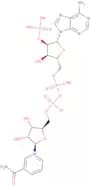
CAS :Coenzyme and regenerating electron donor in catabolic processesFormule :C21H28N7O17P3Degré de pureté :Min. 80 Area-%Couleur et forme :Off-White PowderMasse moléculaire :743.41 g/molN1-Methylguanosine
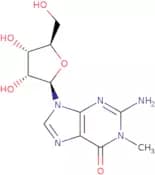
CAS :Produit contrôléN1-Methylguanosine is a methylated nucleotide that is incorporated into the growing DNA chain during protein synthesis. The incorporation of N1-methylguanosine into the growing DNA chain can cause frameshifting, which creates an unusual amino acid sequence. This effect has been shown in model organisms, such as Saccharomyces cerevisiae and Escherichia coli. In these organisms, N1-methylguanosine has been shown to induce cancer when added to the growth medium. It is also found in urine samples from people with bladder cancer and has been used to identify urinary tract cancers. Titration calorimetry studies have shown that N1-methylguanosine binds to a chelate ligand and forms a disulfide bond with cysteine residues on proteins or peptides, which may lead to mitochondrial dysfunction by interfering with hydrogen bonding interactions. Messenger RNA studies show that N1-methylguanosine inhibits translation of mRNA by binding to
Formule :C11H15N5O5Degré de pureté :Min. 95%Couleur et forme :White PowderMasse moléculaire :297.27 g/mol3’-Azido-3’-deoxy-b-L-adenosine
CAS :3’-Azido-3’-deoxy-b-L-adenosine is a novel nucleoside that has been synthesized to be used as an antiviral agent. It is phosphorylated, which allows it to be activated by adenosine kinase, and is thus able to inhibit viral replication and spread. 3’-Azido-3’-deoxy-b-L-adenosine is effective against various viruses, including HIV, herpes simplex virus type 1 (HSV1), and hepatitis C virus (HCV). This nucleoside also has anticancer activity due to its ability to inhibit the synthesis of DNA and RNA. It has been modified from the natural nucleosides with the addition of a 2′,3′ azido group at the 3 position on the ribose sugar. The modification prevents viral resistance because it does not require activation by cellular kinases or phosphorylation in order to be active.Degré de pureté :Min. 95%2'-Deoxyadenosine 3'-O-L-valinyl ester
2'-Deoxyadenosine 3'-O-L-valinyl ester is a novel nucleoside phosphoramidite that is synthesized by activating the 2'-deoxyribose phosphate with an L-valyl chloride. This synthetic nucleoside analog can be used as a substitute for dATP in DNA synthesis and has antiviral as well as anticancer activities.Degré de pureté :Min. 95%5'-O-tert-Butyldimethsilyl-2'-Deoxy-N2-isobutyrylguanosine 3'-CE phosphoramidite
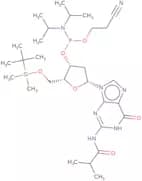
5'-O-tert-Butyldimethsilyl-2'-Deoxy-N2-isobutyrylguanosine 3'-CE phosphoramidite is a novel nucleoside analog with antiviral and anticancer properties. It is a modified nucleoside that is synthesized by reacting 5'-O-tert-butyldimethylsilyl guanosine with 2'-deoxyisobutyryl chloride in the presence of triethylamine. The resulting 5'-O-tert-butyldimethylsilyl-2'-deoxyisobutyrylguanosine 3'-CE phosphoramidite has been shown to be cytotoxic to tumor cells without affecting normal cells.Formule :C29H50N7O6PSiDegré de pureté :Min. 95%Masse moléculaire :651.82 g/mol


![6-Amino-4-hydrazino-2-(b-D-ribofuranosyl)-2H-pyrazolo[3,4-d]pyrimidine](/_next/image/?url=https%3A%2Fstatic.cymitquimica.com%2Fproducts%2F3D%2Fthumb-webp%2FNA162981.webp&w=3840&q=75)