Toxines
134 produits trouvés pour "Toxines"
Zearalanone
CAS :Zearalanone is a mycotoxin that is produced by certain species of the Fusarium fungi. This compound is structurally related to the known mycotoxin zearalenone, and it exhibits similar functionalities. It is primarily found in grains such as maize, barley, oats, wheat, and rice that have been contaminated by these fungi. The mode of action of zearalanone involves its mimicry of estrogenic activity. It binds to estrogen receptors in various tissues, disrupting normal endocrine functions. This disruption can have significant implications in both human and animal health, leading to reproductive issues and developmental anomalies.
Degré de pureté :Min. 95%Enniatin B1
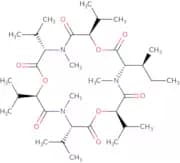
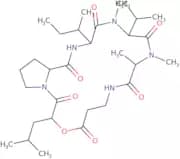
CAS :Enniatin B1 is a cyclic depsipeptide, which is a type of mycotoxin produced by certain species of Fusarium fungi. It is characterized by its unique structural composition that includes alternating N-methylamino and hydroxy acid residues, forming a cyclic hexadepsipeptide. The source of Enniatin B1 primarily encompasses various Fusarium species, known for their ubiquitous presence in agricultural environments and propensity to contaminate cereal crops.
Degré de pureté :Min. 95%Enniatin A1
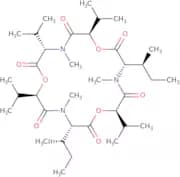
CAS :Enniatin A1 is a cyclic hexadepsipeptide, which is a secondary metabolite produced by various Fusarium species. This compound is primarily derived from Fusarium fungi and exhibits notable bioactivity due to its ionophoric properties. The mode of action involves its ability to disrupt ion gradients across cellular membranes. Enniatin A1 functions by forming complexes with cations, particularly alkali and alkaline earth metal ions, facilitating their transport across lipid membranes and ultimately perturbing cellular homeostasis.
Degré de pureté :Min. 95%Enniatin A
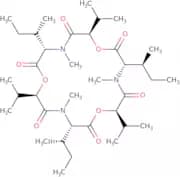
CAS :Enniatin A is a cyclic depsipeptide, which is a secondary metabolite produced by certain Fusarium fungi. It functions as an ionophore, facilitating the transport of ions across cellular membranes. This activity stems from its ability to form complexes with metallic cations, disrupting ion gradients and membrane potential. As a result, Enniatin A can affect various cellular processes, including signal transduction and energy metabolism.Degré de pureté :Min. 95%Picrotoxinin
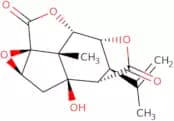
CAS :Picrotoxinin is a sesquiterpene lactone, which is a naturally occurring compound derived from the seeds of plants in the Annonaceae family, specifically the species Anamirta cocculus. This compound plays a critical role as a non-competitive antagonist at the GABA_A receptor, interfering with the inhibitory effects of gamma-aminobutyric acid (GABA) in the central nervous system by blocking the associated chloride ion channel.
Formule :C15H16O6Degré de pureté :Min. 95%Couleur et forme :PowderMasse moléculaire :292.28 g/molOuabain octahydrate
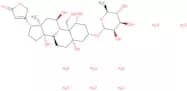
CAS :Na+/K+-ATPase inhibitor
Formule :C29H44O12·8H2ODegré de pureté :Min. 95%Couleur et forme :White PowderMasse moléculaire :728.77 g/molD-Tubocurarine chloride
CAS :D-Tubocurarine chloride is a neuromuscular blocking agent, which is a naturally occurring alkaloid derived from the bark and stems of Chondrodendron tomentosum, a plant native to South America. This compound functions by competitively binding to nicotinic acetylcholine receptors at the neuromuscular junction, inhibiting acetylcholine from transmitting nerve impulses to muscles. The result is skeletal muscle relaxation, which is crucial during surgical procedures where muscle paralysis is required for intubation or to ensure the absence of movement.
Formule :C37H42Cl2N2O6Degré de pureté :Min. 95%Couleur et forme :PowderMasse moléculaire :681.64 g/molAltertoxin l
CAS :Altertoxin I is a mycotoxin, which is a type of toxic secondary metabolite produced by mold. It is synthesized by certain species of the *Alternaria* genus, commonly found in agricultural environments. This toxin belongs to the perylenequinone class of chemical compounds and is characterized by its potent toxicological effects on both plant and animal cells.
Degré de pureté :Min. 95%KT5720
CAS :KT5720 is a selective protein kinase A (PKA) inhibitor, which is a synthetic chemical compound often utilized in laboratory research. The source of this compound stems from chemical synthesis processes used to investigate intracellular signaling pathways. Its mode of action involves competitive inhibition, where it binds to the ATP-binding site on the PKA enzyme, thereby obstructing the enzyme's activity and preventing the phosphorylation of target substrates.
Formule :C32H31N3O5Degré de pureté :Min. 98 Area-%Couleur et forme :PowderMasse moléculaire :537.61 g/molDestruxin B
CAS :Destruxin B is a mycotoxin, which is a secondary metabolite derived from the fungus *Metarhizium anisopliae*. This compound acts as an insecticidal agent by disrupting calcium homeostasis in target insects, leading to paralysis and eventually death.
Degré de pureté :Min. 95%Aflatoxicol
CAS :Aflatoxicol is a derivative of aflatoxin, which is a type of mycotoxin. It is derived from the biochemical transformation of aflatoxins, predominantly by metabolic reduction, often sourced from specific fungi such as *Aspergillus flavus* and *Aspergillus parasiticus*. The mode of action of aflatoxicol involves its interaction with cellular macromolecules, causing disruption and potentially leading to toxic effects, similar to its parent compound. It is known to cause DNA adduct formation, ultimately interfering with genetic integrity.
Degré de pureté :Min. 95%Altenuene
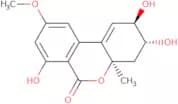
CAS :Altenuene is a mycotoxin, which is a secondary metabolite produced by fungi, primarily belonging to the genus Alternaria. It is typically derived from fungal cultures that grow on plant material, especially in agricultural settings. Altenuene’s mode of action involves interacting with cellular components to disrupt normal cell function, demonstrating notable antifungal and phytotoxic effects.
Degré de pureté :Min. 95%Hirudin from leeches
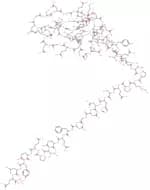
CAS :Hirudin is a potent anticoagulant protein, which is a naturally occurring compound sourced from the salivary glands of medicinal leeches, specifically *Hirudo medicinalis*. It functions by directly inhibiting thrombin, a key enzyme in the blood coagulation process, thereby preventing fibrin formation and subsequent clot development. Hirudin achieves its effects by binding to both the active site and the exosite of thrombin, effectively neutralizing its coagulative activity.
Formule :C287H440N80O110S6Degré de pureté :Min. 95%Masse moléculaire :6 g/mol15Acetoxyscirpenol
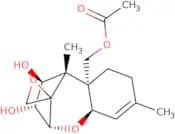
CAS :15Acetoxyscirpenol is a trichothecene mycotoxin, which is a secondary metabolite produced by certain species of fungi, particularly those within the Fusarium genus. This compound acts by inhibiting protein synthesis through its interaction with the ribosome, leading to cytotoxic effects on eukaryotic cells. This mode of action makes 15Acetoxyscirpenol a potent inhibitor of cellular proliferation, and it is often used in scientific research to investigate the mechanisms behind cell cycle regulation, apoptosis, and other cellular processes.
Formule :C17H24O5Degré de pureté :Min. 95%Masse moléculaire :324.37 g/mol