Source botanique
La catégorie des Sources Botaniques englobe une large gamme de composés et d'extraits dérivés de plantes utilisés dans la recherche et le développement de produits. Ces sources botaniques incluent diverses herbes, arbres et arbustes qui fournissent des composés bioactifs pour une utilisation dans les produits pharmaceutiques, cosmétiques et compléments nutritionnels. Chez CymitQuimica, nous offrons une sélection complète de sources botaniques pour soutenir la recherche en chimie des produits naturels, pharmacologie et médecine traditionnelle.
1459 produits trouvés pour "Source botanique"
Trier par
Degré de pureté (%)
0
100
|
0
|
50
|
90
|
95
|
100
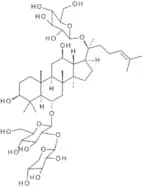
Notoginsenoside R1
CAS :<p>Notoginsenoside R1 is a saponin compound, which is a key bioactive ingredient derived from the roots of Panax notoginseng, a well-known traditional medicinal plant. This product is renowned for its diverse pharmacological activities, particularly its anti-inflammatory and antioxidant effects. The mode of action of Notoginsenoside R1 involves modulating various signaling pathways, including the NF-κB and MAPK pathways, which are pivotal in regulating the body's inflammatory response. Additionally, it exhibits the ability to scavenge free radicals, contributing to its antioxidative properties.</p>Formule :C47H80O18Degré de pureté :Min. 95%Couleur et forme :White PowderMasse moléculaire :933.15 g/molVitexin-2-O-rhamnoside
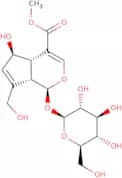
CAS :<p>Vitexin-2-O-rhamnoside is a naturally occurring flavonoid glycoside, which is primarily sourced from various medicinal plants, including certain species within the plant family Lamiaceae. This compound is known for its unique molecular structure, where the flavonoid vitexin is bound to a rhamnose sugar moiety at the 2-O position. Its mode of action involves antioxidative, anti-inflammatory, and potential cardioprotective properties, which are attributed to its ability to modulate signaling pathways, scavenge free radicals, and inhibit pro-inflammatory mediators.</p>Formule :C27H30O14Degré de pureté :Min. 95%Couleur et forme :Yellow PowderMasse moléculaire :578.52 g/molScandoside methyl ester
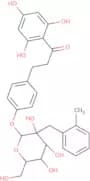
CAS :<p>Scandoside methyl ester is a naturally occurring iridoid glycoside derivative, which is typically isolated from certain plant species, particularly those in the genus Scrophularia. This compound is part of a class of secondary metabolites known for their diverse biological activities. Its mechanism of action is often linked to its ability to interact with various biological pathways, including those involved in anti-inflammatory and antioxidant responses. Researchers have explored its potential to inhibit specific enzymes and modulate signaling pathways.</p>Formule :C17H24O11Degré de pureté :Min. 95%Couleur et forme :PowderMasse moléculaire :404.37 g/molPhloretin 2'-O-xylosyl-glucoside
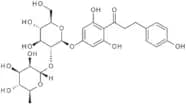
CAS :<p>Phloretin 2'-O-xylosyl-glucoside is a natural glycoside compound, which is derived from the xylosylation and glucosylation of phloretin, commonly found in certain fruits like apples. It is a biochemical derivative formed through enzymatic reactions involving specific glycosyltransferases in plant tissues. The mode of action of this compound primarily involves its antioxidant properties, where it serves to neutralize free radicals and reduce oxidative stress within biological systems.</p>Formule :C26H32O14Degré de pureté :Min. 95%Masse moléculaire :568.52 g/molMomordin 2e
CAS :<p>Momordin 2e is a cucurbitane triterpenoid compound, which is derived from natural plant sources, particularly within the gourd family, Cucurbitaceae. This product has garnered attention due to its bioactive properties, primarily identified in plants such as bitter melon (Momordica charantia).</p>Formule :C52H82O22Degré de pureté :Min. 95%Masse moléculaire :1,059.19 g/molNaringin dihydrochalcone
CAS :<p>Naringin dihydrochalcone, sometimes abbreviated to naringin DC, is an artificial sweetener derived from naringin, a bitter compound found in citrus. Naringin dihydrochalcone is a phloretin glycoside, 500 - 700 times sweeter than sucrose.</p>Formule :C27H34O14Degré de pureté :Min. 95%Couleur et forme :White PowderMasse moléculaire :582.55 g/molRebaudioside I
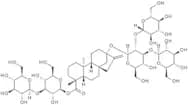
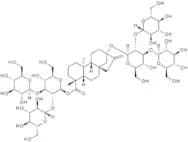
CAS :<p>Rebaudioside I is a steviol glycoside, which is a high-intensity sweetener derived from the leaves of the Stevia rebaudiana plant. As a natural compound, it is extracted and purified through a water or alcohol-based process from the plant’s leaves, which have been traditionally used for their sweetening properties.</p>Formule :C50H80O28Degré de pureté :Min. 95%Couleur et forme :White PowderMasse moléculaire :1,129.15 g/molRebaudioside M
CAS :<p>Rebaudioside M is a high-potency sweetener, which is derived from the Stevia rebaudiana plant. It is one of the glycosides found in the leaves of this plant, often extracted and purified for use in a variety of applications. The mode of action for Rebaudioside M involves interacting with taste receptors on the tongue to produce a sweet sensation, without contributing calories or affecting blood glucose levels. This makes it particularly appealing for use in low-calorie and diabetic-friendly products.</p>Formule :C56H90O33Degré de pureté :Min. 95%Couleur et forme :White PowderMasse moléculaire :1,291.29 g/molNaringin 4'-O-glucoside
<p>Naringin 4'-O-glucoside is a flavonoid glucoside, which is a metabolite derived from citrus fruits, particularly grapefruit. It is characterized by the attachment of a glucose molecule to the naringin flavonoid structure, which enhances its water solubility and absorption in biological systems.</p>Formule :C33H42O19Degré de pureté :Min. 95%Masse moléculaire :742.68 g/molStevioside - min 75%
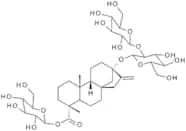
CAS :<p>Stevioside - min 75% is a high-purity glycoside compound that functions as a natural sweetener. It is derived from the leaves of the Stevia rebaudiana plant, a member of the Asteraceae family, which is native to Paraguay and Brazil. This compound works by interacting with the sweet receptors on the tongue, specifically the TAS1R2 and TAS1R3 receptors, to provide a sweet taste sensation that is several hundred times sweeter than sucrose, without contributing to caloric intake.</p>Formule :C38H60O18Degré de pureté :(%) Min. 75%Couleur et forme :White PowderMasse moléculaire :804.87 g/molGinsenoside Rg6
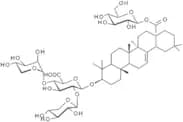
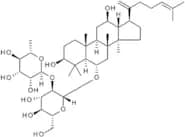
CAS :<p>Ginsenoside Rg6 is a saponin compound, which is a naturally occurring glycoside found in the plant species Panax ginseng. Ginsenosides are the active pharmacological components of ginseng, recognized for their diverse bioactive properties. Ginsenoside Rg6 specifically acts by modulating multiple signaling pathways, exhibiting effects such as anti-inflammatory and antioxidant actions. It interacts with cellular mechanisms to inhibit the production of pro-inflammatory cytokines and reactive oxygen species.</p>Formule :C42H70O12Degré de pureté :Min. 95%Couleur et forme :White PowderMasse moléculaire :767 g/molJujuboside B
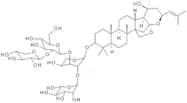
CAS :<p>Jujuboside B is a bioactive compound, which is a triterpenoid saponin derived from the seeds of Ziziphus jujuba, known as the jujube plant. This compound is primarily found in the plant’s seeds and is extracted using various chromatography techniques. Jujuboside B exhibits its mode of action through modulation of neurotransmitter systems and antioxidative defense mechanisms, which contribute to its neuroprotective and anxiolytic effects. Additionally, it influences the GABAergic system, enhancing gamma-aminobutyric acid (GABA) neurotransmission.</p>Formule :C52H84O21Degré de pureté :Min. 95%Couleur et forme :PowderMasse moléculaire :1,045.21 g/molGinsenoside Rb3
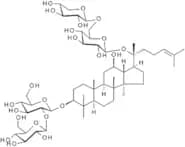
CAS :<p>Ginsenoside Rb3 is a natural saponin compound, which is a type of ginsenoside derived from the root of Panax ginseng. The source of Ginsenoside Rb3, Panax ginseng, is a perennial plant widely utilized in traditional medicine for its pharmacological properties.</p>Formule :C53H90O22Degré de pureté :Min. 95%Couleur et forme :PowderMasse moléculaire :1,079.27 g/molHederacoside C
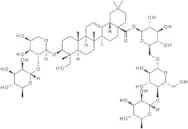
CAS :<p>Hederacoside C is a bioactive triterpenoid saponin, which is isolated from the leaves of the common ivy plant, *Hedera helix*. These saponins have been a subject of scientific study due to their significant pharmacological properties. The mode of action of Hederacoside C involves its ability to reduce the viscosity of mucus, facilitating its expulsion from the respiratory tract. This is achieved through its expectorant properties, which stimulate bronchial secretions and improve mucociliary clearance, making it particularly valuable in the treatment of respiratory disorders.</p>Formule :C59H96O26Degré de pureté :Min. 98 Area-%Couleur et forme :PowderMasse moléculaire :1,221.38 g/molHydroxysafflor yellow A
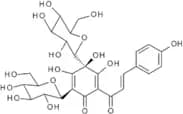
CAS :<p>Anti-inflammatory; antioxidant; anti-cancer agent; neuroprotective</p>Formule :C27H32O16Degré de pureté :Min. 95%Couleur et forme :PowderMasse moléculaire :612.53 g/molMomordin 1e
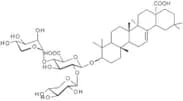
CAS :<p>Momordin 1e is a triterpenoid saponin, which is an active biological compound, derived from the plant species Momordica charantia, commonly known as bitter melon. This compound is sourced primarily from the seeds and fruit of the plant and is known for its diverse biochemical activities. The mode of action of Momordin 1e involves the inhibition of viral replication, making it a subject of interest in antiviral research. It is hypothesized to disrupt viral RNA synthesis, which prevents the proliferation of the virus within host cells.</p>Formule :C46H72O17Degré de pureté :Min. 95%Masse moléculaire :897.05 g/molPlantamajoside
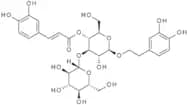
CAS :<p>Plantamajoside is a phenylethanoid glycoside isolated primarily from Plantago asiatica, which is a perennial herb known for its pharmacological benefits. This compound functions through its anti-inflammatory and antioxidant properties, effectively modulating pathways such as the NF-κB signaling and scavenging reactive oxygen species (ROS). These mechanisms contribute to its potential therapeutic effects in managing inflammation and oxidative stress-related conditions.</p>Formule :C29H36O16Degré de pureté :Min. 95%Couleur et forme :PowderMasse moléculaire :640.59 g/molGlycyrrhizin monoammonium
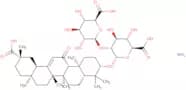
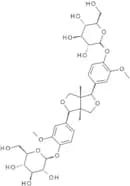
CAS :<p>Glycyrrhizin is a natural triterpenoid and the main active ingredient of licorice. In humans, the main side effects are increasing blood pressure (hypertension) and of enhancing the risk of hypokalemia-induced disorders, i.e. caused by low potassium levels in blood (Omar, 2012). Used as a flavouring agent, glycyrrhizin is the triterpenoid compound behind the sweet taste of licorice. Glycyrrhizin is naturally present at concentrations up to 25% in the roots of the Glycyrrhiza glabra. In mice, rats, and human cancer cell lines, glycyrrhizin is an antioxidant and a DNA-protective agent with additional, multiple anticancer activities.</p>Formule :C42H65NO16Degré de pureté :Min. 95%Couleur et forme :PowderMasse moléculaire :839.96 g/molPinoresinol diglucopyranoside
CAS :<p>Pinoresinol diglucopyranoside is a lignan glycoside, which is a type of polyphenolic compound. It is predominantly sourced from various plant species, including flaxseeds, sesame seeds, and olives. This compound is distinguished by its intricate glycosidic linkages, which play a crucial role in its biological activity.</p>Formule :C32H42O16Degré de pureté :Min. 95%Couleur et forme :White PowderMasse moléculaire :682.67 g/mol20-(S)-Ginsenoside F2
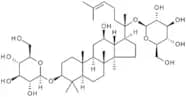
CAS :<p>20-(S)-Ginsenoside F2 is a bioactive compound isolated from the roots of Panax ginseng, a plant renowned for its diverse pharmacological properties. As a saponin glycoside, it is derived through the enzymatic hydrolysis of major ginsenosides like Rb1. The compound functions primarily through modulating various cellular pathways, including apoptosis, autophagy, and inflammation via its interaction with membrane receptors and intracellular signaling molecules.</p>Formule :C42H72O13Degré de pureté :Min. 95%Couleur et forme :White PowderMasse moléculaire :785.01 g/mol