Peptides
Les peptides sont des chaînes courtes d'acides aminés liées par des liaisons peptidiques, jouant un rôle essentiel en tant que molécules biologiques dans divers processus cellulaires. Ils fonctionnent comme hormones, neurotransmetteurs et molécules de signalisation, et sont largement utilisés dans les applications thérapeutiques et diagnostiques. Les peptides sont également cruciaux dans la recherche pour étudier les interactions protéiques, les activités enzymatiques et les voies de signalisation cellulaire. Chez CymitQuimica, nous proposons une large sélection de peptides de haute qualité pour soutenir vos besoins en recherche et développement en biotechnologie et en pharmacie.
Sous-catégories appartenant à la catégorie "Peptides"
30306 produits trouvés pour "Peptides"
Trier par
Degré de pureté (%)
0
100
|
0
|
50
|
90
|
95
|
100
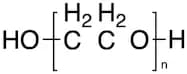
Poly(ethylene Glycol) ~20000
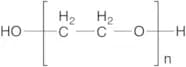
CAS :Produit contrôlé<p>Stability Hygroscopic<br>Applications Poly(ethylene Glycol) molecules of an average molecular mass of 20000. Poly(ethylene Glycol) is used in various applications from industrial chemistry to biological chemistry. Recent research has shown PEG maintains the ability to aid the spinal cord injury recovery process, helping the nerve impulse conduction process in animals. In rats, it has been shown to aid in the repair of severed sciatic axons, helping with nerve damage recovery. It is industrially produced as a lubricating substance for various surfaces to reduce friction. PEG is also used in the preparation of vesicle transport systems in with application towards diagnostic procedures or drug delivery methods.<br>References Borgens, R. et al.: J. Neurosci. Res., 66, 1179 (2001); Stavisky, R. et al.: Neurosci. Lett., 376, 98 (2005); Nalam, P. et al.: Tribiol. Lett., 37, 541 (2010); Steinmetz, N. et al.: J. Am. Chem. Soc., 131, 17093 (2009); Li, X. et al.: J. Am. Chem. Soc., 133, 11147 (2011); Li, L. et al.: Int. J. Pharm., 447, 192 (2013);<br></p>Formule :H2O(C2H4O)nCouleur et forme :Off-WhiteMasse moléculaire :62.07TCEP Hydrochloride
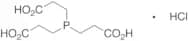
CAS :<p>Applications Biochemical tool for selective reduction of disulfide bridges at low pH; reductant for redox assay.<br> Not a dangerous good if item is equal to or less than 1g/ml and there is less than 100g/ml in the package<br>References Neuburger, M., et al.: Eur. J. Biochem., 267, 2882 (2000), Krijt, J., et al.: Clin. Chem., 47, 1821 (2001), Yen, T.-Y., et al.: J. Mass Spectrom., 37, 15 (2002),<br></p>Formule :C9H15O6P·ClHCouleur et forme :NeatMasse moléculaire :286.65Arg-Gly-Asp-Ser
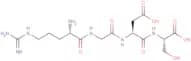
CAS :Arg-Gly-Asp-Ser (RGDS peptide) is a conserved tetrapeptide sequence found in fibronectin, and the von Willebrand factor.Formule :C15H27N7O8Degré de pureté :98.29%Couleur et forme :SolidMasse moléculaire :433.42TCEP Hydrochloride (0.5M in water)
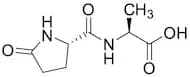
CAS :Produit contrôléFormule :C9H15O6P·ClHCouleur et forme :ColourlessMasse moléculaire :286.65L-Pyroglutamyl-L-alanine
CAS :Produit contrôléFormule :C8H12N2O4Couleur et forme :NeatMasse moléculaire :200.192N-Boc-L-proline
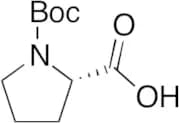
CAS :Produit contrôlé<p>Applications N-Boc-L-proline is a useful synthetic intermediate. It is used to synthesize Daclatasvir (D101500) which nhibits the HCV protein NS5A. Daclatasvir (D101500) can be used as a drug candidate for the treatment of hepatitis C (HCV).<br>References Gao, M., et al.: Nature, 465(7294), 96 (2010); Bell, T. W., Chem. Med. Chem., 5(10), 1663 (2010);<br></p>Formule :C10H17NO4Couleur et forme :NeatMasse moléculaire :215.25MG-101 (ALLN)
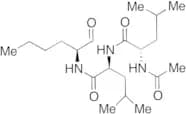
CAS :Produit contrôlé<p>Applications MG-101 (ALLN) is a potent inhibitor of cysteine proteases including caplains and cathespins. Used in the treatment of genotoxic agents or replication stress of cells. Neuroprotective product.<br>References Wang, H. et al.: Biochem., 54, 5781 (2015); Fukunaga, Y. et al.: Neurosci. Res., 101, 6 (2014);<br></p>Formule :C20H37N3O4Couleur et forme :NeatMasse moléculaire :383.53Actinomycin D (Dactinomycin)
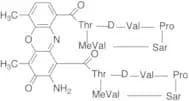
CAS :Produit contrôlé<p>Applications Antibiotic substance belonging to the actinomycin complex, produced by several Streptomyces spp. Antineoplastic.<br> Not a dangerous good if item is equal to or less than 1g/ml and there is less than 100g/ml in the package<br>References Manaker, et al.: Antibiot. Ann., 55, 853 (1954), Jain, S., et al.: J. Mol. Biol., 114, 317 (1977), Nakajima, K., et al.: Pept. Chem., 19, 143 (1981), Shereda, R., et al.: J. Biol. Chem., 282, 19247 (2007),<br></p>Formule :C62H86N12O16Couleur et forme :RedMasse moléculaire :1255.42N-Glycylproline
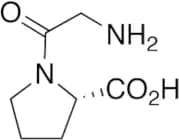
CAS :<p>Applications N-Glycylproline was found to exhibit anti-ischemic effects on the metabolism of neuroactive amino acids and indices of energy turnover in the neocortex of rats after experimental brain ischemia.<br>References Bashun, Z.N., et al.: Neurochem. J., 7, 39 (2013);<br></p>Formule :C7H12N2O3Couleur et forme :NeatMasse moléculaire :172.182Fmoc-His-OH
CAS :Fmoc-His-OH (FMOC-L-Histidine) is a histidine derivative and a common material for peptide synthesis.Formule :C21H19N3O4Degré de pureté :98.38% - 99.82%Couleur et forme :SolidMasse moléculaire :377.39Poly(ethylene Glycol) ~200
CAS :Produit contrôlé<p>Applications Poly(ethylene Glycol) molecules of an average molecular mass of 200. Poly(ethylene Glycol) is used in various applications from industrial chemistry to biological chemistry. Recent research has shown PEG maintains the ability to aid the spinal cord injury recovery process, helping the nerve impulse conduction process in animals. In rats, it has been shown to aid in the repair of severed sciatic axons, helping with nerve damage recovery. It is industrially produced as a lubricating substance for various surfaces to reduce friction. PEG is also used in the preparation of vesicle transport systems in with application towards diagnostic procedures or drug delivery methods.<br>References Borgens, R. et al.: J. Neurosci. Res., 66, 1179 (2001); Stavisky, R. et al.: Neurosci. Lett., 376, 98 (2005); Nalam, P. et al.: Tribiol. Lett., 37, 541 (2010); Steinmetz, N. et al.: J. Am. Chem. Soc., 131, 17093 (2009); Li, X. et al.: J. Am. Chem. Soc., 133, 11147 (2011); Li, L. et al.: Int. J. Pharm., 447, 192 (2013);<br></p>Formule :H2O(C2H4O)nCouleur et forme :ColourlessMasse moléculaire :62.07CY5-SE
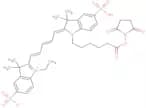
CAS :CY5-SE (Cy5 NHS Ester) is a reactive dye used to label amino groups in peptides, proteins, and nucleotides.Formule :C37H43N3O10S2Degré de pureté :99.56%Couleur et forme :SolidMasse moléculaire :753.88Benzotriazol-1-yl-oxytripyrrolidinphosphonium Hexafluorophosphate
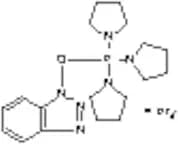
CAS :Produit contrôlé<p>Applications Benzotriazol-1-yl-oxytripyrrolidinphosphonium Hexafluorophosphate (cas# 128625-52-5) is a compound useful in organic synthesis.<br></p>Formule :C18H28N6OP·F6PCouleur et forme :NeatMasse moléculaire :520.39Fmoc N-Hydroxysuccinimide Ester
CAS :<p>Stability Moisture Sensitive<br>Applications Used in conjunction with Isothiocyanate to conduct partial Edman Degradation on biologically active peptides.<br> Not a dangerous good if item is equal to or less than 1g/ml and there is less than 100g/ml in the package<br>References Heidenreich, O., et al.: J. Biol. Chem., 269, 2131 (1994), Kothe, U., et al.: Anal. Biochem., 356, 148 (2006), Thakkar, A., et al.: Anal. Chem., 78, 5935 (2006),<br></p>Formule :C19H15NO5Couleur et forme :NeatMasse moléculaire :337.33γ-L-Glutamyl L-Glutamic Acid
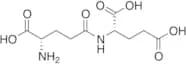
CAS :Produit contrôlé<p>Applications H-GAMMA-GLU-GLU-OH (cas# 1116-22-9) is a useful research chemical.<br></p>Formule :C10H16N2O7Couleur et forme :NeatMasse moléculaire :276.24L-γ-Glutamyl-L-valine
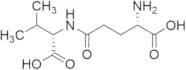
CAS :<p>Applications H-Glu(Val-OH)-OH (CAS# 2746-34-1) is a useful research chemical compound.<br></p>Formule :C10H18N2O5Couleur et forme :NeatMasse moléculaire :246.26N-Boc-γ-aminobutyric Acid
CAS :Produit contrôléFormule :C9H17NO4Couleur et forme :Off-WhiteMasse moléculaire :203.24N,N'-Dicyclohexylcarbodiimide
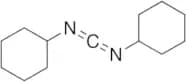
CAS :Produit contrôléFormule :C13H22N2Couleur et forme :Off-White To Light YellowMasse moléculaire :206.33H-Leu-Leu-OMe HBr
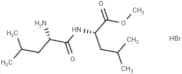
CAS :H-Leu-Leu-OMe HBr (L-Leucyl-L-Leucine methyl ester HBr) is a dipeptide condensation of L-Leucine methyl ester, a peptide that is toxic to natural killer T-cellsFormule :C13H27BrN2O3Degré de pureté :98.15%Couleur et forme :SolidMasse moléculaire :339.27Fructosyl Glycine α/β Mixture (Mixture of Diastereomers)
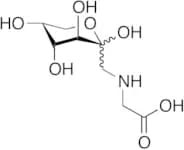
CAS :<p>Stability Hygroscopic<br>Applications Fructosyl Glycine is a synthetic glycoamine used in the study of glycoamine analogs and their effect on metastatic carcinoma cells.<br>References Glinsky, G. et al.: Clin. Exp. Metastas., 14, 253 (1996);<br></p>Formule :C8H15NO7Couleur et forme :NeatMasse moléculaire :237.207