Peptides
Sous-catégories appartenant à la catégorie "Peptides"
29608 produits trouvés pour "Peptides"
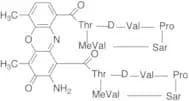
Actinomycin D (Dactinomycin)
CAS :Produit contrôléApplications Antibiotic substance belonging to the actinomycin complex, produced by several Streptomyces spp. Antineoplastic.
Not a dangerous good if item is equal to or less than 1g/ml and there is less than 100g/ml in the package
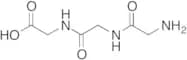
References Manaker, et al.: Antibiot. Ann., 55, 853 (1954), Jain, S., et al.: J. Mol. Biol., 114, 317 (1977), Nakajima, K., et al.: Pept. Chem., 19, 143 (1981), Shereda, R., et al.: J. Biol. Chem., 282, 19247 (2007),Formule :C62H86N12O16Couleur et forme :RedMasse moléculaire :1255.42Glycyl-Glycyl-Glycine
CAS :Produit contrôléApplications Glycyl-glycyl-glycine is used as a model peptide for studies of physicochemical parameters and molecular associations of small peptides. It is also used as a copper chelator.
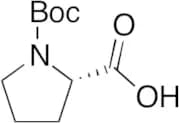
Formule :C6H11N3O4Couleur et forme :NeatMasse moléculaire :189.17N-Boc-L-proline
CAS :Produit contrôléApplications N-Boc-L-proline is a useful synthetic intermediate. It is used to synthesize Daclatasvir (D101500) which nhibits the HCV protein NS5A. Daclatasvir (D101500) can be used as a drug candidate for the treatment of hepatitis C (HCV).
References Gao, M., et al.: Nature, 465(7294), 96 (2010); Bell, T. W., Chem. Med. Chem., 5(10), 1663 (2010);Formule :C10H17NO4Couleur et forme :NeatMasse moléculaire :215.25Fmoc N-Hydroxysuccinimide Ester
CAS :Stability Moisture Sensitive
Applications Used in conjunction with Isothiocyanate to conduct partial Edman Degradation on biologically active peptides.
Not a dangerous good if item is equal to or less than 1g/ml and there is less than 100g/ml in the package
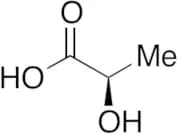
References Heidenreich, O., et al.: J. Biol. Chem., 269, 2131 (1994), Kothe, U., et al.: Anal. Biochem., 356, 148 (2006), Thakkar, A., et al.: Anal. Chem., 78, 5935 (2006),Formule :C19H15NO5Couleur et forme :NeatMasse moléculaire :337.33D-Lactic Acid
CAS :Applications D-Lactic Acid occurs in small quantities in the blood and muscle fluid of man and animals. The lactic acid concentration increases in muscle and blood after vigorous activity.
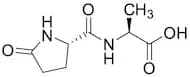
References He, W. et al.: Comp. Biochem. Phys. Part A: Mol. Int. Phys., 166, 308 (2013)Formule :C3H6O3Degré de pureté :90%Couleur et forme :Colourless To Light YellowMasse moléculaire :90.08L-Pyroglutamyl-L-alanine
CAS :Produit contrôléFormule :C8H12N2O4Couleur et forme :NeatMasse moléculaire :200.192N-Boc-γ-aminobutyric Acid
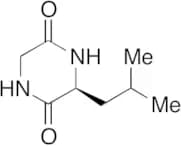
CAS :Produit contrôléFormule :C9H17NO4Couleur et forme :Off-WhiteMasse moléculaire :203.24Cyclo(Leu-Gly)
CAS :Produit contrôléApplications Cyclo(Leu-Gly) is an antimicrobial compound produced by Latobacillus plantarum.
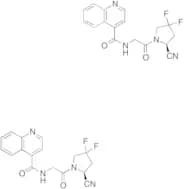
References Niku-Paavola, M., et al.: J. Appl. Microbiol., 86, 29 (1999)Formule :C8H14N2O2Couleur et forme :Off-WhiteMasse moléculaire :170.21(S)-N-(2-(2-Cyano-4,4-difluoropyrrolidin-1-yl)-2-oxoethyl)quinoline-4-carboxamide (UAMC1110)
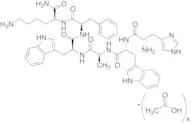
CAS :Produit contrôléFormule :C17H14F2N4O2Couleur et forme :NeatMasse moléculaire :344.32L-Histidyl-D-tryptophyl-L-alanyl-L-tryptophyl-D-phenylalanyl-L-lysinamide Acetate Salt
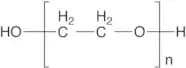
CAS :Produit contrôléFormule :C46H56N12O6·x(C2H4O2)Couleur et forme :NeatMasse moléculaire :873.01 + x(60.05)Poly(ethylene Glycol) ~1000
CAS :Produit contrôléApplications Poly(ethylene Glycol) molecules of an average molecular mass of 1000. Poly(ethylene Glycol) is used in various applications from industrial chemistry to biological chemistry. Recent research has shown PEG maintains the ability to aid the spinal cord injury recovery process, helping the nerve impulse conduction process in animals. In rats, it has been shown to aid in the repair of severed sciatic axons, helping with nerve damage recovery. It is industrially produced as a lubricating substance for various surfaces to reduce friction. PEG is also used in the preparation of vesicle transport systems in with application towards diagnostic procedures or drug delivery methods.
References Borgens, R. et al.: J. Neurosci. Res., 66, 1179 (2001); Stavisky, R. et al.: Neurosci. Lett., 376, 98 (2005); Nalam, P. et al.: Tribiol. Lett., 37, 541 (2010); Steinmetz, N. et al.: J. Am. Chem. Soc., 131, 17093 (2009); Li, X. et al.: J. Am. Chem. Soc., 133, 11147 (2011); Li, L. et al.: Int. J. Pharm., 447, 192 (2013);Formule :H2O(C2H4O)nCouleur et forme :White To Off-WhiteMasse moléculaire :62.07Urolithin A
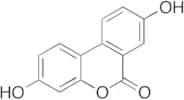
CAS :Applications Urolithin A is a major metabolite of ellagitannin and exhibits anti-inflammatory and antioxidant properties.
References Ishimoto, H., et. al.: Bioorg. Med. Chem. Lett., 21, 5901 (2011);Formule :C13H8O4Couleur et forme :NeatMasse moléculaire :228.2Kollisolv PEG 300
CAS :Produit contrôléApplications Kollisolv PEG 300 is used as a thickening agent and gel binder in the pharmaceutical industry.
Formule :H2O(C2H4O)nCouleur et forme :ColourlessMasse moléculaire :62.07L-Cysteine Hydrochloride Monohydrate
CAS :Stability Moisture Sensitive
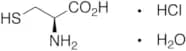
Applications L-Cysteine is a non-essential amino acid that can be synthesized by the human body under normal physiological conditions if a sufficient quantity of methionine is available. L-Cysteine is commonly used as a precursor in the food and pharmaceutical industries. L-Cysteine is used as a processing aid for baking, as an additive in cigarettes, as well as in the preparation of meat flavours.
References Hui, N. et al.: Meat Sci. Appl., 74 (2001); Kiviharju, K. et al.: J. Biotechnol., 117, 299 (2005); Pecivova, P. et al.: J. Sci. Food Agric., 90, 1681 (2010);Formule :C3H7NO2S·ClH·H2OCouleur et forme :NeatMasse moléculaire :175.63TCEP Hydrochloride
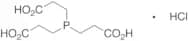
CAS :Applications Biochemical tool for selective reduction of disulfide bridges at low pH; reductant for redox assay.
Not a dangerous good if item is equal to or less than 1g/ml and there is less than 100g/ml in the package
References Neuburger, M., et al.: Eur. J. Biochem., 267, 2882 (2000), Krijt, J., et al.: Clin. Chem., 47, 1821 (2001), Yen, T.-Y., et al.: J. Mass Spectrom., 37, 15 (2002),Formule :C9H15O6P·ClHCouleur et forme :NeatMasse moléculaire :286.65Thyrotropin-Releasing Hormone
CAS :Produit contrôléApplications Thyrotropin-Releasing Hormone is a hypothalamic hypophysiotropic neuropeptide, which has the ability to stimulate the release of thyroid-stimulating hormone in mammals. It is proven that Thyrotropin-Releasing Hormone can be used to accelerate wound healing.
References Kanasaki, H., et al.: Neuropeptides., 54, 73 (2015); Nie, C., et al.: J. Surg. Res., 189, 364 (2014);Formule :C16H22N6O4Couleur et forme :Off-WhiteMasse moléculaire :362.38Linaclotide
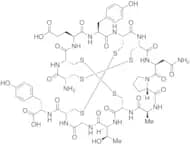
CAS :Produit contrôléApplications Linaclotide is a guanylate cyclase-C agonist currently being studied in Phase 3 trials for the treatment of irritable bowel syndrome with constipation.
References Chey, W.D., et al.: Am. J. Gastroenterol., 107, 1702 (2012); Rao, S., et al.: Am. J. Gastroentrol., 107, 1714 (2012); Brierley, S.M., et al.: Curr. Opinion. Pharmacol., 12, 632 (2012);Formule :C59H79N15O21S6Couleur et forme :NeatMasse moléculaire :1526.74N-Glycylglycine
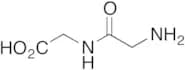
CAS :Produit contrôléApplications N-Glycylglycine is a derivative of Glycine (G615990), a non-essential amino acid that enhances N-methyl-D-aspartate (NMDA) receptor mediated synaptic potentials in the neocortex of rats. Glycine is also being used as adjuvant therapy for the treatment of schizophrenia.
References Logan, W. & Snyder, S.: Brain Res., 42, 413 (1972); Rosse, R., et al.: Clin. Neuropharmacol., 12, 416 (1989)Formule :C4H8N2O3Couleur et forme :NeatMasse moléculaire :132.126-Azidohexanoic Acid
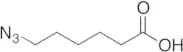
CAS :Produit contrôléApplications 6-Azidohexanoic Acid is a reagent that is useful for click chemistry.
References Alleti, R.,et al.: J. Org. Chem., 75, 5895 (2010); Daumar, P., et al.: Bioconjug. Chem., 23, 1557 (2012)Formule :C6H11N3O2Couleur et forme :NeatMasse moléculaire :157.17NG-Monomethyl-L-arginine Acetate
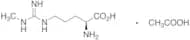
CAS :Produit contrôléFormule :C7H16N4O2·C2H4O2Couleur et forme :NeatMasse moléculaire :248.28