Oligosaccaridi
Gli oligosaccaridi sono carboidrati composti da un piccolo numero di unità di monosaccaridi legate da legami glicosidici. Queste molecole svolgono ruoli significativi in vari processi biologici, tra cui il riconoscimento cellulare, la segnalazione e le risposte immunitarie. In questa sezione troverai una selezione completa di oligosaccaridi essenziali per la ricerca in glicoscienze, biochimica e biologia molecolare. Questi composti sono fondamentali per studiare le strutture complesse dei carboidrati, le loro funzioni e le loro interazioni con altre biomolecole. Da CymitQuimica, offriamo oligosaccaridi di alta qualità per supportare le tue esigenze di ricerca e sviluppo, garantendo risultati precisi e affidabili nei tuoi esperimenti.
Sottocategorie di "Oligosaccaridi"
- Glicosidi aminoetilici, glicosidi amminopropilici(14 prodotti)
- Glicani leganti Asn(33 prodotti)
- Oligosaccaridi biotinati(13 prodotti)
- Gruppi sanguigni e antigeni di Lewis(11 prodotti)
- Oligosaccaridi del gruppo sanguigno(13 prodotti)
- Cellooligosaccaridi(1 prodotti)
- Ciclodestrine(183 prodotti)
- Disaccaridi(192 prodotti)
- Oligosaccaridi dell'epitopo(19 prodotti)
- Fruttoligosaccaridi(2 prodotti)
- Oligosaccaridi funzionali(554 prodotti)
- Oligosaccaridi funzionalizzati(1 prodotti)
- Galactosamina(41 prodotti)
- Galattosio(261 prodotti)
- Galb (1-3) GalNAc(21 prodotti)
- Serie ganglio(11 prodotti)
- Serie Globo e Isoglobo(17 prodotti)
- Glucosamina(128 prodotti)
- Acidi glucuronici(51 prodotti)
- Glicoproteine, glicopeptidi(59 prodotti)
- Glicosaminoglicani(26 prodotti)
- Oligosaccaridi del latte umano(22 prodotti)
- O-Glicani etichettati(9 prodotti)
- Oligosaccaridi etichettati(36 prodotti)
- LacNAc(53 prodotti)
- Serie Lacto e Neolacto(14 prodotti)
- Latto-N-biosio(10 prodotti)
- Lattooligosaccaridi(7 prodotti)
- Oligosaccaridi fissati con linker(19 prodotti)
- Maltooligosaccaridi(6 prodotti)
- Oligosaccaridi del latte(31 prodotti)
- N-Glicani(149 prodotti)
- Glicosidi naturali(177 prodotti)
- Oligosaccaridi naturali(103 prodotti)
- O-Glicano(18 prodotti)
- Building Blocks di Oligosaccaridi(7 prodotti)
- Sostituzione di oligosaccaridi(2 prodotti)
- Oligosaccaridi per componente zucchero(225 prodotti)
- Oligose(24 prodotti)
- Altri Oligosaccaridi(14 prodotti)
- Oligomeri PEG(33 prodotti)
- Zuccheri fosfatati(17 prodotti)
- Zuccheri protetti(526 prodotti)
- Reagenti per la sintesi degli oligosaccaridi(254 prodotti)
- Glicani leganti Ser, Thr(9 prodotti)
- Oligosaccaridi sialilati(3 prodotti)
- Sfingoglicolipidi(42 prodotti)
- Aminoacidi dello zucchero, peptidi dello zucchero(20 prodotti)
- Antigeni dello zucchero(31 prodotti)
- Building Blocks Zuccherini per Oligosaccaridi Bersaglio(225 prodotti)
- Coniugati di zucchero(100 prodotti)
- Zuccheri solforati(16 prodotti)
- Tetrasaccaridi(34 prodotti)
- Trisaccaridi e oltre(95 prodotti)
- Xilooligosaccaridi(5 prodotti)
Mostrare 47 più sottocategorie
Trovati 2278 prodotti di "Oligosaccaridi"
Ordinare per
Purezza (%)
0
100
|
0
|
50
|
90
|
95
|
100
Hyaluronic acid potassium salt - from Cockscomb
CAS:Hyaluronic acid is a glycosaminoglycan found in many organs where it functions as a joint lubricant and shock absorber (Collins, 2006). It is obtained principally from synovial fluid, vitreous humor of the eye, umbilical tissue and cockscomb. The chemical structure of hyaluronic acid is a disaccharide repeat of β-1,3 glucuronic acid and β-1,4 N-acetyl glucosamine (Casu, 1990). Hyaluronic acid is a common ingredient in skin care products and is used as a dermal filler in cosmetic surgery.Formula:(C14H20KNO11)nColore e forma:White PowderMaltotriose - Technical
CAS:Starch breakdown productFormula:C18H32O16Purezza:Min. 90.0 Area-%Colore e forma:PowderPeso molecolare:504.44 g/mol2-O-(2-Acetamido-2-deoxy-β-D-glucopyranosyl)-D-mannopyranose
CAS:<p>2-O-(2-Acetamido-2-deoxy-b-D-glucopyranosyl)-D-mannopyranose is a disaccharide that contains two acetamides. It has a glycosidic bond and is classified as a glycoside. This compound has the same sequence of residues as D-mannose, but one less carbon atom. The acetamides form an ester linkage to the 2’ and 3’ hydroxyl groups on the sugar moiety.</p>Formula:C14H25NO11Purezza:Min. 95%Colore e forma:PowderPeso molecolare:383.35 g/mol3'-(N-Glycolyl-a-neuraminosyl)lactose
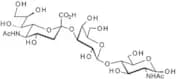
CAS:3'-(N-Glycolyl-a-neuraminosyl)lactose is a carbohydrate that is synthesized from lactose, which is a disaccharide composed of glucose and galactose. It is synthesized by the modification of the terminal hydroxyl group on the galactose moiety with glycolyl chloride. 3'-(N-Glycolyl-a-neuraminosyl)lactose has been shown to inhibit the growth of bacteria and fungi. It also has the potential to be used as an anti-cancer drug candidate due to its ability to inhibit protein synthesis in cells. This carbohydrate can also be modified by methylation, glycosylation, or click chemistry.Formula:C23H39NO20Purezza:Min. 95%Peso molecolare:649.55 g/molLactobionate hydrazide
Lactobionate hydrazide is a custom synthesis of an oligosaccharide. It is a complex carbohydrate with CAS No. that has been modified by glycosylation, methylation and fluorination. Lactobionate hydrazide is a polysaccharide which has been synthesized by click chemistry and contains high purity with a sugar content of over 99%. This oligosaccharide is not saccharide-bound and can be modified to produce different chemical structures. Lactobionate hydrazide has been used for glycogen storage disorders, as well as for the synthesis of oligosaccharides for the treatment of cancer cells.Purezza:Min. 95%NA3 Glycan, 2-AB labelled
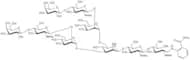
NA3 Glycan is a custom-synthesized Oligosaccharide that has been modified by the addition of 2AB labelled. This glycan contains an N-acetylglucosamine residue at its reducing end. The NA3 Glycan can be used for a wide range of applications, including glycosylation reactions, click reactions, and carbohydrate chemistry. It is also available in high purity and with fluorination on the sugar moiety.Purezza:Min. 95%D-Cellobiose
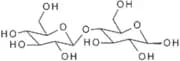
CAS:D-Cellobiose, also known as cellose, is a reducing disaccharide consisting of two β(1-4)-linked glucopyranose units. It is produced by the hydrolysis of cellulose, a homopolysaccharide of glucose with β(1-4)-linkages. Cellobiose constitutes the polar part of cellobiose lipids (CLs) that are secreted by yeasts and mycelia fungi. Their various biological activities have led to a range of applications in the food industry, pharmaceutical industry and in medicine. Cellobiose itself has been used as an indicator carbohydrate for Crohn's disease and malabsorption syndrome. In biotechnology, cellobiose is one of the sugars explored for the synthesis of biotensides.Formula:C12H22O11Purezza:Min. 97 Area-%Colore e forma:White Off-White Crystalline PowderPeso molecolare:342.30 g/molGlycyl-lacto-N-fucopentaose VI
Glycyl-lacto-N-fucopentaose VI is a polysaccharide that is synthesized by the enzymatic activity of glycosylase, methylase, and fluorinase. It can be modified with click chemistry to introduce a fluorine atom at the C4 position of the glucose molecule. This modification can be used for the synthesis of oligosaccharides. Glycyl-lacto-N-fucopentaose VI has CAS number 108897-96-5 and is available in high purity and custom synthesis.Formula:C34H59N3O25Purezza:Min. 95%Peso molecolare:909.84 g/molDextran 60, MW: 54,000 to 66,000
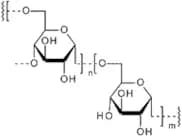
CAS:Complex glucan (a 1-6) from Leuconostoc spp.; extender in blood transfusionsFormula:(C6H10O5)nColore e forma:White PowderMan-8 Glycan, 2-AB labelled
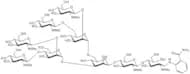
Man-8 Glycan, 2-AB labelled is a carbohydrate, modification. It is a saccharide that has been fluorinated and modified with methylation and glycosylation. It has a CAS number of 7071-83-0, and is available for custom synthesis. This product has high purity, is synthetic, and can be modified with a click modification. The molecular weight of this product is 604.Purezza:Min. 95%2-Azidoethyl 2-acetamido-2-deoxy-3-O-(2-acetamido-2-deoxy-b-D-galactopyranosyl)-b-D-glucopyranoside
CAS:2-Azidoethyl 2-acetamido-2-deoxy-3-O-(2-acetamido-2-deoxy-b-D-galactopyranosyl)-b-D-glucopyranoside is an oligosaccharide. It is used as a reagent in the synthesis of complex carbohydrates.Formula:C18H31N5O11Purezza:Min. 95%Peso molecolare:493.47 g/molD-Turanose
CAS:Turanose is a reducing analog of sucrose that is not metabolized by higher plants, but rather acquired through the action of sucrose transporters for intracellular carbohydrate signaling. In addition to its involvement in signal transduction, D-(+)-turanose can also be used as a carbon source by many organisms including numerous species of bacteria and fungi.Formula:C12H22O11Purezza:Min. 98 Area-%Colore e forma:White PowderPeso molecolare:342.3 g/molSucrose distearate - 30% monostearate
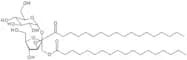
CAS:The ‘tallowate’ esters are probably the best known derivatives of sucrose and many attempts have been made to commercialise them in order to exploit their excellent surfactant functionalities. The most functional products are the mono- and diesters of the tallow acids (stearic, palmitic, oleic) with hydrophile-lipophile balance (HLB) values that lend themselves to surfactant applications in foods and cosmetics. They also have other uses, for example in coating fruits with a semipermeable membrane that acts as a preservative. Manufacturing economics have prevented these products from mass production and they remain in niche applications.Formula:C48H90O13Purezza:Min. 95%Colore e forma:PowderPeso molecolare:875.24 g/mol4-Aminophenyl 1,3-a-1,6-a-D-mannotriose
4-Aminophenyl 1,3-a-1,6-a-D-mannotriose is a custom synthesis of the complex carbohydrate Oligosaccharide. It belongs to the group of saccharides and has a CAS number. This product is modified with methylation and glycosylation and is made up of a series of monosaccharides linked by alpha (1,4) or beta (1,2) glycosidic bonds. 4-Aminophenyl 1,3-a-1,6-a-D-mannotriose may be fluorinated during its synthesis using an electrophilic substitution reaction. This product is synthetic and has high purity.Purezza:Min. 95%Chondroitin sulphate octasaccharide ammonium salt
<p>Chondroitin sulphate octasaccharide ammonium salt is a synthetic, fluorinated glycosaminoglycan. It is a synthetic, fluorinated glycosaminoglycan that has been synthesized from chondroitin sulfate and 2-amino-2-deoxy-D-glucose. Chondroitin sulphate octasaccharide ammonium salt has the CAS number 93860-92-7. It can be modified to make it more complex, such as methylation or click modification to give it different properties. This product is offered in high purity with a custom synthesis service available on request.</p>Purezza:Min. 95%Oligogalactosyllactose
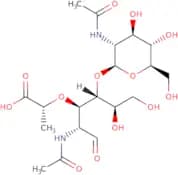
<p>Oligogalactosyllactose is a polysaccharide made from galactose and glucose. Oligogalactosyllactose has been shown to have an inhibitory effect on the growth of Staphylococcus aureus strains. Oligogalactosyllactose also has anti-inflammatory properties, which may be due to its ability to bind to free fatty acids and reduce the production of pro-inflammatory cytokines. This dietary ingredient is found in inulin, which is a type of carbohydrate that can be found in some vegetables. Oligogalactosyllactose is composed of short chains of sugar molecules, making it easier for the body to absorb. It is also more readily metabolized by bacteria in the gut than other types of carbohydrates like celluloses or starches.</p>Purezza:Min. 95%Colore e forma:Powder2-Acetamido-4-O-(2-acetamido-2-deoxy-β-D-glucopyranosyl)-2-deoxy-D-muramic acid
CAS:A MurNAc disaccharideFormula:C19H32N2O13Purezza:Min. 95 Area-%Colore e forma:PowderPeso molecolare:496.46 g/molVinyl a-D-lactose
Vinyl a-D-lactose is a custom synthesis, fluorinated, modified monosaccharide that can be used to modify proteins and polysaccharides. It has been shown to react with proteins through the click chemistry reaction and methylation. Vinyl a-D-lactose can be used for glycosylation of saccharides and complex carbohydrates in order to synthesize oligosaccharides.Purezza:Min. 95%2-Acetamido-2-deoxy-4-O-(a-L-fucopyranosyl)-D-glucopyranose
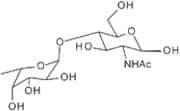
CAS:2-Acetamido-2-deoxy-4-O-(a-L-fucopyranosyl)-D-glucopyranose is a methylated, custom synthesized oligosaccharide. It has been modified to include a fluorine atom at the C4 position on the glucose residue. The product is highly pure and in crystalline form, with a CAS number of 76211-71-7.Formula:C14H25NO10Purezza:90%Colore e forma:White PowderPeso molecolare:367.35 g/molLacto-N-tetraose - 90%
CAS:Core human milk oligosaccharideFormula:C26H45NO21Purezza:Min. 90 Area-%Colore e forma:White PowderPeso molecolare:707.63 g/molChitobiose dihydrochloride
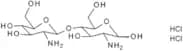
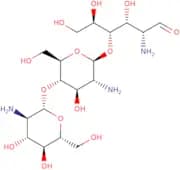
CAS:Chitobiose is a dimer formed by beta-1,4-linked glucosamine units. It is also the repeated dimer of chitin, a polysaccharide.Formula:C12H24N2O9·2HClPurezza:Min. 98 Area-%Colore e forma:White PowderPeso molecolare:413.25 g/molMonosialyllacto-N-hexaose
<p>Monosialyllacto-N-hexaose is a high purity, custom synthesis sugar that belongs to the group of oligosaccharides. This carbohydrate is modified with fluorination and glycosylation, which are Click modifications. Monosialyllacto-N-hexaose has a CAS number of 68638-04-3. This product is available for purchase in bulk quantities.</p>Formula:C51H85N3O39Purezza:Min. 95%Peso molecolare:1,364.22 g/mol3-(b-D-Mannopyranosyl)-D-rhamnose
<p>3-(b-D-Mannopyranosyl)-D-rhamnose is a custom synthesized carbohydrate that is modified by fluorination. It is also a complex carbohydrate with an Oligosaccharide, sugar, and a Monosaccharide. 3-(b-D-Mannopyranosyl)-D-rhamnose has high purity and can be used for methylation, glycosylation, or Click modifications. Click modification is an organic chemistry technique that uses a copper ion to add chemical groups to the surface of molecules. This provides access to new functionalities, such as increased solubility or stability in organic solvents.</p>Purezza:Min. 95%A2G1 Glycan, 2-AB labelled
A2G1 Glycan, 2-AB labelled is a monosaccharide which is modified with fluorine. A2G1 Glycan, 2-AB labelled is used in the synthesis of complex carbohydrate structures. It has been shown to be useful for click modification, methylation and polysaccharide synthesis. This compound can also be custom synthesized to order. The purity of this product is high and it is available in a range of CAS numbers.Purezza:Min. 95%3'-Sialyl-N-acetyllactosamine sodium salt
CAS:Component of glycoproteins and glycolipids expressed in antigens and receptors of proteins, bacteria and viruses. Found in the free form in human biofluids, including urine and milk - preventing adhesion of bacteria to urinary epithelium and inhibiting enteric pathogens respectively. An efficient inhibitor of neutrophil-activating protein of H.pylori (HPNAP)-mediated neutrophil activation.Formula:C25H42N2O19·NaPurezza:Min. 95%Colore e forma:White Off-White PowderPeso molecolare:697.59 g/molNGA4 Glycan, 2-AB labelled
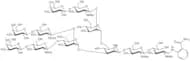
NGA4 Glycan, 2-AB labelled is a synthetic oligosaccharide that has been modified with Click chemistry. This modification has been shown to be useful for the detection of methylation. The NGA4 Glycan, 2-AB labelled has a purity of >99% and is available in quantities of 1 mg or more.Purezza:Min. 95%NA2 Glycan, 2-AB labelled
<p>N-Acetylneuraminic acid (NA2) is a glycan that is found in the human body, and is important for brain function. NA2 Glycan, 2-AB labelled, is a high purity custom synthesis sugar with Click modification and fluorination. The glycans are made of monosaccharides or saccharides linked together by glycosidic bonds. Carbohydrates are classified according to their number of sugar units: simple carbohydrates contain one or two sugar units; complex carbohydrates have three or more. This product is an oligosaccharide that contains nine sugar units: three monosaccharides and six saccharides. It can be used as a substrate for methylation, glycosylation, and modification reactions.</p>Formula:C69H112N6O46Purezza:Min. 95%Peso molecolare:1,761.64 g/molChitotriose trihydrochloride
CAS:Chitotriose trihydrochloride is a modification of chitin, an oligosaccharide. Chitotriose trihydrochloride is a synthetic carbohydrate which is used as a raw material for the production of fibers, films, and adhesives. It can be used in the synthesis of complex carbohydrates such as starch and glycogen. Chitotriose trihydrochloride is a high purity carbohydrate with CAS No. 41708-93-4 that can be used to produce glycosylated proteins or polysaccharides.Formula:C18H35N3O13·3HClPurezza:Min. 95 Area-%Colore e forma:PowderPeso molecolare:610.87 g/molKojipentaose
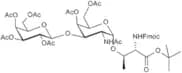
CAS:<p>Kojipentaose is a glycosidic oligosaccharide that is synthesized by the enzyme phosphorylase. It is an important nutrient for many organisms, including bacteria and fungi. Kojipentaose has been found to be synthesized from the terminal sugars of teichoic acids in both Gram-positive and Gram-negative bacteria. The stereoselectivity of the synthesis may be due to enzymatic activity or the availability of chiral substrates.</p>Formula:C30H52O26Purezza:Min. 95%Peso molecolare:828.72 g/mol2-Acetamido-3-O-(2,3,4,6-tetra-O-acetyl-b-D-galactopyranosyl)-4,6-di-O-acetyl-2-deoxy-a-D-galactopyranosyl-Fmoc-L-threonine tert-but yl ester
2-Acetamido-3-O-(2,3,4,6-tetra-O-acetyl-b-D-galactopyranosyl)-4,6-di-O-acetyl-2,6 -deoxy--a-,D-,galactopyranosyl--Fmoc--L--threonine tert--but yl ester is a synthetic carbohydrate that contains 2 acetamido groups and 3 O-(2,3,4,6 tetra O acetyl b D galactopyranosyl) groups. The chemical name for this compound is 2 Acetamido 3 O (2 3 4 6 tetra O acetyl b D galactopyranosyl) 4 6 di O acetyl 2 deoxy a D galactopyranosyl Fmoc L threonine tert but yl ester. It has been synthesized by the Click modification reaction of an oligosFormula:C49H62N2O21Purezza:Min. 95%Peso molecolare:1,015.02 g/molGala1-3Galb1-4GlcNAc-O-L-serine
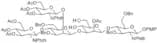
Gala1-3Galb1-4GlcNAc-O-L-serine is a Custom synthesis, Modification, Fluorination, Methylation, Monosaccharide, Synthetic, Click modification, Oligosaccharide, saccharide. The CAS number for this product is . It has been created by the process of Glycosylation. This product is a Carbohydrate and a Polysaccharide. The molecular weight of this product is .Purezza:Min. 95%4-Methoxyphenyl 4-O-{2-O-acetyl-3-O-[2,4-di-O-(3,4 ,6-tri-O-acetyl-2-deoxy-2-phthalimido-β-D-glucopyranosyl)-3 ,6-di-O-benzyl-β-D-mannopyranosyl]-β-D-mannopyranosyl}-3 ,6-di-O-benzyl-2-deoxy-2-phthalimido-β-D-glucopyranoside
4-Methoxyphenyl 4-O-[2-O-(3,4,6-tri-O-acetyl-2-deoxy-2-phthalimido-b-D-glucopyranosyl)-3,6-di-O-(3,4,6,-tri -O acetyl 2 deoxy 2 phthalimido b D glucopyranosyl) b D mannopyranosyl] 3,6 di O benzyl 2 deoxy 2 phthalimido b D glucopyranoside (MPP) is a carbohydrate that belongs to the group of saccharides. It is an oligosaccharide sugar with a molecular weight of 1029.5 Da. This compound has been custom synthesized and is available in high purity. MPP is an ester of 4 methoxyphenol and 4 O-[2 O-(3,4,6 tri O acetyl 2 deoxyFormula:C103H105N3O37Purezza:Min. 95%Peso molecolare:1,976.93 g/molIsomalto oligomers (Dp 4-8)
Isomalto oligomers are a custom synthesis of polysaccharide oligosaccharides. These compounds are modified with methylation, glycosylation, and fluorination to create a high purity product that is free of undesirable contaminants. Isomalto oligomers (DP 4-8) are synthesized from sugars and can be used in the modification of saccharide chains during glycosylation reactions. This product also has the ability to produce click chemistry modifications.Purezza:ReportedColore e forma:PowderBenzyl 4- O- b- D- galactopyranosyl-b- D- xylopyranoside
CAS:Benzyl 4-O-b-D-galactopyranosyl-b-D-xylopyranoside is a glycoside that is used in the synthesis of antibiotics. It can be found in the leaves of "Ajania cordata" and "Chenopodium ambrosioides".Formula:C18H26O10Purezza:Min. 95%Peso molecolare:402.39 g/molk-Carradiitol sulfate sodium salt
k-carrageenan derived disaccharide alcohol sulfateFormula:C12H21O13S1NaPurezza:Min. 95%Peso molecolare:428.34 g/molMaltotriosyltrehalose
CAS:Maltotriosyltrehalose is a sugar that is found in plants, fungi, and bacteria. It can be used as a substrate for the production of hydrogen-bonded oligosaccharides. Maltotriosyltrehalose has been shown to have a protective effect against death induced by high temperatures in mammalian cells. This sugar is also a good substrate for the production of hydrogen-bonded oligosaccharides and can be used as an additive to dry food products such as bread or cereals. Maltotriosyltrehalose is stable at high temperatures and has been shown to protect against cell death caused by heat stress. It can be used in both animal feed and human food products. Maltotriosyltrehalose is not active against proteases, but it does not inhibit the activity of mammalian cells that produce proteases.Formula:C20H52O26Purezza:Min. 95%Peso molecolare:708.61 g/molChitosan
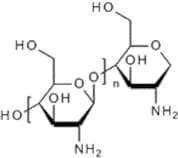
CAS:<p>Chitosan is the deacetylated form of chitin. The polysaccharide is deacetylated in order to render it soluble, which is then possible at pH values of less than 7 (normally in dilute acid). This then allows the material to be used in a number of industrial applications as a binder and film former.Molecular weight range 350 - 3500 Da.</p>Colore e forma:PowderLactose octaacetate
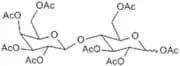
CAS:The acetates of lactose are useful starting points and intermediates in the synthesis of oligosaccharides based on lactose, particularly in the synthesis of the important oligosaccharides that occur in human milk.Formula:C28H38O19Purezza:Min. 98 Area-%Colore e forma:White PowderPeso molecolare:678.59 g/molLS-tetrasaccharide b
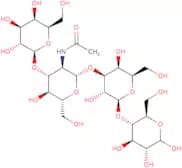
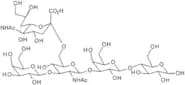
CAS:Sialylated tetrasaccharide found in human milk, possible health benefits for the neonate by supporting resistance to pathogens, gut maturation, immune function, and cognitive development.Formula:C37H61N2O29•NH4Purezza:Min. 95 Area-%Colore e forma:White PowderPeso molecolare:1,015.92 g/mol(3b,14a)-3-O-b-D-glucopyranosyl-(1,2)-[b-D-xylopyranosyl-(1,3)]-b-D-glucopyranosyl-(1,4)-b-D-galacopyranosyl-(25S)-spirost-5-ene
<p>A custom synthesis of a complex carbohydrate. It is a synthetic, modified and fluorinated saccharide with a methylated monosaccharide.</p>Purezza:Min. 95%Lacto-N-neotetraose
CAS:Lacto-N-neotetraose (LNnT) is a neutral and abundant human milk oligosaccharide (HMO), composed of four sugar molecules. It supports the infant's gut microbiota development and provides protection against infectious diseases. LNnT like many other HMOs offers great interest for the studies of baby milk formula.Formula:C26H45NO21Purezza:Min. 95%Colore e forma:White PowderPeso molecolare:707.63 g/molGanglioside GM1
CAS:Ganglioside GM1 has a core tetrasaccharide structure (Galβ1,3GalNAcβ1,4Galβ1,4Glc) with sialic acid linked α2,3 to the inner galactose residue, ceramide linked β to position 1 on the reducing terminal glucose residue (Ledeen, 2009), and is abundant in all mammalian brains, where it covers 10%-20% of the total ganglioside mixture. Ganglioside GM1 is found in epithelial membranes and is a key element for the detection of bacterial toxicity and viral infection. It is the intestinal receptor for cholera toxin, the B-subunits of heat-labile toxin (LTB) from E.coli, for rotavirus, and simian virus 40. GM1 functions as a neurotrophic and neuroprotective compound and has been used therapeutically for diabetic and peripheral neuropathies. It also has the ability to bind amyloid-β proteins and is involved in Alzheimer’s pathogenesis (Chiricozzi, 2020).Formula:C73H131N3O31·xNaPurezza:Min. 95 Area-%Colore e forma:White PowderPeso molecolare:1,546.82 g/molMurNAc-6-phosphate-GlcNAc
MurNAc-6-phosphate-GlcNAc is a complex carbohydrate that is composed of a glycosylation, methylation, and fluorination. It is an important component in polysaccharides and oligosaccharides. This compound has been modified with Click chemistry to form a reactive site for incorporation of a variety of molecules such as fluorophores, biotin, or other small molecules. This compound can be synthesized using custom synthesis methods and has CAS number 106579-01-4. MurNAc-6-phosphate-GlcNAc is available in high purity and can be custom synthesized to specific needs.Purezza:Min. 95%Methyl 2-acetamido-2-deoxy-3-O-(a-D-galactopyranosyl)-a-D-galactopyranoside
Methyl 2-acetamido-2-deoxy-3-O-(a-D-galactopyranosyl)-a-D-galactopyranoside is a synthetic, fluorinated glycoside that is used as a building block for the synthesis of complex carbohydrates. Methyl 2-acetamido-2-deoxy-3-O-(a-D-galactopyranosyl)-a-D-galactopyranoside can be used in either Click or Fluorination reactions to synthesize oligosaccharides and monosaccharides. It has been shown to react with ethylene glycol to form methyl 2,6 -O-[(3,4,5,6 -tetra‑O‑acetyl‑β‑D‑galactopyranosyl)α -L‑idopyranosyl]-α -L‑idopyranose. Methyl 2,6 -Purezza:Min. 95%Sucrose-6-phosphate sodium
CAS:<p>Sucrose-6-phosphate sodium is a transcriptional regulator that belongs to the group of sugar phosphate ions. Sucrose-6-phosphate sodium regulates the transcription of genes involved in the synthesis of polysaccharides, such as sucrose and starch. This compound plays an important role in the metabolism of plants and has been shown to regulate hydrogen bond formation, photosynthetic activity, glycosidic bond formation, polymerase chain reactions, and regulatory sequences. The optimum pH for this compound is 7.0, with enzyme activities between pH 6.0 and 8.5. Sucrose-6-phosphate sodium also has been shown to regulate root formation and phosphorus pentoxide production in corynebacterium glutamicum.</p>Formula:C12H23O14P•Na2Purezza:Min. 95%Colore e forma:PowderPeso molecolare:468.26 g/molGlycyl-chitobiose
Glycyl-chitobiose is an oligosaccharide that can be synthesized from glycerol and chitobiose. This product is often used as a building block for the synthesis of complex carbohydrate molecules. The purity of Glycyl-chitobiose is greater than 98% and it has been modified with fluorine, methyl, and click chemistry. The CAS number for this product is 627-14-1.Formula:C18H32N4O11Purezza:Min. 95%Peso molecolare:480.47 g/molCarboxymethyl-dextran sodium 20-30% COOH, average molecular weight 150000
CAS:Drug carrier for cancer therapy & imaging, biocompatible, soluble, biodegradableColore e forma:PowderLewis B tetrasaccharide
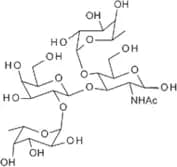
CAS:Lewis B tetrasaccharide (LBT) is a glycosylated oligosaccharide that is found in the outer membrane of human pathogens, such as Helicobacter pylori. LBT has been shown to inhibit the growth of cancer cells and may be used as a potential therapeutic agent for cancer treatment. It has also been shown to have structural features similar to those found in inflammatory bowel disease patients, suggesting that it may play a role in regulating bowel inflammation. LBT is recognized by monoclonal antibodies and can be used to detect H. pylori in biological samples. Lewis B tetrasaccharide binds with methyl glycosides on human erythrocytes, which inhibits the polymerase chain reaction (PCR). This inhibition leads to reduced DNA synthesis and a decrease in bacterial replication, making it an effective antimicrobial agent.Formula:C26H45NO19Purezza:Min. 90%Colore e forma:White PowderPeso molecolare:675.63 g/mol2-O-(a-D-Galactopyranosyl)-D-glucopyranose
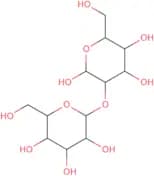
CAS:2-O-(a-D-Galactopyranosyl)-D-glucopyranose is a disaccharide consisting of two monosaccharides, glucose and galactose. It also contains a hydroxy group on the second carbon atom in the molecule. 2-O-(a-D-Galactopyranosyl)-D-glucopyranose is found in some plants including sugarcane, sugar beet, and sweet potatoes. This disaccharide is broken down by enzymes called beta-galactosidases into its two monosaccharides. Beta-galactosidases are used as an enzyme therapy to treat certain genetic disorders that affect the breakdown of carbohydrates.Formula:C12H22O11Purezza:Min. 95%Peso molecolare:342.3 g/molLactitol anhydrous
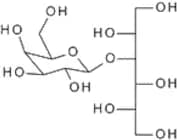
CAS:Lactitol is a polyol that is used as a sweetener and has the potential to cause diarrhea. It belongs to the group of sugar alcohols, which are not completely digested by humans. Lactitol is produced from lactose, which is derived from milk. The main clinical relevance of lactitol is its high intestinal permeability, low caloric value, and ability to lower blood glucose levels in diabetics. Lactitol undergoes microbial metabolism through the action of certain bacteria in the colon and can be found in products such as probiotics and food supplements. It has been shown to have beneficial effects on chronic viral hepatitis and may be used for treatment of bacterial translocation. Lactitol also inhibits pge2 production in mice with colitis, leading to decreased inflammatory responses in their small intestines and colon. This inhibition may also lead to suppression of tumor growth or promotion of apoptosis in colorectal cancer cells by inhibiting protein synthesis and cell division.br>Formula:C12H24O11Purezza:Min. 95%Colore e forma:PowderPeso molecolare:344.31 g/mol










![(3b,14a)-3-O-b-D-glucopyranosyl-(1,2)-[b-D-xylopyranosyl-(1,3)]-b-D-glucopyranosyl-(1,4)-b-D-galac…](/_next/image/?url=https%3A%2Fstatic.cymitquimica.com%2Fproducts%2F3D%2Fthumb-webp%2FOG74568.webp&w=3840&q=75)