Alcoli
Sottocategorie di "Alcoli"
Trovati 5817 prodotti di "Alcoli"
4-(Hydroxymethyl)cyclohexanol
CAS:4-(Hydroxymethyl)cyclohexanol is a versatile building block that can be used in the synthesis of complex compounds. This chemical has been shown to have a high degree of purity and is a useful intermediate or reaction component for many different reactions. It is also an excellent scaffold for synthesizing other organic molecules.Formula:C7H14O2Purezza:Min. 95%Colore e forma:Clear To White To Off-White SolidPeso molecolare:130.18 g/mol4-Isopropylresorcinol
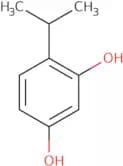
CAS:4-Isopropylresorcinol or 4-Isopropylbenzene-1,3-diol belongs to the family of alkylresorcinol. It is a synthetic molecule that has been shown to reduce tumor size and inhibit cancer cell growth in vitro and in vivo. It also inhibits the expression of heat shock protein (Hsp90), which is highly expressed in most tumor cells. A study done on human lung cancer cell lines showed that 4-isopropylresorcinol inhibited the growth of xenograft tumors with no side effects, by enhancing the sensitivity of lung cancer cells to photodynamic therapy, and arrests non-small cell lung cancer cells in the G1 phase with an associated increase in apoptosis. It also induces efflux transporters in tumor cells, which leads to a time-dependent pharmacokinetics.
Formula:C9H12O2Purezza:Min. 98 Area-%Colore e forma:White Off-White PowderPeso molecolare:152.19 g/mol1,3-Dihydroxyacetone
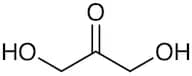
CAS:Formula:C3H6O3Purezza:>97.0%(GC)Colore e forma:White to Almost white powder to crystalPeso molecolare:90.084-Chlorophenol
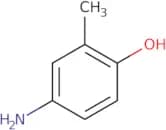
CAS:4-Chlorophenol is a chemical compound that is found as a byproduct in the manufacturing process of phenol and acetone. It has been found to be stable in the presence of nitrogen atoms, which are present in wastewater treatment plants. The optimum concentration for 4-chlorophenol is 0.2 ppm, but it can be reduced to 0.1 ppm with the addition of malonic acid or surfactant sodium dodecyl sulfate. The reaction mechanism for 4-chlorophenol is an oxidation-reduction reaction with oxygen nucleophiles as electron acceptors and surface methodology through electrochemical impedance spectroscopy.Formula:C6H5ClOPurezza:Min. 98%Colore e forma:Clear LiquidPeso molecolare:128.56 g/mol4-Amino-2-methylphenol
CAS:4-Amino-2-methylphenol is a chemical substance that is used in the production of dyes, cationic surfactants, and basic dyes. It can be produced through oxidation of phenol or by dehydration of aniline. 4-Amino-2-methylphenol has been shown to have potential use as a surface enhancer for Raman spectroscopy. This compound has also been used to extract amines and ethers from organic solvents.Formula:C7H9NOPurezza:Min. 95%Colore e forma:SolidPeso molecolare:123.15 g/molDeoxynivalenol
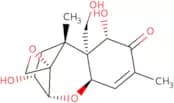
CAS:Deoxynivalenol is a mycotoxin that is produced by the fungi Fusarium graminearum and F. culmorum. It produces toxic effects in humans and animals, including human immunoglobulin E (IgE) production, acute toxicities, and cytotoxic effects on cultured human leukocytes. The analytical method for deoxynivalenol detection includes a variety of in vitro methods such as enzyme-linked immunosorbent assays (ELISA), competitive ELISA, fluorescent antibody staining assay, fluorescence polarization immunoassay (FPIA), competitive FPIA, and high performance liquid chromatography (HPLC). Deoxynivalenol binds to dna with high affinity and has been shown to have fusarial activity. The toxicity of deoxynivalenol can be confirmed by the mitochondrial membrane potential assay or by the assessment of vomitoxin levels. Colloidal gold can be used for identification of deox
Formula:C15H20O6Purezza:Min. 95%Colore e forma:White PowderPeso molecolare:296.32 g/molQuinoline-5-carboxylic acid
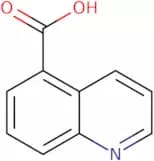
CAS:Quinoline-5-carboxylic acid is a peroxide that is produced by the oxidation of quinoline derivatives. Quinoline-5-carboxylic acid has been shown to have antibacterial activity, and it also has affinity values for chloride ions. The chemical isomers of quinoline-5-carboxylic acid are called quninolines, which are produced by the hydrolysis of quinoline-5-carboxylic acid. Quinolines can be obtained by the oxidation of aniline. Quinolines have been shown to catalyze reactions with carbonyl groups in organic molecules, such as the reaction between an alkoxycarbonyl group and a hydroxyl group to form an aldehyde or ketone. Kinetic data for this reaction was obtained using titration calorimetry.
Formula:C10H7NO2Purezza:Min. 95%Colore e forma:White To Beige To Light Brown To Grey SolidPeso molecolare:173.17 g/molFmoc-O-tert-butyl-L-threoninol
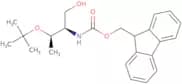
CAS:Fmoc-O-tert-butyl-L-threoninol is an aminoacyl chloroformate ester that is used in the synthesis of peptides. It has a conjugate acid chloride and a disulfide bond. The chloroformate group reacts with the carboxylic acid moiety of L-threonine to form an ester, which can then be cleaved by hydrolysis to yield L-threonine. This product is also used for the synthesis of peptides in which the threonine residue is conjugated to another amino acid such as cysteine or glutamic acid.
Fmoc-O-tert-butyl-L-threoninol is synthesized from l-threonine and isobutene via a phase chromatography process. The synthetic intermediate Fmoc-(S)-OH is reacted with trifluoroacetic acid (TFA)Formula:C23H29NO4Purezza:Min. 98 Area-%Colore e forma:White PowderPeso molecolare:383.48 g/mol2-(Dimethylamino)phenol
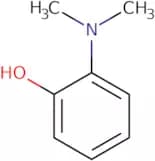
CAS:2-(Dimethylamino)phenol (DMP) is a neutral organic compound that is used as an analytical reagent. It reacts with hydrochloric acid to form phenols, which are then analyzed by fluorescence probe. DMP can also be used in the synthesis of aminophenols, which are used in the manufacture of dyes, pharmaceuticals, and other chemical products. It has been shown to inhibit mitochondrial functions and fatty acid synthesis. DMP binds to receptors on the surface of cells and can block the binding of drugs that target these receptors. DMP may also act as a hydrogen bond donor or acceptor depending on its environment.
Formula:C8H11NOPurezza:Min. 95 Area-%Colore e forma:White PowderPeso molecolare:137.18 g/molFrench maritime pine bark extract ™
CAS:Pycnogenol is a nonsteroidal anti-inflammatory drug that is derived from the bark of the French maritime pine tree. It has been shown to reduce bowel disease activity in animal models and has been found to be as effective as ibuprofen in human studies. Pycnogenol also inhibits the expression of toll-like receptor 4, which reduces inflammation in cells. Pycnogenol has also been shown to have an anti-inflammatory effect on human polymorphonuclear leukocytes and may be useful for treating various diseases such as cancer, cardiovascular diseases, or asthma. This compound also has natural antioxidant properties that are thought to protect against oxidative damage and help regulate blood pressure by inhibiting vascular smooth muscle proliferation.
Purezza:Min 95%Colore e forma:Powder8-Methoxycarbonyloctanol
CAS:8-Methoxycarbonyloctanol (8MCO) is a fatty acid molecule that has been shown to have significant inhibitory activities against Streptococcus pneumoniae in human serum. 8MCO is a synthetic molecule that can be synthesized from galactose and chloride. It has been found to have a molecular weight of 190.08 g/mol, melting point of -2°C, and boiling point of 217°C at 1 mmHg. 8MCO is soluble in water, methanol, and ethanol. This molecule can be used as an analytical tool for the detection of fatty acids by gas chromatography-mass spectrometry (GC-MS). It also exhibits enzymatic activity when incorporated into enzyme preparations such as esterases and lipases. 8MCO contains functional groups such as carbonyl (-CO), hydroxyl (-OH), carboxylic acid (-COOH), ether (-O-) and alcohol (-
Formula:C10H20O3Purezza:Min. 95%Colore e forma:Clear LiquidPeso molecolare:188.26 g/mol1H,1H,2H,2H-Tridecafluoro-1-n-octanol
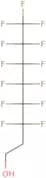
CAS:1H,1H,2H,2H-Tridecafluoro-1-n-octanol is a potent and selective halogenated hydrocarbon. It binds to DNA at the dinucleotide phosphate site, which is an important site for polymerase chain reaction (PCR) activation. 1HFN has been shown to be more effective than other halogenated hydrocarbons in vitro assays on rat liver microsomes. It has been used as an additive in wastewater treatment to remove organic contaminants and metal ions. In vivo studies have been carried out in CD-1 mice to determine the effects of 1HFN on the liver and kidneys; these studies showed no toxicological effects on these organs. 1HFN also has been shown to inhibit enzymes such as cytochrome P450 and monoamine oxidase B that are involved in drug metabolism and may lead to adverse reactions with drugs metabolized by these enzymes.Formula:C8H5F13OPurezza:Min. 95%Peso molecolare:364.1 g/mol(5Z,8Z,11Z)-5,8,11-Eicosatrienoic acid
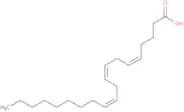
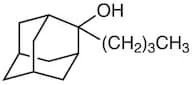
CAS:(5Z,8Z,11Z)-5,8,11-Icosatrienoic acid is a fatty acid that has anti-angiogenic effects. This compound is synthesized from arachidonic acid by the enzyme delta-5-desaturase and inhibits the formation of new blood vessels by promoting the death of endothelial cells. The synthesis of (5Z,8Z,11Z)-5,8,11-Icosatrienoic acid in liver cells is stimulated by an increase in body mass index and a decrease in fatty acids. This molecule has been shown to have physiological effects on brain function and to have anti-inflammatory properties. It also binds to the CB2 receptor.Formula:C20H34O2Purezza:Min. 95%Peso molecolare:306.48 g/mol2-Butyl-2-adamantanol
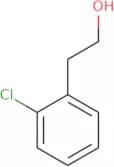
CAS:Formula:C14H24OPurezza:>98.0%(GC)Colore e forma:White to Almost white powder to crystalPeso molecolare:208.352-(2-Chlorophenyl)ethanol
CAS:2-(2-Chlorophenyl)ethanol is a chemical used to synthesize aldehydes and fatty acids. It is also used to validate the purity of products, such as bulk drugs. 2-(2-Chlorophenyl)ethanol can be found in solvents, impurities, and chlorobenzene. It is not recommended for use at temperatures above 50°C or below -10°C. This chemical should not be left in contact with plastic or rubber tubing for extended periods of time because it may cause discoloration or cracking. 2-(2-Chlorophenyl)ethanol is not radioactive, but it may become so after irradiation.
2-(2-Chlorophenyl)ethanol can be found in solvents, impurities, and chlorobenzene. It is not recommended for use at temperatures above 50°C or below -10°C. This chemical should not be left in contact with plastic orFormula:C8H9ClOPurezza:Min. 95%Peso molecolare:156.61 g/mol2,4-Hexadien-1-ol
CAS:2,4-Hexadien-1-ol is an organic compound that belongs to the group of aliphatic alcohols. It is a colorless liquid with a pleasant odor and high boiling point. 2,4-Hexadien-1-ol has been shown to be a potent inhibitor of tyrosinase in vitro. This inhibition may be due to its ability to form hydrogen bonds with zirconium oxide or the hydroxyl group on its structure. 2,4-Hexadien-1-ol also has been shown to inhibit enzymes that are involved in the metabolic pathways for xenobiotics such as sodium citrate. 2,4-Hexadien-1-ol is used in wastewater treatment because it can decompose organic matter and reduce sludge volume by increasing the solubility of oils and fats.
Formula:C6H10OPurezza:Min. 95%Colore e forma:White PowderPeso molecolare:98.14 g/mol(1S,2R,3S,5R)-2-((Benzyloxy)methyl)-6-oxabicyclo[3.1.0]hexan-3-ol
CAS:(1S,2R,3S,5R)-2-((Benzyloxy)methyl)-6-oxabicyclo[3.1.0]hexan-3-ol is a fine chemical with a CAS No. of 117641-39-1. It has been used as a versatile building block in the synthesis of complex compounds, and has also been used as a useful intermediate in the production of specialty chemicals. This compound is useful for research purposes and can be used as a reaction component in the synthesis of new compounds.Formula:C13H16O3Purezza:Min. 95%Colore e forma:Clear LiquidPeso molecolare:220.26 g/mol[(3S,4R)-4-(4-Fluorophenyl)-3-piperidinyl]methanol
CAS:[(3S,4R)-4-(4-Fluorophenyl)-3-piperidinyl]methanol is a chemical with the molecular formula C10H17FN2O. It is a versatile building block that can be used as an intermediate in organic synthesis, or in the synthesis of complex compounds such as pharmaceuticals. This product has been shown to have high quality and is a useful reagent in research.Formula:C12H16FNOPurezza:Min. 95%Colore e forma:PowderPeso molecolare:209.26 g/mol2-Ethylphenol
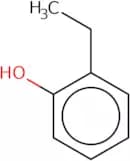
CAS:2-Ethylphenol is a phenolic acid, which is a type of organic compound that contains an hydroxyl group (-OH) bonded directly to an aromatic hydrocarbon ring. 2-Ethylphenol is used in the production of polymers, such as polyurethane and polyester, as well as in the manufacture of other chemicals. It can also be found in some food products, such as coffee beans and cocoa beans. 2-Ethylphenol has been shown to have P450 activity by increasing the rate at which rat liver microsomes metabolize testosterone into estradiol. The kinetic constants for this reaction were determined using solid phase microextraction (SPME). A multi-walled carbon nanotube (MWCNT) was used to extract 2-ethylphenol from a water sample. The sample preparation was done with anhydrous sodium sulfate, which acted as a desiccant and was then heated to remove any remaining water vaporFormula:C8H10OPurezza:Min. 97 Area-%Colore e forma:Colorless Clear LiquidPeso molecolare:122.16 g/mol2-Amino-4,6-dibromophenol
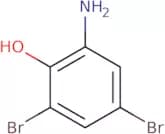
CAS:2-Amino-4,6-dibromophenol is an organic compound that is used in research for the synthesis of benzoxazoles and related compounds. It is a lactam analog that can be synthesized from commercially available starting materials. 2-Amino-4,6-dibromophenol has been shown to have pharmacological activity against tumor cells. This compound has also been used to synthesize regiospecific skeletal analogs of natural products.Formula:C6H5Br2NOPurezza:Min. 95 Area-%Colore e forma:Off-White PowderPeso molecolare:266.92 g/mol






![(1S,2R,3S,5R)-2-((Benzyloxy)methyl)-6-oxabicyclo[3.1.0]hexan-3-ol](/_next/image/?url=https%3A%2Fstatic.cymitquimica.com%2Fproducts%2F3D%2Fthumb-webp%2FFB167338.webp&w=3840&q=75)
![[(3S,4R)-4-(4-Fluorophenyl)-3-piperidinyl]methanol](/_next/image/?url=https%3A%2Fstatic.cymitquimica.com%2Fproducts%2F3D%2Fthumb-webp%2FFF92100.webp&w=3840&q=75)