Nucleotidi
I nucleotidi sono composti organici che fungono da mattoni per la costruzione degli acidi nucleici, essenziali per la formazione del DNA e dell'RNA. Ogni nucleotide è composto da una base azotata, una molecola di zucchero e uno o più gruppi fosfato. Questi nucleotidi si uniscono per formare lunghe catene, creando il materiale genetico che porta e trasmette informazioni genetiche in tutti gli organismi viventi. In questa sezione, troverai una vasta gamma di nucleotidi cruciali per la ricerca in genetica, biologia molecolare e biochimica. Sono fondamentali per studiare i processi genetici, sintetizzare acidi nucleici e sviluppare strumenti diagnostici e terapeutici. Da CymitQuimica, offriamo nucleotidi di alta qualità per supportare la tua ricerca scientifica e applicazioni, garantendo precisione e affidabilità nei tuoi esperimenti.
Sottocategorie di "Nucleotidi"
Trovati 2634 prodotti di "Nucleotidi"
Ordinare per
Purezza (%)
0
100
|
0
|
50
|
90
|
95
|
100
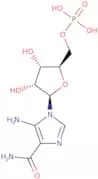
5-Aminoimidazole-4-carboxamide-1-b-D-ribofuranose 5'-monophosphate
CAS:Prodotto controllato<p>5-Aminoimidazole-4-carboxamide-1-b-D-ribofuranose 5'-monophosphate (AICAR) is an analogue of AMP that activates the AMPK pathway. It is a potent activator that increases the activity of this enzyme, which regulates cellular energy metabolism. AICAR has been shown to induce significant cytotoxicity in k562 cells and to increase the levels of ATP in these cells. This compound has also been shown to have potential use in metabolic disorders, such as type 2 diabetes, by increasing uptake and kinetic of glucose. AICAR has also been shown to activate the AMPK pathway in prostate cancer cells and increase cellular physiology.</p>Formula:C9H15N4O8PPurezza:Min. 95 Area-%Colore e forma:White PowderPeso molecolare:338.21 g/molMizoribine
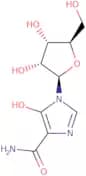
CAS:<p>Inhibitor of heat shock protein Hsp60; immunosuppressant</p>Formula:C9H13N3O6Purezza:Min. 95%Colore e forma:White PowderPeso molecolare:259.22 g/mol2'-Deoxy-5-hydroxymethyluridine
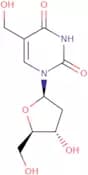
CAS:<p>2'-Deoxy-5-hydroxymethyluridine (DHMU) is a natural compound that has been shown to have inhibitory properties against bowel disease. DHMU inhibits the proliferation of wild-type strains of Salmonella enterica serovar Typhimurium and Escherichia coli by binding to their nuclear dna. It also prevents DNA synthesis in human polymorphonuclear leukocytes and synergizes with pharmacological agents, such as radiation or chemotherapeutic agents, to induce cell death. This agent can be used as an analytical method for the detection of nucleic acids.</p>Formula:C10H14N2O6Purezza:Min. 98.0 Area-%Colore e forma:White PowderPeso molecolare:258.23 g/molN6-Benzoyladenosine
CAS:N6-Benzoyladenosine is a purine nucleoside that is synthesized from uridine and has a high resistance to phosphorylation. It is found in the mitochondrial matrix of rat hepatocytes and can be used as a specific agent for the treatment of symptoms related to Parkinson's disease. N6-Benzoyladenosine inhibits protein synthesis by inhibiting the catalytic subunit of guanine nucleotide-binding proteins, which are involved in cellular energy production. It also inhibits camp levels and camp concentrations in mitochondria, which may be due to its effects on the trimethylbenzodiazepine receptor.Formula:C17H17N5O5Purezza:Min. 98 Area-%Colore e forma:White PowderPeso molecolare:371.35 g/mol8-Bromo-2'-deoxyguanosine
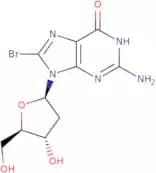
CAS:<p>8-Bromo-2'-deoxyguanosine is a reactive brominated compound that has been shown to stabilize DNA strands. The effects of 8-bromo-2'-deoxyguanosine on the stability of DNA are due to the steric interactions between the bromine and amines in the DNA backbone, which prevent nucleophilic attack. 8-Bromo-2'-deoxyguanosine is an antihistamine, but it has also been used as a precursor for other drugs such as zidovudine, an antiviral drug used in HIV/AIDS therapy. It has also been proposed as a potential treatment for atherosclerosis.</p>Formula:C10H12BrN5O4Purezza:Min. 90 Area-%Colore e forma:Off-White PowderPeso molecolare:346.14 g/mol2'-C-Methyladenosine
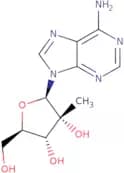
CAS:<p>Antiviral compound; inhibitor of viral RNA replication</p>Formula:C11H15N5O4Purezza:Min. 95%Colore e forma:PowderPeso molecolare:281.27 g/molN4-Benzoyl-L-cytidine
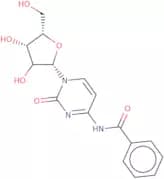
CAS:<p>N4-Benzoyl-L-cytidine is an acid that is used as a building block in organic synthesis. It is a precursor to many biologically active compounds, including nucleosides and nucleotides. N4-Benzoyl-L-cytidine is an aminoacylated derivative of cytidine, which can be synthesized by reacting the benzoyl chloride with the corresponding amine. This reaction product can be purified by extraction into an organic solvent followed by washing with water and drying under vacuum. The compound can be converted to its hydrolysis products, benzoic acid and pyrrolidinone, through acidic hydrolysis. The synthesis of N4-benzoyl-L-cytidine can also be achieved using solid phase chemistry (SPS) to exploit the reactivity of amino acids and their derivatives.</p>Formula:C16H17N3O6Purezza:Min. 95%Colore e forma:PowderPeso molecolare:347.32 g/mol2'-Deoxycytidine-3'-monophosphate
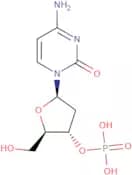
CAS:2'-Deoxycytidine-3'-monophosphate free acid is a nucleotide that is synthesized from deoxyadenosine triphosphate and deoxycytidine triphosphate in the presence of ribonucleotide reductase. It is the precursor to DNA synthesis, where it is converted to dCTP by thymidylate synthase. 2'-Deoxycytidine-3'-monophosphate free acid has low energy and vibrational levels, due to its glycosidic bond. This bond can be broken by chromatographic methods. The excised activated product uridine can be used for carcinogenesis studies, as well as for other molecular studies such as electron microscopy and crystallography. 2'-Deoxycytidine-3'-monophosphate free acid is an unstable molecule that can undergo dinucleotide rearrangements, electron transfer, or bond cleavage to form a metastable molecule withFormula:C9H14N3O7PPurezza:Min. 95%Colore e forma:PowderPeso molecolare:307.2 g/molTenofovir disoproxil fumarate
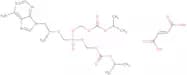
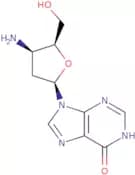
CAS:<p>Anti-viral; reverse transcriptase inhibitor</p>Formula:C23H34N5O14PPurezza:Min. 97.5 Area-%Colore e forma:White Off-White PowderPeso molecolare:635.52 g/mol3'-Amino-2',3'-dideoxyinosine
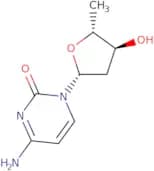
CAS:<p>3'-Amino-2',3'-dideoxyinosine acts as a chain terminator in DNA synthesis due to the absence of a 3'-hydroxyl group. The 3'-amino group allows for the attachment of various molecules to the 3' end of oligonucleotides, and the inosine base introduces the potential for wobble base pairing, making it a specialized tool for research and potential diagnostic applications.</p>Formula:C10H13N5O3Purezza:Min. 95%Peso molecolare:251.24 g/mol2',5'-Dideoxycytidine
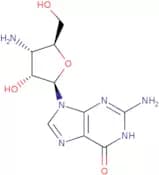
CAS:<p>2',5'-Dideoxycytidine is a nucleoside for use in a variety of applications</p>Formula:C9H13N3O3Purezza:Min. 95%Colore e forma:White Off-White PowderPeso molecolare:211.22 g/mol3'-Amino-3'-deoxyguanosine
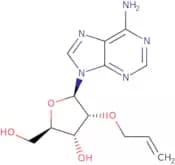
CAS:<p>terminates RNA strand synthesis catalyzed by RNA polymerase.</p>Formula:C10H14N6O4Purezza:Min. 95%Colore e forma:Off-White PowderPeso molecolare:282.3 g/mol2'-O-Allyladenosine
CAS:<p>2'-O-Allyladenosine is a synthetic nucleoside analog that has been shown to be a competitive inhibitor of the enzyme guanosine kinase. It has a high yield and can be used as a synthon for the preparation of 2'-deoxyribose nucleosides. The alkylation of allyl groups onto adenosines provides an efficient method for synthesizing allylated purines, which are analogs with increased stability and affinity for DNA sequences. 2'-O-Allyladenosine has been shown to bind to DNA, RNA, and proteins. Its interaction with DNA is stronger than that of unmodified adenosine, due to the presence of two allyl groups that can form hydrogen bonds with the phosphate backbone. This interaction may also lead to increased affinity for sequences containing G-C base pairs.</p>Formula:C13H17N5O4Purezza:Min. 95%Colore e forma:PowderPeso molecolare:307.31 g/mol5-Azacytidine
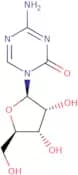
CAS:<p>An azanucleoside and epigenetic modulator that interferes with nucleic acid metabolism. The compound gets incorporated into RNA and inhibits ribonucleotide reductase subunit RRM2 in leukemia cell lines. Intracellularly, 5-azacytidine can get converted into 2′-deoxy-5-azacytidine (decitabine) and subsequently incorporated in DNA, where it irreversibly inhibits DNMT1 methyltransferase. In human epithelial cell lines, this compound decreases Src-activated expression of a histone chaperone CAF1 and inhibits cell motility and invasiveness.</p>Formula:C8H12N4O5Purezza:Min. 95%Colore e forma:White Off-White PowderPeso molecolare:244.21 g/mol5-(Azidomethyl)uridine
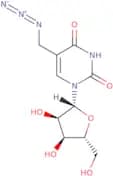
CAS:<p>5-(Azidomethyl)uridine (5-AZA-U) is a cytosolic nucleoside analog that inhibits the replication of herpes simplex virus type 1 (HSV-1). It is resistant to degradation by cellular nucleases and is fluorescent, making it a clickable substrate for microscopy. 5-AZA-U has been shown to inhibit the transcription of viral DNA and the synthesis of viral proteins in mammalian cells. This drug has also been shown to be effective against cancer and hepatitis B virus (HBV). 5-AZA-U can be used as an antiviral agent because of its ability to inhibit the posttranscriptional gene expression of HSV-1. 5-(Azidomethyl)uridine is also an analog of uridine, which can be used to study intracellular signaling pathways that regulate proliferation, differentiation, or apoptosis in mammalian cells.</p>Formula:C10H13N5O6Purezza:Min. 95%Colore e forma:PowderPeso molecolare:299.24 g/molAcetyl coenzyme A lithium
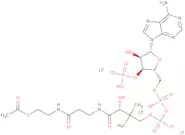
CAS:<p>Acetyl coenzyme A lithium salt is a drug that inhibits the production of acetyl-CoA, which is an important molecule in the metabolism of fatty acids. This drug has been shown to be effective against cancerous cells by inhibiting the synthesis of lysine residues and carnitine. Acetyl coenzyme A lithium salt has also been shown to inhibit the growth of typhimurium, which may be due to its ability to inhibit NADPH-cytochrome p450 reductase. Acetyl coenzyme A lithium salt has not been shown to have any carcinogenic potential in humans, but it has been shown to have carcinogenic potential in animal models.</p>Formula:C23H38N7O17P3S•LixPurezza:Min. 85%Colore e forma:PowderPeso molecolare:809.57 g/mol7-Methylguanosine 5'-triphosphate sodium
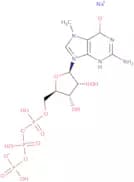
CAS:<p>7-Methylguanosine 5'-triphosphate sodium salt is a Novel, High purity, Activator, High quality, Modified, Ribonucleosides. CAS No. 104809-18-9. Synthetic, DNA, Phosphoramidites. Anticancer, diphosphate. 7-Methylguanosine 5'-triphosphate sodium salt is an antiviral agent that blocks the synthesis of viral RNA or DNA by inhibiting the enzyme ribonucleotide reductase. It is a monophosphate analog of guanosine triphosphate and may be useful in the treatment of cancer or antiviral therapy because it inhibits cell proliferation and induces apoptosis in tumor cells.</p>Formula:C11H18N5O14P3•NaxPurezza:Min. 85 Area-%Colore e forma:PowderPeso molecolare:537.21 g/mol5'-O-Acetyladenosine
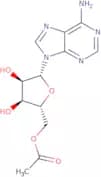
CAS:<p>5'-O-Acetyladenosine is a labile nucleoside that can be converted to adenosine. It is a substrate for the enzyme ribonucleotide reductase, which converts it to adenosine monophosphate. 5'-O-Acetyladenosine has been shown to function as an equilibrating agent in the synthesis of guanosine and other pyrimidine nucleotides. In addition, it is a precursor for the synthesis of purines. 5'-O-Acetyladenosine can be synthesized from trimethyl phosphate and chloride gas yields acetaldehyde, which then reacts with phosphorus oxychloride to form 5'-O-acetyladeninol, which undergoes hydrolysis to yield 5'-O-acetyladenosine. The regioselectivity of this reaction depends on the concentration of reactants and solvents used in the reaction.</p>Formula:C12H15N5O5Purezza:Min. 95%Colore e forma:White PowderPeso molecolare:309.28 g/mol2,2'-Anhydrouridine
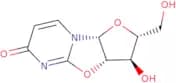
CAS:<p>The nucleophilic opening of 2,2'-Anhydrouridine represents a novel synthetic approach for elaborating the ring of nucleosides. For example, compounds such as 2-amino-, 2-fluoro- and 2-phenylseleno-2-deoxyuridines are prepared from the nucleophilic opening of 2,2'-Anhydrouridine.Â2,2'-Anhydrouridine inhibits uridine phosphorylase, a key enzyme targeted by some antitumor drugs.</p>Formula:C9H10N2O5Purezza:Min. 98 Area-%Colore e forma:White Off-White PowderPeso molecolare:226.19 g/mol5'-O-DMT-2'-O-methyl-N6-phenoxyacetyladenosine
CAS:<p>5'-O-DMT-2'-O-methyl-N6-phenoxyacetyladenosine is a novel synthetic nucleoside with antiviral and anticancer activities. It is a phosphoramidite that can be used to synthesize oligonucleotides of any sequence. It is a nucleoside analogue that has been shown to inhibit the activity of DNA gyrase and topoisomerase IV, which are enzymes that maintain the integrity of bacterial DNA. 5'-O-DMT-2'-O-methyl-N6-phenoxyacetyladenosine is also an activator of viral transcription and replication.<br>5'-O-DMT-2'-O-methyl-N6-phenoxyacetyladenosine has been shown to be active against methicillin resistant Staphylococcus aureus (MRSA) and Clostridium perfringens, although it is not active against acid fast bacteria such</p>Formula:C40H39N5O8Purezza:Min. 95 Area-%Colore e forma:PowderPeso molecolare:717.77 g/mol