Carboidrati e Glicoconiugati
I carboidrati sono composti organici costituiti da carbonio, idrogeno e ossigeno, con una struttura di base formata da monosaccaridi. Questi possono unirsi per formare disaccaridi, oligosaccaridi o polisaccaridi, a seconda del numero di unità monomeriche. I carboidrati svolgono un ruolo fondamentale nell’immagazzinamento dell’energia, nella struttura cellulare e nella comunicazione cellulare. I loro derivati sono utilizzati nei prodotti farmaceutici, come dolcificanti ed eccipienti.
Presso CymitQuimica, offriamo un’ampia varietà di carboidrati e loro derivati per la ricerca e le applicazioni industriali.
Trovati 5014 prodotti di "Carboidrati e Glicoconiugati"
Ordinare per
Purezza (%)
0
100
|
0
|
50
|
90
|
95
|
100
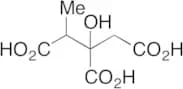
2-Methylcitric Acid
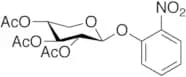
CAS:<p>Applications 2-Methylcitric Acid is a metabolite of Citric Acid (C521000). It is formed from the condensation of propionoyl-CoA and oxaloacetic acid catalyzed by a citrate synthase enzyme.<br>References Allen, R. H., et al.: Metabolism, 42, 978 (1993)<br></p>Formula:C7H10O7Colore e forma:NeatPeso molecolare:206.152’-Nitrophenyl 2,3,4-Tri-O-acetyl-β-D-xylopyranoside
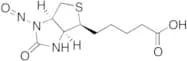
CAS:Prodotto controllato<p>Stability Store in Freezer<br>Applications 2’-Nitrophenyl 2,3,4-Tri-O-acetyl-β-D-xylopyranoside (cas# 10256-24-3) is a compound useful in organic synthesis.<br></p>Formula:C17H19NO10Colore e forma:NeatPeso molecolare:397.331'-Nitrosobiotin
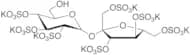
CAS:<p>Applications Nitrosobiotin Impurity is a useful research chemical.<br></p>Formula:C10H15N3O4SColore e forma:NeatPeso molecolare:273.31Sucrose Heptasulfate, Potassium Salt, Technical Grade
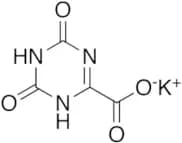
CAS:<p>Applications Used as a reference standard for the drug Sucralfate.<br></p>Formula:C12H15O32S7·7KColore e forma:Off-WhitePeso molecolare:1169.37Oxonic Acid Potassium Salt
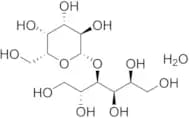
CAS:Prodotto controllato<p>Applications Antitumor effect potentiator and antitumor agent.<br>References Chelbova, et al.: Biochem. Pharmacol., 19, 1785 (1970), Collins, J., et al.: Clin. Pharmacol. Ther., 28, 235 (1980), Hoff, P., et al.: Anticancer Drugs, 9, 479 (1998), Backus, H., et al.: Oncol. Res., 12, 231(2000), Peters, G., et al.: J. Clin. Oncol., 19, 4267 (2001).<br></p>Formula:C4H2N3O4·KColore e forma:NeatPeso molecolare:195.17Lactitol Monohydrate
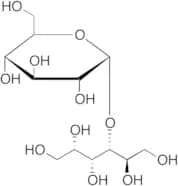
CAS:Prodotto controllato<p>Applications Lactitol Monohydrate is the hydrated form of Lactitol(L113550). Lactitol is listed as an excipient in some prescription drugs, such as Adderall. Lactitol is a sugar alcohol used as a replacement bulk sweetener for low calorie foods. It is also used medically as a laxative.<br>References Bolhuis, G., et al.: Drug Dev. Ind. Pharm., 35, 671 (2009); Toda, Y.: New Food Ind., 33, 21 (1991); Egger, B., et al.: Eur. J. Clin. Pharmacol., 37, 205 (1989);<br></p>Formula:C12H24O11·H2OColore e forma:NeatPeso molecolare:362.33trans-4-[[(2-Amino-3,5-dibromophenyl)methylene]amino]cyclohexanol(Ambroxol Impurity C)
CAS:Prodotto controllato<p>Impurity Ambroxol EP Impurity C Hydrochloride<br>Stability Light Sensitive<br>Applications trans-4-[[(2-Amino-3,5-dibromophenyl)methylene]amino]cyclohexanol is an impurity of Ambroxol (A575900), a bronchosecretolytic drug and the metabolite of Bromhexine (B678600). Ambroxol EP Impurity C<br>References Jauch, R., et al.: Arzneim-Forsch., 13, 474 (1963)<br></p>Formula:C13H16Br2N2OColore e forma:NeatPeso molecolare:376.09rac 1-Oleoyl Glycerol-d5
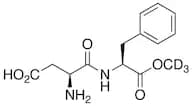
CAS:Prodotto controllato<p>Applications Monoglycerides fatty acid esters are useful for improvement of texture and flavor of beverages. 93% 1-Oleoyl, 7% 2-oleoyl.<br>References Lee, T.-H., et al.: J. Nat. Prod., 72, 1960 (2009),<br></p>Formula:C21D5H35O4Colore e forma:NeatPeso molecolare:361.57Aspartame-D3
CAS:Prodotto controllato<p>Applications A labelled dipeptide ester about 160 times sweeter than sucrose in aqueous solution. A non-nutritive sweetener.<br>References Cloninger, B., et al.: Science, 170, 81 (1970), Oppermann, et al.: J. Nutr., 103, 1454 (1973),<br></p>Formula:C14H15D3N2O5Colore e forma:NeatPeso molecolare:297.32trans-4-[[(2-Amino-5-bromophenyl)methyl]amino]-cyclohexanol
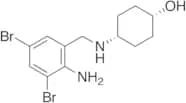
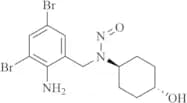
CAS:<p>Applications trans-4-[[(2-Amino-5-bromophenyl)methyl]amino]-cyclohexanol is an impurity of Ambroxol (A575900), a bronchosecretolytic drug and a metabolite of Bromohexine.<br>References Jauch, R., et al.: Arzneim-Forsch., 13, 474 (1963)<br></p>Formula:C13H19BrN2OColore e forma:NeatPeso molecolare:299.211’N-Benzyl Biotin
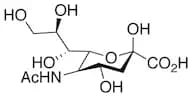
CAS:Prodotto controllato<p>Applications A biotin derivative used in the novel enantioselective syntheses of (+)-Biotin.<br>References Robinson, A.E.., et al.: J. Pharma. Pharmacol., 16, 342 (1964),<br></p>Formula:C17H22N2O3SColore e forma:Light Beige SolidPeso molecolare:334.43N-Acetylneuraminic Acid
CAS:Prodotto controllato<p>Applications N-Acetyl-β-neuraminic Acid is a useful reagent in sequential esterification and acetylation of β-Sialyl phosphite and phosphoramidite.<br>References Methods Enzymol., 5, 391 (1962), Biochemistry, 18, 2086 (1979)<br></p>Formula:C11H19NO9Colore e forma:Off WhitePeso molecolare:309.27Citric Acid
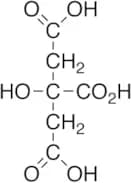
CAS:<p>Applications Citric acid is a weak organic acid that is known as a commodity chemical, as more than a million tonnes are produced every year by mycological fermentation on an industrial scale using crude sugar solutions, such as molasses and strains of Aspergillus niger. Citric acid is widely distributed in plants and in animal tissues and fluids and exist in greater than grace amounts in variety of fruits and vegetables, most notably in citrus fruits such as lemon and limes. Citric acid is mainly used as an acidifier, flavoring agent and chelating agent. Citric acid is also a metabolite of Dimethyl Fumarate (D464965), a compound used as a treatment for the relapsing forms of multiple sclerosis and psoriasis.<br>References Dawson, R.M., et al.: Data for Biochem. Rsch., (1959); Gruber, C. M., et al.: J. Pharmacol. Exp. Ther., 94, 65 (1948); Lofty, W.A., et al.: Bioresource. Tech., 98, 3470 (2007); Schimrigk, S., et al.: Eur. J. Neurol., 13, 604 (2006)<br></p>Formula:C6H8O7Colore e forma:NeatPeso molecolare:192.126,6'-Iminobis(N,N,N-trimethyl-1-hexanaminium) Dibromide Hydrobromide
CAS:<p>Applications 6,6'-Iminobis[N,N,N-trimethyl-1-hexanaminium is an impurity of the pharmaceutical Welchol (Colesevelam).<br>References Schoftner, R., et al.: J. Chromatogr., 920, 333 (2001),<br></p>Formula:C18H44Br3N3Colore e forma:NeatPeso molecolare:542.27rac-cis-Ambroxol
CAS:Prodotto controllato<p>Impurity Ambroxol EP Impurity D<br>Applications cis-Ambroxol is the cis-isomeric impurity of Ambroxol (A575905). cis-Ambroxol is a metabolite Bromhexine (B678600). Ambroxol EP Impurity D<br>References Liu, J. et al.: J. Pharmac. Biomed. Anal., 51, 1134 (2010); Schmid, J.: J. Chrom. Biomed. Appl., 414, 65 (1987);<br></p>Formula:C13H18Br2N2OColore e forma:NeatPeso molecolare:378.10Xylitol
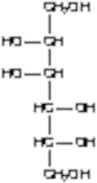
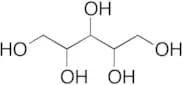
CAS:Prodotto controllato<p>Applications Xylitol, is a lower-calorie alternative to table sugar. Studies have shown xylitol chewing gum can help prevent acute otitis media. Xylitol is categorized by the U.S. Food and Drug Administration as a food additive.<br>References Code of Federal Regulations Title 21, US., FDA (2012); Azarparzhooh, A., et al.,: Cochrane data. Sys. Revi. (online) (11), (2011);<br></p>Formula:C5H12O5Colore e forma:NeatPeso molecolare:152.15Erdosteine Thioacid Disodium Salt
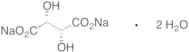
CAS:Prodotto controllato<p>Stability Air Sensitive, Hygroscopic<br>Applications The active metabolite of Erdosteine (E596050).<br>References Dechant, K., et al.: Drugs, 52, 875 (1996), Braga, P., et al.: Arzneim.-Forsch., 49, 344 (1999), Braga, P., et al.: Antimicrob. Agents Chemother., 43, 1013 (1999),<br></p>Formula:C8H11NO5S2·2NaColore e forma:Off-WhitePeso molecolare:311.29Thymidine-α,α,α,6-d4
CAS:Prodotto controllato<p>Applications Thymidine-alpha,alpha,alpha,6-d4 (CAS# 347841-67-2) is a useful isotopically labeled research compound.<br></p>Formula:C10H10D4N2O5Colore e forma:NeatPeso molecolare:246.2532Xylobiose
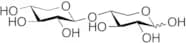
CAS:Prodotto controllato<p>Applications Xylobiose is a disaccharide that can reduce the blood sugar and blood fat and inhibit the fat accumulation of diet-induced obese rats.<br>References Chen, H., et al.: Shipin Kexue, 35, 255 (2014)<br></p>Formula:C10H18O9Colore e forma:NeatPeso molecolare:282.24Rubusoside
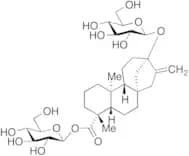
CAS:Prodotto controllatoFormula:C32H50O13Colore e forma:White To Off-WhitePeso molecolare:642.73Voglibose
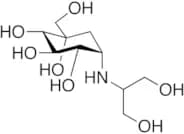
CAS:<p>Applications An α-Glucosidase inhibitor used as an antidiabetic.<br>References Matsuo, T., et al.: Am. J. Clin. Nutr., 55, 314S (1992), Goke, B., et al.: Digestion, 56, 493 (1995), Shinozaki, K., et al.: Metabolism, 45, 731 (1996)<br></p>Formula:C10H21NO7Colore e forma:NeatPeso molecolare:267.28D-Psicose
CAS:Prodotto controllato<p>Applications D-Psicose is a C3 epimer of L-Fructose, which maintains the ability to reduce fat accumulation when added to a diet through inhibition of intestinal α-glucosidase.<br>References Matsuo, T. et al.: J. Clin. Biochem. Nutri., 45, 202 (2009); Matsuo, T. et al.: J. Clin. Biochem. Nutri., 30, 55 (2001);<br></p>Formula:C6H12O6Colore e forma:Off-WhitePeso molecolare:180.16Biotin
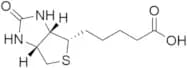
CAS:<p>Applications Biotin is a growth factor present in minute amounts in every living cell. Plays an indispensable role in numerous naturally occurring carboxylation reactions. Occurs mainly bound to proteins or polypeptides. The richest sources are liver, kidney, pancreas, yeast, and milk. The biotin content of cancerous tumors is higher than that of normal tissue.<br>References du Vigneaud, et al.: J. Biol. Chem., 146, 475 (1942); Traub, et al.: Nature, 178, 649 (1956); Siegel, H., et al.: Experienta, 37, 789 (1981); Vesely, D.L., Science, 216, 1329 (1982); Hugues, M., et al.: Biochemistry, 31, 12 (1992);<br></p>Formula:C10H16N2O3SColore e forma:WhitePeso molecolare:244.31Sodium L-(+)-Tartaric Acid Dihydrate
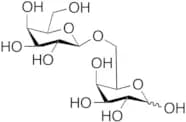
CAS:Formula:C4H4O6·2Na·2H2OColore e forma:NeatPeso molecolare:230.086-O-β-D-Galactopyranosyl-D-galactose
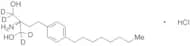
CAS:<p>Applications 6-O-β-D-Galactopyranosyl-D-galactose can be as a substrate of β-galactosidase in research studies.<br>References Kotake, T., et al.: Plant Physio., 138(3), 1563-1576 (2005)<br></p>Formula:C12H22O11Colore e forma:NeatPeso molecolare:342.30Fingolimod-d4 Hydrochloride
CAS:Prodotto controllato<p>Applications A labelled derivative of ISP-1 (myriocin), a fungal metabolite of the Chinese herb Iscaria sinclarii as well as a structural analogue of Sphingosine. It is a novel immune modulator that prolongs allograft transplant survival in numberour models by inhibiting lymphocyte emigration from lymphoid organs. Reported to be phosphorylated by sphingosine kinase to FTY720-P, which has been shown to potently stimulate GTPgS binding activity in S1P-transfected CHO cells (EC50 = 210 pM, 4.9 nM, 4.3 nM, and 1 nM for S1P1, S1P3, S1P4 and S1P5, respectively).<br>References Brinkmann, V., et al.: Transplantation, 72, 764 (2001), Brinkmann, et al.: J. Biol. Chem., 277, 24, 21453 (2002), Mtaloubian, M., et al.: Nature, 427, 355 (2004),<br></p>Formula:C19H30D4ClNO2Colore e forma:NeatPeso molecolare:347.96D-[13C5]Xylose
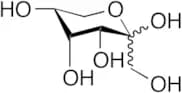
CAS:<p>Applications D-[13C5]Xylose is a labeled analog of D-Xylose, which is used in diagnostic malabsorption tests as well as in the production of Furfural.<br>References Ehrenpreis E.D. et al.: J. Acquir. Immune. Defic. Syndr., 5, 1047 (1992); Sérgio L. et al.: Cat. Comm., 9, 2144 (2008);<br></p>Formula:C5H10O5Colore e forma:White SolidPeso molecolare:155.09L-Thioproline
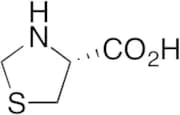
CAS:<p>Applications L-Thioproline is used to create a monolayer on gold electrodes for the determination Copper(II). L-Thioproline has shown to be an effect inhibitor of proline absorption in Saccharomyces chevalieri.<br> Not a dangerous good if item is equal to or less than 1g/ml and there is less than 100g/ml in the package<br>References Cui, X., et. al.: Sci. China Chem., 53, 257 (2010); Magana-Schwenchke, N., Schwencke, J.: BBA-Biomembranes, 173, 313 (1969)<br></p>Formula:C4H7NO2SColore e forma:NeatPeso molecolare:133.172-Amino-2-[2-(4-hexylphenyl)ethyl]-1,3-propanediol
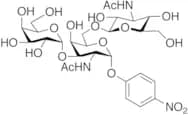
CAS:Prodotto controllatoFormula:C17H29NO2Colore e forma:NeatPeso molecolare:279.424-Nitrophenyl 2-Acetamido-6-O-(2-acetamido-2-deoxy-β-D-glucopyranosyl) -3-O-(β-D-galactopyranosyl)-2-deoxy-α-D-galactopyranoside
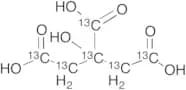
CAS:Prodotto controllatoFormula:C28H41N3O18Colore e forma:NeatPeso molecolare:707.63Citric Acid-13C6
CAS:<p>Applications Citric Acid-13C6 is an isotope labelled compound of citric acid (C521000). Citric acid is mainly used as an acidifier, flavoring agent and chelating agent. Citric acid is also a metabolite of Dimethyl Fumarate (D464965), a compound used as a treatment for the relapsing forms of multiple sclerosis and psoriasis.<br>References Dawson, R.M., et al.: Data for Biochem. Rsch., (1959); Gruber, C. M., et al.: J. Pharmacol. Exp. Ther., 94, 65 (1948); Lofty, W.A., et al.: Bioresource. Tech., 98, 3470 (2007); Schimrigk, S., et al.: Eur. J. Neurol., 13, 604 (2006)<br></p>Formula:C6H8O7Colore e forma:NeatPeso molecolare:198.08Lauramine Oxide
CAS:Prodotto controllato<p>Applications Lauramine Oxide, is an frequently-used amine oxide surfactant. It is strongly hydrophilic , and it forms normal micelles and normal liquid crystalline phases.<br> Not a dangerous good if item is equal to or less than 1g/ml and there is less than 100g/ml in the package<br>References Kocherbitov, v., et al.: J. Molec. Struct.: Theochem., 808, 111 (2007); Kocherbitov, v., et al.: J. Phys. Chem. B., 110 (27), 13649 (2006);<br></p>Formula:C14H31NOColore e forma:NeatPeso molecolare:229.40Biocytin
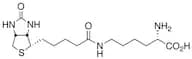
CAS:<p>Applications Useful for the synthesis of Biocytin containing peptides to study the mechanism of reactions catalyzed by biotin - containing enzymes.<br>References Bodanszky, M., and Fagan, D.T.: J. Am. Chem. Soc., 99, 235 (1977)<br></p>Formula:C16H28N4O4SColore e forma:White To Off-WhitePeso molecolare:372.48Acarbose D-Fructose Impurity
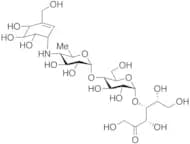
CAS:Prodotto controllato<p>Impurity Acarbose EP Impurity A<br>Applications Acarbose D-Fructose (Acarbose EP Impurity A) is an impurity of Acarbose (A123500) (1,2,3,4). Acarbose impurity A.<br>References (1) Kim, I., et al.: J. Biol. Chem., 267, 22108 (1992) (2) Tonozuka, T., et al.: Carbohydr. Res., 261, 157 (1994) (3) Brzozowski, A., et al.: Biochemistry, 36, 10837 (1997) (4) Cha, H., et al.: Eur. J. Biochem., 253, 251 (1998)<br></p>Formula:C25H43NO18Colore e forma:NeatPeso molecolare:645.60cis-Ambroxol Hydrochloride
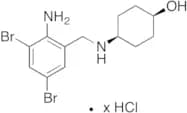
CAS:<p>Stability Hygroscopic<br>Applications cis-Ambroxol Hydrochloride is a cis isomer of Ambroxol Hydrochloride (A575900 ), a metabolite of Bromohexine. Ambroxol Hydrochloride is a bronchosecretolytic drug.<br>References Jauch, R., et al.: Arzneim-Forsch., 13, 474 (1963)<br></p>Formula:C13H18Br2N2O·x(HCl)Colore e forma:NeatPeso molecolare:378.10 + x(36.46)D-Glucono-1,4-lactone (>85%)
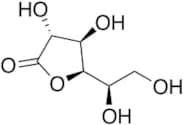
CAS:Prodotto controllato<p>Applications D-Glucono-1,4-lactone was a metabolite studied in mice tissue with induced chronic stress.<br>References Hamiliton, P. J., et al.: Sci. Rep., 10, 18134 (2020)<br></p>Formula:C6H10O6Purezza:>85%Colore e forma:NeatPeso molecolare:178.14D-Maltotriose
CAS:Prodotto controllato<p>Applications D-Maltotriose is a trisaccharide resulting from the digestion of Amalose by α-Amalase.<br>References Carvalho, G., et al.: App. Biochem. Biotechnol., 155, 356 (2009), Huuskonen, A., et al.: App. Environ. Microbiol., 76, 1563 (2010), Chang, S., et al.: J. Agric. Food Chem., 58, 2908 (2010),<br></p>Formula:C18H32O16Colore e forma:Off-WhitePeso molecolare:504.44Plerixafor
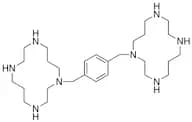
CAS:<p>Stability Hygroscopic<br>Applications Plerixafor is a hematopoietic stem cell (HSC) mobilizer that inhibits the CXCR4 chemokine receptor and blocks binding of its ligand, stromal cell-derived factor-1-α (SDF-1-α). This agent was approved on Dec. 15, 2008, as treatment in combination with granulocyte-colony stimulating factor (G-CSF) to mobilize HSCs to the peripheral blood for collection and subsequent autologous transplantation in patients with non-Hodgkin's lymphoma (NHL) and multiple myeloma (MM). Selective CXCR4 antagonist.<br>References Xie, T., et al.: Science, 290, 328 (2000), Leone, D., et al.: J. Pharmacol. Exp. Ther., 305, 1150 (2003), Chigaev, A., et al.: J. Immunol. 178, 6828 (2007), Kiel, M., et al.: Cell Stem Cell, 1, 204 (2007),<br></p>Formula:C28H54N8Colore e forma:Off White PowderPeso molecolare:502.789-Methyl Biotin (mixture of diastereomers)
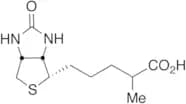
CAS:Prodotto controllato<p>Impurity Biotin EP Impurity D<br>Applications Biotin (B389040) impurity. Biotin EP Impurity D.<br>References Trotter, J., et al.: Biochemistry, 5, 713 (1966), Suurkuusk, J., et al.: Eur. J.Biochem., 28, 438 (1972),<br></p>Formula:C11H18N2O3SColore e forma:NeatPeso molecolare:258.34Isomalt
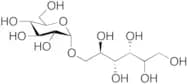
CAS:<p>Stability Hygroscopic<br>Applications Isomalt is a sugar alcohol and artificial sweetener.<br>References Martinez-Cervera, S. et al.: Food Hydro., 35, 1 (2014); Ilic, I. et al.: Int. J. Pharm., 446, 6 (2013);<br></p>Formula:C12H24O11Colore e forma:White To Off-WhitePeso molecolare:344.31Sucralose
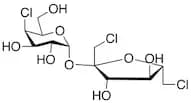
CAS:<p>Applications A low-calorie artificial sweetener<br>References Agresti, C., et al.: Eur. J. Pharm. Biopharm., 70, 226 (2008), Kidd, M., et al.: Am. J. Physiol., 295, G260 (2008),<br></p>Formula:C12H19Cl3O8Colore e forma:WhitePeso molecolare:397.63(-)-Biotin Sulfoxide
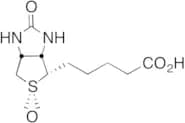
CAS:<p>Applications (-)-Biotin Sulfoxide, is a metabolite of Biotin (B389040), which is a growth factor present in minute amounts in every living cell, and plays an indispensable role in numerous naturally occurring carboxylation reactions.<br>References du Vigneaud, et al.: J. Biol. Chem., 146, 475 (1942), Traub, et al.: Nature, 178, 649 (1956), Siegel, H., et al.: Experienta, 37, 789 (1981), Vesely, D.L., Science, 216, 1329 (1982), Hugues, M., et al.: Biochemistry, 31, 12 (1992),<br></p>Formula:C10H16N2O4SColore e forma:White To Off-WhitePeso molecolare:260.314-Amino-3.4-dideoxy-2-C-(hydroxymethyl)-D-epi-inositol
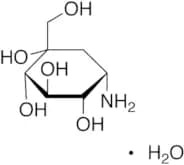
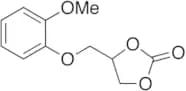
CAS:Prodotto controllato<p>Applications Valiolamine is a aminocyclitol that exhibits potent alpha-D-glucosidase inhibitory activity against porcine intestinal sucrase, maltase and isomaltase.<br>References Kameda, Y., et al.: J. Antibiot., 11, 1301 (1984); Horii, S., et al.: J. Med. Chem., 29, 1038 (1986);<br></p>Formula:C7H15NO5Colore e forma:NeatPeso molecolare:193.20rac Guaifenesin Cyclic Carbonate
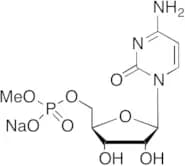
CAS:<p>Applications Protected Guaifenesin.<br>References Petrow, V., et al.: J. Pharm. Pharmacol., 12, 37 (1960),<br></p>Formula:C11H12O5Colore e forma:White SolidPeso molecolare:224.21Cytidine 5’-Monophosphate Methyl Ester Sodium Salt
CAS:<p>Applications Cytidine 5’-Phosphate Methyl Ester Sodium Salt is an byproduct formed in the synthesis of analogs of Cytidine 5’-Diphosphate with an important role in the metabolism of phospholipids.<br>References Trotter, P., et al.: J. Biol. Chem., 270, 6062 (1995), Janssen, M., et al.: Yeast, 16, 641 (2000), Henneberry, A., et al.: Mol. Biol. Cell, 12, 511 (2001), Boumann, H., et al.: Biochemistry, 42, 3054 (2003),<br></p>Formula:C10H15N3NaO8PColore e forma:White To Off-WhitePeso molecolare:359.2Biotin-[2-(2-pyridyldithio)ethylamide]
CAS:Prodotto controllato<p>Applications A sulfhydryl reactive biotinylaton reagent.<br>References Carlsson, J., et al.: Biochem. J., 173, 723 (1978), Ghebrehiwet, B., et al.: J. Immunol. Methods, 110, 251 (1988)<br></p>Formula:C17H24N4O2S3Colore e forma:White To Light YellowPeso molecolare:412.59D-Mannitol
CAS:Prodotto controllato<p>Applications D-Mannitol is widespread in plants and plant exudates; obtained from manna and seaweeds. D-Mannitol is used in the food industry as anticaking and free-flow agent, flavoring agent, lubricant and release agent, stabilizer and thickener and nutritive sweetener.<br>References Pigman, W., et al.: The Carbohydrates, 249 (1957), Makkee, M., et al.: Chem. Commun., 930 (1980),<br></p>Formula:C6H14O6Colore e forma:NeatPeso molecolare:182.17

![trans-4-[[(2-Amino-3,5-dibromophenyl)methylene]amino]cyclohexanol(Ambroxol Impurity C)](/_next/image/?url=https%3A%2Fstatic.cymitquimica.com%2Fproducts%2FTR%2Fthumb-webp%2FA604605.webp&w=3840&q=75)

![trans-4-[[(2-Amino-5-bromophenyl)methyl]amino]-cyclohexanol](/_next/image/?url=https%3A%2Fstatic.cymitquimica.com%2Fproducts%2FTR%2Fthumb-webp%2FA601985.webp&w=3840&q=75)




![D-[13C5]Xylose](/_next/image/?url=https%3A%2Fstatic.cymitquimica.com%2Fproducts%2FTR%2Fthumb-webp%2FX750758.webp&w=3840&q=75)
![2-Amino-2-[2-(4-hexylphenyl)ethyl]-1,3-propanediol](/_next/image/?url=https%3A%2Fstatic.cymitquimica.com%2Fproducts%2FTR%2Fthumb-webp%2FA611073.webp&w=3840&q=75)


![Biotin-[2-(2-pyridyldithio)ethylamide]](/_next/image/?url=https%3A%2Fstatic.cymitquimica.com%2Fproducts%2FTR%2Fthumb-webp%2FB391500.webp&w=3840&q=75)