


The chemistry of aging: how laboratories study the passage of time in our skin
Is it possible to measure the passage of time at the molecular level? In the cosmetics industry, millions of euros are invested each year to study how the skin ages... and how to slow it down. Behind every anti-aging cream or firming serum, there is intensive lab work where chemistry plays a key rol...

What price movements have chemicals seen in 2025?
In recent years, chemical prices have been anything but stable. In 2025, many laboratories and companies in the sector are asking: what’s behind the recent increases or decreases? Behind every fluctuation is a combination of global factors, from energy to regulation. Understanding them is key to pla...

The Chemistry of Caffeine: The Molecular Secret of the World's Most Consumed Stimulant
From the first sip of coffee in the morning to the last energy drink before a long workday, caffeine is an omnipresent substance in daily life. But what makes this molecule so special from a chemical perspective? In this article, we will explore the structure and mechanisms that make caffeine an ess...

Ynés Mexía: Science, courage, and over 500 species discovered
Ynés Enriquetta Julietta Mexía (1870–1938) was no ordinary botanist. She began her scientific career at the age of 51, defying all the conventions of her time. In just over a decade, she traveled from Alaska to the Amazon, collected more than 145,000 specimens, and discovered over 500 new plant spec...

Global Water Crisis: An Urgent Challenge That Chemistry Can Help Solve
The water crisis is one of the most pressing threats to humanity in the 21st century. According to recent data, more than 2.2 billion people lack access to safe drinking water and 3.5 billion do not have safely managed sanitation services. This situation not only compromises the health and well-bein...

Global Food Crisis and Fertilizers: The Key Role of Chemical Innovation
The war in Ukraine has triggered a global food crisis that goes beyond cereal shortages: it has jeopardized the supply of fertilizers, a key pillar of modern agricultural production. Before the conflict, Russia and Belarus jointly accounted for around 33% of global potash exports, an essential ferti...
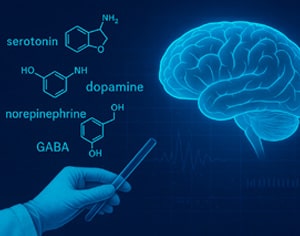
Mental Health and Brain Chemistry: A Scientific Perspective
Mental health is one of the major healthcare challenges of the 21st century. The rising number of cases of anxiety, depression, and neurodegenerative disorders has driven the search for new diagnostic tools and more effective treatments. In this context, although often overlooked, chemistry plays a ...

Food Allergies: Chemical Precision for a Growing Problem
A Growing Challenge in Food SafetyFood allergies have increased significantly in recent decades, especially in industrialized countries. Although there is no single clear cause, experts point to multiple factors: changes in diet, reduced exposure to microorganisms during childhood (hygiene hypothesi...
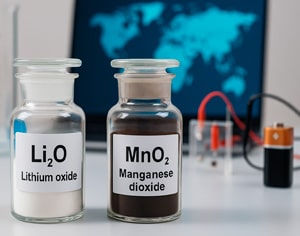
Global Challenges in the Battery Industry: The Key Role of Lithium Oxide and Manganese Dioxide
The transition towards a more sustainable economy has driven unprecedented demand for advanced batteries, essential for electric vehicles, renewable energy storage, and electronic devices. However, this growing demand has highlighted significant challenges in the supply chain of critical materials s...

Marie Maynard Daly: Pioneer in Chemistry and Cardiovascular Health Research
Marie Maynard Daly made history by becoming the first African-American woman to earn a PhD in Chemistry in the United States—a milestone that opened doors for countless women and underrepresented communities in STEM fields. Beyond this historic achievement, Daly’s pioneering research on cholesterol ...

Did you know… the first soft drinks were created by chemists?
The soft drinks we now enjoy from any supermarket or restaurant have a surprisingly chemical origin. Long before they became popular beverages, sodas were invented in laboratories by pharmacists and chemists seeking to replicate natural mineral waters with medicinal properties. But how did we go fro...
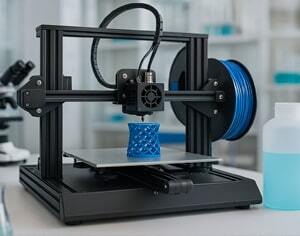
3D Printing for Laboratory Research and Development: Pioneers, Innovations, and Future Possibilities
3D printing, also known as additive manufacturing, is revolutionizing a wide range of industries, from aerospace to healthcare. The technology's ability to create precise, custom objects layer by layer has made it indispensable in research and development (R&D), particularly in laboratory settings. ...

How Chemistry is Revolutionising Space Exploration
The Science Behind the Conquest of SpaceTravelling to space is not only a feat of engineering, but also an achievement of chemistry. Without it, rockets would not launch, astronauts would have no oxygen to breathe, and spacecraft would not withstand the extreme conditions of the cosmos. Every missio...

Did you know… the metals driving modern technology are becoming increasingly scarce?
Elements such as neodymium, yttrium, and dysprosium are essential in the manufacture of high-power magnets, electric vehicle batteries, and LED screens, but their extraction is complex and costly due to their uneven distribution in the Earth's crust.The scarcity of chemical elements and its impact o...
Bioplastics and Sustainable Chemistry: Redefining the Future of Plastics
Towards a World Without Conventional PlasticsThe environmental impact of traditional plastics has become a global issue. The accumulation of plastic waste in the oceans, microplastic pollution, and dependence on petroleum for production have driven a revolution in the chemical industry: the developm...

Did you know... mercury is the only metal that is liquid at room temperature?
Mercury (Hg) is the only metal that remains in a liquid state at room temperature, a characteristic that makes it exceptional among the elements of the periodic table. Unlike other metals, which have solid structures and strong metallic bonds, mercury does not form a stable crystalline lattice under...

ARTICLE 3: The Future of AI in Drug Development & CymitQuimica’s Contribution
This article is part of a three-article series on AI in drug discovery. You can explore the full series here.Advantages of using AI in Drug DevelopmentBesides reducing time and cost AI is also improving the precision and personalization of treatments which has an impact difficult to quantify.Conside...

ARTICLE 2: AI’s Impact on the Pharmaceutical Industry
This article is part of a three-article series on AI in drug discovery. You can explore the full series here.Large Pharmaceutical Companies are incorporating AI into Drug DiscoveryBelow there are some examples how some of the largest traditional pharmaceutical companies are increasingly integrating ...

ARTICLE 1: The Role of AI in Drug Discovery
This article is part of a three-article series on AI in drug discovery. You can explore the full seriesArticle 1: The Role of AI in Drug DiscoveryIntroductionHow is AI Used in Drug Discovery?What Was the First Drug Discovered by AI?Article 2: AI’s Impact on the Pharmaceutical IndustryLarge Pharmaceu...

129 years since the discovery of radioactivity: from Becquerel to Marie Curie and its impact on modern science
On 1st March 1896, physicist Henri Becquerel made a discovery that would forever change the history of science: radioactivity. This accidental yet revolutionary finding opened the doors to a new era in physics and chemistry. Shortly after, Marie and Pierre Curie delved deeper into this phenomenon, ...