01-I-1115 - boc-val-leu-lys-amc | 73554-84-4
Sorry, no product with reference 01-I-1115 been found, but please check out the following similar products:
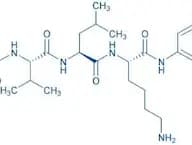
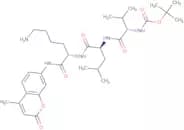
Boc-Val-Leu-Lys-AMC
CAS:A sensitive, fluorogenic, and specific substrate for the quantitative measurement of plasmin. Boc-VLK-AMC is also cleaved by acrosin from the ascidian Halocynthia roretzi, by porcine calpain isozymes I and II, and by papain.Formula:C32H49N5O7Purity:97.7%Color and Shape:White LyophilisateMolecular weight:615.77Boc-Val-Leu-Lys-AMC
CAS:Boc-Val-Leu-Lys-AMC is a research tool that has been shown to activate ion channels and increase the permeability of cell membranes. This compound also binds to receptors on cells, which may be due to its ability to bind with antibodies. Boc-Val-Leu-Lys-AMC has been used as an inhibitor in protein interactions and pharmacology studies, as well as for the study of ion channels in cell biology.Formula:C32H49N5O7Purity:Min. 95%Molecular weight:615.76 g/molBoc-Val-Leu-Lys-AMC acetate salt
CAS:Boc-Val-Leu-Lys-AMC acetate salt is a protease inhibitor that binds to the active site of trypsin and inhibits its proteolytic activity. It has been shown to protect neuronal cells from death caused by amyloid beta (Aβ) peptide. Boc-Val-Leu-Lys-AMC acetate salt also inhibits the secretion of proinflammatory cytokines and reduces the permeability of mitochondrial membranes in human neutrophils. This drug is stable in acidic environments, with a pH optimum of 2.0, but is sensitive to alkaline conditions with a pH optimum of 8.5. Boc-Val-Leu-Lys-AMC acetate salt has been shown to bind to casein, which may result in high values on sephadex g100 chromatography.Formula:C32H49N5O7•C2H4O2Purity:Min. 98 Area-%Color and Shape:PowderMolecular weight:675.81 g/mol