04-C16492500 - propionaldehyde
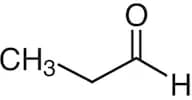
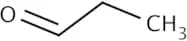
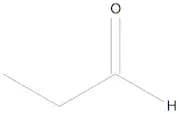
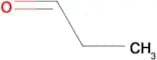
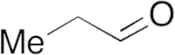
Propionaldehyde
CAS:Formula:C3H6OPurity:>98.0%(GC)Color and Shape:Colorless clear liquidMolecular weight:58.08Propionaldehyde
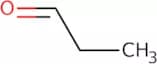
CAS:Formula:CH3CH2CHOPurity:≥ 98.0%Color and Shape:Clear, colourless liquidMolecular weight:58.08Propionaldehyde
CAS:Controlled ProductStability Moisture Sensitive, Volatile
Applications Propionaldehyde is a reagent combined with formaldehyde to produce trimethylolethane, a compound important in the production of alkyd resins. Propionaldehyde is also a strong inducer of aneuploidy in cultured Chinese hamster cells.
Not a dangerous good if item is equal to or less than 1g/ml and there is less than 100g/ml in the package
References Furnus, C., et al.: Mutagenesis, 5, 323 (1990); Kraft, W. & Forschirm, A.: J. Am. Oil Chem. Soc., 36, 164 (1959); Laemmle, G., et al.: Ind. Eng. Chem., 52, 33 (1960);Formula:C3H6OColor and Shape:ColourlessMolecular weight:58.08Propionaldehyde
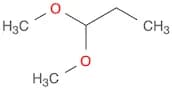
CAS:Propionaldehyde is a simple aliphatic aldehyde that is used in the synthesis of other compounds. It can be synthesized by oxidizing propylene with an oxidation catalyst such as manganese dioxide or platinum metal under pressure. Propionaldehyde can also be formed by the direct oxidation of propanol using ferric chloride, but this reaction has been shown to produce a mixture of products. Propionaldehyde can be produced by the oxidation of acetaldehyde with hydrogen peroxide, which produces formaldehyde and acetone. In addition to its use as a chemical reagent, propionaldehyde has been used as an additive in nutrient solutions for experiments in plant physiology and microbiology. The kinetic data for reactions involving propionaldehyde have been determined using methyl ethyl ketone (MEK) as the solvent and copper(II) sulfate pentahydrate as the catalyst. The redox potential for this molecule is -0.034 volts at pH 7,Formula:C3H6OPurity:Min. 95%Color and Shape:Colorless Clear LiquidMolecular weight:58.08 g/molPropionaldehyde Dimethyl Acetal
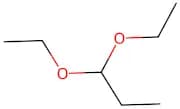
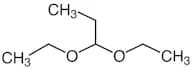
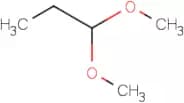
CAS:Formula:C5H12O2Purity:>98.0%(GC)Color and Shape:Colorless to Almost colorless clear liquidMolecular weight:104.15Propionaldehyde diethyl acetal
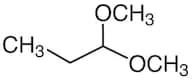
CAS:Formula:C7H16O2Purity:95%Color and Shape:LiquidMolecular weight:132.2007Propionaldehyde dimethyl acetal
CAS:Formula:C5H12O2Purity:97%Color and Shape:LiquidMolecular weight:104.1476Propionaldehyde Diethyl Acetal
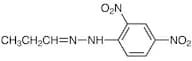
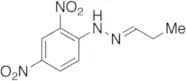
CAS:Propionaldehyde Diethyl AcetalPurity:95%Molecular weight:132.20g/molPropionaldehyde 2,4-Dinitrophenylhydrazone
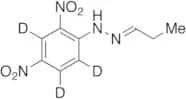
CAS:Propionaldehyde 2,4-DinitrophenylhydrazonePurity:98%Molecular weight:238.2g/molPropionaldehyde 2,4-Dinitrophenylhydrazone-3,5,6-d3
CAS:Formula:CH3CH2CHNNHC6D3(NO2)2Purity:99 atom % DColor and Shape:Orange-Red SolidMolecular weight:241.08904Propionaldehyde Diethyl Acetal
CAS:Formula:C7H16O2Purity:>98.0%(GC)Color and Shape:Colorless to Almost colorless clear liquidMolecular weight:132.20Propionaldehyde 2,4-Dinitrophenylhydrazone
CAS:Formula:C9H10N4O4Purity:>97.0%(T)(HPLC)Color and Shape:Orange to Brown powder to crystalMolecular weight:238.20Propionaldehyde dimethyl acetal
CAS:Propionaldehyde dimethyl acetal
Formula:C5H12O2Purity:97%Color and Shape: clear. colourless liquidMolecular weight:104.15g/molPropionaldehyde 2,4-Dinitrophenylhydrazone
CAS:Controlled ProductFormula:C9H10N4O4Color and Shape:Dark YellowMolecular weight:238.2Propionaldehyde 2,4-Dinitrophenylhydrazone-d3
CAS:Controlled ProductApplications Labelled analogue of Propionaldehyde 2,4-Dinitrophenylhydrazone, a dinitrophenylhydrazone (DNPH) derivative of an aliphatic aldehyde found in mainstream cigarette smoke and a breakdown product of lipid peroxidation.
References Delgado, B. et al.: J. Liq. Chrom. Rel. Technol., 31, 361 (2008); Miller, J.H. et al.: J. Chrom. Sci., 48, 12 (2010); Enoiu, M. et al.: Anausis, 28, 285 (2000);Formula:C9H7D3N4O4Color and Shape:NeatMolecular weight:241.22