10-MTV-112 - vinyl-t-structure-polymers | 1
Sorry, no product with reference 10-MTV-112 been found, but please check out the following similar products:
Hexamoll
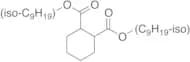
CAS:<p>Applications Hexamoll is one of the new plasticizers being used, which shows a structure similar to the most commonly used o-phthalates. It is favoured to substitute DEHP by DINCH as plasticizer for flexible poly(vinyl chloride).<br>References Crespo, J., et al.: J. Appl. Polym. Sci.,104, 1215 (2007).<br></p>Formula:C26H48O4Color and Shape:NeatMolecular weight:424.67Divinyl adipate, stabilized with MEHQ
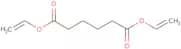
CAS:<p>Divinyl adipate is a biocompatible polymer that has been stabilized with MEHQ. It is a light-sensitive material that is reactive and can be used in a wide variety of applications, such as particle coating and hydroxyl group polymerization. The chemical structure of divinyl adipate includes two vinyl groups and one fatty acid group. This polymer has a high resistance to kinetic energy, making it suitable for use in medical devices. Divinyl adipate undergoes phase transition at temperatures above 100°C, which allows for its use in reaction solutions.</p>Formula:C10H14O4Purity:Min. 95%Color and Shape:Clear LiquidMolecular weight:198.22 g/molTetrafluoroethylene-perfluoro(2-(2-sulfonylethoxy)propyl vinyl ether) copolymer
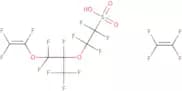
CAS:<p>Tetrafluoroethylene-perfluoro(2-(2-sulfonylethoxy)propyl vinyl ether) copolymer (EPC) is a polymer that is synthesized by the polymerization of tetrafluoroethylene and perfluoro(2-(2-sulfonylethoxy)propyl vinyl ether). EPC has been shown to be effective in removing nutrients, such as phosphate and nitrate, from wastewater. The polymer can be used as an additive in the treatment of wastewater and perovskite. EPC has also been observed to reversibly form bilayers with water droplets or surfactant micelles. The FTIR spectroscopy revealed that the chemical structure of the copolymer includes fluorine, carbon, hydrogen, oxygen, sulfur, nitrogen, and chlorine. The microscopy showed that EPC forms a uniform film on glass slides when irradiated with UV light. The electrochemical impedance spect</p>Formula:C9HF17O5SPurity:Min. 95%Color and Shape:PowderMolecular weight:544.14 g/mol2,2'-Dicarboxydiphenylsulphone
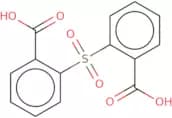
CAS:<p>2,2'-Dicarboxydiphenylsulphone is a rigid rod-like molecule with two vinyl groups. It has alkali metal ions that are present in the backbone and side chains of the polymer. These alkali metals are crucial for the structural analysis of 2,2'-dicarboxydiphenylsulphone because they provide insight into the structure and properties of this molecule. The nanofiber is synthesized from 2,2'-dicarboxydiphenylsulphone by electrospinning. This process can be used to create an array of different shapes and sizes that range from nanometers to centimeters in size. The luminescent property of 2,2'-dicarboxydiphenylsulphone may be due to its ability to absorb electromagnetic radiation at wavelengths greater than 400 nanometers (UV-A) and emit light at longer wavelengths (450-900 nanometers). The fluorescence may also be due</p>Formula:C14H10O6SPurity:Min. 95%Molecular weight:306.29 g/mol3,7-Dibromodibenzo[b,d]thiophene
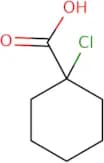
CAS:<p>3,7-Dibromodibenzo[b,d]thiophene is a polymerizable monomer that can be used for the synthesis of polymers with interesting optical properties. This material has been shown to undergo copolymerization with vinyl ethers and vinyl esters in the presence of sodium carbonate. The resulting copolymer has semiconducting properties and gel permeation chromatography showed a ring structure. Cross-coupling reactions have been used to synthesize 3,7-dibromodibenzo[b,d]thiophene from 2-bromo-1,3-dithiolane and 2-iodobenzene.</p>Formula:C12H6Br2SPurity:Min. 95%Color and Shape:White PowderMolecular weight:342.05 g/mol1-Chlorocyclohexane-1-carboxylic acid
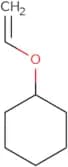
CAS:<p>1-Chlorocyclohexane-1-carboxylic acid (1CCA) is an aryl halide that is used in the synthesis of polymers. It is used as an oxidation catalyst and as a structural formula for cationic polymerization. 1CCA has been shown to efficiently initiate the polymerization of aromatic hydrocarbons, such as styrene, divinylbenzene, and vinyl toluene. The structure of 1CCA is similar to that of aminoglycosides, which are antibiotics that inhibit bacterial protein synthesis by binding to ribosomes. This similarity suggests that 1CCA may have antibiotic properties and could be useful in treating lymphocytic leukemia. However, more research would be needed to confirm this hypothesis.</p>Formula:C7H11ClO2Purity:Min. 95%Molecular weight:162.61 g/mol(Vinyloxy)cyclohexane
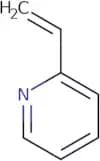
CAS:Vinyloxycyclohexane is an ether that is a reactive chemical species. It can be used as a crosslinking agent in the synthesis of biocompatible polymers. This polymer is often used as a substrate film for organic semiconductors, and has the ability to be modified with hydroxyl groups. Vinyloxycyclohexane has a basic structure, which may be due to its two hydroxyl groups and one vinyl group. This ether is also sensitive to heat, light, and radiation.Formula:C8H14OPurity:Min. 95%Molecular weight:126.2 g/mol2-Vinylpyridine, stabilized with TBC
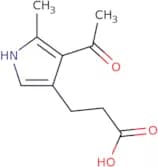
CAS:<p>2-Vinylpyridine is a reactive, organic compound that can form hydrogen bonds with other molecules. It has been used in the synthesis of detergent compositions and as a reactant to produce polymers. 2-Vinylpyridine is also used in the treatment of autoimmune diseases, such as hepatitis C. 2-Vinylpyridine has been shown to bind to proteins by forming hydrogen bonds with amino acid residues that have an amine group or a hydroxyl group. The binding of 2-vinyl pyridine to these sites leads to conformational changes and enzyme inhibition. 2-Vinylpyridine can be synthesized from pyridine and hydrochloric acid in a two step process involving condensation followed by cyclization. 2-Vinylpyridine was first synthesized by Kolbe and Woodward in 1883 using x-ray crystallography, which involved exposing crystals of pyridine to x-rays, thereby providing structural</p>Formula:C7H7NPurity:Min. 95%Color and Shape:Clear LiquidMolecular weight:105.14 g/mol3-(4-Acetyl-5-methyl-1H-pyrrol-3-yl)propanoic acid
CAS:3-(4-Acetyl-5-methyl-1H-pyrrol-3-yl)propanoic acid is a protonated form of 3-(4-acetyl-5-methyl-1H-pyrrol-3-yl)acrylic acid. It has been shown to be more stable than the neutral form, which can be degraded by chemical reactions. This compound is used in polymer matrices as a transition metal ion chelator and has been shown to increase the uptake of vinyl alcohol monomers. The structural parameters of this compound are discussed in relation to thermodynamic calculations at different temperatures.Formula:C10H13NO3Purity:Min. 95%Molecular weight:195.21 g/molVinylboronic acid dibutyl ester
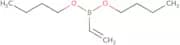
Vinylboronic acid dibutyl ester is a crosslinker that can be used in the synthesis of polymers and other organic molecules. It reacts with mercuric chloride to form an organomercury compound, which can then be converted into a vinyl boronate. Vinylboronic acid dibutyl ester is also a precursor for the preparation of quinoline derivatives, which are used as anticancer agents. The hydroxy group on this compound reacts with carbonyl groups on other compounds, forming an alcohol. Vinylboronic acid dibutyl ester has been shown to have growth factor-like activity and is capable of binding to adenosine receptors. This compound also contains a chloride ion as part of its structure.Formula:C10H21BO2Purity:Min. 95%Molecular weight:184.08 g/mol1-(Ethenyloxy)hexadecane
1-(Ethenyloxy)hexadecane is a vinyl polymer that has a linear chain structure. It has an ethylene backbone and an ester side-chain with an alcohol group on one end. 1-(Ethenyloxy)hexadecane is fluorescent and can be used as a fluorescence probe for the detection of cationic surfactants in polymers. The polymer film formed from this monomer exhibits high resistance to solvents and temperature, making it suitable for use as a film-forming polymer. 1-(Ethenyloxy)hexadecane also contains fatty acid groups, which are important for its molecular stability.Formula:C18H36OPurity:Min. 95%Molecular weight:268.5 g/mol1-Vinyl-1H-benzoimidazole
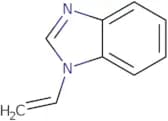
1-Vinyl-1H-benzoimidazole is a monomer that has been used as a cross-linking agent in the production of light-stable polymers. 1-Vinyl-1H-benzoimidazole has been shown to be reactive with oxygen, which leads to the formation of free radicals and oxidation. This chemical has low light sensitivity, but can be used for electrophotographic purposes. The protonated form of this chemical is thermally stable and photostable. The structural formula for 1-vinyl-1H-benzoimidazole is shown below: The polymerization process for 1-vinyl-1H-benzoimidazole can be done either by thermal or radiation methods.Formula:C9H8N2Purity:Min. 95%Molecular weight:144.17 g/mol3,5,5-Trimethyl-1-hexene
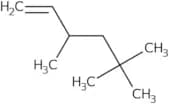
3,5,5-Trimethyl-1-hexene is a monomer that belongs to the group of aliphatic hydrocarbons. It is used as a chemical intermediate in the production of polymers. 3,5,5-Trimethyl-1-hexene can be extracted from fish oils using solid phase microextraction and analyzed by gas chromatography/mass spectrometry. 3,5,5-Trimethyl-1-hexene has been reported to polymerize with other monomers such as vinyl acetate or styrene to form polymers. This process is known as copolymerization and it produces copolymers with varying properties depending on the type of monomers used. Copolymerization results in a greater variety of chemical structures than those obtained when only one type of monomer is used.Formula:C9H18Purity:Min. 95%Molecular weight:126.24 g/mol3-Bromopentane-2,4-dione
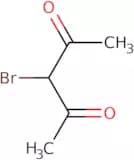
3-Bromopentane-2,4-dione is a quinoxaline derivative that has been used as an antimicrobial agent. It is effective against Gram-positive bacteria and some Gram-negative bacteria. 3-Bromopentane-2,4-dione binds to the active methylene of the bacterial cell wall by hydrogen bonding, thereby preventing the formation of crosslinks between peptidoglycan polymers that are required for cell wall biosynthesis. This results in inhibition of bacterial growth. The time it takes for 3-bromopentane-2,4-dione to have an effect on bacterial cell growth depends on the nature of the nitrogen atoms present in its structure. In order to make this drug more potent, it has been developed with vinylic groups that allow it to penetrate the bacterial cell membrane. Molecular orbital theory predicts that these vinylic groups will increase electron density on nitrogen atoms and thereby enhance antibacterial activity.Formula:C5H7BrO2Purity:Min. 95%Molecular weight:179.01 g/mol5-Chloroethyl-1H-tetrazole
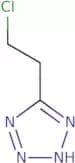
5-Chloroethyl-1H-tetrazole is a heterocycle that belongs to the chemical class of tetrazoles. It has been shown to have proton conductive properties and can be used in membranes. 5-Chloroethyl-1H-tetrazole has also shown thermally activated fluorescence, and this property can be used as a molecular probe for studying the structure of polymers. The vinyl group on the nitrogen atom is present in this compound and it can copolymerize with acrylonitrile to form an anhydrous copolymer with a molecular weight of 220. This copolymerisation leads to a change in the wavelength of the transition from 350 nm to 450 nm, which can be used as a means of identifying this compound.Formula:C3H5ClN4Purity:Min. 95%Molecular weight:132.55 g/mol(2-Chloro-ethoxy)-cyclopropane
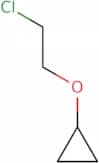
2-Chloro-ethoxy-cyclopropane is a vinyl ether with two chloro substituents on the ethoxy group. It has been used for the synthesis of polymers, pharmaceuticals, and other chemical compounds. 2-Chloro-ethoxy-cyclopropane can be synthesized by reacting anhydrous aluminium chloride with vinyl acetate in the presence of a base catalyst, such as sodium methoxide or sodium ethoxide. The rate of reaction is determined by the concentration of reactants, temperature, and pressure. The rate is also affected by solvents and catalysts. The kinetics of the reaction can be studied using fluorescence parameters to determine how fast a molecule reacts at different concentrations. The reaction can also be studied using micelles, which are spherical structures that form when molecules are dissolved in water. 2-Chloro-ethoxy-cyclopropane has been shown to have interactions with both polar and nonpolar solventsFormula:C5H9ClOPurity:Min. 95%Molecular weight:120.58 g/mol1,6-Heptadiene
1,6-Heptadiene is a reactive monomer that is used in the synthesis of polymers. It can be synthesized by copolymerization with styrene and ethylene. 1,6-Heptadiene reacts readily with chloride and pyridine to form a pyridine complex. The vinyl groups on the cyclopentane ring react with nucleophiles such as amines to form five-membered rings. This monomer has been shown to be stereoselective, reacting preferentially with one enantiomer of an alcohol rather than the other. 1,6-Heptadiene has been used for structural analysis by NMR spectroscopy and is also useful for ligand design.Formula:C7H12Purity:Min. 95%Color and Shape:Clear LiquidMolecular weight:96.17 g/mol4,5-Methyl mercapto benzimidazole zinc salt
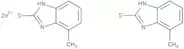
4,5-Methyl mercapto benzimidazole zinc salt is a white powder that has a basic structure and consists of chloride and functional groups. It is soluble in organic solvents, such as alcohols, ethers, chlorinated hydrocarbons, and esters. 4,5-Methyl mercapto benzimidazole zinc salt is used as coagulant in water treatment processes to remove suspended matter from the water. This product can be used as monomers for polymers with vinyl alcohol or magnesium salt. The viscosity of this product is high at low concentrations and decreases with increasing concentration. Cross-linking agents are added to increase the viscosity of this product. The particle size of this product ranges from 0.5 to 10 micrometers with an average diameter of 2 micrometers.Formula:C16H14N4S2ZnPurity:Min. 95%Color and Shape:PowderMolecular weight:391.82 g/mol


![3,7-Dibromodibenzo[b,d]thiophene](/_next/image/?url=https%3A%2Fstatic.cymitquimica.com%2Fproducts%2F3D%2Fthumb-webp%2FFD62242.webp&w=3840&q=75)