

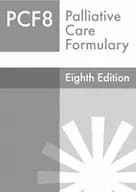

Palliative Care Formulary (PCF8)
Ref. 12-9780857114372
1u
78.00€
Product Information
Name:Palliative Care Formulary (PCF8)
Brand:Pharmpress
Description:Edited by Andrew Wilcock, Paul Howard, Sarah CharlesworthScheduled closure of pharmpress.comISBN 9780857114372Published Aug 2022DESCRIPTION: The eighth edition of the Palliative Care Formulary (PCF), from Pharmaceutical Press, the Royal Pharmaceutical Societys knowledge business, is an essential resource for health professionals who care for patients with progressive end-stage disease. Although written primarily with cancer patients in mind, PCF8 contains specific material relating to several other life-limiting diseases e.g. COPD, end-stage heart failure, renal and hepatic failure, and end-stage Parkinson's disease. Grounded in clinical practice, this comprehensive title includes independent information about drugs used in palliative care, highlighting off-label indications or routes, and dealing with the administration of multiple drugs by continuous subcutaneous infusion. Updates in the new edition: Renamed monograph (Tricyclic antidepressants) and two discontinued - (Carbamazepine and Danazol). Fully reviewed and updated monographs including for: Individual strong opioid analgesic drug monographs and Quick Clinical Guides Antidepressants class and individual drug monographs Anti-epileptics class and individual drug monographs including a significantly updated section on the management of seizures and the use of subcutaneous levetiracetam Bisphosphonates monograph including the 2020 ESMO clinical practice guidelines and a new joint summary table for the indications of use for bisphosphonates and denosumab in palliative care Denosumab monograph including the 2020 ESMO clinical practice guidelines Drugs and fitness to drive chapter including updates to the summary table of the available evidence for sedative drugs Renal impairment chapter including significant changes to the sections on assessing renal function, and opioid use in renal impairment Drug administration to patients with swallowing difficulties or enteral feeding tubes chapter including a new step-wise approach for alternative formulations, and a fully updated table on commonly used alternative product Targeted updates to monographs including: H2-receptor antagonists monograph updated to reflect the alternative oral and parenteral options due to the world-wide absence of ranitidine Proton pump inhibitors monograph significant updates to the parenteral administration section Clonidine monograph, involving significant updates to the dose and use section and a new summary of dexmedetomidine use Drugs for diabetes monograph updated to include the 2021 Diabetes UK guidelines and the 2021 Joint British Diabetes Societies Inpatient Care Group guidelines. Significant changes to the sections on corticosteroid-induced diabetes mellitus, the management of hypoglycaemia, and the management of spikes of hyperglycaemia in the last few weeks of life Systemic corticosteroids significant updates on the risks of adrenal insufficiency including information about the new steroid emergency card and information on the evidence of use for appetite stimulation Anaphylaxis appendix updated to reflect the 2021 Resuscitation Council UK guidelines. PCF8 also includes several Quick Clinical Guides covering key topics in palliative care and designed for everyday use. CONTENTS: Preface How PCF is constructed Getting the most out of PCF The use of medicinal products beyond (off-label) and without (unauthorized) marketing authorization Drug names Abbreviations Part 1 Drug Monographs 1 Gastro-intestinal system Antacids and antiflatulents Antimuscarinics Prokinetics H2-receptor antagonists Proton pump inhibitors Loperamide Laxatives Topical products for haemorrhoids Pancreatin 2 Cardiovascular system Furosemide Spironolactone Systemic local anaesthetics *Clonidine Glyceryl trinitrate Nifedipine Anticoagulants Haemostatics 3 Respiratory system Bronchodilators Inhaled corticosteroids Oxygen Drugs for cough 4 Central nervous system Benzodiazepines and Z-drugs Melatonin Antipsychotics Antidepressants *Psychostimulants *Cannabinoids Anti-emetics Anti-epileptics 5 Analgesics Principles of use of analgesics Adjuvant analgesics Paracetamol Nefopam Non-steroidal anti-inflammatory drugs (NSAIDs) Weak opioids Strong opioids Opioid antagonists (therapeutic target within the CNS) Opioid antagonists (therapeutic target outside the CNS) 6 Infections Antibacterials in palliative care Oral candidosis Metronidazole Rifampicin Urinary tract infections Cellulitis in a lymphoedematous limb 7 Endocrine system and immunomodulation Bisphosphonates Denosumab Systemic corticosteroids Demeclocycline Desmopressin Drugs for diabetes mellitus *Octreotide Progestogens *Thalidomide 8 Urinary tract disorders Tamsulosin Urinary antimuscarinics Methenamine hippurate Catheter patency solutions Discoloured urine 9 Nutrition and blood Anaemia Ascorbic acid (vitamin C) Vitamin K Potassium Magnesium Zinc 10 Musculoskeletal and joint diseases Depot corticosteroid injections Rubefacients and other topical products Skeletal muscle relaxants 11 Ear, nose and oropharynx Mouthwashes Artificial saliva Pilocarpine Drugs for oral inflammation and ulceration Cerumenolytics 12 Skin Emollients Topical antipruritics Barrier products 13 Anaesthesia *Ketamine *Propofol Part 2 Prescribing in palliative care 14 Prescribing in palliative care 15 Anticipatory prescribing in the community 16 Prescribing for children 17 Renal impairment 18 Hepatic impairment 19 Variability in response to drugs 20 Prolongation of the QT interval in palliative care 21 Drug-induced movement disorders 22 Drugs and fitness to drive 23 Taking controlled and prescription drugs to other countries 24 Obtaining specials 25 Management of postoperative pain in opioid-dependent patients 26 Drugs for pruritus 27 Oral nutritional supplements Part 3 Routes of administration 28 Drug administration to patients with swallowing difficulties or enteral feeding tubes 29 Continuous subcutaneous drug infusions 30 Transdermal patches 31 Nebulized drugs 32 Spinal analgesia Appendices A1Anaphylaxis A2Opioid dose conversion ratios A3Compatibility charts Indexes Drugs Topics REVIEWS: From the reviews of previous editions PCF [is] a core text for the speciality and has no serious rivals. Palliative Medicine The information is up to date and prepared with extreme care. This handbook should be available to staff involved with inpatient consultation, inpatient units of care and home visits. Journal of Pain and Symptom Management First class. Highly recommended. International Association for Hospice and Palliative Care
Notice:Our products are intended for lab use only. For any other use, please contact us.
Chemical properties
Technical inquiry about: Palliative Care Formulary (PCF8)
Please use instead the cart to request a quotation or an order
If you want to request a quotation or place an order, please instead add the desired products to your cart and then request a quotation or order from the cart. It is faster, cheaper, and you will be able to benefit from the available discounts and other advantages.