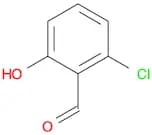
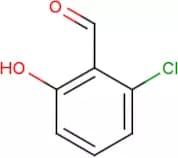
3D-FC11101 - 2-chloro-6-hydroxybenzaldehyde
Benzaldehyde, 2-chloro-6-hydroxy-
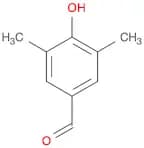
CAS:Formula:C7H5ClO2Purity:97%Color and Shape:SolidMolecular weight:156.56643,5-Dimethyl-4-hydroxybenzaldehyde
CAS:Formula:C9H10O2Purity:97%Color and Shape:SolidMolecular weight:150.17453-Hydroxy-benzaldehyde (5-Chloro-6-oxo-1,6-dihydro-pyridazin-4-yl)-hydrazone
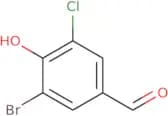
CAS:Controlled ProductFormula:C11H9ClN4O2Color and Shape:NeatMolecular weight:264.6683-Bromo-5-chloro-4-hydroxybenzaldehyde
CAS:3-Bromo-5-chloro-4-hydroxybenzaldehyde (3BCHA) is a phenolic compound that has been used in the synthesis of new drugs. 3BCHA is produced by the ozonation of 2,6-dichlorophenol and subsequent reactions with sodium hydroxide and hydrogen peroxide. The production of 3BCHA can be monitored using gas chromatography/electron spray ionization mass spectrometry (GC/ESI MS). 3BCHA can be synthesized in two ways:Formula:C7H4BrClO2Purity:Min. 95%Molecular weight:235.46 g/molPalbociclib Impurity F
CAS:Palbociclib Impurity F is a high purity synthetic intermediate for the production of Palbociclib. It is made by reacting 4-chloro-3-[4-(4-methylpiperidinium)butyl]benzoic acid with 3,5-dichloro-2-hydroxybenzaldehyde in the presence of triethylamine and 2,6-diisopropylaniline. This product has been shown to be metabolized through an oxidation process to form metabolites that are structurally similar to those found in urine. The chemical structure of this impurity can be found in CAS No. 851067-56-6.
Formula:C22H26BrN7OPurity:Min. 95%Molecular weight:484.4 g/mol2-Chloro-6-hydroxybenzaldehyde
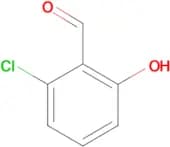
CAS:Formula:C7H5ClO2Purity:>98.0%(GC)(T)Color and Shape:White to Light yellow to Light orange powder to crystalMolecular weight:156.572-Chloro-6-hydroxybenzaldehyde
CAS:2-Chloro-6-hydroxybenzaldehydeFormula:C7H5ClO2Purity:98%Color and Shape: white to off white to faint yellow crystalline solidMolecular weight:156.57g/mol2-Chloro-6-hydroxybenzaldehyde
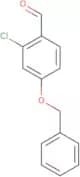
CAS:Formula:C7H5ClO2Purity:95%Color and Shape:SolidMolecular weight:156.574-(Benzyloxy)-2-chlorobenzaldehyde
CAS:4-(Benzyloxy)-2-chlorobenzaldehyde is an aldehyde that can be used for the synthesis of organic compounds. It is made from 2-chloro-4-hydroxybenzaldehyde, which is synthesized from hydroxybenzaldehyde, oxime, and benzyl alcohol. The product has been shown to react with riboflavin and a second reagent in the presence of palladium to form a chromatographic column. 4-(Benzyloxy)-2-chlorobenzaldehyde reacts with 6-chlorouracil to form an oxirane ring. This reaction can also be used to synthesize tulobuterol, which is a β2-agonist. 4-(Benzyloxy)-2-chlorobenzaldehyde reacts with ribose in the presence of hydroxy to produce glucose and 2-(6'-hydroxypurinomethyl)riboflavin as a byproduct.
Formula:C14H11ClO2Purity:Min. 95%Molecular weight:246.69 g/mol