3D-FC151121 - 1-chloro-2-methylanthraquinone | 129-35-1
Sorry, no product with reference 3D-FC151121 been found, but please check out the following similar products:
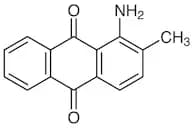
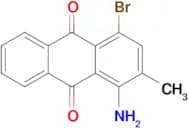
1-Amino-2-methylanthraquinone
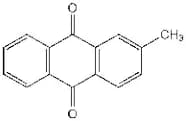
CAS:Formula:C15H11NO2Purity:>90.0%(N)Color and Shape:Orange to Amber to Dark red powder to crystalMolecular weight:237.262-Methylanthraquinone, 97%
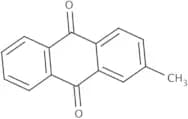
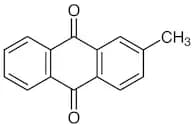
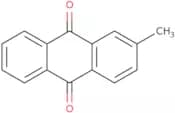
CAS:2-Methylanthraquinone is used as a pharmaceutical intermediate. It is used in smog dyes. This Thermo Scientific Chemicals brand product was originally part of the Alfa Aesar product portfolio. Some documentation and label information may refer to the legacy brand. The original Alfa Aesar product / iFormula:C15H10O2Purity:97%Color and Shape:Yellow, PowderMolecular weight:222.241-Hydroxy-2-methylanthraquinone
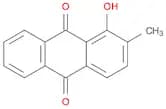
CAS:Formula:C15H10O3Purity:98%Color and Shape:SolidMolecular weight:238.23812-Methylanthraquinone
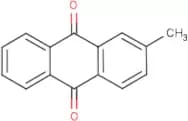
CAS:2-MethylanthraquinoneFormula:C15H10O2Purity:98%Color and Shape: yellow to orange solidMolecular weight:222.24g/mol3,8-Dihydroxy-1-methylanthraquinone-2-carboxylic a
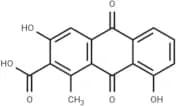
CAS:3,8-Dihydroxy-1-methylanthraquinone-2-carboxylic a is a useful organic compound for research related to life sciences.Formula:C16H10O6Color and Shape:SolidMolecular weight:298.256,8-Dihydroxy-1,2,7-trimethoxy-3-methylanthraquinone
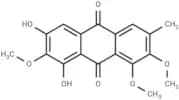
CAS:Compound 1, 6,8-Dihydroxy-1,2,7-trimethoxy-3-methylanthraquinone, is an anthraquinone α-glucosidase inhibitor with an IC50 of 185 μM, and it can be isolatedFormula:C18H16O7Purity:98%Color and Shape:SolidMolecular weight:344.321-Hydroxy-2-methylanthraquinone
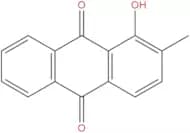
CAS:1-Hydroxy-2-methylanthraquinone exhibits promising larvicidal activity.Formula:C15H10O3Purity:98%Color and Shape:SolidMolecular weight:238.2422-Hydroxy-3-methylanthraquinone
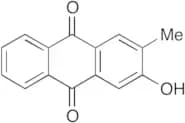
CAS:2-Hydroxy-3-methylanthraquinone triggers U937 cell apoptosis via p-p38MAPK, downregulates p-ERK1/2, and activates caspase-3.Formula:C15H10O3Purity:98%Color and Shape:SolidMolecular weight:238.242-Methylanthraquinone
CAS:Formula:C15H10O2Purity:>99.0%(GC)Color and Shape:Light orange to Yellow to Green powder to crystalMolecular weight:222.246,8-Dihydroxy-1,2,7-trimethoxy-3-methylanthraquinone
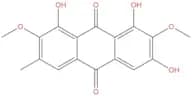
CAS:Formula:C18H16O7Purity:95%~99%Molecular weight:344.3191,6,8-Trihydroxy-2,7-dimethoxy-3-methylanthraquinone
CAS:Formula:C17H14O7Purity:95%~99%Molecular weight:330.2921-Hydroxy-2-methylanthraquinone
CAS:Formula:C15H10O3Purity:95%~99%Color and Shape:Yellow cryst.Molecular weight:238.2422-Hydroxy-3-methylanthraquinone
CAS:Applications 2-Hydroxy-3-methylanthraquinone is a derivative of anthraquinone (A679245) which is an important precursor for many drugs, including Emodin (E523000), Aloe-emodin (A575400), Antimalarials such as Rufgallol, and also Antineoplastics used in the treatment of cancer, such as mitoxantrone (M373425), pixantrone (P552500), and the anthracyclines.
References Pan, X., et al.: Biochem. Eng. J., 5, 173 (2000), Macleod, L.C., et al.: Org. Synth., 14:4; (2005); McDonald, M., et al.: Drugs Exp. Clin. Res., 10, 745 (1984); Cavalletti, E. et al.: Invest. New Drugs, 25, 187 (2007);Formula:C15H10O3Color and Shape:Dark Green SolidMolecular weight:238.241,4,6,8-Tetrahydroxy-3-methylanthraquinone
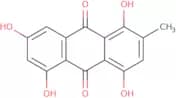
CAS:1,4,6,8-Tetrahydroxy-3-methylanthraquinone is a specialized anthraquinone derivative, which is isolated primarily from certain plant sources, showcasing its botanical origin. This compound belongs to the anthraquinone family, known for their characteristic aromatic structures and hydroxyl functionalities. The mode of action of 1,4,6,8-Tetrahydroxy-3-methylanthraquinone primarily involves its potential as a redox-active molecule due to its hydroxy groups. These groups facilitate electron transfer processes, enabling the compound to act as an antioxidant or potentially interfere with biological redox cycles.Formula:C15H10O6Purity:Min. 94 Area-%Color and Shape:PowderMolecular weight:286.24 g/mol2-Methylanthraquinone
CAS:2-Methylanthraquinone is an organic compound known as a substituted anthraquinone, which is a type of polycyclic aromatic quinone. It is primarily sourced from the methoxylation of anthraquinone, a naturally occurring compound found in certain plants and lichens. The mode of action of 2-Methylanthraquinone involves its ability to undergo redox cycling, where it participates in electron transfer processes due to its quinone structure.Formula:C15H10O2Purity:Min. 95%Molecular weight:222.24 g/mol