3D-FH65687 - hypericin-min-95
Hypericin
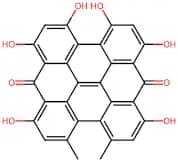
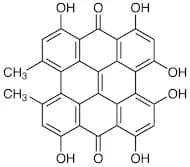
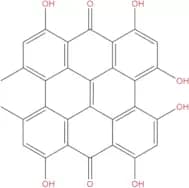
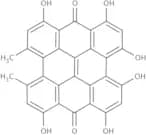
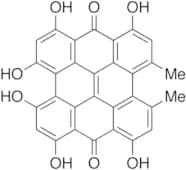
CAS:Hypericin analytical standard provided with w/w absolute assay, to be used for quantitative titration.Formula:C30H16O8Purity:(HPLC) ≥95%Color and Shape:PowderMolecular weight:504.46Hypericin
CAS:Formula:C30H16O8Purity:>95.0%(HPLC)Color and Shape:Black powder to crystalMolecular weight:504.45Hypericin
CAS:Red dye (Naphthodianthron derivative) that is natural occurring partly as sodium- and potassium salt. Hypericin has been shown to have antiviral and antiretroviral activity and to inhibit succinoxidase, NADPH-oxidase, tyrosinkinase and protein kinaseFormula:C30H16O8Purity:95%~99%Molecular weight:504.45Hypericin
CAS:Formula:C30H16O8Purity:≥ 98.0%Color and Shape:Blue or black powderMolecular weight:504.44Hypericin
CAS:Hypericin (Cyclosan) is a natural anthraquinone compound. Hypericin exhibits antimicrobial, antiviral, antitumor, and antidepressant effects. Cost-effective and quality-assured.Formula:C30H16O8Purity:98.90% - ≥98%Color and Shape:Red-Coloured Anthraquinone-DerivativeMolecular weight:504.44Ref: TM-T6S0923
1mg54.00€5mg120.00€10mg172.00€25mg341.00€50mg504.00€100mg705.00€500mg1,431.00€1mL*10mM (DMSO)133.00€Hypericin
CAS:QuinoneFormula:C30H16O8Purity:≥ 95.0 % (HPLC)Color and Shape:PowderMolecular weight:504.45Hypericin
CAS:Applications Hypericin is an extract from Hypericum perforatum L. hypericaceae (also known as St. John’s wort) and is believed to be an antibiotic/antiviral, specifically acting as a kinase inhibitor.
References Valeri, A. et al.: J. Pharm. Pharmacol., 64, 1770 (2012); Tahtouh, T. et al.: J. Med. Chem., 55, 9312 (2012); Arsic, I. et al.: Molecules, 15, 6688 (2010);Formula:C30H16O8Color and Shape:Dark RedMolecular weight:504.44Hypericin from Hypericum perforatum
CAS:Hypericin from Hypericum perforatumFormula:C30H16O8Purity:By hplc: 99.5% (Typical Value in Batch COA)Color and Shape: blue-black powderMolecular weight:504.44g/molHypericin sodium
CAS:Hypericin sodium is a sodium salt form of hypericin, which is a naturally occurring naphthodianthrone derivative. It is sourced primarily from the plant species Hypericum perforatum, commonly known as St. John's Wort. The compound exhibits intriguing properties, notable for its photodynamic action. When activated by specific wavelengths of light, hypericin sodium generates reactive oxygen species (ROS), leading to subsequent cellular changes. This attribute makes it a candidate for photodynamic therapy (PDT), a treatment strategy in oncological and antimicrobial applications.Formula:C30H16O8•NaPurity:Min. 95%Color and Shape:PowderMolecular weight:527.43 g/molHypericin, 98%
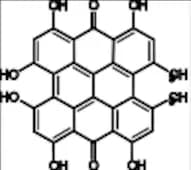
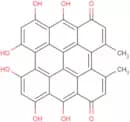
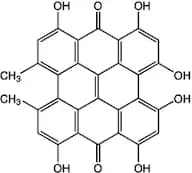
CAS:Hypericin, 548-04-9, is an anthraquinone derivative and chromophore which has multifunctional laboratory research applications. Learn more at Thermo Fisher Scientific.Formula:C30H16O8Purity:98%Color and Shape:Dark brown to black, PowderMolecular weight:504.45Phenanthro[1,10,9,8-opqra]perylene-7,14-dione,1,3,4,6,8,13-hexahydroxy-10,11-dimethyl-, stereoisomer
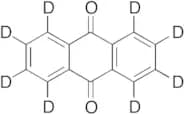
CAS:Formula:C30H16O8Purity:96%Color and Shape:SolidMolecular weight:504.4432Anthraquinone-D8
CAS:Controlled ProductApplications Anthraquinone-D8 is a labelled analogue of Anthraquinone (A679245). Anthraquinone is commonly used as a precursor to synthesize antiviral compounds such as Hypericin (H998190). Anthraquinone and its derivatives are also used in textile dyes.
References Andersen, D., et al.: Antivir. Res., 16, 185 (1991); Lee, Y. & Pavlostathis, S.: Water Res., 38,1838 (2004); Walker, G. & Weatherley, L.: Env. Poll., 108, 219 (2000)Formula:C14H8O2Color and Shape:Light YellowMolecular weight:216.26Emodinanthrone
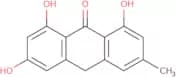
CAS:Emodinanthrone is a secondary metabolite that belongs to the group of microbial infection. It is extracted from Etoac, an Indian plant genus. Emodinanthrone has been shown to have antimicrobial activity against bacteria and fungi in vitro. The antibacterial activity of emodinanthrone is due to its ability to inhibit the synthesis of DNA, RNA, and proteins by inhibiting bacterial DNA polymerase and protein synthesis. It has also been shown to have synergistic effects when used with other antimicrobial agents such as hypericins or anthrone.Formula:C15H12O4Purity:Min. 95 Area-%Color and Shape:White PowderMolecular weight:256.25 g/mol2,4,6-Trihydroxybenzophenone
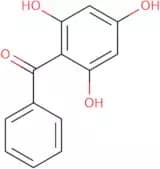
CAS:2,4,6-Trihydroxybenzophenone is a phenolic compound that has been shown to have significant inhibitory activities against the growth of bacteria in vitro. It can be used as a preservative for oils and fats. This product also inhibits the benzoate degradation pathway in E. coli and inhibits the synthesis of phenylpropanoids by inhibiting the activity of phenylalanine ammonia-lyase (PAL). 2,4,6-Trihydroxybenzophenone also has an inhibitory effect on cell proliferation and induces apoptosis in human leukemia cells. 2,4,6-Trihydroxybenzophenone belongs to the group of compounds called hypericins (hyperforin) that are produced by Hypericum perforatum plants. The biosynthesis of this molecule is thought to involve two consecutive hydroxylations at positions 4 and 6 on the aromatic ring.
Formula:C13H10O4Purity:Min. 95%Color and Shape:Off-White PowderMolecular weight:230.22 g/mol















![Phenanthro[1,10,9,8-opqra]perylene-7,14-dione,1,3,4,6,8,13-hexahydroxy-10,11-dimethyl-, stereoisom…](/_next/image/?url=https%3A%2Fstatic.cymitquimica.com%2Fproducts%2FIN%2Fthumb-webp%2FDA00I9S8.webp&w=3840&q=75)