3D-FT28147 - tetrahydroxyazon-scl | 946153-47-5
Sorry, no product with reference 3D-FT28147 been found, but please check out the following similar products:
PM Scl 75 Antibody Positive Human Plasma
PM Scl 75 Antibody Positive Human Plasma is a life science tool for use in IVD applications. Please enquire for more information about PM Scl 75 Antibody Positive Human Plasma including the price, delivery time and more detailed product information at the technical inquiry form on this page.Scl-70 Antibody Positive Human Plasma
Scl-70 Antibody Positive Human Plasma is a life science tool for use in IVD applications. Please enquire for more information about Scl-70 Antibody Positive Human Plasma including the price, delivery time and more detailed product information at the technical inquiry form on this page.Scl-70 Antibody Positive Human Plasma
Please enquire for more information about Scl-70 Antibody Positive Human Plasma including the price, delivery time and more detailed product information at the technical inquiry form on this page
Scl-70 Antibody Positive Human Plasma
Scl-70 Antibody Positive Human Plasma is an antigen for use in IVD applications. Please enquire for more information about Scl-70 Antibody Positive Human Plasma including the price, delivery time and more detailed product information at the technical inquiry form on this page.Scl-70 Antibody Positive Human Plasma
Scl-70 Antibody Positive Human Plasma is an antigen for use in IVD applications. Please enquire for more information about Scl-70 Antibody Positive Human Plasma including the price, delivery time and more detailed product information at the technical inquiry form on this page.Scl-70 Antibody Positive Human Plasma
Scl-70 Antibody Positive Human Plasma is an antigen for use in IVD applications. Please enquire for more information about Scl-70 Antibody Positive Human Plasma including the price, delivery time and more detailed product information at the technical inquiry form on this page.Human KRT7(Keratin 7) ELISA Kit
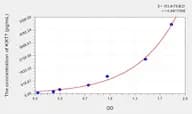
The test principle applied in this kit is Sandwich enzyme immunoassay. The microtiter plate provided in this kit has been pre-coated with an antibody specific to Human KRT7. Standards or samples are added to the appropriate microtiter plate wells then with a biotin-conjugated antibody specific to Human KRT7. Next, Avidin conjugated to Horseradish Peroxidase (HRP) is added to each microplate well and incubated. After TMB substrate solution is added, only those wells that contain Human KRT7, biotin-conjugated antibody and enzyme-conjugated Avidin will exhibit a change in color. The enzyme-substrate reaction is terminated by the addition of sulphuric acid solution and the color change is measured spectrophotometrically at a wavelength of 450nm ± 10nm. The concentration of Human KRT7 in the samples is then determined by comparing the OD of the samples to the standard curve.Color and Shape:Colourless TransparentliquidHuman KRT7(Keratin 7) Microsample ELISA Kit
The test principle applied in this kit is Sandwich enzyme immunoassay. The microtiter plate provided in this kit has been pre-coated with an antibody specific to Human KRT7. Standards or samples are added to the appropriate microtiter plate wells then with a biotin-conjugated antibody specific to Human KRT7. Next, Avidin conjugated to Horseradish Peroxidase (HRP) is added to each microplate well and incubated. After TMB substrate solution is added, only those wells that contain Human KRT7, biotin-conjugated antibody and enzyme-conjugated Avidin will exhibit a change in color. The enzyme-substrate reaction is terminated by the addition of sulphuric acid solution and the color change is measured spectrophotometrically at a wavelength of 450nm ± 10nm. The concentration of Human KRT7 in the samples is then determined by comparing the OD of the samples to the standard curve.CK7 Mouse mAb
Cytokeratin 7 is a 54kD intermediate filament protein found in a variety of glandularepithelia. Cytokeratin 7 has been found in columnar and glandular epithelium of the lung, cervix, breast, bile ducts and larger collecting ducts of the kidney. It is present in the transitional epithelium of bladder as well as ovarian and lungepithelia, and occasionally staining of blood vessel cell walls, particularly endothelial cells, may be observed. However, Cytokeratin 7 is not expressed by epithelial cells of the gastrointestinal tract, colon or prostate. Keratin 7 is often co expressed with keratin 19.Cytokeratin 7 rabbit pAb
keratin 7(KRT7) Homo sapiens The protein encoded by this gene is a member of the keratin gene family. The type II cytokeratins consist of basic or neutral proteins which are arranged in pairs of heterotypic keratin chains coexpressed during differentiation of simple and stratified epithelial tissues. This type II cytokeratin is specifically expressed in the simple epithelia lining the cavities of the internal organs and in the gland ducts and blood vessels. The genes encoding the type II cytokeratins are clustered in a region of chromosome 12q12-q13. Alternative splicing may result in several transcript variants; however, not all variants have been fully described. [provided by RefSeq, Jul 2008],TAL1 (phospho Ser122) rabbit pAb
alternative products:The splicing pattern is cell-lineage dependent,disease:A chromosomal aberration involving TAL1 may be a cause of some T-cell acute lymphoblastic leukemias (T-ALL). Translocation t(1;14)(p32;q11) with T-cell receptor alpha chain (TCRA) genes.,domain:The helix-loop-helix domain is necessary and sufficient for the interaction with DRG1.,function:Implicated in the genesis of hemopoietic malignancies. It may play an important role in hemopoietic differentiation. Serves as a positive regulator of erythroid differentiation.,PTM:Phosphorylated on serine residues. Phosphorylation of Ser-122 is strongly stimulated by hypoxia.,PTM:Ubiquitinated; subsequent to hypoxia-dependent phosphorylation of Ser-122, ubiquitination targets the protein for rapid degradation via the ubiquitin system. This process may be characteristic for microvascular endothelial cells, since it could not be observed in large vessel endothelial cells.,similarity:Contains 1 basic helix-loop-helix (bHLH) domain.,subunit:Efficient DNA binding requires dimerization with another bHLH protein. Forms heterodimers with TCF3. Binds to the LIM domain containing protein LMO2 and to DRG1. Can assemble in a complex with LDB1 and LMO2. Component of a TAL-1 complex composed at least of CBFA2T3, LDB1, TAL1 and TCF3.,tissue specificity:Leukemic stem cell.,TAL1 rabbit pAb
alternative products:The splicing pattern is cell-lineage dependent,disease:A chromosomal aberration involving TAL1 may be a cause of some T-cell acute lymphoblastic leukemias (T-ALL). Translocation t(1;14)(p32;q11) with T-cell receptor alpha chain (TCRA) genes.,domain:The helix-loop-helix domain is necessary and sufficient for the interaction with DRG1.,function:Implicated in the genesis of hemopoietic malignancies. It may play an important role in hemopoietic differentiation. Serves as a positive regulator of erythroid differentiation.,PTM:Phosphorylated on serine residues. Phosphorylation of Ser-122 is strongly stimulated by hypoxia.,PTM:Ubiquitinated; subsequent to hypoxia-dependent phosphorylation of Ser-122, ubiquitination targets the protein for rapid degradation via the ubiquitin system. This process may be characteristic for microvascular endothelial cells, since it could not be observed in large vessel endothelial cells.,similarity:Contains 1 basic helix-loop-helix (bHLH) domain.,subunit:Efficient DNA binding requires dimerization with another bHLH protein. Forms heterodimers with TCF3. Binds to the LIM domain containing protein LMO2 and to DRG1. Can assemble in a complex with LDB1 and LMO2. Component of a TAL-1 complex composed at least of CBFA2T3, LDB1, TAL1 and TCF3.,tissue specificity:Leukemic stem cell.,TAL1/2 (Acetyl Lys221/Acetyl Lys222/Acetyl Lys36/Acetyl Lys37) rabbit pAb
alternative products:The splicing pattern is cell-lineage dependent,disease:A chromosomal aberration involving TAL1 may be a cause of some T-cell acute lymphoblastic leukemias (T-ALL). Translocation t(1;14)(p32;q11) with T-cell receptor alpha chain (TCRA) genes.,domain:The helix-loop-helix domain is necessary and sufficient for the interaction with DRG1.,function:Implicated in the genesis of hemopoietic malignancies. It may play an important role in hemopoietic differentiation. Serves as a positive regulator of erythroid differentiation.,PTM:Phosphorylated on serine residues. Phosphorylation of Ser-122 is strongly stimulated by hypoxia.,PTM:Ubiquitinated; subsequent to hypoxia-dependent phosphorylation of Ser-122, ubiquitination targets the protein for rapid degradation via the ubiquitin system. This process may be characteristic for microvascular endothelial cells, since it could not be observed in large vessel endothelial cells.,similarity:Contains 1 basic helix-loop-helix (bHLH) domain.,subunit:Efficient DNA binding requires dimerization with another bHLH protein. Forms heterodimers with TCF3. Binds to the LIM domain containing protein LMO2 and to DRG1. Can assemble in a complex with LDB1 and LMO2. Component of a TAL-1 complex composed at least of CBFA2T3, LDB1, TAL1 and TCF3.,tissue specificity:Leukemic stem cell.,Anti-KRT7 Polyclonal Antibody
Antibody Type: Rabbit Polyclonal
Application: FCM,IF,IHC-Fr,IHC-P,WB
Reactivity: Human,Mouse,RatColor and Shape:LiquidMolecular weight:Theoretical: 54 kDa.Anti-KRT7 Antibody (6S321)
Antibody Type: Mouse Monoclonal
Application: IF,IHC,WB
Reactivity: Human,Mouse,RatColor and Shape:LiquidMolecular weight:Actual: 54 kDa.Anti-KRT7 Antibody (4X26)
Anti-KRT7 Antibody (4X26) is a Rabbit antibody targeting KRT7. Anti-KRT7 Antibody (4X26) can be used in WB,ICC/IF,IHC,IP,FCM.Color and Shape:LiquidMolecular weight:Theoretical: 51 kDa.Anti-KRT7 Antibody (8D469)
Antibody Type: Mouse Monoclonal
Application: IHC,WB
Reactivity: HumanColor and Shape:LiquidMolecular weight:Theoretical: 51 kDa.Anti-SCLY Antibody (6G356)
Anti-SCLY Antibody (6G356) is a Mouse antibody targeting SCLY. Anti-SCLY Antibody (6G356) can be used in ELISA.Color and Shape:Odour LiquidSCLY Protein, Human, Recombinant (His)
SCLY, also known as selenocysteine lyase, belongs to the class-V pyridoxal-phosphate-dependent aminotransferase family.Color and Shape:Lyophilized PowderMolecular weight:49.63 kDa (predicted); 46 kDa (reducing condition, due to glycosylation)KRT7 Protein, Human, Recombinant (His & SUMO)
Blocks interferon-dependent interphase and stimulates DNA synthesis in cells.Purity:90%Color and Shape:Lyophilized PowderMolecular weight:67.3 kDa (predicted)Ref: TM-TMPH-01584
1mg1,648.00€5µg78.00€10µg111.00€20µg178.00€50µg268.00€100µg384.00€200µg592.00€500µg1,054.00€