3H-SIS6962.0 - silicon-dioxide-amorphous-hexamethyldisilazane-treated | 68909-20-6
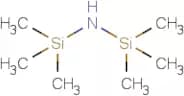
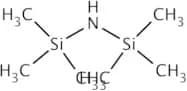
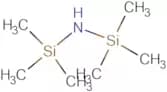
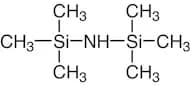
Hexamethyldisilazane
CAS:HexamethyldisilazaneFormula:C6H19NSi2Purity:98%Color and Shape: clear.colourless liquidMolecular weight:161.39275g/molHexamethyldisilazane
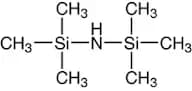
CAS:Formula:C6H19NSi2Purity:(GC) ≥ 98.0%Color and Shape:Clear, colourless liquidMolecular weight:161.40Hexamethyldisilazane
CAS:S09625 - Hexamethyldisilazane
Formula:C6H19NSi2Purity:98%Color and Shape:Liquid, Clear LiquidMolecular weight:161.395Hexamethyldisilazane
CAS:Controlled ProductApplications Hexamethyldisilazane is used in the preparation of 5-azacytidine, an antineoplastic drug. Also used in the preparation of β3-AR agonists used in anti-stress formulations.
Not a dangerous good if item is equal to or less than 1g/ml and there is less than 100g/ml in the package
References Vujjini, S. et al.: Org. Proc. Res. Dev., 17, 303 (2013); Xu, F. et al.: Org. Lett., 15, 1342 (2013);Formula:C6H19NSi2Color and Shape:NeatMolecular weight:161.39Hexamethyldisilazane lithium salt 1M in THF
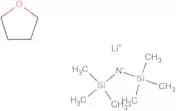
CAS:S09630 - Hexamethyldisilazane lithium salt 1M in THF
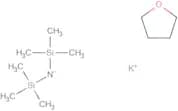
Formula:C10H26LiNOSi2Color and Shape:LiquidMolecular weight:239.43Potassium hexamethyldisilazane 20% in THF
CAS:S13950 - Potassium hexamethyldisilazane 20% in THF
Formula:C10H26KNOSi2Purity:95%Color and Shape:LiquidMolecular weight:271.5921,1,1,3,3,3-Hexamethyldisilazane
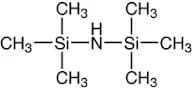
CAS:Formula:C6H19NSi2Purity:>96.0%(GC)Color and Shape:Colorless to Almost colorless clear liquidMolecular weight:161.40Hexamethyldisilazane, 98+%
CAS:Hexamethyldisilazane is used as a solvent in organic synthesis and organometallic chemistry. It is often used as an adhesion promoter for photoresist in photolithography. Further, it is used for the preparation of trimethylsilyl ethers from hydroxy compounds. It is used as an alternative to criticalFormula:C6H19NSi2Purity:98+%Color and Shape:Liquid, Clear colorless to pale yellowMolecular weight:161.40Hexamethyldisilazane, Electronic grade, 99+%
CAS:Hexamethyldisilazane is used as a solvent in organic synthesis and organometallic chemistry. It is often used as an adhesion promoter for photoresist in photolithography. Further, it is used for the preparation of trimethylsilyl ethers from hydroxy compounds. It is used as an alternative to criticalFormula:C6H19NSi2Purity:99+%Color and Shape:Clear colorless, LiquidMolecular weight:161.40CALLERY™ Sodium hexamethyldisilazane, 40% solution in tetrahydrofuran
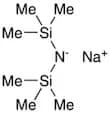
CAS:Formula:C6H18NNaSi2Color and Shape:Yellow to brownMolecular weight:183.38Sodium hexamethyldisilazane, min. 95%
CAS:Sodium hexamethyldisilazane, min. 95%
Formula:(CH3)3SiNNaPurity:min. 95%Color and Shape:off-white pwdr.Molecular weight:183.38Hexamethyldisilazane, min. 97%
CAS:Hexamethyldisilazane, min. 97%
Formula:(CH3)3SiNHSi(CH3)3Purity:min. 97%Color and Shape:colorless liq.Molecular weight:161.40CALLERY™ Potassium hexamethyldisilazane, 20% solution in tetrahydrofuran
CAS:Formula:(CH3)3Si)2NKColor and Shape:colorless to amber liq.Molecular weight:199.49A Hexamethyldisilazane-treated Fumed Silica, AEROSIL® R 812
CAS:Color and Shape:White to Almost white powder to crystal1,1,1,3,3,3-HEXAMETHYLDISILAZANE, 98%
CAS:Alkyl Silane - Conventional Surface Bonding
Aliphatic, fluorinated aliphatic or substituted aromatic hydrocarbon substituents are the hydrophobic entities which enable silanes to induce surface hydrophobicity. The organic substitution of the silane must be non-polar. The hydrophobic effect of the organic substitution can be related to the free energy of transfer of hydrocarbon molecules from an aqueous phase to a homogeneous hydrocarbon phase. A successful hydrophobic coating must eliminate or mitigate hydrogen bonding and shield polar surfaces from interaction with water by creating a non-polar interphase. Although silane and silicone derived coatings are in general the most hydrophobic, they maintain a high degree of permeability to water vapor. This allows coatings to breathe and reduce deterioration at the coating interface associated with entrapped water. Since ions are not transported through non-polar silane and silicone coatings, they offer protection to composite structures ranging from pigmented coatings to rebar reinforced concrete. A selection guide for hydrophobic silanes can be found on pages 22-31 of the Hydrophobicity, Hydrophilicity and Silane Surface Modification brochure.
ALD Material
Atomic layer deposition (ALD) is a chemically self-limiting deposition technique that is based on the sequential use of a gaseous chemical process. A thin film (as fine as -0.1 Å per cycle) results from repeating the deposition sequence as many times as needed to reach a certain thickness. The major characteristic of the films is the resulting conformality and the controlled deposition manner. Precursor selection is key in ALD processes, namely finding molecules which will have enough reactivity to produce the desired films yet are stable enough to be handled and safely delivered to the reaction chamber.
Trimethylsilyl Blocking Agent
Used as a protecting group for reactive hydrogens in alcohols, amines, thiols, and carboxylic acids. Organosilanes are hydrogen-like, can be introduced in high yield, and can be removed under selective conditions. They are stable over a wide range of reaction conditions and can be removed in the presence of other functional groups, including other protecting groups. The tolerance of silylated alcohols to chemical transformations summary is presented in Table 1 of the Silicon-Based Blocking Agents brochure.
Silane Cross-Coupling Agent
The cross-coupling reaction is a highly useful methodology for the formation of carbon-carbon bonds. It involves two reagents, with one typically being a suitable organometallic reagent - the nucleophile - and the other a suitable organic substrate, normally an unsaturated halide, tosylate or similar - the electrophile.
Hexamethyldisilazane; HMDS; HMDZ; Bis(trimethylsilyl)amine
Viscosity: 0.90 cStLow chloride grade available, SIH6110.1ΔHcomb: 25,332 kJ/molΔHvap: 34.7 kJ/molDipole moment: 0.37 debyeSurface tension: 18.2 mN/mSpecific wetting surface: 485 m2/gVapor pressure, 50 °C: 50 mmpKa: 7.55Dielectric constant: 1000 Hz: 2.27Ea, reaction w/SiO2 surface: 73.7 kJ/moleReleases ammonia upon reactionVersatile silylation reagentTreatment of fumed silica renders it hydrophobicBoth trimethylsilyl groups usedConverts acid chlorides and alcohols to amines in a three-component reactionReacts with formamide and ketones to form pyrimidinesSilylations catalyzed by SIT8510.0 and other reagentsNafion SAC-13 has been shown to be a recyclable catalyst for the trimethylsilylation of primary, secondary, and tertiary alcohols in excellent yields and short reaction timesUsed to convert ketones to α-aminophosphonatesLithium reagent reacts with aryl chlorides or bromides to provide anilinesSummary of selective deprotection conditions is provided in Table 7 through Table 20 of the Silicon-Based Blocking Agents brochureExtensive review of silicon based cross-coupling agents: Denmark, S. E. et al. "Organic Reactions, Volume 75" Denmark, S. E. ed., John Wiley and Sons, 233, 2011Formula:C6H19NSi2Purity:98%Color and Shape:Colourless LiquidMolecular weight:161.391,1,1,3,3,3-HEXAMETHYLDISILAZANE, 99% 5-GAL DRUM
CAS:Alkyl Silane - Conventional Surface Bonding
Aliphatic, fluorinated aliphatic or substituted aromatic hydrocarbon substituents are the hydrophobic entities which enable silanes to induce surface hydrophobicity. The organic substitution of the silane must be non-polar. The hydrophobic effect of the organic substitution can be related to the free energy of transfer of hydrocarbon molecules from an aqueous phase to a homogeneous hydrocarbon phase. A successful hydrophobic coating must eliminate or mitigate hydrogen bonding and shield polar surfaces from interaction with water by creating a non-polar interphase. Although silane and silicone derived coatings are in general the most hydrophobic, they maintain a high degree of permeability to water vapor. This allows coatings to breathe and reduce deterioration at the coating interface associated with entrapped water. Since ions are not transported through non-polar silane and silicone coatings, they offer protection to composite structures ranging from pigmented coatings to rebar reinforced concrete. A selection guide for hydrophobic silanes can be found on pages 22-31 of the Hydrophobicity, Hydrophilicity and Silane Surface Modification brochure.
Silane Cross-Coupling Agent
The cross-coupling reaction is a highly useful methodology for the formation of carbon-carbon bonds. It involves two reagents, with one typically being a suitable organometallic reagent - the nucleophile - and the other a suitable organic substrate, normally an unsaturated halide, tosylate or similar - the electrophile.
Trimethylsilyl Blocking Agent
Used as a protecting group for reactive hydrogens in alcohols, amines, thiols, and carboxylic acids. Organosilanes are hydrogen-like, can be introduced in high yield, and can be removed under selective conditions. They are stable over a wide range of reaction conditions and can be removed in the presence of other functional groups, including other protecting groups. The tolerance of silylated alcohols to chemical transformations summary is presented in Table 1 of the Silicon-Based Blocking Agents brochure.
ALD Material
Atomic layer deposition (ALD) is a chemically self-limiting deposition technique that is based on the sequential use of a gaseous chemical process. A thin film (as fine as -0.1 Å per cycle) results from repeating the deposition sequence as many times as needed to reach a certain thickness. The major characteristic of the films is the resulting conformality and the controlled deposition manner. Precursor selection is key in ALD processes, namely finding molecules which will have enough reactivity to produce the desired films yet are stable enough to be handled and safely delivered to the reaction chamber.
1,1,1,3,3,3-Hexamethyldisilazane; HMDS; HMDZ; Bis(trimethylsilyl)amine
<5 ppm chlorideStandard grade available, SIH6110.0Viscosity: 0.90 cStΔHcomb: 25,332 kJ/molΔHvap: 34.7 kJ/molDipole moment: 0.37 debyeSurface tension: 18.2 mN/mSpecific wetting surface: 485 m2/gVapor pressure, 50 °: 50 mmpKa: 7.55Photoresist adhesion promoterDielectric constant: 1000 Hz: 2.27Ea, reaction w/SiO2 surface: 73.7 kJ/molVersatile silylation reagentCreates hydrophobic surfacesConverts acid chlorides and alcohols to amines in a three-component reactionReacts with formamide and ketones to form pyrimidinesLithium reagent reacts w/ aryl chlorides or bromides to provide primary anilinesUsed to convert ketones to α-aminophosphonatesFormula:C6H19NSi2Purity:99%Color and Shape:Colourless LiquidMolecular weight:161.39CALLERY™ Lithium hexamethyldisilazane, 24% solution in tetrahydrofuran
CAS:Formula:C6H18LiNSi2Color and Shape:Yellow to amberMolecular weight:167.33CALLERY™ Potassium hexamethyldisilazane, 15% in toluene
CAS:Formula:(CH3)3SiNKColor and Shape:colorless to amber liquidMolecular weight:199.49