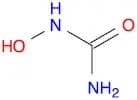
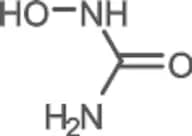
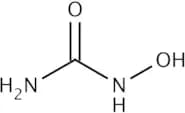
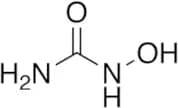
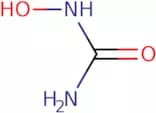
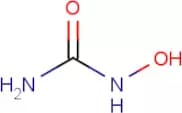
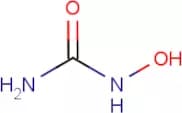
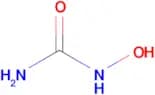
86-MM0895.00-0250 - hydroxycarbamide | 127-07-1
Sorry, no product with reference 86-MM0895.00-0250 been found, but please check out the following similar products:
Hydroxycarbamide
CAS:HydroxycarbamideFormula:CH4N2O2Purity:99.6%Color and Shape:Off-WhiteMolecular weight:76.02728HYDROXYCARBAMIDE CRS
CAS:HYDROXYCARBAMIDE CRSFormula:CH4N2O2Color and Shape:Crystalline Powder. White. Powder.Molecular weight:76.0547Hydroxyurea, 98%
CAS:<p>Hydroxyurea is used as an inhibitor of DNA synthesis and an anti-cancer drug. It is used as a precursor to prepare 1-hydroxy-5,6-dimethyl-1H-pyrimidine-2,4-dione via reaction with 2-methyl-3-oxo-butyric acid ethyl ester. It is used in the treatment of melanoma, resistant chronic myelocytic leukemia </p>Formula:CH4N2O2Purity:98%Color and Shape:White to cream or yellow, Crystals or powder or crystalline powderMolecular weight:76.06Hydroxyurea
CAS:Hydroxyurea (Hydroxycarbamide), an antineoplastic agent, inhibits DNA synthesis through the inhibition of ribonucleoside diphosphate reductase.Formula:CH4N2O2Purity:99.85% - 99.92%Color and Shape:SolidMolecular weight:76.05Hydroxyurea
CAS:Formula:CH4N2O2Purity:98.0 - 102.0 % (anhydrous basis)Color and Shape:White to off-white powderMolecular weight:76.06Hydroxy Urea
CAS:Controlled Product<p>Stability Hygroscopic<br>Applications An anti-neoplastic - inhibits ribonucleoside reductase and DNA replication. A potential therapy for sickle cell anemia which involves the nitrosylation of sickle cell hemoglobin. Horseradish peroxidase catalyzes nitric oxide formation from hydroxyurea in the presence of hydrogen peroxide.<br>References Ratcliffe, W., et al.: Lancet, 339, 164 (1992), Roodman, G., et al.: Cancer, 80, 1557 (1997), Horwitz, M., et al.: J. Clin. Endocrinol. Metab., 2003, 88, 1603 (2003),<br></p>Formula:CH4N2O2Color and Shape:White SolidMolecular weight:76.05Hydroxyurea
CAS:<p>Hydroxyurea is a prodrug that is activated by the enzyme Jak2, which is found in the mitochondria of cells. Hydroxyurea is used to treat various types of cancer and other diseases, such as sickle cell anemia. It has been shown to be effective in inhibiting the growth of squamous cell carcinomas and myeloid leukemia cells. Hydroxyurea has also been shown to have synergistic effects when combined with other pharmacological agents, such as hydroxycarbamide and cytosine arabinoside. Hydroxyurea inhibits the production of energy in the form of ATP, which leads to death by apoptosis or necrosis. This drug also has inhibitory properties against bacterial infections, especially those caused by Mycobacterium tuberculosis and Mycobacterium avium complex.</p>Formula:CH4N2O2Purity:Min. 97.5 Area-%Color and Shape:White Off-White PowderMolecular weight:76.06 g/molHydroxyurea
CAS:Formula:CH4N2O2Purity:>97.0%(HPLC)(N)Color and Shape:White to Almost white powder to crystalMolecular weight:76.06Hydroxyurea
CAS:Non-aromatic organic derivatives of hydrazine or of hydroxylamine for use as drugsFormula:CH4N2O2Color and Shape:White Off-White PowderMolecular weight:76.06 g/molHydroxyurea
CAS:HydroxyureaFormula:CH4N2O2Purity:98%Color and Shape: white solidMolecular weight:76.05g/molHydroxyurea
CAS:Formula:CH4N2O2Purity:98%Color and Shape:Solid, White crystalline powderMolecular weight:76.055